

Efficient Ticket Queue System in Qatar
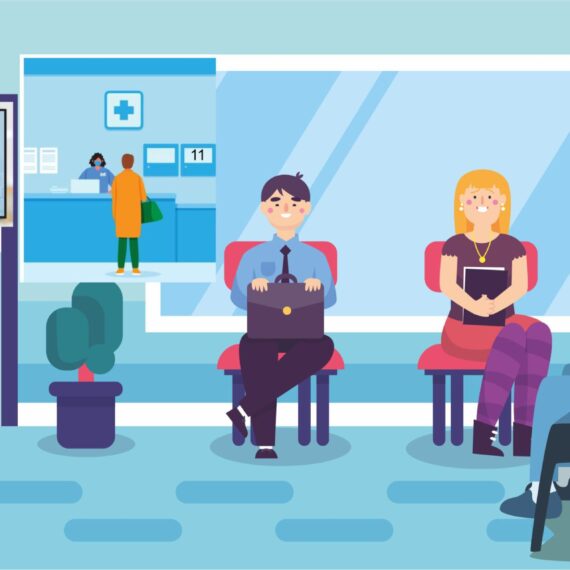
In today’s fast-paced, service-oriented world, managing customer flow efficiently is critical for success. Whether in banks, hospitals, government offices, or service centers, long queues and disorganized waiting areas can lead to customer dissatisfaction and operational delays. This is where a Ticket Queue System plays a vital role. These systems streamline customer service processes, reduce waiting times, and enhance the overall experience.
At Axle Systems, we specialize in delivering cutting-edge Ticket Queue System in Qatar from top international brands like Qmatic, Qbetter, and QueueBee, tailored to meet the unique needs of each industry.
What is a Ticket Queue System?
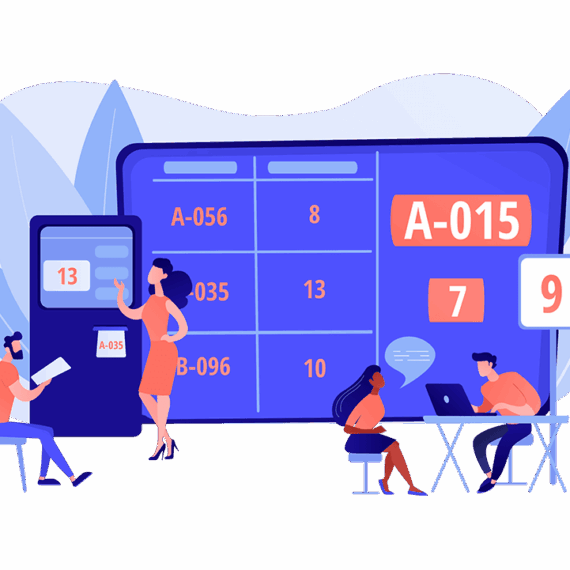
A Ticket Queue System is a customer service management solution designed to organize and manage queues in public and private service environments. Instead of waiting in physical lines, customers take a ticket and wait until their number is called, either through a screen, audio announcement, or both. These Ticket Queue System can be basic or highly advanced, integrating software, touchscreens, kiosks, and mobile interfaces.
Ticket Queue System are widely used across sectors such as:
- Hospitals and clinics
- Government service centers
- Banks and financial institutions
- Telecom service providers
- Immigration offices
- Educational institutions
- Retail stores
Key Benefits of a Ticket Queue System
Implementing a Ticket Queue System brings measurable improvements to both customer experience and service provider efficiency. Whether in retail, banking, healthcare, or government services, a well-designed queuing solution can dramatically enhance how organizations operate and how customers perceive them. Let’s explore the key benefits in detail:
1. Improved Customer Experience
Customer satisfaction is at the heart of every successful business. A Ticket Queue System transforms chaotic, standing lines into a smooth, organized experience. Customers no longer need to physically wait in a queue — they can sit comfortably, follow their ticket status on a display screen, and be assured their turn will come without unnecessary stress.
- Comfort and Convenience: Customers wait in a relaxed environment, free from pushing or shuffling in lines.
- Fairness and Transparency: Every visitor gets a fair, first-come-first-served treatment, or priority-based service, depending on the settings.
- Positive Perception: Professional queue management creates a sense of order and reliability, boosting brand image.
In high-traffic environments like government service centers or hospitals, improving the waiting experience can significantly raise public trust and customer loyalty.
2. Reduced Waiting Times
One of the main frustrations in service environments is excessive waiting. A Ticket Queue System reduces perceived and actual wait times by organizing service flows efficiently.
- Real-Time Queue Distribution: Intelligent systems assign customers to counters or agents based on current workload, helping balance traffic.
- Ticket Time Estimation: Some systems estimate and display expected wait times, allowing customers to manage their expectations.
- Queue Optimization Algorithms: Modern queue software like Qmatic and QueueBee use data-driven methods to reduce service bottlenecks.
By efficiently managing traffic, service providers can serve more customers in less time while keeping waiting areas less congested.
3. Enhanced Operational Efficiency
Efficient queue handling directly contributes to operational excellence. A well-structured ticket queue system enables staff to stay focused, reduces stress, and minimizes idle time.
- Routing by Service Type: Customers can choose their required service when taking a ticket, and the system directs them to the most appropriate service point.
- Load Balancing: Workloads are evenly distributed among staff, reducing burnout and improving output.
- Staff Scheduling Insights: Based on data from the system, managers can optimize staff allocation during peak and off-peak hours.
This efficiency translates to quicker service times, happier customers, and a more productive workforce.
4. Real-Time Data and Reporting
A major advantage of digital Ticket Queue System is their ability to collect and process vast amounts of data in real time. Brands like Qmatic and QueueBee offer detailed dashboards and automated reports that empower decision-makers.
- Key Metrics Captured:
- Average waiting time
- Average service time
- Peak traffic hours
- Number of customers served
- Service Performance Tracking: Track the performance of individual counters or staff.
- Strategic Improvements: Use reports to optimize workflows, identify bottlenecks, and plan infrastructure upgrades.
This data-driven approach ensures continuous improvement and long-term success.
5. Mobile and SMS Integration
In a mobile-first world, queue systems have evolved to meet modern customer expectations. Advanced ticketing solutions include mobile and SMS-based features, enabling remote interaction with the system.
- Remote Ticket Booking: Customers can book their place in line via mobile apps or web portals before arriving.
- SMS Notifications: Alerts can be sent to customers to notify them of their turn, reducing time spent on-site.
- Mobile Queue Monitoring: Users can track queue status in real time from their devices.
This is particularly beneficial during health crises (e.g., COVID-19) or for busy customers who want to minimize on-site presence.
6. Multi-Service Management
Ticket Queue System are designed to handle multiple service streams simultaneously. This is crucial for multi-department environments like hospitals, banks, and municipality offices.
- Service Selection on Entry: Customers select the service they need when taking a ticket, and the system categorizes them accordingly.
- Specialized Counter Allocation: Counters or service agents can be assigned to specific ticket types, reducing confusion and improving specialization.
- Cross-Department Coordination: Multi-branch businesses can synchronize queue data across locations for enterprise-level efficiency.
This multi-layered queuing capability enhances flexibility and ensures each customer receives the right service at the right place.
7. Audio-Visual Alerts
An integral part of a modern ticket system is its ability to communicate clearly with waiting customers. Audio-visual alerts enhance accessibility and reduce reliance on staff announcements.
- Digital Displays: Screens show current ticket numbers, counters, and estimated wait times.
- Voice Announcements: Automated audio alerts help visually impaired customers and improve clarity in busy spaces.
- Multilingual Options: Support for multiple languages ensures inclusivity in diverse environments like Qatar.
This feature reduces customer confusion, minimizes service desk inquiries, and supports a smooth customer journey.
Features of a Modern Ticket Queue System
A modern Ticket Queue System is far more than just issuing numbers to customers. Today’s systems integrate cutting-edge technology, user-friendly interfaces, and powerful analytics to deliver a seamless, smart, and scalable queuing experience. Whether you’re a small clinic or a multi-branch enterprise, the right features make all the difference.
Below is a detailed breakdown of the essential and advanced features of a modern Ticket Queue System:
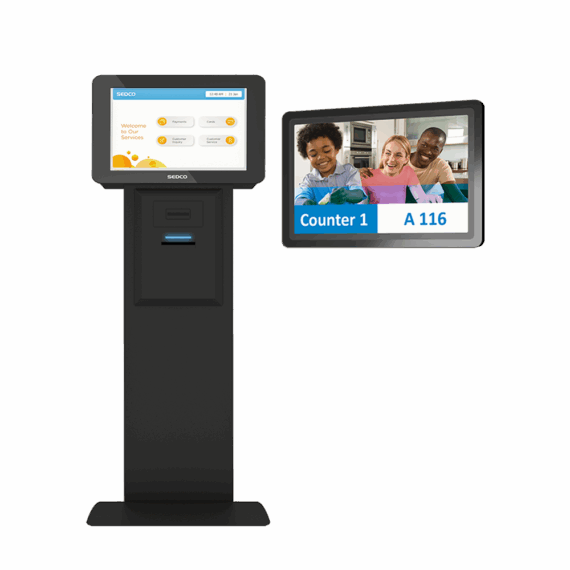
1. Self-Service Kiosk or Touchscreen Ticket Dispenser
The first point of contact for customers is the ticket issuing device, often a touchscreen kiosk that enables quick service selection.
- Intuitive Interface: Easy-to-use touchscreen allowing users to select services in multiple languages.
- Multi-Service Selection: Customers can choose from a list of services, each routed to the appropriate counter.
- Contactless Options: Infrared sensors or mobile QR scanning options for hygienic, touch-free interaction.
2. Smart Ticket Generation
After selecting their desired service, customers receive a printed or digital ticket.
- Custom Ticket Format: Includes ticket number, estimated waiting time, QR code, and promotional messages or branding.
- Digital Ticket Support: For users who access the system via mobile or online platforms.
3. Digital Display System
Visual guidance is crucial for keeping customers informed and engaged while they wait.
- LED/LCD Displays: Show real-time ticket numbers, counter assignments, and waiting status.
- Multi-Zone Display Support: In large facilities, screens can be assigned to different service zones.
- Advertising Integration: While customers wait, screens can show marketing content, videos, or promotions.
4. Audio Announcement System
In busy or crowded environments, visual cues are enhanced by automated voice announcements.
- Multi-Language Support: Announcements can be made in Arabic, English, or any preferred language.
- Queue Status Alerts: Announces ticket numbers, counter numbers, and any service-related updates.
5. Counter Display and Operator Panel
Operators or service agents are equipped with tools to call the next ticket, transfer calls, or mark services as completed.
- Agent Interface: A browser-based or dedicated software panel allows staff to manage their queue.
- Service Status Indicators: Staff can update queue status (busy, available, break).
- Cross-Counter Ticket Transfer: If needed, tickets can be routed to different counters without losing queue position.
6. Centralized Admin Dashboard
Back-end administrators can manage the entire queuing ecosystem via a central dashboard.
- Live Monitoring: View queue status, service load, and ticket flow across all branches or counters.
- Remote Access: Cloud-based platforms allow access from anywhere.
- System Configuration: Set service types, priority levels, operational hours, and agent schedules.
7. Mobile Ticketing and Remote Queueing
Modern systems support mobile platforms to extend convenience and minimize physical interaction.
- Mobile App or Web Portal: Customers can join a virtual queue, check wait times, and get tickets remotely.
- SMS Alerts: Receive ticket number, estimated wait, and notification when it’s time to approach the counter.
- QR Code Scanning: Customers scan a code at the entrance to instantly receive a digital ticket.
8. Cloud-Based System Architecture
Many modern solutions are cloud-enabled, allowing greater flexibility and scalability.
- Multi-Branch Management: Centralized control for organizations with multiple locations.
- Data Syncing: Real-time ticket and service data across branches.
- Automatic Updates & Backups: Reduced IT overhead and downtime.
9. Appointment Scheduling Integration
A powerful Ticket Queue System often integrates with appointment modules.
- Walk-in + Appointment Handling: Prioritizes scheduled visitors while managing ad hoc footfall.
- Online Booking: Let customers book slots through websites or mobile apps.
- Check-In via Appointment ID: Automatically issues a ticket for the scheduled time.
10. Reporting & Analytics
A vital feature for continuous improvement and KPI tracking.
- Custom Reports: Export service performance, customer flow, and staff metrics.
- Heat Maps & Trends: Visualize busy hours, underperformance, and queue efficiency.
- SLAs & Service Goals: Track metrics like average handling time, first-time resolution, and more.
11. API & System Integration
Ticket Queue System can integrate with various business tools and third-party platforms.
- CRM Integration: Log service history and track repeat visitors.
- POS & ERP Systems: Synchronize data across financial, sales, and support platforms.
- Access Control or ID Verification: Connect with kiosks or gates for secure environments.
12. Priority and Segmented Queues
Advanced queue logic supports different types of service models.
- VIP Queues: Serve priority customers without impacting standard service.
- Special Needs Queues: Designated ticket types for elderly, disabled, or emergency cases.
- Dynamic Re-Routing: Automatically balance queues by diverting traffic to free agents.
13. Customization & Branding
Every business has its own identity — your Ticket Queue System should reflect that.
- Custom UI Design: Interface tailored to your brand colors, logos, and language.
- Printed Ticket Branding: Add promotions, greetings, or disclaimers.
- Localized Content: Arabic, English, or bilingual configurations for Qatar-based deployment.
14. Security and Compliance
Ticket Queue System must comply with data privacy regulations and ensure secure operations.
- GDPR/Local Compliance: Systems that store or process customer data meet global and regional standards.
- Role-Based Access: Limit admin and staff privileges for system integrity.
- Audit Logs: Track all actions taken by staff or system for transparency.
15. AI-Powered Queue Intelligence (Emerging Feature)
Some leading-edge systems are integrating artificial intelligence to further enhance queue predictions and load balancing.
- Predictive Wait Time Calculation
- Queue Abandonment Detection
- Customer Sentiment Analysis via Feedback Kiosks
Applications and Uses of Ticket Queue System
A Ticket Queue System is a powerful solution that transforms how organizations manage customer flow. It’s not just about reducing wait times — it’s about reshaping how businesses interact with customers, enhance efficiency, and deliver professional service experiences. In Qatar, where government services, healthcare, banking, and retail sectors are growing rapidly, the use of advanced queue systems has become essential.
Let’s explore the major applications and use cases across industries:
1. Banks and Financial Institutions
Challenge: High footfall, long queues, and a variety of services ranging from account opening to loan processing make bank queues complex and often frustrating.
Solution with Ticket Queue System:
- Directs customers to the right service desk based on their chosen service (e.g., teller, customer service, or loan inquiry).
- Displays real-time queue information on digital screens.
- Improves service time tracking and reduces customer wait anxiety.
Benefits:
- Smoother service flow during peak hours.
- Reduced crowding in waiting areas.
- Enhanced customer experience and professionalism.
2. Hospitals, Clinics, and Healthcare Centers
Challenge: Walk-in patients, scheduled appointments, and emergency services create a dynamic, often chaotic queue system.
Solution with Ticket Queue System:
- Handles both walk-in and appointment queues through integration.
- Enables priority for urgent cases.
- Alerts patients via screen and voice when it’s their turn.
Benefits:
- Improves patient satisfaction and safety.
- Reduces waiting room congestion.
- Provides real-time performance insights for hospital administration.
3. Government Offices and Public Service Centers
Challenge: Long waiting times, language barriers, and complex multi-service departments can lead to inefficiency and dissatisfaction.
Solution with Ticket Queue System:
- Allows service categorization (e.g., passport renewal, ID issuance, licensing).
- Supports multi-language interface (Arabic, English).
- Offers appointment-based and walk-in ticketing.
Benefits:
- Streamlined citizen service experience.
- Better control over daily visitor flow.
- Enhanced transparency and fairness.
Examples in Qatar: Ministry of Interior (MOI) service centers, Hukoomi offices, immigration departments, and traffic offices.
4. Retail Stores and Customer Service Desks
Challenge: Managing post-sales service queues, warranty claims, or consultations in high-traffic retail environments.
Solution with Ticket Queue System:
- Organizes service counters based on issue type.
- Allows customers to take tickets at entrance or via mobile.
- Integrates with customer feedback kiosks post-service.
Benefits:
- Smooth customer service operations.
- Improved store layout with reduced physical queues.
- Higher customer retention due to better service.
Use Cases:
- Electronics stores
- Telecom service centers
- Furniture and appliance showrooms
5. Corporate Offices and HR Departments
Challenge: Managing visitor flow for interviews, meetings, or internal HR services in a structured way.
Solution with Ticket Queue System:
- Automates appointment check-in.
- Displays visitor status and directs them to the correct department or meeting room.
- Tracks service performance and average handling time.
Benefits:
- Professional first impression for visitors.
- Organized handling of internal services.
- Enhanced productivity and less administrative chaos.
6. Airports and Travel Service Desks
Challenge: Long lines at check-in counters, visa desks, or lost baggage claims often frustrate travelers.
Solution with Ticket Queue System:
- Divides services into categories such as check-in, visa inquiries, or baggage assistance.
- Speeds up processing with audio-visual queue guidance.
- Provides mobile or web-based remote queuing for tech-savvy travelers.
Benefits:
- Faster passenger processing.
- Higher satisfaction scores.
- Better crowd control during peak travel seasons.
7. Educational Institutions
Challenge: Managing student services such as admissions, fee payments, and certificate collection.
Solution with Ticket Queue System:
- Organizes queues based on service type.
- Offers appointment-based visits for student counselors or administrative services.
- Tracks peak periods for smarter staffing.
Benefits:
- Organized student experience.
- Reduced administrative pressure.
- Time savings for both students and staff.
8. Mosques and Religious Facilities
Challenge: Managing foot traffic during prayer times, Friday sermons, or special events.
Solution with Ticket Queue System:
- Controls entry and service queues for ablution areas, donations desks, or religious consultations.
- Helps maintain social distancing during pandemics.
- Allows silent ticket management during prayer times with visual-only display.
Benefits:
- Improved crowd management.
- Enhanced comfort and safety.
- Support for inclusive, accessible environments.
9. Real Estate & Property Management Offices
Challenge: Walk-in visitors for property inquiries, documentation, and customer support often result in confusion or long wait times.
Solution with Ticket Queue System:
- Queues customers for services like rent payments, maintenance complaints, or tenancy contracts.
- Provides reporting to help understand visitor trends.
Benefits:
- Efficient service delivery.
- Increased customer satisfaction.
- Streamlined daily operations.
10. Automobile Showrooms & Service Centers
Challenge: Handling multiple queues for car servicing, test drives, vehicle registration, and customer care.
Solution with Ticket Queue System:
- Prioritizes servicing based on appointment or walk-in.
- Manages multiple queues for sales, service, and parts.
- Tracks technician performance and wait time.
Benefits:
- Better operational management.
- Smoother sales experience.
- Clear communication between departments and customers.
11. Hotels and Hospitality Sector
Challenge: Managing queues for check-in, concierge, spa appointments, and event registration during peak hours.
Solution with Ticket Queue System:
- Allows pre-booking of services and automated check-ins.
- Integrates with hotel PMS systems.
- Reduces long lobby lines during conferences or tourist seasons.
Benefits:
- Elevated guest experience.
- Staff efficiency during high-demand times.
- Reduced service delays at the front desk.
12. Multi-Branch Enterprises & Franchises
Challenge: Consistent Ticket Queue System management and reporting across multiple locations.
Solution with Ticket Queue System:
- Cloud-based dashboards for centralized control.
- Standardized service flows and branding across branches.
- Comparative analytics between locations.
Benefits:
- Cohesive service experience regardless of location.
- Smarter performance benchmarking.
- Easier expansion and scalability.
Leading Brands in Ticket Queue System: Qbetter, Qmatic, and QueueBee
The global market for Ticket Queue System is populated by several innovative brands, each offering unique strengths and technological advancements. Axle Systems partners with some of the industry’s most reputable names to bring the best solutions to Qatar.
- Qbetter: Hailing from Portugal, Qbetter is recognized for its advanced and systematic queue management solutions. Their systems are built on sophisticated technology, focusing on bringing order, transparency, and efficiency to any environment. Qbetter solutions emphasize reducing waiting times, improving operational efficiency, and enhancing customer engagement through real-time updates and interactive displays. They offer seamless integration capabilities and are highly scalable, making them suitable for various business sizes.
- Qmatic: A global leader in customer journey management, Qmatic, a Swedish company, is synonymous with intelligent Ticket Queue System management solutions that transform how organizations interact with their customers. Qmatic systems are engineered to optimize customer flow, reduce waiting times, and enhance the overall customer experience through intelligent automation and data-driven insights. They offer comprehensive platforms that integrate appointment management, virtual queuing, business intelligence, and customer feedback, providing an end-to-end solution for customer journey optimization. Qmatic is particularly strong in complex environments like healthcare and government, where detailed analytics and comprehensive management are crucial.
- QueueBee: QueueBee Solution is another prominent global player in Customer Journey Management and Customer Experience Management. They offer versatile queue management systems available in physical, virtual, and hybrid modes. QueueBee solutions focus on user-friendly interfaces, real-time alerts, and personalized service selection. Their offerings include advanced ticket capabilities such as paper and paperless options, flexible ticket styles (QR codes, barcodes), personalized designs, and live queue status updates, all aimed at minimizing wait times and increasing efficiency.
Axle Systems’ partnership with these leading brands ensures that businesses in Qatar have access to the most reliable, feature-rich, and globally recognized Ticket Queue System solutions, tailored to their specific needs.
Axle Systems: Your Trusted Partner for Ticket Queue System in Qatar
Axle Systems is a well-established and trusted name in security and smart solutions across Qatar. With over a decade of experience and ISO 9001-2008 certification, we are dedicated to delivering high-quality solutions, encompassing installation, integration, and ongoing maintenance. Our commitment to excellence has made us a preferred partner for businesses and government entities seeking to enhance their operational efficiency and customer experience.
We understand that every business in Qatar is unique, with distinct requirements and challenges. That’s why we don’t just supply products; we provide comprehensive, tailored solutions. Our team of highly trained and experienced technicians works closely with clients from initial consultation and needs assessment to system design, implementation, and post-installation support. We ensure that the Ticket Queue System we deploy seamlessly integrates with your existing infrastructure and processes, maximizing its impact.
Why choose Axle Systems for your Ticket Queue System in Qatar?
- Expertise and Experience: With over 12 years in the industry, we possess in-depth knowledge of various technologies and their application in the Qatari market.
- Comprehensive Solutions: We offer a wide range of Ticket Queue Systems from globally renowned brands like Qbetter, Qmatic, and QueueBee, ensuring we can meet diverse business needs and budgets.
- Tailored Approach: We believe in customized solutions. Our team will assess your specific requirements and recommend the most suitable system to achieve your goals.
- Professional Installation and Integration: Our certified technicians ensure flawless installation and seamless integration with your existing systems, minimizing disruption to your operations.
- Reliable After-Sales Support: Our commitment extends beyond installation. We provide comprehensive training for your staff, ongoing maintenance, and prompt technical support to ensure your system operates optimally at all times.
- Local Presence and Understanding: Being based in Doha, we have a deep understanding of the local market dynamics, regulations, and cultural nuances, allowing us to provide highly relevant and effective solutions.
Axle Systems Contact Details:
We are ready to discuss your specific needs and provide a customized solution that will revolutionize your customer experience and operational efficiency.
- Phone: +974 4468 2391
- Email: info@axlesys.com
- Website: www.axlesys.com
- Address: Al Khalidiya Street, P.O. Box 200081, Najma, Doha, Qatar
Common FAQs about Ticket Queue System
Here are some frequently asked questions about Ticket Queue System:
Q1: What is the primary purpose of a Ticket Queue System?
A1: The primary purpose is to organize and manage customer flow, reduce actual and perceived waiting times, improve customer satisfaction, and enhance operational efficiency for businesses.
Q2: How does a Ticket Queue System reduce waiting times?
A2: It reduces waiting times by providing a structured system for service, offering real-time updates, allowing customers to wait comfortably (even remotely), and optimizing staff allocation based on demand.
Q3: Can a Ticket Queue System integrate with existing systems like CRM or appointment booking software?
A3: Yes, most modern Ticket Queue Systems, especially those supplied by Axle Systems from brands like Qbetter, Qmatic, and QueueBee, are designed for seamless integration with existing CRM, ERP, and online appointment booking platforms. This creates a unified data flow and improved customer journey management.
Q4: Is a Ticket Queue System suitable for small businesses or just large enterprises?
A4: Ticket Queue Systems are scalable and beneficial for businesses of all sizes. While large enterprises with high customer traffic clearly benefit, even small clinics, salons, or retail outlets can see significant improvements in customer flow, staff efficiency, and customer satisfaction. Basic standalone systems are available for smaller operations, while networked systems serve larger, multi-location businesses.
Q5: What are the different ways customers can get a ticket?
A5: Customers can typically get a ticket through: * Physical kiosks: Self-service terminals that print a paper ticket. * Mobile apps: Joining a virtual queue through a dedicated smartphone application. * Web portals: Accessing a web-based interface to get a virtual ticket. * QR code scanning: Scanning a QR code at the entrance to join a virtual queue. * Staff assistance: A staff member can issue a ticket manually or digitally.
Q6: What kind of data and reports can I expect from a Ticket Queue System?
A6: A comprehensive system provides valuable data such as: * Number of customers served daily/weekly/monthly. * Average waiting time per customer/service. * Average service time per customer/service. * Peak hours and days for customer traffic. * Staff performance metrics (e.g., number of customers served per agent). * Customer feedback and satisfaction ratings. This data is crucial for operational optimization.
Q7: How do customers know when it’s their turn to be served?
A7: Customers are typically notified through: * Digital display screens: Showing the current number being served and the next few numbers. * Voice announcements: Automated voice calls announcing the ticket number and service counter. * Mobile notifications: SMS alerts or in-app notifications when their turn is approaching or has arrived.
Q8: Are Ticket Queue System secure, especially with virtual queuing?
A8: Reputable Ticket Queue Systems prioritize data security and privacy. They employ robust encryption protocols, access controls, and secure storage mechanisms to protect sensitive customer information. Virtual queuing solutions typically do not store extensive personal data, focusing on queue position management.
Q9: How long does it take to install a Ticket Queue System?
A9: Installation timelines vary depending on the complexity of the system and the size of the establishment. Basic standalone systems can be deployed within a few days, while more complex, networked systems requiring extensive integration may take longer. Axle Systems works efficiently to minimize disruption.
Q10: Can a Ticket Queue System help with customer feedback?
A10: Yes, many advanced systems include integrated customer feedback modules. Customers can provide feedback post-service via QR codes on their tickets, touchscreens at the service counter, or automated email/SMS surveys. This feedback is invaluable for continuous service improvement.
Final Thoughts
In Qatar’s competitive business landscape, delivering exceptional customer experience is paramount. A state-of-the-art Ticket Queue System is no longer a luxury but a strategic investment that yields significant returns in terms of customer satisfaction, operational efficiency, and overall business success.
Axle Systems, with its deep expertise, commitment to quality, and partnerships with global leaders like Qbetter, Qmatic, and QueueBee, is your ideal partner in bringing this transformative technology to your organization. We are dedicated to helping businesses in Qatar streamline their operations, reduce wait times, and create truly positive and memorable customer journeys.
Don’t let long queues and frustrated customers hinder your business growth. Contact Axle Systems today to explore how a tailored Ticket Queue System can revolutionize your service delivery and elevate your customer experience to new heights.