

Stall Usage Sensors for Smart Washroom in Qatar
Smart buildings aren’t complete without intelligent washroom management. One of the simplest, highest-impact upgrades you can add to any commercial, hospitality, retail, or public facility is the Stall Usage Sensors — a small, robust device that tells you, in real time, whether a toilet stall or urinal is occupied. This blog post explains what Stall Usage Sensors are, how they work, their features and benefits, how they’re used in Stall Usage Sensor for Smart Washroom solutions, important privacy and compliance considerations (especially for installations in Qatar), installation and maintenance guidance, and a practical FAQ you can use when procuring or specifying these devices.
Axle Systems is a leading supplier of Stall Usage Sensors for Smart Washroom in Qatar. Scroll to the end for our contact placeholders and a short call to action — please replace the placeholders with the exact phone/email/address you want displayed on your website.
What are Stall Usage Sensors for Smart Washroom?
A Stall Usage Sensors for Smart Washroom is a compact sensor device installed in individual toilet stalls, urinal areas, or Stall Usage Sensors for Smart Washroom cubicles to detect whether the stall is currently occupied. Unlike a simple mechanical indicator (e.g., an “in-use” latch), these sensors are electronic and network-capable, allowing real-time occupancy state to be:
- Sent to a central management platform,
- Shown on digital signage or washroom status panels,
- Used to trigger automated cleaning workflows, or
- Incorporated into building analytics and people-flow systems.
Typically, the sensor detects occupancy without capturing personally identifiable imagery — it uses presence, motion, infrared, pressure, or magnetic detection methods that respect privacy while providing accurate usage signals.
How Stall Usage Sensors for Smart Washroom Work
Stall Usage Sensors use one or more of the following detection technologies:
- Passive Infrared (PIR): Detects heat/motion changes when a person enters the stall. Simple and power-efficient.
- Ultrasonic / Doppler: Emits ultrasonic waves and senses reflections to detect motion or presence even if body heat is low.
- Capacitive / Proximity: Senses changes in capacitance when a human body is within the stall vicinity — useful for very short-range detection.
- Pressure / Seat Sensors: Built into the toilet seat or floor mat to detect weight/pressure (common in accessible stalls).
- Door Status + Timeout Logic: Combines a door-open sensor (magnet/contact) and a time-based state machine — if door closed and time < X, assume occupied.
- Low-resolution Presence Radar: Millimeter-wave radar can detect presence and micro-movements without producing images, offering better reliability in varied lighting and temperatures.
Sensors typically include a low-power radio (Wi-Fi, Zigbee, LoRaWAN, BLE, or proprietary RF) to communicate with a local hub/gateway or directly to the building network. Power options include batteries (replaceable or rechargeable), PoE (Power over Ethernet), or low-voltage wiring.
Core Features to Expect in a Modern Stall Usage Sensors for Smart Washroom
When evaluating or procuring Stall Usage Sensors for Smart Washroom project, it’s essential to look beyond just “occupied/free” detection. A modern solution should be accurate, durable, privacy-safe, network-ready, and easy to integrate into your overall smart facility infrastructure. Below are the key features and specifications you should expect from a high-quality sensor system.
1. High Detection Accuracy and Reliability- Stall Usage Sensors for Smart Washroom
The foundation of any occupancy sensor is detection accuracy. The sensor should reliably distinguish between occupied and vacant states, minimizing both false positives (detecting occupancy when the stall is empty) and false negatives (failing to detect a user).
- Recommended accuracy: ≥ 95% in real-world testing
- Detection speed: Ideally < 2 seconds after stall entry or exit
- Continuous detection: Should recognize long dwell times (e.g., user remains still for a few minutes) without prematurely marking the stall as vacant
- Adaptive calibration: Some sensors use algorithms to adapt sensitivity based on environmental changes like temperature, lighting, and humidity
This reliability ensures smooth user experience and accurate analytics — critical in places like airports, malls, and stadiums in Qatar, where Stall Usage Sensors for Smart Washroom are heavily used.
2. Privacy-Preserving Technology- Stall Usage Sensors for Smart Washroom
Because these sensors are installed inside washroom stalls, privacy is non-negotiable. Modern stall sensors are non-imaging devices that detect presence without capturing any identifiable visual or audio data.
Common privacy-safe sensing methods include:
- Passive Infrared (PIR): Detects heat changes without recording visuals.
- Millimeter-wave radar: Detects presence and micro-movements without forming an image.
- Pressure sensors: Detect seating or floor pressure discreetly.
- Door status sensors: Use magnetic contact or latch position combined with logic timers.
This ensures full compliance with Qatar’s data protection norms and customer privacy expectations.
3. Long Battery Life and Low Power Consumption- Stall Usage Sensors for Smart Washroom
In large facilities with dozens or hundreds of stalls, wiring every sensor can be impractical. Battery-powered sensors are ideal — provided they offer multi-year operation without constant maintenance.
Key specifications:
- Battery type: Standard lithium (CR123A, AA, or rechargeable)
- Typical battery life: 2–5 years
- Low-power sleep modes: Sensor “sleeps” when idle and wakes instantly when movement or door closure is detected
- Battery health monitoring: The device reports its voltage so the management platform can alert staff before a failure
This ensures uninterrupted performance while reducing maintenance visits — a strong cost advantage for malls, airports, and office towers.
4. Flexible Connectivity Options- Stall Usage Sensors for Smart Washroom
A modern Stall Usage Sensor should integrate seamlessly with your network infrastructure and Stall Usage Sensors for Smart Washroom software. Different communication protocols offer varying ranges, power efficiencies, and network architectures.
Common connectivity options include:
- Wi-Fi: High-bandwidth, direct cloud communication. Suitable for smaller installations or where Wi-Fi coverage already exists.
- Zigbee / BLE (Bluetooth Low Energy): Low-power mesh networks ideal for multi-stall environments.
- LoRa / LoRaWAN: Long-range, low-bandwidth communication — excellent for large buildings or campuses.
- PoE (Power over Ethernet): For wired reliability and power through a single cable.
- Proprietary RF: Used by certain vendors for enhanced reliability in high-interference zones.
Integration flexibility allows facility teams to choose the best option based on the site’s IT standards and network security policies.
5. Compact, Durable, and Vandal-Resistant Enclosure- Stall Usage Sensors for Smart Washroom
Stall Usage Sensors for Smart Washroom are humid, high-traffic environments where devices face both environmental stress and occasional tampering. Quality sensors are designed with this in mind.
Look for:
- Ingress Protection (IP) Rating: At least IP54 or IP65 for moisture and dust resistance.
- Material: Flame-retardant ABS, polycarbonate, or aluminum casing.
- Tamper detection: Alerts if the device is removed or opened.
- Impact resistance: IK08 or higher for public restrooms.
- Operating temperature: Typically -10°C to +50°C (suitable for Qatar’s climate with air-conditioned interiors).
These build-quality elements ensure long lifespan and reduce downtime.
6. Multiple Mounting and Form Factor Options- Stall Usage Sensors for Smart Washroom
Each washroom layout is unique. A flexible sensor system should support various mounting options:
- Ceiling mount: Ideal for radar or PIR sensors with downward detection cones.
- Wall or partition mount: Common for side-mounted PIR or door sensors.
- Door frame mount: For magnetic reed contact sensors or door latch sensors.
- Concealed mounting: Hidden behind panels for aesthetic or vandal-resistant installations.
Ease of installation also matters — adhesive pads or screw mounts should make retrofits quick without heavy civil work.
7. Intelligent Occupancy Logic and Configurable Parameters- Stall Usage Sensors for Smart Washroom
Modern sensors include microcontrollers that process raw data locally before sending results to the cloud. This edge intelligence improves accuracy and reduces bandwidth.
Configurable parameters may include:
- Detection sensitivity — adjust for smaller or larger stalls.
- Occupancy timeout — determines when a stall should revert to “vacant” after no motion.
- Debounce timing — prevents false triggers from short movements.
- Presence duration logging — useful for analytics or alerting if occupancy exceeds a threshold (e.g., 20 minutes).
Such configurability ensures accurate results in diverse environments — from compact Stall Usage Sensors for Smart Washroom in offices to spacious public facilities in malls or stadiums.
8. Seamless System Integration (API, Cloud, BMS)- Stall Usage Sensors for Smart Washroom
The value of stall usage data lies in how well it integrates with other systems. Your sensor should be part of a connected Stall Usage Sensors for Smart Washroom Ecosystem that includes digital signage, cleaning task management, and analytics dashboards.
Look for sensors that support:
- Open APIs (REST, MQTT, or WebSocket) for flexible integration.
- Cloud and on-premise compatibility to meet your IT policies.
- Real-time data streaming for instant occupancy display.
- Compatibility with BMS, CAFM, and cleaning management platforms.
- Webhook support for triggering automated tasks (e.g., send alert after X uses).
This interoperability enables true “smart” functionality — not just isolated detection.
9. LED Indicators and Local Visual Feedback- Stall Usage Sensors for Smart Washroom
For user convenience and traffic flow control, some sensors come with LED indicators or link to external signal lights:
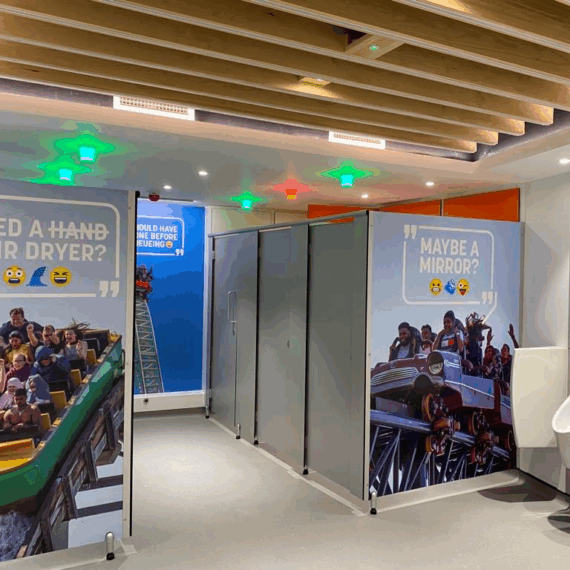
- Green/Red light outside stall: Instantly shows availability.
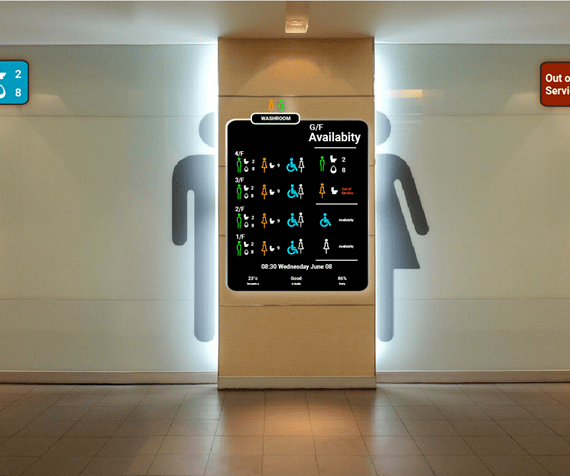
- Multi-stall corridor indicators: Aggregate several sensors to show real-time status (e.g., “2 of 6 stalls free”).
- Flashing alerts: Indicate maintenance or cleaning in progress.
This improves visitor experience and reduces unnecessary door checking, which is especially beneficial in busy public restrooms like malls, offices, and transport hubs.
10. Data Logging and Advanced Analytics- Stall Usage Sensors for Smart Washroom
Modern sensors are not just for real-time monitoring — they also collect and transmit rich data that supports facility analytics and optimization.
Expect the following data capabilities:
- Usage count per stall per day/week
- Average occupancy duration
- Peak usage time windows
- Maintenance/cleaning trigger logs
- Anomaly alerts (long dwell time detection)
- Exportable CSV/Excel reports for audits
Combined with other Stall Usage Sensors for Smart Washroom (soap, paper, bin, etc.), this data helps optimize cleaning schedules, staffing levels, and consumable replenishment.
Benefits of Stall Usage Sensors — Why Facilities Choose Them
Stall Usage Sensors are more than just a modern convenience; they are a powerful operational tool for Stall Usage Sensors for Smart Washroom in commercial, hospitality, retail, and public environments. Installing these sensors brings tangible benefits for facilities managers, cleaning staff, and visitors alike. Let’s explore the benefits in detail, with practical examples and specific relevance to Qatar’s facilities.
1. Enhanced Cleaning Efficiency and Hygiene- Stall Usage Sensors for Smart Washroom
One of the primary advantages of Stall Usage Sensors is optimized cleaning workflows. Traditional cleaning schedules are often time-based, meaning staff clean all stalls on a fixed routine, whether they were used or not. This can lead to wasted labor, chemicals, and water.
How Stall Usage Sensors improve hygiene management:
- Real-time data on stall occupancy allows clean-on-demand cleaning. For example, janitorial staff are alerted only when a stall has been used multiple times or when dwell times exceed typical limits.
- Sensors integrated with smart cleaning apps automatically create tasks and assign them to staff, ensuring high-traffic stalls are cleaned more frequently than low-usage stalls.
- In high-profile facilities such as luxury hotels in Doha or airport terminals, this targeted cleaning maintains a consistently high hygiene standard, improving the overall user experience.
2. Improved Guest and Employee Experience- Stall Usage Sensors for Smart Washroom
Nothing frustrates visitors or employees more than long queues or unavailable stalls. Stall Usage Sensors provide real-time occupancy information, helping users locate available stalls quickly.
Benefits include:
- Digital signage or app integration shows available stalls in corridors or on mobile apps.
- Reduced wait times, which is especially valuable in airports, stadiums, and office towers with high foot traffic.
- Modern smart-building perception, as visitors see that the facility uses technology-driven convenience, enhancing brand reputation.
Practical scenario:
In a Doha airport, passengers can check stall availability via a mobile app, minimizing stress and ensuring a smooth experience during peak flight hours.
3. Operational Cost Savings- Stall Usage Sensors for Smart Washroom
Stall Usage Sensors deliver significant cost reductions by streamlining labor and consumable usage:
- Labor optimization: Staff only clean when necessary, reducing overtime and unnecessary cleaning rounds.
- Chemical and water savings: Fewer cleaning cycles mean lower detergent and water usage, translating into measurable cost savings.
- Energy efficiency: Sensors can trigger lighting and ventilation only when stalls are occupied, further reducing utility bills.
4. Data-Driven Space Planning- Stall Usage Sensors for Smart Washroom
Occupancy data from Stall Usage Sensors provides valuable analytics for long-term planning:
- Identify peak usage periods (e.g., lunch breaks, event times, or airport peak hours).
- Determine which stalls are underused or overused, aiding decisions about renovation or expansion.
- Optimize staff allocation across shifts based on real usage patterns.
5. Energy and Water Optimization- Stall Usage Sensors for Smart Washroom- Stall Usage Sensors for Smart Washroom
Smart washrooms powered by Stall Usage Sensors can contribute to sustainability goals, an increasingly important consideration in Qatar’s modern commercial buildings:
- Automatic lighting control: Lights turn on only when stalls are occupied.
- Ventilation control: Exhaust fans or HVAC adjust dynamically based on occupancy.
- Water-saving triggers: Coupled with smart faucets or urinals, water can be conserved during low-usage periods.
6. Compliance and Reporting- Stall Usage Sensors for Smart Washroom
Many industries, especially hospitality, healthcare, and public facilities, are required to maintain hygiene and cleaning records. Stall Usage Sensors simplify this:
- Automated logs of stall usage and cleaning events
- Audit trails for cleaning staff adherence and response times
- Supports infection control protocols and regulatory reporting
7. Accessibility and Staff Assistance Integration- Stall Usage Sensors for Smart Washroom
For accessible stalls, Stall Usage Sensors can integrate with assistance alert systems:
- Detect unusually long dwell times, potentially indicating a user needs help.
- Automatically send alerts to staff or security for immediate assistance.
- Monitor usage patterns to ensure accessible washrooms are efficiently maintained.
8. Scalability and Future-Readiness- Stall Usage Sensors for Smart Washroom
Modern facilities in Qatar, such as mega malls, mixed-use towers, and stadiums, benefit from solutions that scale easily:
- Sensors can be added incrementally as facilities expand.
- Data can be aggregated across multiple locations to analyze usage trends at regional or corporate levels.
- The system can integrate with other IoT devices, creating a comprehensive smart-building ecosystem.
9. Operational Predictive Insights- Stall Usage Sensors for Smart Washroom
Advanced Stall Usage Sensors with AI and analytics can provide predictive insights:
- Anticipate high-traffic times and prepare cleaning teams accordingly.
- Detect anomalies such as a stuck user or sensor malfunction.
- Inform procurement decisions for consumables based on projected usage trends.
Practical Use Cases by Sector for Stall Usage Sensors in Smart Washroom
Stall Usage Sensors are highly versatile, delivering tangible benefits across multiple industries. Their adoption in Qatar is accelerating as businesses, government facilities, and public venues increasingly prioritize hygiene, efficiency, and smart building integration. Below, we explore sector-specific use cases, demonstrating why these sensors are becoming an essential component of modern washrooms.
1 Airports and Transportation Hubs- Stall Usage Sensors for Smart Washroom
Scenario:
Airports are high-traffic environments with continuous passenger flow. Washrooms often face peak congestion periods around flight arrivals and departures. Traditional cleaning schedules cannot respond dynamically, often leaving stalls uncleaned during critical times or over-cleaned during lulls.
Benefits of Stall Usage Sensors:
- Real-time occupancy monitoring reduces waiting times for passengers.
- Alerts cleaning staff to high-use stalls, maintaining sanitation standards even during peak hours.
- Integration with airport digital signage and mobile apps informs passengers about stall availability, reducing queues and improving passenger experience.
- Data analytics helps airport management predict peak usage periods, plan staffing efficiently, and optimize cleaning schedules.
Qatar Example:
Hamad International Airport (HIA) could deploy Stall Usage Sensors to manage washroom traffic across multiple terminals, ensuring stalls are always clean, accessible, and properly staffed, enhancing the airport’s reputation for world-class facilities.
2. Shopping Malls and Retail Spaces- Stall Usage Sensors for Smart Washroom
Scenario:
Malls like Villaggio, Doha Festival City, and Lagoona Mall host thousands of visitors daily. Washrooms in such venues face unpredictable peak usage during weekends, holidays, and promotional events.
Benefits:
- Sensors provide real-time occupancy data, displayed on corridor screens or mall apps, guiding visitors to available stalls.
- Enables on-demand cleaning, reducing labor costs while ensuring stalls are clean for high-profile visitors.
- Tracks usage trends to identify stalls or floors requiring additional resources during busy periods.
- Enhances visitor satisfaction and brand perception, critical for retail success.
3. Hotels and Hospitality Sector- Stall Usage Sensors for Smart Washroom
Scenario:
Luxury hotels and resorts must maintain high standards of hygiene and guest comfort. Smart washrooms with Stall Usage Sensors allow management to monitor usage discreetly without compromising privacy.
Benefits:
- Guest convenience: Occupancy status lights outside stalls prevent confusion and reduce wait times.
- Operational efficiency: Data-driven cleaning schedules optimize housekeeping staffing and reduce unnecessary trips.
- Hygiene compliance: Sensors integrate with management systems to maintain logs, which are crucial for audits and guest safety.
Qatar Example:
High-end hotels in Doha hosting international conferences or sports tourists during events like the FIFA World Cup can use these sensors to ensure 24/7 washroom availability and cleanliness, enhancing guest satisfaction scores.
4. Corporate Offices and Business Towers- Stall Usage Sensors for Smart Washroom
Scenario:
Large office towers often have multiple floors with numerous washrooms. High occupancy periods during lunch breaks or shift changes can overwhelm maintenance staff.
Benefits:
- Sensors track stall usage per floor, helping facilities managers allocate staff efficiently.
- Reduces unnecessary cleaning trips, saving labor costs.
- Supports corporate wellness programs by ensuring a clean and hygienic environment for employees.
- Can integrate with building management systems (BMS) to adjust lighting and ventilation dynamically.
5. Hospitals and Healthcare Facilities- Stall Usage Sensors for Smart Washroom
Scenario:
Healthcare facilities require stringent sanitation protocols. Washroom cleanliness is critical not only for comfort but also for infection control.
Benefits:
- Sensors provide alerts for high-usage stalls, ensuring timely cleaning and preventing cross-contamination.
- Tracks stall usage for regulatory reporting and hygiene audits.
- Alerts staff if a stall is occupied unusually long, potentially indicating assistance is required for patients or visitors
Why Choose Axle Systems?
In today’s fast-paced, technology-driven world, choosing the right partner for smart facility solutions is as critical as the technology itself. Axle Systems has established itself as a trusted provider of innovative, high-quality solutions in Qatar, specializing in smart building technologies, access control, and Stall Usage Sensor for Smart Washroom solutions, including Stall Usage Sensors.
Here’s why facilities across Qatar rely on Axle Systems for their smart washroom and building automation needs:
1. Proven Expertise in Smart Facility Solutions
Axle Systems brings years of experience in supplying, installing, and maintaining advanced IoT and smart building technologies. Our expertise extends across multiple domains, including:
- SStall Usage Sensor for Smart Washroom Solutions: Stall Usage Sensors, occupancy monitoring, and hygiene management systems.
- Access Control & Security: Turnstiles, flap barriers, and key management systems.
- Queue Management Systems: Digital ticketing, online queue platforms, and visitor flow management.
- Digital Signage & Display Solutions: Indoor/outdoor LED displays, mall information kiosks, and interactive displays.
With each project, we focus on understanding client requirements, delivering tailored solutions, and ensuring seamless integration into existing infrastructure.
2. Local Presence with Global Standards
Operating in Qatar, Axle Systems understands the local market, regulations, and client expectations. We ensure all our products and services comply with:
- Qatar Communications Regulatory Authority (CRA) standards
- Local safety and electrical regulations
- Environmental and sustainability standards
At the same time, we adhere to global quality and performance benchmarks, sourcing products from leading international brands to deliver reliable, future-proof solutions.
3. Comprehensive Product Portfolio
Axle Systems offers a wide range of high-quality products suitable for small, medium, and large-scale facilities:
- Stall Usage Sensors for Smart Washrooms: High-accuracy, privacy-compliant, and network-ready sensors.
- Occupancy and People Counting Systems: Real-time analytics for optimizing operations.
- Smart Cleaning and Facility Management Solutions: On-demand cleaning, predictive maintenance, and energy optimization.
- Integrated IoT Solutions: Seamless connection between occupancy sensors, access control, and building management systems.
Our diverse portfolio ensures clients can rely on a single vendor for end-to-end solutions, simplifying procurement, installation, and support.
4. Tailored Solutions for Every Facility
No two facilities are identical. Axle Systems specializes in customized solutions designed to meet the unique challenges of each environment:
- Airports & Transportation Hubs: Scalable solutions for high-traffic areas.
- Hotels & Hospitality: Privacy-compliant, luxury-friendly smart washrooms.
- Corporate Offices & Mixed-Use Developments: Integration with existing building management systems.
- Healthcare & Educational Institutions: Compliance-driven, hygiene-focused solutions.
Our approach ensures that every sensor, system, and integration aligns with the facility’s operational requirements and enhances the overall visitor experience.
5. End-to-End Support and Maintenance
Axle Systems doesn’t just supply products — we provide comprehensive support throughout the lifecycle:
- Professional Installation: Certified engineers ensure devices are installed correctly and optimized for performance.
- Configuration & Integration: Seamless integration with smart building systems, apps, and dashboards.
- Training & Technical Support: On-site and remote guidance for staff, ensuring they fully utilize system capabilities.
- Maintenance & After-Sales Service: Regular checkups, troubleshooting, and firmware updates to maximize uptime.
Our full-service approach ensures clients in Qatar experience smooth, reliable operation with minimal downtime.
6. Trusted Partnerships with Leading Brands
Axle Systems partners with global leaders in smart facility technology to provide clients in Qatar with best-in-class solutions. Our partnerships guarantee:
- High-quality, durable, and reliable devices
- Access to the latest innovations in IoT, occupancy sensing, and smart building technologies
- Certified technical support from manufacturers for complex integrations
These collaborations allow us to deliver future-ready smart washroom systems, including Stall Usage Sensors that enhance operational efficiency and user experience.
Common FAQs — Stall Usage Sensors for Smart Washroom
Q1: Will these sensors record video or audio?
A: No. Reputable stall usage sensors rely on non-imaging techniques (PIR, radar, pressure) and do not capture images or audio. If camera-based solutions are proposed, request a privacy impact assessment and explicit justification.
Q2: How accurate are occupancy readings?
A: Accuracy depends on sensor type and installation quality. Well-installed sensors tuned for the environment typically achieve >95% reliability for occupied/free state.
Q3: Do these sensors work in all stall types?
A: Yes, but sensor selection and mounting differ. Ceiling-mounted radar suits deep stalls; door sensors or seat/pressure sensors may be better for stalls with complex geometry.
Q4: What is the battery life?
A: Battery life varies. Modern low-power sensors often last 2–5 years on standard CR123A or AA batteries depending on reporting intervals. PoE options remove battery concerns.
Q5: How do sensors communicate?
A: Sensors support various protocols — Wi-Fi, BLE, Zigbee, LoRaWAN, or proprietary RF — often via a gateway that forwards data to cloud platforms.
Q6: Can Stall Usage Sensors integrate with existing BMS or cleaning software?
A: Yes. Most modern solutions offer APIs, webhooks, or middleware connectors to integrate with BMS, CAFM, or work-order systems.
Q7: Are they tamper-proof?
A: Many commercial sensors come with tamper detection and locking mounts. For high-traffic public sites, choose vandal-resistant models.
Q8: What about hygiene—do sensors get contaminated?
A: Sensors are usually installed out of direct contact zones. Enclosures should be IP-rated and easy to wipe during cleaning.
Q9: Can I show stall status to users on my website or mobile app?
A: Yes. With proper integration and privacy-safe design, you can display live availability on apps or on-site digital signage.
Q10: Is data stored and who has access?
A: Data storage policies vary by vendor. Choose solutions with encrypted storage, role-based access, data retention settings, and the ability to export logs for audits.
Q11: What about ADA/accessible stalls?
A: For accessible stalls, sensors can be configured to reduce false alarms and integrated with assistance request features to detect when help may be required.
Q12: How quickly will I see ROI?
A: Many facilities report payback within 12–24 months via labor and consumable savings. Larger deployments see faster ROI.
Conclusion
The modern facility landscape demands smart, efficient, and user-centric solutions, and Stall Usage Sensors for Smart Washroom are a pivotal component of this transformation. By combining real-time occupancy monitoring, privacy-compliant technology, and advanced analytics, these sensors empower facility managers to optimize cleaning operations, reduce operational costs, and enhance user satisfaction.
From airports and hotels to corporate offices, malls, healthcare, and educational institutions, Stall Usage Sensors deliver tangible benefits: minimizing wait times, improving hygiene standards, and supporting sustainability goals through smarter water, energy, and labor management. The rich data generated by these sensors also enables informed decision-making, predictive maintenance, and long-term operational improvements, making them an invaluable asset for any modern facility.
Choosing the right partner is just as critical as selecting the right technology. Axle Systems brings unmatched expertise in supplying, installing, and supporting Stall Usage Sensors in Qatar, offering tailored solutions, professional installation, seamless integration, and ongoing technical support. With Axle Systems, facilities can confidently embrace smart washroom solutions that deliver efficiency, hygiene, and exceptional user experience.
In an era where technology meets everyday convenience, Stall Usage Sensors are not just a smart choice—they are a strategic investment for creating cleaner, safer, and smarter facilities across Qatar.