

Smart Toilet Management System in Qatar
Keeping restrooms hygienic, well-stocked, efficient and pleasant is no longer a “nice-to-have” — it’s an essential part of guest experience, public health, operations and sustainability. Smart Toilet Management System brings IoT, sensors, analytics and automation to restroom operations so facility managers can stop firefighting complaints and start delivering measurable service improvements and cost savings.
What is a Smart Toilet Management System?
A Smart Toilet Management System is an integrated solution that uses sensors, connectivity, cloud (or edge) analytics and management software to monitor and manage restroom facilities in real time. Instead of relying on fixed cleaning schedules or user complaints, the Smart Toilet Management System provides data-driven alerts and automation for tasks like:
- Real-time occupancy and stall availability
- Hand soap, paper towel and toilet paper levels
- Sanitation events and cleaning verification
- Water usage and leak detection
- Air quality and odor monitoring
- Touch-free fixtures and automated dispensers
- Centralized reporting and trend analytics
The goal is to improve hygiene and user satisfaction while reducing operating costs, lowering water/consumables waste, improving staff productivity and creating measurable operational transparency.
How Smart Toilet Management System Work — core components
An Smart Toilet Management System is a stack of hardware, connectivity and software. Here are the main components and how they interplay:
1. Sensors and IoT devices
- Occupancy sensors (infrared, ultrasonic, or beam-break) for stalls and wash areas.
- Consumable sensors (load cells, optical sensors, or reed switches) on soap, paper towel and toilet paper dispensers.
- Flush & leak sensors that monitor toilet/urinal usage and continuous flow.
- Water flow meters for basin taps and toilets to measure consumption.
- Environmental sensors for temperature, humidity and volatile organic compounds (VOCs) — useful for odor control.
- Door sensors for entry/exit counts.
- Smart dispensers and touch-free fixtures (soap, taps, flush valves, dryers).
2. Connectivity
- Devices communicate via low-power wireless protocols (LoRaWAN, Zigbee, NB-IoT, Wi-Fi, or BLE) depending on building layout, scale and integration needs.
- Gateways aggregate sensor data and forward to a local controller or cloud platform.
3. Edge controllers and local logic
- Edge devices can run local rules (e.g., immediate flush disable on leak detection) to reduce latency and ensure safety even if cloud connectivity is lost.
4. Cloud or on-premises management platform
- A central dashboard displays real-time status, alerts and historical analytics.
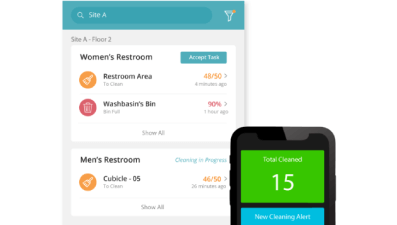
- Mobile and web apps for cleaning staff show prioritized cleaning tasks with location, reason and verification.
- APIs allow integration with building management systems (BMS), workforce management, and facility portals.
5. Mobile apps / staff tools
- Push notifications for refill/clean tasks.
- QR / NFC for cleaning verification and time-stamped service logs.
- Route optimization for janitorial staff (dynamic worklists based on priority).
6. Data & analytics
- Usage trends, peak hours, consumable forecasting, water and energy dashboards.
- Reports for health & safety audits, SLA verification and sustainability KPIs
Key Features of Modern Smart Toilet Management System
A modern Smart Toilet Management System brings together intelligent sensors, automation, real-time analytics, and workforce optimization tools. When selecting a solution, organizations should focus on feature richness, scalability, and ease of integration into existing facility operations.
Below are the essential features that outline what a best-in-class Smart Toilet Management System should provide:
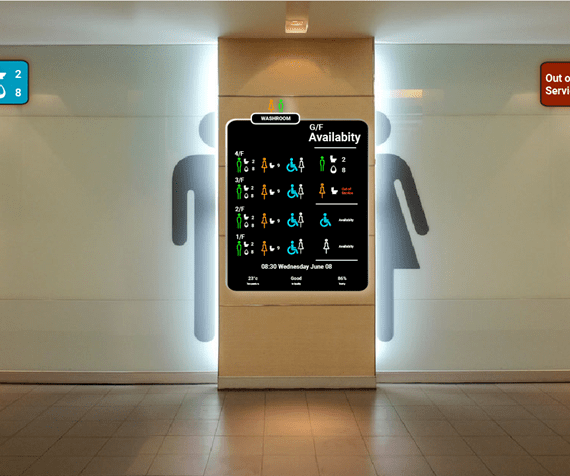
1. Real-Time Occupancy & Availability Display
Smart Toilet Management System enables users to instantly identify which stalls or washrooms are currently free.
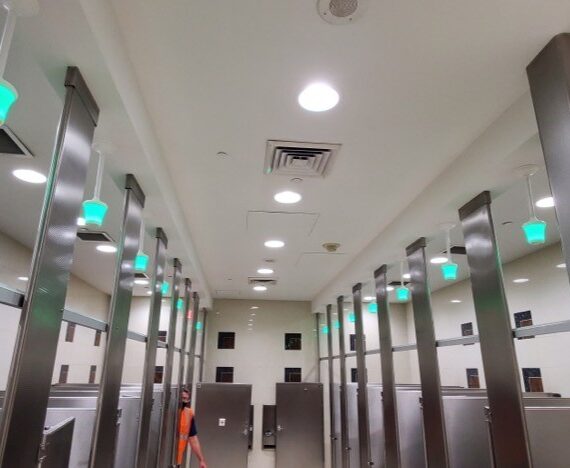
Digital signage at entrances and corridors, LED indicators above each cubicle, Mobile/wayfinding app integration
Reduces unnecessary queueing, improves user satisfaction, and enhances traffic flow during peak hours such as in malls, airports, and stadiums.
2. Consumables Monitoring & Automatic Reordering
IoT-enabled dispensers track usage of:
- Toilet paper
- Hand towels
- Soap
- Cleaning supplies
If levels fall below a preset threshold, alerts are dispatched to housekeeping or integrated procurement systems automatically.
3. Intelligent Cleaning Alerts & Digital Verification
Cleaning tasks are triggered based on live data:
- Usage count (e.g., after every 25–50 visitors)
- Spillage detection
- Overflow or clogged toilets
- Odor/intensity levels
4. Touch-Free Interfaces
Touchless technology minimizes contamination and improves hygiene safety:
- Automated flushing
- Contactless taps
- Sensor-based soap/ sanitizer dispensers
- Hands-free door mechanisms
5. Odor & Indoor Air Quality (IAQ) Monitoring
Sensors detect:
- VOCs (Volatile Organic Compounds)
- Humidity imbalance
- Ammonia/Hydrogen Sulfide levels
If air quality degrades, the system can auto-activate ventilation or alert facility managers.
6. Water Leak Detection & Usage Insights
Smart Toilet Management System continuously tracks water consumption at the fixture level:
- Toilet flushes
- Faucets
- Urinals
Early leak or broken fixture detection prevents water wastage and reduces utility bills substantially — essential for sustainability goals.
7. Mobile Tasking & Workforce Management
For cleaning staff and supervisors:
- App-based dynamic task lists
- Route optimization across large facilities
- Digital approvals and completion logs
- Escalation alerts if tasks are overdue
8. Predictive Analytics & Forecasting
Using AI/ML, the Smart Toilet Management System predicts:
- Consumable restock schedules
- Cleaning manpower requirements
- Seasonal and event-driven peak footfall
9. Integration with Enterprise Systems
Open APIs allow seamless communication with:
- Building Management Systems (BMS)
- CAFM / CMMS platforms
- Queue Management Systems (QMS)
- HR/Payroll attendance systems
- Central operational dashboards
10. Role-Based Dashboards & Multi-Site Visibility
Cloud dashboards allow consolidated control across branches:
- Admin view for entire portfolio
- Branch-level view for managers
- Technician/cleaner view for assigned zones
Historic trends and benchmarking help improve performance across locations.
Benefits of Smart Toilet Management System
Modern Smart Toilet Management System bring significant value to high-traffic facilities, creating sanitary, data-driven, and resource-optimized environments. Below is a detailed breakdown of how organizations and the public benefit from these intelligent solutions:
1. Superior Hygiene & User Safety
Smart Toilet Management System ensure a consistently clean and healthy restroom environment.
✔ Touchless fixtures minimize contact with contaminated surfaces
✔ Automated alerts reduce unattended spills or overflowing bins
✔ Odor and air-quality monitoring improves comfort
✔ Handwashing compliance analytics boost hygiene standards
2. Enhanced User Experience
Visitors often remember restroom quality as a reflection of overall facility prestige.
✔ Real-time stall availability eliminates long queues
✔ Guided navigation reduces frustration during peak hours
✔ Predictive polling ensures consumables are always stocked
3. Optimized Cleaning Operations
Smart cleaning moves from a fixed schedule to a demand-based maintenance model.
✔ Automated task triggers based on footfall
✔ Digital checklists with timestamps improve transparency
✔ Priority alerts ensure critical issues are resolved quickly
✔ Supervisors get real-time staff performance reports
4. Cost Savings on Resources & Utilities
Continuous monitoring prevents waste and identifies inefficiencies.
✔ Early leak detection prevents high water bills
✔ Usage forecasting improves procurement planning
✔ Reduced consumable wastage
5. Data-Driven Decision Making
Smart Toilet Management System turns restrooms into insight-rich spaces for facility management.
✔ Footfall analytics help forecast peak hours
✔ Performance benchmarking across multiple locations
✔ Reporting supports sustainability and compliance documentation
6. Improved Workforce Productivity
Digital workflows ensure staff are assigned only where needed.
✔ Automatically generated cleaning routes
✔ Elimination of unnecessary manual monitoring
✔ Staff empowerment through clear, measurable KPIs
7. Stronger Brand Image & Compliance
Clean and technologically advanced restrooms communicate excellence.
✔ Positive public perception in malls, airports, offices, and venues
✔ Compliance with health and environmental policies
✔ Supports certifications like WELL, LEED & sustainability goals
8. Rapid Issue Resolution
Smart Toilet Management System detect issues before they become user complaints.
✔ Blocked toilets & malfunction alerts
✔ Overflow warnings
✔ Urgent escalations to supervisors
9. Sustainability & Environmental Responsibility
Smart usage practices support national sustainability initiatives.
✔ Water usage optimization
✔ Reduced paper waste
✔ Carbon-emission reduction through predictive maintenance
10. Multi-Site Scalability & Centralized Monitoring
Managing large restroom networks has never been easier.
✔ Cloud dashboards for nationwide facilities
✔ Consistency in cleaning standards across all locations
✔ Centralized procurement reduces administrative burden
Typical Use Cases: Where Smart Toilet Management System Shine
Smart Toilet Management System are increasingly becoming standard in modern facilities where hygiene, efficiency, and customer experience are high priorities. Below are the key environments where Smart Toilet Management System technology makes a powerful impact:
Corporate Offices & Business Centers
- Ensures restrooms remain clean and presentable throughout busy workdays.
- Automatically adjusts cleaning based on usage during peak hours (break times, meeting transitions).
- Provides washroom satisfaction insights for facility management teams.
- Enhances employee health and workplace wellness initiatives.
Shopping Malls & Retail Centres
- Handles large visitor traffic by showing real-time restroom availability.
- Helps maintain a positive shopping experience — fewer complaints and queues.
- Improves operational cost efficiency by optimizing consumables like paper towels and tissues.
- Enables mall management to monitor performance of outsourced cleaning service providers.
Airports & Transportation Hubs
- Supports high-volume foot traffic with 24/7 demand.
- Occupancy-based cleaning triggers prevent unpleasant conditions during peak arrivals.
- Integrates easily with airport BMS and passenger flow analytics.
- Ensures toilets meet strict global hygiene standards — essential for tourism and reputation.
Hospitals & Healthcare Facilities
- Enhances infection control with touchless and real-time hygiene alerts.
- Supports compliance with strict sanitation protocols.
- Detects water leaks and overflow early to prevent hygiene risk and operational disruption.
- Data helps optimize staff efficiency without compromising patient safety.
Hotels & Hospitality Spaces
- Improves guest satisfaction by ensuring fresh, always-ready facilities.
- Smart feedback mechanisms allow quick rectification of issues.
- Integrates with housekeeping management software for efficiency.
- Supports premium branding for 4–5 star facilities showcasing smart technology.
Universities, Schools & Educational Institutions
- Helps maintain restrooms during busy class changeovers.
- Discourages vandalism with sensor-triggered alerts.
- Encourages student hygiene by ensuring well-stocked supplies.
- Tracks maintenance performance across multiple campus buildings.
Mosques & Religious Facilities
- Handles prayer-time surges with dynamic monitoring.
- Supports water resource optimization in ablution areas.
- Enables faster response to cleanliness issues before congregation volume increases.
Entertainment Venues (Stadiums, Cinemas, Arenas)
- Peak visitor flows during events create restroom congestion — solved using stall availability displays.
- Handles extremely high usage intelligently with automated replenishment alerts.
- Provides accurate post-event cleaning and maintenance tracking
Government Offices & Public Sector
- Enhances service to visiting citizens and ensures better facility upkeep.
- Smart automation reduces operational burden on contracted cleaning companies.
- Demonstrates public hygiene innovation and smart city transformation.
Labor Camps & Industrial Complexes
- Ensures fair usage and hygiene standards for workers even in remote facilities.
- Prevents water wastage and detects plumbing issues early.
- Protects health and reduces absenteeism through cleaner restroom environments.
Axle Systems – Your Trusted Smart Toilet Management System Supplier in Qatar
Axle Systems is a leading technology solutions provider headquartered in Doha, Qatar, specializing in smart facility management, security, queue management, and digital transformation solutions. With over a decade of expertise serving government, enterprise, retail, healthcare, and public infrastructure segments, we deliver the latest innovations that support Qatar’s Smart Nation vision and sustainability goals.
Our Smart Toilet Management System portfolio integrates cutting-edge IoT sensors, AI-driven analytics, cloud dashboards, and contactless technologies to ensure:
- Exceptional washroom hygiene
- Optimal facility operations
- Reduced carbon footprint and utility waste
- Improved visitor experience and service quality
Why Choose Axle Systems?
- Qatar-based engineering & support team
- Specialized in facility IoT and hygiene automation
- Custom integrations with BMS, CAFM & security systems
- 24/7 after-sales support and SLA-based maintenance
- Proven delivery for airports, malls, hospitals & government
- Consultation, design, installation, training & lifecycle services
We don’t just deploy smart washroom technology — we empower organizations to operate more efficiently with real-time insights, predictive maintenance, and measurable KPIs for continuous improvement.
Solutions & Services Offered by Axle Systems
We provide a complete end-to-end smart washroom transformation:
- Smart Toilet Management Solutions
- People Counting & Occupancy Systems
- Digital Signage for Washroom Display
- Water & Energy Monitoring
- Queue Management & Customer Experience Solutions
- CCTV & Security Systems
- Access Control & Workforce Management
Every project is designed with Qatar’s operational environment in mind — high-traffic facilities, multi-national users, and mission-critical service delivery.
Contact Axle Systems Qatar
We’d love to support your Smart Washroom transformation journey.
Location: Al Khalidiya Street, Najma, Doha, Qatar
Email: info@axlesys.com
Phone: +974 44682391 / 77443731
Website: www.axlesys.com
Frequently Asked Questions
Q1 — What is the difference between a smart restroom and a sensorized restroom?
A: A sensorized restroom has devices that collect data (e.g., occupancy counts or dispenser levels). A smart restroom goes further — it uses analytics, automated workflows, staff tasking, and integrations (BMS/CAFM) to act on that data, automating replenishment, cleaning and preventive actions.
Q2 — Will the system invade user privacy?
A: No. Reputable Smart Toilet Management System use non-visual sensors (infrared, ultrasonic, beam-break or load cells) that count and measure without capturing images or personally identifiable information. Data is typically aggregated and anonymized.
Q3 — How long do sensors’ batteries last?
A: Battery life depends on sensor type, reporting frequency and wireless technology. Properly configured devices can run from 12 months up to several years. Battery replacement planning is part of the maintenance program.
Q4 — Can the system work offline?
A: Yes. Edge controllers and gateways can cache events and run local rules. Once connectivity is restored, data syncs back to the cloud.
Q5 — How quickly will we see benefits?
A: You can expect operational improvements within weeks of pilot deployment (fewer emergency calls, faster response times). Full ROI typically becomes clear within 6–18 months depending on scale and labor costs.
Q6 — Is it easy to integrate with our current building systems?
A: Most modern Smart Toilet Management System provide APIs, OPC-UA connectors or BACnet interfaces for BMS and CAFM integration. Axle Systems assesses compatibility during the design stage.
Q7 — What maintenance is required?
A: Routine battery checks, firmware updates and physical inspections of dispensers. Software patches and analytics tuning are periodic activities.
Q8 — Are there options for environmentally friendly consumables?
A: Yes. The Smart Toilet Management System can be configured to support eco-friendly dispensers and products; analytics can also measure consumption and help choose cost-effective, green options.
Q9 — Can Smart Toilet Management System prevent vandalism or misuse?
A: Sensors can detect abnormal patterns (continuous water flow, repeated tampering) and trigger security alerts. Integration with security systems helps dispatch security teams when required.
Q10 — How much does an Smart Toilet Management System cost?
A: Costs vary by scale, feature set and integration needs. Pricing can be CapEx or subscription-based. Axle Systems will prepare a site-specific quotation and ROI analysis.
Final Thoughts: Why Smart Toilet Management System Are Essential
In today’s fast-paced, high-traffic, and health-conscious environment, maintaining restroom hygiene is no longer just a routine operational task — it has become a strategic priority for businesses, government facilities, and public spaces. Smart Toilet Management System represent a transformative approach that combines technology, data, and process optimization to deliver clean, efficient, and sustainable restroom facilities.
Proactive Hygiene and Safety
Traditional restroom maintenance relies on fixed schedules or user complaints, which often results in inconsistent cleanliness and delayed response to issues. With Smart Toilet Management System, facility managers gain real-time visibility into restroom conditions, from occupancy levels to consumable stock and air quality. This proactive approach minimizes health risks, improves user safety, and reduces the spread of germs, making it especially critical in healthcare facilities, airports, and public areas.
Data-Driven Operations
Modern Smart Toilet Management System solutions leverage IoT sensors, analytics, and cloud-based dashboards to provide actionable insights. Facility teams can track usage patterns, predict peak periods, forecast consumable needs, and optimize cleaning schedules. This data-driven approach not only improves operational efficiency but also reduces costs, including labor, water, and paper waste, while supporting sustainability goals.
Enhanced User Experience
Clean, fully stocked, and well-maintained restrooms contribute directly to the perception of a facility’s quality. Occupancy indicators, touch-free fixtures, and timely maintenance create a seamless user experience, reducing frustration and improving satisfaction in high-traffic venues like malls, airports, stadiums, and corporate offices.
Scalability and Flexibility
Smart Toilet Management System solutions are highly scalable — whether managing a single restroom, multiple floors in a building, or hundreds of washrooms across various sites. The flexibility to integrate with Building Management Systems (BMS), Computer-Aided Facility Management (CAFM), and other enterprise systems ensures that operations remain streamlined, regardless of facility size or complexity.
Environmental Responsibility
With increasing emphasis on sustainability, the Smart Toilet Management System helps facilities reduce water consumption, minimize waste, and optimize energy usage. Leak detection, predictive maintenance, and intelligent resource monitoring align with corporate social responsibility initiatives and environmental regulations, making Smart Toilet Management System not just an operational upgrade but also an investment in sustainable practices.
ROI and Strategic Value
Organizations implementing Smart Toilet Management System report tangible return on investment through labor savings, reduced consumable waste, water conservation, and fewer emergency maintenance calls. Beyond financial benefits, there is also intangible value: enhanced brand reputation, higher customer or employee satisfaction, and compliance with hygiene standards that could be critical during audits or regulatory inspections.