

Smart Building Access Control in Qatar
In an era where security and convenience must go hand in hand, Smart Building Access Control Systems are revolutionizing how we manage entry and security in commercial, residential, and government buildings. In Qatar, with its rapid infrastructure growth and focus on smart cities like Lusail and Msheireb Downtown Doha, the demand for advanced access control solutions has never been higher.
This blog will explore what Smart Building Access Control is, its benefits, features, and uses, the top brands available in Qatar such as Suprema, Matrix, and ZKT, and how Axle Systems provides expert access control solutions tailored for your needs.
Table Of Contents
- 1 What is Smart Building Access Control?
- 1.1 Benefits of Smart Building Access Control Systems
- 1.1.1 1. Enhanced Security
- 1.1.2 2. Real-Time Monitoring and Instant Alerts
- 1.1.3 3. Centralized Access Management
- 1.1.4 4. Audit Trail & Reporting
- 1.1.5 5. Seamless Integration with Building Systems
- 1.1.6 6. Touchless & Hygienic Entry
- 1.1.7 7. Energy Efficiency and Sustainability
- 1.1.8 8. Operational and Cost Efficiency
- 1.1.9 9. Scalability and Flexibility
- 1.1.10 10. Improved User Experience
- 1.1.11 11. Compliance and Regulatory Support
- 1.1.12 12. Customizable Access Schedules
- 1.1.13 13. Better Workforce Management
- 1.2 Features of Smart Building Access Control Systems
- 1.3 Uses of Smart Building Access Control Systems in Qatar
- 1.3.1 1. Corporate Offices and Commercial Towers
- 1.3.2 Applications:
- 1.3.3 2. Residential Buildings, Compounds & Gated Communities
- 1.3.4 Applications:
- 1.3.5 3. Government Buildings and Ministries
- 1.3.6 Applications:
- 1.3.7 4. Hospitals, Clinics, and Healthcare Facilities
- 1.3.8 Applications:
- 1.3.9 5. Universities, Colleges, and Schools
- 1.3.10 Applications:
- 1.3.11 6. Hotels and Resorts
- 1.3.12 Applications:
- 1.3.13 7. Shopping Malls and Retail Outlets
- 1.3.14 Applications:
- 1.3.15 8. Industrial Facilities and Warehouses
- 1.3.16 Applications:
- 1.3.17 9. Airports and Transportation Hubs
- 1.3.18 Applications:
- 1.3.19 10. Banks and Financial Institutions
- 1.3.20 Applications:
- 1.3.21 11. Construction Sites and Project Offices
- 1.3.22 Applications:
- 1.3.23 12. Data Centers and IT Hubs
- 1.3.24 Applications:
- 1.4 Axle Systems: Your Trusted Supplier for Smart Building Access Control in Qatar
- 1.5 Featured Brands: Suprema, Matrix, and ZKTeco
- 1.6 Why Choose Axle Systems for Smart Building Access Control in Qatar?
- 1.7 Common FAQs about Smart Building Access Control
- 1.8 Secure Your Building the Smart Way
- 1.1 Benefits of Smart Building Access Control Systems
What is Smart Building Access Control?
Smart Building Access Control refers to integrated systems that securely manage entry and exit points using automated, intelligent technologies. These systems go beyond simple key cards or mechanical locks — they utilize biometrics, mobile credentials, facial recognition, RFID, and cloud-based platforms to control access.
Smart Building Access Control systems allow administrators to grant or restrict access to users in real-time, monitor traffic, generate detailed reports, and integrate with building automation systems (BAS) for seamless operation.
From office towers and hospitals to residential complexes and government buildings, Smart Building Access Control is the cornerstone of modern physical security infrastructure in Qatar.
Benefits of Smart Building Access Control Systems
Smart Building Access Control Systems offer numerous tangible and strategic advantages that go beyond simply unlocking doors. These systems are an essential component of modern building security, operational efficiency, user experience, and compliance. Below are the key benefits, each elaborated to highlight their real-world impact:
1. Enhanced Security
Security is the primary function of any Smart Building Access Control system — and smart systems take it to the next level.
- Biometric authentication such as face, fingerprint, or palm vein recognition ensures that only verified individuals gain access to secure areas.
- Multi-factor authentication (MFA) adds another layer of protection by requiring a combination of credentials (e.g., PIN + fingerprint).
- Role-based access permissions prevent unauthorized entry to sensitive locations like data centers, HR departments, or executive floors.
- Smart access control significantly reduces risks of:
- Tailgating (unauthorized person entering with someone)
- Lost or stolen keys/cards
- Internal threats or employee misconduct
Example: In a hospital in Doha, biometric access control restricted unauthorized staff from entering the pharmacy, ensuring that only certified personnel handled medications.
2. Real-Time Monitoring and Instant Alerts
Modern Smart Building Access Control Systems are connected to a network, allowing administrators to monitor activity live and receive alerts for suspicious events.
- Live dashboards show which doors are open, closed, or held open.
- Instant alerts can be sent via email, SMS, or mobile app in case of:
- Forced entry attempts
- Doors left ajar
- Unusual access attempts at odd hours
- Security teams can respond quickly and reduce risk exposure.
Example: In an office tower in West Bay, real-time monitoring detected an unauthorized door access at 3:00 AM. An alert was triggered, allowing the security team to respond immediately.
3. Centralized Access Management
Gone are the days of managing keys or local card readers individually. With centralized access management:
- Administrators can grant, update, or revoke access to any user from a centralized interface.
- Useful for managing multi-location buildings such as branch offices or campuses.
- Changes made on the admin dashboard can sync across all sites instantly, even remotely via cloud platforms.
Example: A property management company in Lusail used one dashboard to manage access across 12 buildings, streamlining operations and reducing administrative load.
4. Audit Trail & Reporting
Every access event is logged with details such as:
- User ID
- Date and time
- Door accessed
- Authentication method used
These logs are invaluable for:
- Security incident investigations
- HR attendance disputes
- Regulatory audits and compliance
Reports can be generated daily, weekly, or monthly and exported for analysis or review.
Example: In a government ministry, audit trails were used to investigate and resolve a breach in a records room, identifying the individual who accessed the room without authorization.
5. Seamless Integration with Building Systems
Smart Building Access Control Systems can work in harmony with other digital systems for enhanced automation and safety.
- Integration with CCTV ensures visual verification of entry attempts.
- Fire alarm system integration allows doors to automatically unlock during emergencies.
- HVAC and lighting can be automated to switch on/off based on occupancy detected via access control.
Example: In a smart residential complex, lights and air conditioning in apartments turn on automatically when the resident enters via biometric access.
6. Touchless & Hygienic Entry
In a post-COVID world, hygiene is a priority. Smart access systems offer:
- Facial recognition or mobile unlock to avoid touching surfaces
- QR code access for guests or delivery agents
- Better hygiene in shared environments like hospitals, schools, or commercial buildings
Example: A clinic in Al Wakrah implemented face recognition access for staff and patients, reducing contact points and improving health safety protocols.
7. Energy Efficiency and Sustainability
Smart Building Access Control Systems contributes to sustainability when integrated with building energy management systems:
- Lighting systems can be set to switch on/off based on access events.
- Air conditioning units can be turned off in unused areas to save energy.
- Systems can track room occupancy and adjust environmental settings accordingly.
Example: An IT firm in The Pearl integrated access control with lighting automation, reducing electricity bills by 22% in the first quarter.
8. Operational and Cost Efficiency
Over time, a Smart Building Access Control Systems proves to be a cost-effective investment:
- Eliminates costs related to lost or duplicated keys.
- Reduces the need for physical security guards.
- Cuts down manual admin tasks related to access management.
- Simplifies employee onboarding and offboarding processes.
Example: A business center in Doha saved thousands of riyals annually by automating access control and phasing out manual badge tracking.
9. Scalability and Flexibility
One of the key strengths of modern smart systems is scalability:
- Start with 2–3 doors and expand to hundreds as your organization grows.
- Add new users, new departments, and new access zones without major system overhauls.
- Support for hybrid authentication methods (card + mobile + face + pin) allows flexibility for different use cases and user preferences.
Example: A university in Qatar began with 5 main gates and later scaled to include 47 classrooms, labs, and administrative offices.
10. Improved User Experience
Smart Building Access Control Systems isn’t just about security — it’s also about convenience.
- Users can unlock doors with a smartphone, wearable device, or face scan without needing a badge or key.
- Visitor check-ins become frictionless with QR codes or pre-issued mobile passes.
- Multi-language support makes the system user-friendly for Qatar’s diverse workforce.
Example: An upscale hotel in Doha implemented mobile room access for guests, eliminating the need for plastic keycards and enhancing guest satisfaction.
11. Compliance and Regulatory Support
Qatar has strict data privacy and building safety standards. Smart access control helps ensure compliance with:
- Qatar Civil Defence regulations
- MOI requirements for building security
- Occupational safety standards
- GDPR-equivalent data protection frameworks
Logs and reports can be presented during regulatory audits or inspections, reducing legal risks.
Example: A multinational corporation met Qatar’s compliance requirements for their West Bay headquarters by implementing Suprema access control with full audit capability.
12. Customizable Access Schedules
You can define custom schedules for:
- Weekdays vs weekends
- Working hours vs off-hours
- Temporary access for contractors or visitors
This allows organizations to maintain tight control without manual intervention.
Example: A logistics warehouse in the Industrial Area created separate access schedules for day-shift workers and night-shift supervisors, ensuring no crossovers or unauthorized overlap.
13. Better Workforce Management
Smart Building Access Control Systems double as time and attendance solutions:
- Automatically log employee check-in and check-out times.
- Sync with HR or payroll software for accurate compensation.
- Avoid time fraud like buddy punching.
Example: A telecom company in Qatar integrated their Matrix access control system with their HR software to eliminate manual timesheets.
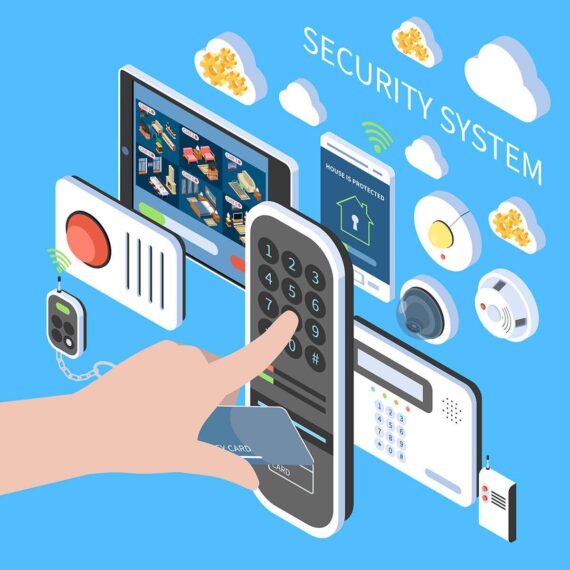
Features of Smart Building Access Control Systems
Modern Smart Building Access Control Systems are packed with features designed to maximize security, convenience, and efficiency:
- Multiple Authentication Methods: Support for a variety of credentials including biometrics (fingerprint, facial recognition, iris), RFID cards, mobile credentials (NFC, Bluetooth), and PIN codes.
- Web-Based/Cloud-Based Management: Centralized platforms accessible via web browsers or mobile apps for remote configuration, monitoring, and reporting.
- Real-time Monitoring and Alerts: Instant notifications for unauthorized access attempts, door forced open alarms, or other security events.
- Time-Based Access Rules: Ability to define specific schedules for access, restricting entry to certain times of the day or week.
- Area-Based Access Permissions: Granting or restricting access to specific zones or rooms within a facility.
- Integration Capabilities: Seamless integration with other security systems (CCTV, alarm systems), building management systems (BMS), human resources (HR) software, and visitor management systems (VMS).
- Visitor Management Module: Often includes features for pre-registering guests, issuing temporary access credentials (e.g., QR codes, temporary cards), and tracking visitor movements.
- Anti-Passback: Prevents a card from being used to enter an area again before it has been used to exit.
- Roll Call/Muster Reporting: In emergencies, the system can generate a list of individuals who have entered or exited specific zones, aiding in evacuation and accountability.
- Scalable Architecture: Designed to easily expand and adapt to growing security needs, from a single door to a multi-building campus.
- Robust Encryption: Protecting data from unauthorized access and potential breaches.
- Mobile App Control: Conveniently manage access and view real-time data from your smartphone.
- Audit Trail and Reporting: Comprehensive logs of all access events for forensic analysis and compliance.
- Emergency Override: Ability to remotely unlock or lock all doors in an emergency.
Uses of Smart Building Access Control Systems in Qatar
Smart Building Access Control Systems are essential in a wide range of sectors across Qatar, a country known for its ambitious development initiatives like Lusail Smart City, Msheireb Downtown Doha, and the Qatar National Vision 2030. Whether you’re operating a commercial building, managing a hospital, or securing a high-security government facility, these systems provide customized access control, efficient operations, and regulatory compliance.
Here’s how different industries and facilities in Qatar use Smart Building Access Control Systems:
1. Corporate Offices and Commercial Towers
Modern commercial buildings in Doha, Lusail, and West Bay require robust Smart Building Access Control Systems to manage large workforces, visitors, and confidential zones.
Applications:
- Restrict access to executive offices, finance departments, and server rooms
- Track employee entry/exit for payroll and time management
- Assign access rights based on hierarchy, project, or department
- Enable seamless entry via mobile credentials or facial recognition
- Integrate with elevators to control floor-wise access
Example: A commercial tower in West Bay implemented a Suprema facial recognition system integrated with elevator controls, ensuring only authorized users could reach specific floors.
2. Residential Buildings, Compounds & Gated Communities
With Qatar’s growing population of expatriates and local families, the demand for secure, high-tech residential spaces is increasing. Access control systems offer peace of mind to residents and management alike.
Applications:
- Enable facial recognition or mobile app access for residents
- Issue temporary QR codes for guest entry
- Integrate with intercom systems for smart visitor management
- Secure common areas like gyms, pools, and parking lots
- Use ANPR (Automatic Number Plate Recognition) for parking access
Example: A residential compound in Al Waab uses ZKTeco’s facial terminals and ANPR for hands-free, touchless access for residents and visitors.
3. Government Buildings and Ministries
Government entities in Qatar prioritize security, accountability, and compliance. Smart Building Access Control Systems ensures secure access to public offices, judicial departments, and administrative hubs.
Applications:
- Multi-factor authentication (face + card) for secure areas
- Visitor logs with real-time monitoring and time-limited access
- Integration with Qatar ID or national databases
- Centralized dashboards for multi-site governance
Example: A ministry in Doha deployed Matrix COSEC multi-door controllers across all branches, with one centralized admin interface.
4. Hospitals, Clinics, and Healthcare Facilities
Healthcare facilities face a dual challenge: maintaining security and ensuring ease of access for staff and patients. Smart Building Access Control Systems helps hospitals meet both goals.
Applications:
- Restrict access to surgery rooms, pharmacies, and labs
- Time-based access for staff on different shifts
- Maintain records of who accessed medical storage or records
- Touchless access to reduce contamination risks
- Secure ambulance bays and emergency entry points
Example: A private hospital in Al Wakrah implemented Suprema BioLite fingerprint terminals to allow only authorized personnel into ICU and storage rooms.
5. Universities, Colleges, and Schools
Educational institutions in Qatar require layered access control strategies to protect students, staff, and assets while supporting a welcoming learning environment.
Applications:
- Secure access to libraries, labs, staff rooms, and exam centers
- Automate student attendance via face recognition
- Manage visitor access for parents and vendors
- Limit access to hostels or dormitories during specific hours
Example: A technical college in Education City uses ZKTeco face readers to log student attendance and control access to high-tech labs.
6. Hotels and Resorts
The hospitality sector thrives on delivering personalized, seamless, and secure guest experiences. Smart Building Access Control Systems helps automate operations and elevate customer satisfaction.
Applications:
- Room access via mobile app, smart card, or NFC device
- Role-based access for housekeeping, F&B, and concierge
- Integration with PMS (Property Management Systems)
- Access control for spa, pool, gym, and conference rooms
- Audit trail for guest and staff movement
Example: A luxury hotel in The Pearl adopted Matrix RFID-enabled door locks integrated with their PMS, enabling instant check-in and key issuance.
7. Shopping Malls and Retail Outlets
Malls and large retail stores must manage both public and restricted spaces efficiently while maintaining a welcoming atmosphere for shoppers.
Applications:
- Secure access to staff-only areas like cash counters, back offices, and warehouses
- Time-based access for delivery and maintenance crews
- Touchless entry for mall management zones
- Visitor analytics and entry logs during emergencies
Example: A major mall in Doha installed Suprema access terminals for back-office access and integrated them with CCTV for audit trail compliance.
8. Industrial Facilities and Warehouses
Industrial environments like manufacturing plants and distribution centers in Qatar require rugged, reliable access control systems.
Applications:
- Control access to high-risk zones like machinery areas or hazardous storage
- Manage shift-based worker access schedules
- Prevent unauthorized entry by subcontractors or delivery personnel
- Ensure compliance with health and safety protocols
Example: A warehouse in Qatar Free Zones deployed Matrix access control to secure its high-value storage areas and integrate with its time-attendance system.
9. Airports and Transportation Hubs
Airports like Hamad International Airport (HIA) operate on strict timelines and heightened security. Smart Building Access Control Systems ensure smooth movement while safeguarding restricted areas.
Applications:
- Control access to airside/landside terminals, lounges, and baggage areas
- Use biometric ID verification for fast-track employee screening
- Log detailed access history for audit and regulatory compliance
- Integration with boarding systems for automated passenger flow
Example: In a partnership with a global airline, a Qatar airport facility deployed Suprema Face Station terminals for biometric access to airside security zones.
10. Banks and Financial Institutions
Banking institutions must protect data, vaults, and sensitive customer information. Smart Building Access Control Systems ensure that only verified personnel can access designated zones.
Applications:
- Biometric Smart Building Access Control Systems for vaults, data centers, and executive rooms
- Visitor registration and escort-based access permissions
- Audit logs to support compliance and security audits
- Panic-button integrations for real-time lockdowns
Example: A commercial bank’s headquarters in Doha used ZKTeco palm vein readers to secure vault rooms and cashier bays.
11. Construction Sites and Project Offices
For temporary sites like construction projects, portable and flexible Smart Building Access Control Systems is needed to manage large, dynamic workforces and subcontractors.
Applications:
- Biometric or card-based access for workers and engineers
- Daily entry and exit tracking for payroll
- Restrict access to hazardous areas
- Turnstile integration for entry point control
Example: A Lusail construction site deployed Matrix portable fingerprint terminals mounted on a container office to manage daily laborer attendance.
12. Data Centers and IT Hubs
With rising digital infrastructure in Qatar, data centers require ultra-secure 5542 5723 to protect sensitive equipment and data.
Applications:
- Multi-layered Smart Building Access Control Systems (room → cage → rack level)
- Real-time access logs for compliance (ISO, GDPR, etc.)
- Biometric and PIN-based entry for server rooms
- 24/7 monitoring with tamper alerts
Example: A private telecom data center in Qatar used Suprema fingerprint systems with door status sensors to prevent unauthorized rack access.
 Axle Systems: Your Trusted Supplier for Smart Building Access Control in Qatar
Axle Systems is proud to be a leading provider of comprehensive and state-of-the-art Smart Building Access Control Systems in Qatar. With years of experience and a deep understanding of the local market’s unique security requirements, we are committed to delivering cutting-edge technology and unparalleled service. Our solutions are designed to meet the diverse needs of commercial buildings, offices, residential towers, government facilities, healthcare institutions, and more.
We partner with globally recognized brands that are synonymous with innovation, reliability, and robust security. These partnerships ensure that our clients in Qatar receive the highest quality access control solutions available in the market.
Featured Brands: Suprema, Matrix, and ZKTeco
Axle Systems is an authorized supplier and integrator of leading global brands in Smart Building Access Control Systems, including:
Suprema:
A global leader in biometrics and security, Suprema offers a wide range of advanced biometric Smart Building Access Control Systems, including fingerprint, facial recognition, and iris scanners. Their BioStar platform provides a powerful and scalable integrated security solution, widely praised for its accuracy, speed, and reliability. Suprema’s commitment to cutting-edge technology ensures a secure and convenient experience, ideal for high-security environments and large-scale deployments.
Matrix Comsec:
Matrix is a prominent name in enterprise-grade security and telecom solutions. Their Smart Building Access Control Systems are known for their robust features, including advanced biometric solutions, smart card readers, and comprehensive software platforms for managing access, time-attendance, and visitor entry. Matrix solutions are designed for seamless integration with other security systems, offering a unified security ecosystem for businesses of all sizes.
ZKTeco:
ZKTeco is a globally renowned provider of biometric verification technology and security solutions. They offer a comprehensive portfolio of access control products, including fingerprint and facial recognition terminals, RFID readers, and standalone access controllers. ZKTeco systems are highly versatile, cost-effective, and user-friendly, making them a popular choice for various applications, from small offices to large enterprises. Their focus on innovative biometrics provides a secure and convenient access experience.
By offering products from these esteemed manufacturers, Axle Systems ensures that our clients have access to a broad spectrum of choices, allowing us to customize solutions that perfectly align with their specific security objectives, operational needs, and budget.
Why Choose Axle Systems for Smart Building Access Control in Qatar?
Choosing the right partner for your Smart Building Access Control Systems is as crucial as selecting the right technology. Axle Systems stands out in the Qatar market due to:
Expert Consultation: Our team of highly trained and experienced security professionals conducts thorough site assessments to understand your specific needs, challenges, and existing infrastructure. We provide expert consultation to recommend the most suitable Smart Building Access Control Systems tailored to your unique requirements.
Customized System Design: We believe that one size does not fit all. Our approach is to design customized Smart Building Access Control Systems that precisely meet your security objectives, operational workflows, and future scalability needs.
Professional Installation and Integration: Our certified technicians ensure seamless and professional installation of all hardware and software components. We specialize in integrating the Smart Building Access Control Systems with your existing security infrastructure, including CCTV, alarm systems, and building management systems, for a truly unified security solution.
Comprehensive Support and Maintenance: Axle Systems offers extensive post-installation support, including preventive maintenance, timely repairs, and dedicated technical assistance. Our commitment extends to ensuring the long-term reliability and optimal performance of your Smart Building Access Control Systems.
Deep Local Market Knowledge: With significant experience in Qatar, we understand the local regulations, infrastructure, and specific security challenges faced by businesses and institutions in the region. This local expertise allows us to deliver solutions that are not only technologically advanced but also culturally and regulatory compliant.
ISO 9001-2008 Certified: Axle Systems is an ISO 9001-2008 certified company, reflecting our commitment to quality management systems and ensuring that we consistently deliver products and services that meet customer and regulatory requirements.
End-to-End Solutions: From initial consultation and design to installation, integration, and ongoing support, Axle Systems provides a complete end-to-end service for all your Smart Building Access Control Systems needs.
Contact Axle Systems Today!
Ready to enhance the security, efficiency, and convenience of your building with state-of-the-art Smart Building Access Control Systems? Contact Axle Systems today for a free consultation and quote. Our team is ready to assist you in designing and implementing the perfect solution for your premises in Qatar.
Phone: +974 4468 2391
Email: info@axlesys.com
Website: www.axlesys.com
Address: P.O. Box 200081, Al Khalidiya Street, Najma, Doha, Qatar.
We look forward to partnering with you to unlock the future of secure and intelligent buildings in Qatar.

Common FAQs about Smart Building Access Control
Here are some frequently asked questions about Smart Building Access Control Systems:
Q1: What is the primary difference between traditional access control and Smart Building Access Control Systems?
A1: The primary difference lies in technology and management. Traditional Smart Building Access Control Systems often relies on physical keys, mechanical locks, or standalone card readers with limited logging. Smart Building Access Control Systems, on the other hand, uses digital credentials (biometrics, mobile, smart cards), is networked (often cloud-based), offers remote management, real-time monitoring, detailed audit trails, and integrates with other smart building systems. This provides greater flexibility, enhanced security, and improved operational efficiency.
Q2: How secure are biometric Smart Building Access Control Systems? Can they be bypassed?
A2: Biometric Smart Building Access Control Systems are considered highly secure because they rely on unique biological characteristics that are extremely difficult to replicate or forge. While no system is 100% foolproof, modern biometric systems employ advanced algorithms and anti-spoofing technologies (e.g., live detection for facial recognition, liveness detection for fingerprints) to prevent fraudulent access attempts. They are generally much more secure than traditional methods like keys or PINs, which can be easily lost, stolen, or shared.
Q3: Can a Smart Building Access Control Systems integrate with my existing CCTV cameras?
A3: Absolutely. Most modern Smart Building Access Control Systems are designed for seamless integration with existing CCTV surveillance systems. This integration allows you to link access events with video footage, enabling visual verification of who entered or exited an area at a specific time. It significantly enhances incident investigation capabilities and overall security monitoring.
Q4: What happens if there’s a power outage? Will the doors remain locked or unlock?
A4: The behavior of the doors during a power outage depends on whether the system is configured for “fail-secure” or “fail-safe.”
* Fail-Secure: In this configuration, doors remain locked during a power outage. This is typically used for high-security areas where maintaining security is paramount, even at the cost of immediate exit. Occupants within the secured area can still exit using emergency override mechanisms.
* Fail-Safe: In this configuration, doors automatically unlock during a power outage. This is commonly used for emergency exits or areas where immediate evacuation is the priority for life safety.
The choice between fail-secure and fail-safe depends on the specific security and safety requirements of the facility and local regulations (e.g., fire codes).
Q5: How does mobile access work, and is it truly secure?
A5: Mobile access typically works through technologies like Bluetooth Low Energy (BLE) or Near Field Communication (NFC). Users install a dedicated app on their smartphone, which stores their digital credentials. When the phone is presented to a compatible reader, it communicates wirelessly to authenticate the user. Mobile access is considered highly secure due to:
* Encryption: Data transmitted between the phone and reader is encrypted.
* Two-factor authentication: Often, the phone itself is protected by a PIN, fingerprint, or facial recognition, adding an extra layer of security.
* Remote deactivation: If a phone is lost or stolen, its access credentials can be immediately revoked remotely.
Q6: Is smart access control suitable for small businesses or only large enterprises?
A6: Smart access control is highly scalable and beneficial for businesses of all sizes. While large enterprises might implement complex multi-site, multi-credential systems, smaller businesses can benefit from standalone smart locks or cloud-based systems for a few doors. The advantages of enhanced security, remote management, and convenience apply universally, making it a valuable investment for any organization looking to modernize its security infrastructure.
Q7: How can smart access control help with visitor management?
A7: Many smart access control systems include or integrate with dedicated visitor management systems (VMS). These systems streamline visitor processes by allowing:
* Pre-registration: Hosts can pre-register visitors, sending them digital invites or QR codes.
* Automated check-in: Visitors can check themselves in using kiosks, scanning their QR code or ID.
* Temporary credentials: The system can issue temporary access cards or mobile credentials with time-limited and area-specific access.
* Visitor tracking: Maintain a digital log of all visitors, their entry/exit times, and who they visited, crucial for security and compliance.
Q8: What is the typical lifespan of a Smart Building Access Control Systems, and what maintenance is required?
A8: The lifespan of a well-maintained Smart Building Access Control Systems can be 10-15 years or more, with software updates and occasional hardware upgrades. Regular maintenance typically includes:
* Software updates: Keeping the system software and firmware up-to-date for security patches and new features.
* Hardware checks: Inspecting readers, controllers, and locking mechanisms for wear and tear.
* Credential management: Regularly reviewing and auditing access permissions.
* Battery checks: For wireless components, ensuring batteries are replaced as needed.
* Cleaning: Especially for biometric readers, keeping surfaces clean for optimal performance.
Professional maintenance contracts with your supplier, like Axle Systems, can ensure optimal system performance and longevity.
Q9: Can Smart Building Access Control Systems help with fire safety and emergency response?
A9: Yes, they play a crucial role. In an emergency such as a fire, Smart Building Access Control Systems can be integrated with fire alarm systems to automatically unlock designated emergency exits, facilitating rapid evacuation. They can also initiate building-wide lockdowns in case of an active threat, securing the premises and alerting authorities. Furthermore, the audit trails can assist emergency personnel in determining who is inside the building and where they might be, aiding in rescue efforts.
Q10: What are the primary cost factors for implementing a Smart Building Access Control Systems?
A10: The cost of a Smart Building Access Control Systems depends on several factors:
* Scale: The number of doors or access points to be secured.
* Technology: The type of authentication methods chosen (biometrics generally cost more than card readers).
* Hardware: Cost of readers, controllers, electric locks, wiring, and servers (if on-premise).
* Software: Licensing fees for management software, and potentially cloud subscription fees.
* Installation complexity: The difficulty of wiring, integration with existing systems, and physical setup.
* Additional features: Such as visitor management, time attendance integration, or advanced reporting.
While the initial investment might be higher than traditional systems, the long-term benefits in security, efficiency, and reduced operational costs often provide a significant return on investment. It’s best to get a customized quote from a trusted provider like Axle Systems.
Secure Your Building the Smart Way
Whether you’re developing a new smart building or upgrading an existing one, Smart Building Access Control is essential for security, compliance, and user experience. With Axle Systems as your technology partner, you gain access to cutting-edge solutions, top global brands, and a team committed to your safety and success.
Contact us today for a free consultation and system demo.
