

360 TNA Shift Management for Optimizing Your Workforce
In the fast-paced world of modern business, managing employee shifts efficiently isn’t just a matter of convenience — it’s a strategic imperative. Whether you’re running a 24/7 operation, coordinating rotating rosters, or balancing seasonal demand, you need a robust Shift Management system that delivers clarity, flexibility, and control. That’s where 360 TNA Shift Management, supplied by Axle Systems in Qatar, comes in.
What Is Shift Management?
Shift Management refers to the process and tools used for planning, scheduling, tracking, and optimizing employees’ work shifts. Rather than relying on manual spreadsheets, paper rosters, or ad‑hoc communication, a modern shift management system centralizes and automates these tasks, giving both managers and employees transparency, flexibility, and accuracy.
At its core, shift management is about aligning workforce resources with business demand intelligently. Good shift management ensures that you have the right people at the right place and time, avoids overstaffing or understaffing, respects labor laws, and supports employee well‑being.
Why Shift Management Matters — The Strategic Role
Effective shift management is more than just filling time slots. Here’s why it matters strategically:
- Operational Efficiency & Resource Optimization
By intelligently assigning shifts based on demand forecasts and employee availability, businesses can maximize utilization and productivity. - Cost Control
Poorly planned shifts can lead to overstaffing, overtime costs, or understaffing that hampers service quality. Shift management helps reduce unnecessary labor expenses. - Improved Employee Satisfaction & Retention
When employees can view their schedule, request changes, or swap shifts, they feel more in control — boosting morale, reducing turnover, and improving work-life balance. - Compliance & Audit Readiness
Shift management software can enforce rules about working hours, breaks, overtime, and rest, helping you comply with labor laws and internal policies. - Scalability & Flexibility
As your business grows — more locations, more employees, more complex shift patterns — Shift Management systems scale with you, allowing more sophisticated scheduling without more manual labor. - Strategic Decision-Making
With reporting and analytics, managers can spot trends (e.g., absenteeism, peak demand times, cost drivers) and make data-driven decisions to improve operations. - Improved Communication
Real-time notifications, alerts, and transparency reduce miscommunications about shift changes, swaps, or assignments.

Key Benefits of 360 TNA Shift Management
Implementing 360 TNA Shift Management delivers a wide range of benefits that span operational efficiency, financial control, employee satisfaction, and compliance. Let’s dive deeper into each benefit and explore real-world examples of how businesses can leverage these advantages.
1. Automation of Scheduling
Manual scheduling is time-consuming, error-prone, and difficult to scale. 360 TNA Shift Management automates the creation of employee schedules by considering availability, labor laws, and business demand.
Practical impact:
- Automatically generates rosters for multiple locations, saving hours of manual work weekly.
- Flags overlapping shifts, ensures fair distribution of weekend or night shifts, and prevents under- or overstaffing.
- For example, a hospital using 360 TNA can schedule dozens of nurses across different wards, ensuring that each shift is covered without conflicts, while respecting rest periods.
2. Real-Time Visibility & Updates
360 TNA provides managers and employees with up-to-the-minute visibility of schedules, shift swaps, and pending approvals.
Practical impact:
- Managers can immediately identify staffing gaps or overstaffed shifts.
- Employees receive real-time notifications of changes, reducing confusion and missed shifts.
- Retail chains can respond dynamically to sudden increases in footfall by quickly reassigning staff, maintaining service quality without overstaffing costs.
3. Employee Self-Service
Empowering employees to manage their own schedules increases satisfaction and reduces administrative burden on managers.
Practical impact:
- Employees can request time-off, swap shifts, or volunteer for extra hours through a mobile app or portal.
- Reduces absenteeism as staff can plan personal commitments in advance while ensuring coverage.
- Example: A call center employee can pick up an unassigned shift on a busy day, improving overall workforce flexibility and coverage.
4. Time & Attendance Integration
Shift Management combined with time-tracking ensures accurate labor reporting and seamless payroll integration.
Practical impact:
- Prevents discrepancies between scheduled and actual hours worked.
- Automatically calculates overtime, late arrivals, or early departures.
- Manufacturing plants can integrate clock-in systems with 360 TNA to monitor productivity, track absenteeism, and optimize labor costs.
5. Compliance & Rule Enforcement
360 TNA ensures organizations adhere to labor laws, union agreements, and internal policies.
Practical impact:
- Automatically enforces maximum work hours, minimum rest periods, and mandatory breaks.
- Maintains audit trails for legal compliance and reporting.
- Example: A hospital can comply with local labor regulations regarding nurse shift durations, reducing risk of violations and penalties.
6. Reporting & Analytics
Data-driven insights from Shift Management allow organizations to optimize workforce allocation and identify improvement areas.
Practical impact:
- Managers receive detailed reports on absenteeism trends, overtime costs, and shift fulfillment.
- Enables forecasting for peak demand periods and better staffing decisions.
- Retail and hospitality businesses can analyze historical sales vs. staffing data to ensure optimal employee coverage during holidays or weekends.
7. Scalability & Flexibility
360 TNA adapts to the size and complexity of any organization, from small offices to multi-location enterprises.
Practical impact:
- Supports multiple locations, rotating shifts, on-call staff, and complex scheduling patterns.
- Growing businesses can expand operations without needing to increase administrative staff.
8. Improved Communication & Transparency
Centralized scheduling and notifications reduce miscommunication between managers and employees.
Practical impact:
- Eliminates reliance on informal channels like emails, texts, or phone calls.
- Historical change logs allow managers to track who made changes and why.
9. Better Workforce Optimization
By aligning staffing levels with business demand, 360 TNA minimizes inefficiencies and enhances productivity.
Practical impact:
- Avoids overstaffing during slow periods and understaffing during peak hours.
- Optimizes costs while maintaining service quality.
10. Enhanced Employee Engagement
A transparent and flexible Shift Management system improves employee satisfaction and engagement.
Practical impact:
- Employees feel valued when they have visibility and control over their schedules.
- Reduces turnover by creating a fair, predictable, and flexible work environment.
- Example: In a hospital or retail setting, employees can plan personal life commitments around their shifts, leading to higher morale and retention.
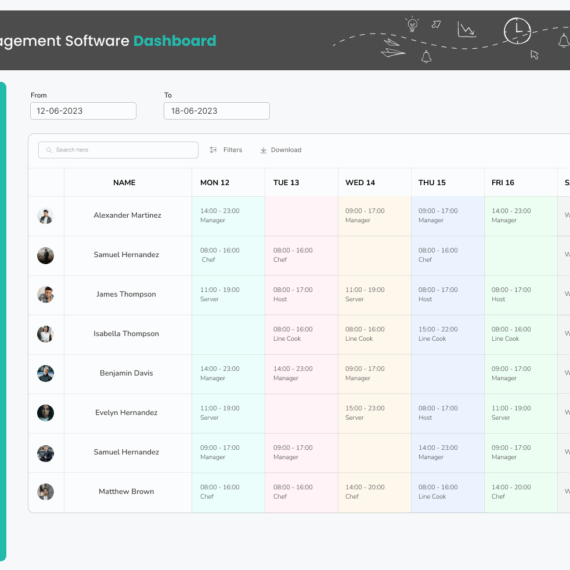
Key Features of 360 TNA Shift Management
360 TNA Shift Management is designed to provide a complete solution for workforce scheduling and optimization. Its robust features cater to businesses across industries — from healthcare and retail to manufacturing and corporate offices. Below, we explore the features in depth and explain how each adds value to organizations in Qatar and beyond.
1. Drag-and-Drop Scheduling Interface
A visual, intuitive scheduling interface simplifies the process of creating and adjusting shifts.
Detailed Insights:
- Managers can assign shifts by dragging employee names into slots, making schedule creation faster and reducing errors.
- Color-coded shifts help identify different teams, roles, or shift types at a glance.
- Conflict detection highlights overlapping assignments or insufficient coverage.
2. Shift Templates & Pre-Built Patterns
Reusing common shift patterns reduces repetitive work and ensures consistency.
Detailed Insights:
- Morning, evening, night, rotating, or on-call templates can be saved and applied across weeks or months.
- Businesses can create customized templates for peak periods, holidays, or special events.
3. Availability & Shift Swap Management
Employees can provide availability, and the system supports controlled shift swaps.
Detailed Insights:
- Staff can indicate preferred working days or times, which helps managers optimize schedules according to employee availability.
- Swap requests go through a predefined approval workflow to prevent conflicts or understaffing.
4. Mobile Access & Notifications
Accessing schedules on mobile devices ensures employees and managers stay informed in real-time.
Detailed Insights:
- Employees can view schedules, request changes, and receive notifications about upcoming shifts.
- Managers can approve requests, reassign staff, and update shifts from anywhere.
- Push notifications alert staff about last-minute changes, reducing missed shifts.
5. Time-Off & Leave Management
Integrated leave management streamlines approvals and keeps schedules accurate.
Detailed Insights:
- Employees can request vacation, sick leave, or other absences through the system.
- Managers can approve requests and automatically adjust shifts, avoiding scheduling conflicts.
- The system keeps track of leave balances, ensuring compliance with company policies.
6. Overtime & Break Rule Enforcement
360 TNA ensures compliance with labor laws and company policies by enforcing working hour limits, breaks, and overtime rules.
Detailed Insights:
- Prevents unauthorized overtime by flagging shifts that exceed limits.
- Automatically schedules mandatory rest breaks between consecutive shifts.
- Reduces the risk of fatigue and ensures employee safety.
7. Payroll & HR Integration
Seamless integration with payroll and HR systems streamlines operations and reduces errors.
Detailed Insights:
- Clock-in/out data flows directly into payroll systems, eliminating manual entry.
- Employee data from HR systems (roles, qualifications, and availability) stays updated automatically.
- Reduces errors in wage calculation, overtime, and attendance reporting.
8. Forecasting & Demand Planning
Predictive analytics help plan staffing based on historical trends and anticipated workloads.
Detailed Insights:
- The system analyzes past attendance, sales, or production data to predict staffing needs.
- Supports scenario planning for holidays, promotions, or unexpected surges.
- Managers can proactively adjust schedules to prevent under- or overstaffing.
9. Reporting, Analytics & Dashboards
Powerful reporting tools provide insight into workforce performance, compliance, and efficiency.
Detailed Insights:
- Dashboards display real-time metrics such as shift fulfillment, absenteeism, labor costs, and overtime.
- Reports can be exported or scheduled for automated delivery to management.
- Historical data supports strategic workforce planning and optimization.
10. Scenario Planning & What-If Analysis
Managers can simulate different scheduling scenarios before committing to changes.
Detailed Insights:
- Test the impact of adding or removing staff during peak periods.
- Evaluate the effects of unexpected absences or shift swaps.
- Reduces risks associated with last-minute staffing changes.

Use Cases: Where 360 TNA Shift Management Shines
360 TNA Shift Management is versatile, supporting businesses across multiple industries and organizational structures. Its advanced features enable organizations to optimize staffing, improve compliance, and increase employee satisfaction. Below, we explore the key industries and real-world scenarios where 360 TNA delivers tangible value.
1. Healthcare & Hospitals: Shift Management
Healthcare facilities operate 24/7, requiring precise workforce management to maintain patient care standards.
Challenges in healthcare:
- Rotating shifts for nurses, doctors, and support staff.
- On-call schedules for emergency departments.
- Compliance with labor regulations regarding rest and maximum working hours.
How 360 TNA helps:
- Automatically generates multi-shift schedules for different departments.
- Ensures compliance with rest periods and overtime limits.
- Enables shift swapping for staff to accommodate emergencies without disrupting patient care.
Benefits realized:
- Reduced scheduling errors by 90%.
- Improved staff satisfaction due to transparent shift assignments.
- Compliance with local labor laws and healthcare standards.
2. Retail & Hospitality: Shift Management
Retail stores, restaurants, and hotels experience highly variable demand, especially during weekends, holidays, and special events.
Challenges in retail & hospitality:
- Managing peak periods without overstaffing.
- Handling last-minute absenteeism.
- Coordinating multiple teams across locations.
How 360 TNA helps:
- Predicts demand based on historical sales and occupancy data.
- Provides mobile access for staff to view and swap shifts.
- Generates reports to analyze labor costs versus revenue.
Benefits realized:
- 20% reduction in labor costs during peak periods.
- Improved service quality due to optimal staffing.
- Increased employee engagement through flexible scheduling.
3. Manufacturing & Warehousing: Shift Management
Manufacturing plants and warehouses often operate on multiple shifts, including night and weekend schedules.
Challenges in manufacturing & warehousing:
- Ensuring coverage across production lines and storage areas.
- Minimizing overtime while meeting production targets.
- Coordinating large, multi-shift teams.
How 360 TNA helps:
- Automates recurring shift patterns for morning, evening, and night shifts.
- Tracks attendance and integrates with payroll for accurate overtime calculations.
- Provides forecasting for seasonal production peaks.
Benefits realized:
- Reduced overtime costs by 25%.
- Increased productivity and throughput.
- Improved workforce satisfaction with fair scheduling practices.
4. Call Centers / Customer Support Centers: Shift Management
Call centers face fluctuating call volumes, requiring precise shift alignment to maintain service levels.
Challenges in call centers:
- High variability in daily call volumes.
- Handling absenteeism without affecting customer service.
- Balancing peak hours with part-time or flexible staff availability.
How 360 TNA helps:
- Forecasts call volume based on historical data.
- Assigns agents to shifts according to predicted demand.
- Allows agents to request swaps or overtime approval, maintaining coverage.
Benefits realized:
- Improved average call handling time due to better staffing.
- Reduced employee stress from last-minute shift changes.
- Increased customer satisfaction scores.
5. Security Services / Facilities Management: Shift Management
Security teams and maintenance staff require strict adherence to schedules for safety and operational integrity.
Challenges in security & facilities:
- 24/7 coverage with rotating shifts.
- Accurate handover between shifts to ensure accountability.
- Rapid response to unexpected absences or incidents.
How 360 TNA helps:
- Schedules guards, janitors, and technicians with coverage across all sites.
- Tracks shift handovers digitally, including task completion and incident reporting.
- Quickly reassigns staff in emergencies using contingency workflows.
Benefits realized:
- Enhanced security compliance and accountability.
- Reduced operational disruptions due to absenteeism.
- Streamlined communication between shifts and management.
6. Field Services / On-Call Technicians: Shift Management
Field service companies rely on technicians available for unscheduled or urgent assignments.
Challenges in field services:
- Coordinating on-call shifts efficiently.
- Minimizing response time to service requests.
- Tracking availability and skills of technicians.
How 360 TNA helps:
- Maintains an up-to-date roster of available technicians.
- Matches technicians’ skills with service requests automatically.
- Sends real-time notifications for urgent assignments.
Benefits realized:
- Reduced average response time by 30%.
- Increased first-time resolution rates.
- Optimized technician workload and minimized travel time.
7. Corporate / Office Environments with Flexible Schedules: Shift Management
Even in standard office settings, Shift Management can optimize hybrid or staggered work arrangements.
Challenges in corporate offices:
- Coordinating flexible work hours or remote shifts.
- Ensuring sufficient coverage for core business hours.
- Balancing employee preferences with operational requirements.
How 360 TNA helps:
- Allows employees to indicate preferred working hours.
- Automatically generates schedules that meet operational coverage requirements.
- Tracks attendance and ensures compliance with labor regulations.
Benefits realized:
- Enhanced employee satisfaction through flexible scheduling.
- Increased operational efficiency without increasing headcount.
- Better visibility into resource allocation and productivity.
8. Special Events & Temporary Staffing: Shift Management
Organizations that require temporary staffing for events, exhibitions, or seasonal work benefit greatly from dynamic scheduling.
Challenges in temporary staffing:
- Managing a large number of short-term workers.
- Aligning staff skills with event requirements.
- Quickly adapting to last-minute changes in staff availability.
How 360 TNA helps:
- Onboards temporary staff quickly into the scheduling system.
- Provides skill-based shift assignment to ensure proper coverage.
- Supports rapid schedule adjustments and communication via mobile notifications.
Benefits realized:
- Efficient coordination of temporary staff without manual effort.
- Reduced risk of understaffed shifts during high-demand periods.
- Improved operational reliability and visitor satisfaction.
9. Multi-Site Organizations: Shift Management
Organizations with multiple offices, warehouses, or retail outlets can manage workforce scheduling centrally.
Challenges in multi-site operations:
- Ensuring consistent scheduling policies across locations.
- Balancing staff allocation and coverage between sites.
- Monitoring labor costs and attendance across all sites.
How 360 TNA helps:
- Centralizes scheduling for multiple locations while providing local managers with relevant access.
- Consolidates reporting and analytics for enterprise-wide insights.
- Supports global rules while accommodating local labor regulations.
Benefits realized:
- Consistent scheduling across multiple sites.
- Centralized control with local autonomy for managers.
- Optimized labor costs and enhanced operational visibility.

Why Choose Axle Systems for 360 TNA Shift Management in Qatar
When it comes to implementing a comprehensive Shift Management solution in Qatar, businesses need a partner who not only provides cutting-edge technology but also understands the local market, labor laws, and operational challenges. Axle Systems stands out as the premier provider of 360 TNA Shift Management, offering unmatched expertise, tailored solutions, and reliable support.
1. Expertise in Workforce Solutions
Axle Systems has extensive experience in delivering workforce management solutions across industries in Qatar.
Key advantages:
- Deep understanding of local labor laws, compliance requirements, and business practices.
- Proven track record of successful implementations in healthcare, retail, hospitality, manufacturing, and security sectors.
- Expertise in aligning technology with organizational objectives to maximize efficiency and ROI.
2. Tailored Solutions for Every Industry
Every business has unique workforce challenges, from rotating shifts in hospitals to fluctuating demand in retail.
How Axle Systems adds value:
- Customizes the 360 TNA platform to match your specific operational needs.
- Configures workflows, alerts, and rules based on industry requirements.
- Ensures seamless integration with existing HR, payroll, and attendance systems.
3. Local Support & Implementation Expertise
Implementing a Shift Management system can be complex, but Axle Systems provides end-to-end support.
Key features:
- On-site consultation to understand operational workflows.
- Full deployment, configuration, and training for managers and staff.
- Ongoing local support ensures issues are resolved quickly, minimizing disruption.
4. Scalable & Flexible Solutions
Businesses in Qatar are growing and evolving rapidly. Axle Systems ensures your workforce management solution grows with you.
Benefits of scalability:
- Supports small teams or multi-site enterprises with hundreds of employees.
- Handles complex shift patterns, seasonal fluctuations, and temporary staffing.
- Flexible enough to accommodate future expansions or new operational requirements.
5. Proven ROI and Operational Efficiency
Axle Systems doesn’t just provide software; it delivers measurable business outcomes.
Key benefits:
- Reduced administrative overhead through automated scheduling.
- Optimized labor costs and reduced overtime expenditures.
- Enhanced employee satisfaction due to transparent, fair scheduling.
6. Comprehensive Training and User Adoption
Technology adoption depends on proper training and user engagement.
Axle Systems approach:
- Provides tailored training sessions for administrators, managers, and employees.
- Offers ongoing guidance for best practices and system utilization.
- Supports continuous improvement through feedback and system optimization.
7. Trusted Partner with Local Presence
Having a local partner ensures quick response times, cultural understanding, and regulatory compliance.
Axle Systems advantage:
- On-ground presence in Qatar for immediate support.
- Strong understanding of local workforce challenges, labor laws, and operational norms.
- Trusted by leading organizations for reliable, ongoing partnership.
8. Integrated, Future-Ready Technology
Axle Systems ensures that 360 TNA Shift Management isn’t just a scheduling tool but a fully integrated, future-ready workforce solution.
Key highlights:
- Integrates with HR, payroll, and attendance systems for seamless operations.
- Supports mobile access, notifications, and employee self-service.
- Adapts to emerging trends, such as hybrid work models, predictive scheduling, and analytics-driven workforce planning.
About Axle Systems: Your Partner in Workforce Optimization
Axle Systems is a leading provider of advanced workforce management solutions in Qatar, dedicated to helping organizations optimize their human resources, increase operational efficiency, and reduce costs. With deep domain expertise and a strong customer-centric approach, Axle Systems delivers technology-driven solutions tailored to your business needs.
Key areas of expertise:
- Workforce Management & Scheduling
- Time & Attendance Systems
- HR & Payroll Integration
- Data Analytics & Reporting
- Change Management & Training
Contact Us
- Address: Al Khalidiya Street, Najma, Doha, Qatar
- Phone: +974 44682391/77443731
- Email: info@axlesys.com
- Website: www.axlesys.com
Frequently Asked Questions (FAQ)
- What is 360 TNA Shift Management?
360 TNA (Time & Attendance) Shift Management is a software solution that enables organizations to plan, schedule, track, and optimize employee shifts. It integrates with attendance systems to ensure accurate time-keeping, enforces business rules (like overtime or rest periods), and provides data analytics and reporting to support decision-making. - How does shift scheduling automation work?
The system uses configurable rules and templates: you define shift patterns, employee availability, business demand, and other constraints. The software then auto-generates schedules, detects conflicts (like overlapping shifts), and proposes optimized assignments. - Can employees swap shifts?
Yes. 360 TNA supports shift swap workflows. Employees can submit swap requests, which managers can approve or deny. This ensures fairness while maintaining roster stability. - How do employees view their shifts?
Employees can access their shift schedule through a mobile app or web portal. They receive real-time notifications for changes, can view upcoming shifts, and make requests (time-off, swap) from their devices. - Does the system handle leave and time-off requests?
Absolutely. The system includes leave and holiday modules: employees can request time off, and managers can approve or reject. Approved leaves are factored into future shift planning. - How does it enforce labor rules, like overtime and rest periods?
360 TNA lets you configure rules around maximum work hours, mandatory rest intervals, overtime policies, and break times. The system checks these rules when generating schedules and during attendance tracking, ensuring compliance automatically. - Can 360 TNA integrate with payroll and HR systems?
Yes. One of the strengths of the platform is its integration capabilities. It can sync attendance and time data with your payroll system, and it can integrate with HRIS (HR Information Systems) so that employee master data is consistent. - What reporting and analytics are available?
You can generate reports on shift fulfillment, labor costs, overtime, absenteeism, and more. Dashboards provide metrics in real time, enabling data-driven decision-making. Trend analysis helps forecast demand and staffing needs. - Is it suitable for rotating or on-call shifts?
Yes. 360 TNA supports complex scheduling patterns, including rotating rosters and on-call shifts. You can set up templates for recurring shifts, and the system can handle last-minute assignments or replacements. - How scalable is the solution?
Highly scalable. Whether you run a small single-site operation or a multi-location enterprise, 360 TNA can adapt. It supports growth and changing business demands. - What support does Axle Systems provide?
Axle Systems offers end-to-end support: from initial consultation and design, to implementation, training, and ongoing maintenance. We tailor the solution to your needs, help with data migration, and provide continuous improvement. - How long does implementation take?
Implementation timelines depend on your organization’s size, complexity, and readiness. A typical deployment plan includes requirement gathering, system configuration, testing, training, and rollout. Axle Systems works closely with your team to minimize disruption and ensure a smooth transition. - Is the data secure?
Yes. 360 TNA is built with enterprise-grade security. Axle Systems ensures proper data protection measures are in place, aligned with local regulations and best practices in data privacy and system security. - How much does it cost?
Pricing depends on factors like the number of users, modules needed (shift scheduling, attendance, leave), integration complexity, and support services. Contact Axle Systems for a tailored quote based on your requirements. - Can I request a demo?
Certainly! Reach out to Axle Systems via phone or email to schedule a demo of 360 TNA Shift Management. We’ll walk you through the platform’s features, show real‑world use cases, and help you evaluate how it fits your organization.
Conclusion
In a competitive environment, efficient workforce management is a key differentiator. By adopting 360 TNA Shift Management, you gain a powerful tool that streamlines scheduling, reduces costs, enhances compliance, and empowers your workforce. And as your local partner in Qatar, Axle Systems delivers not just the software — but the expertise, support, and partnership you need to succeed.
If you’re ready to transform how you manage shifts, improve operational efficiency, and boost employee satisfaction, get in touch with Axle Systems today. Let us help you build smarter schedules, reduce labor waste, and create a more agile, productive organization.