

Queue Management System by Axle Systems
In today’s fast-paced, customer-centric business environment, managing customer flow efficiently is no longer optional—it is essential. Long waiting lines, overcrowded service areas, and unorganized service delivery can negatively impact customer satisfaction and brand reputation. This is where a Queue Management System (QMS) becomes a critical business solution.
Table Of Contents
- 1 Introduction to Queue Management System
- 1.1 How a Queue Management System Works
- 1.2 Key Features of a Modern Queue Management System
- 1.2.1 1. Multi‑Channel Check‑In
- 1.2.2 2. Virtual Queuing
- 1.2.3 3. Appointment Scheduling
- 1.2.4 4. Digital Signage Integration
- 1.2.5 5. Real-Time Notifications
- 1.2.6 6. Intelligent Routing
- 1.2.7 7. Analytics & Reporting
- 1.2.8 8. Multi-Language Support
- 1.2.9 9. Feedback Collection
- 1.2.10 10. System Integration
- 1.3 Benefits of Queue Management System
- 1.3.1 1. Reduced Waiting Time
- 1.3.2 2. Improved Customer Experience
- 1.3.3 3. Increased Operational Efficiency
- 1.3.4 4. Higher Staff Productivity
- 1.3.5 5. Reduced Walkaways and Lost Revenue
- 1.3.6 6. Data-Driven Decision Making
- 1.3.7 7. Increased Revenue
- 1.3.8 8. Improved Communication
- 1.3.9 9. Resource Optimization
- 1.3.10 10. Brand Image Enhancement
- 1.4 Types of Queue Management Systems
- 1.5 Uses of Queue Management System
- 1.5.1 1. Banking and Financial Institutions
- 1.5.2 2. Hospitals and Healthcare Facilities
- 1.5.3 3. Government Offices and Public Services
- 1.5.4 4. Retail Stores and Shopping Centers
- 1.5.5 5. Telecom and Service Centers
- 1.5.6 6. Airports and Transportation Hubs
- 1.5.7 7. Restaurants and Hospitality
- 1.5.8 8. Educational Institutions
- 1.5.9 9. Utility Service Providers
- 1.5.10 10. Events and Entertainment Venues
- 1.6 About Axle Systems
- 1.7 Contact Axle Systems
- 1.8 Common FAQ – Queue Management System
- 1.9 Conclusion
Introduction to Queue Management System
A Queue Management System is an integrated combination of hardware and software designed to manage customer flow, reduce waiting times, and enhance service efficiency. It organizes queues, assigns customers to service agents, and provides real-time updates about wait status.
Traditionally, queues were managed manually—customers stood in long lines waiting to be served. This method caused frustration, confusion, and inefficiency. Modern QMS solutions digitize and automate this process, ensuring smooth service delivery.
Organizations across industries—including banks, hospitals, government offices, telecom providers, and retail outlets—use Queue Management System to improve operational performance and customer experience.
How a Queue Management System Works
A Queue Management System follows a structured workflow:
Step 1: Customer Check-In
Customers register using one of the following methods:
- Self-service kiosk
- Mobile app
- Website booking
- QR code scan
- SMS/IVR system
Step 2: Token Generation
The Queue Management System generates a digital or printed ticket with:
- Queue number
- Service type
- Estimated waiting time
Step 3: Queue Allocation
Customers are routed to the appropriate department or agent based on their request.
Step 4: Real-Time Monitoring
Staff monitor queues via dashboards showing:
- Waiting customers
- Service duration
- Agent availability
Step 5: Customer Calling
Customers are called via:
- Display screens
- Voice announcements
- SMS alerts
Step 6: Service & Feedback
After service completion, feedback can be collected for analytics and improvement.
This structured flow eliminates confusion and ensures organized service delivery.
Key Features of a Modern Queue Management System
A modern Queue Management System (QMS) goes far beyond simply issuing tickets. Today’s advanced Queue Management System combine hardware, software, and analytics to create a seamless, customer-centric experience. Here is a detailed breakdown of the key features:
1. Multi‑Channel Check‑In
One of the most important features is multi-channel check-in, which allows customers to register their place in a Queue Management System using different methods:
- Self-service kiosks: Placed at entrances, these allow customers to quickly select the service they need and receive a token.
- Mobile apps: Customers can join queues remotely, reducing congestion and saving time.
- Online portals: Businesses can allow customers to schedule visits or join virtual queues via websites.
- QR code scanning: A simple QR code at entrances or waiting areas can let customers join queues instantly.
- IVR or SMS-based registration: Ideal for organizations serving a large volume of remote users who prefer using their phones.
2. Virtual Queuing
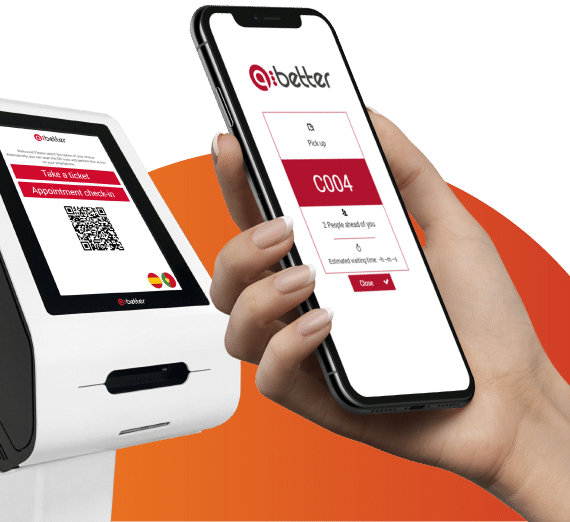
Virtual queuing is a revolutionary feature that lets customers wait wherever they want rather than standing physically in line. Customers are given a digital token and receive real-time notifications when it’s their turn.
- Benefits:
- Reduces crowding in waiting areas
- Improves perceived waiting experience
- Enables social distancing in healthcare or government offices
3. Appointment Scheduling
Modern QMS solutions allow businesses to offer appointment-based scheduling, where customers book a specific time slot in advance.
- Advantages:
- Reduces walk-in congestion
- Helps staff plan workloads efficiently
- Enhances customer satisfaction by minimizing wait times
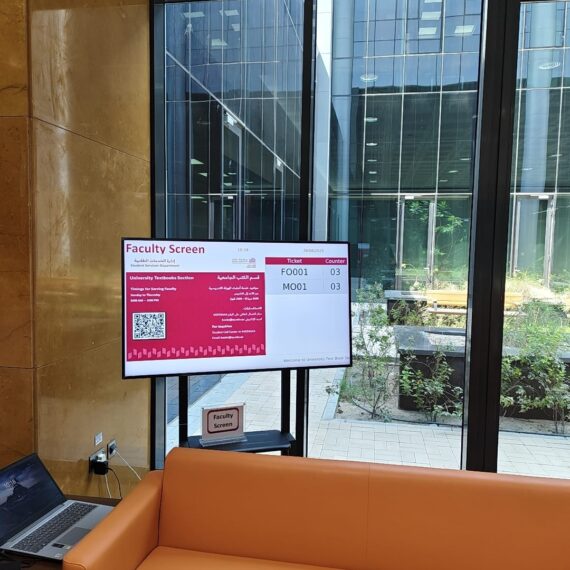
4. Digital Signage Integration
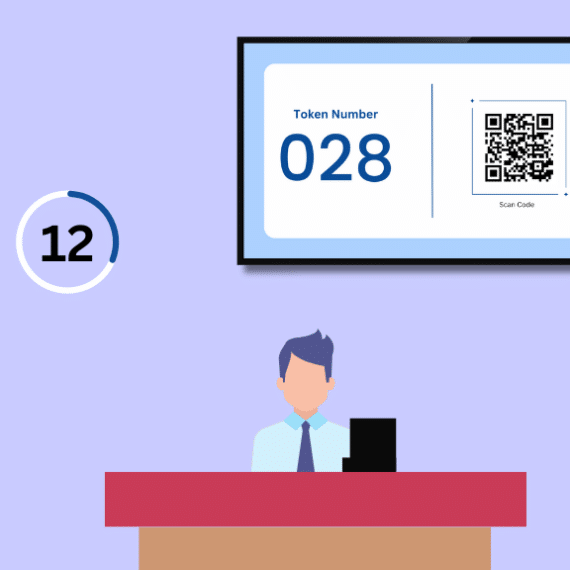
Integrating digital signage ensures that all queue information is visually communicated to customers. Screens can display:
- Queue numbers
- Assigned counters
- Estimated wait times
- Announcements or advertisements
Benefits:
- Keeps customers informed
- Reduces anxiety and confusion
- Creates opportunities for targeted messaging and branding
5. Real-Time Notifications
A modern QMS provides real-time notifications through multiple channels:
- SMS alerts: Notify customers when their turn is approaching
- Mobile app notifications: Update queue status instantly
- Email reminders: Confirm appointments or ticket status
Benefits:
- Keeps customers engaged
- Reduces walkaways
- Improves operational efficiency
6. Intelligent Routing
Intelligent routing is a key feature where the Queue Management System automatically assigns customers to the most appropriate agent based on:
- Service type
- Priority level
- Agent availability
- Customer preferences (VIP, regular, first-time)
Benefits:
- Ensures fair and efficient service
- Reduces wait times for complex services
- Optimizes staff utilization
7. Analytics & Reporting
A modern QMS generates detailed analytics and reports to help management make data-driven decisions.
- Data collected:
- Average wait time
- Peak hours
- Service duration per agent
- Customer flow trends
- Benefits:
- Optimizes staffing and counter allocation
- Identifies bottlenecks in service
- Supports long-term planning for resource management
8. Multi-Language Support
To serve a diverse customer base, QMS software often includes multi-language support.
- Benefits:
- Improves accessibility for non-native speakers
- Ensures clear communication
- Enhances inclusivity and customer satisfaction
9. Feedback Collection
An integrated feedback system allows customers to rate their service experience immediately after completion.
- Benefits:
- Provides real-time insights into service quality
- Identifies areas for improvement
- Enhances customer satisfaction tracking
10. System Integration
Modern QMS solutions are designed to integrate with existing enterprise systems:
- Customer Relationship Management (CRM)
- Enterprise Resource Planning (ERP)
- Point of Sale (POS)
- HR or workforce management tools
Benefits:
- Streamlines operations
- Avoids duplication of data
- Enables holistic business insights
Benefits of Queue Management System
A Queue Management System (QMS) is more than just a tool for organizing customer lines—it is a strategic solution that delivers significant operational, financial, and customer experience benefits. Businesses that implement an advanced QMS can transform long wait times into smooth, efficient, and enjoyable service experiences. Below, we explore the benefits in detail:
1. Reduced Waiting Time
One of the most immediate and noticeable benefits of a QMS is the reduction of waiting times. By automating ticketing and allocating customers to the appropriate service points, the Queue Management System ensures that queues move efficiently and predictably.
How it works:
- Automated token issuance ensures the next customer is promptly routed.
- Intelligent routing assigns customers to available staff or service counters.
- Virtual queuing allows customers to wait remotely, reducing physical crowding.
2. Improved Customer Experience
Waiting in a long, unorganized line is frustrating. A QMS enhances the customer experience by providing:
- Clear instructions and queue numbers
- Estimated wait times
- Real-time notifications via SMS or app
Benefits for customers:
- Less uncertainty about waiting
- More comfortable waiting conditions
- Enhanced perception of professionalism
3. Increased Operational Efficiency
A QMS streamlines operations, allowing businesses to serve more customers in less time. By automating queue management, staff can focus entirely on service rather than crowd control.
Operational improvements include:
- Reduced staff idle time
- Efficient counter utilization
- Faster customer processing
4. Higher Staff Productivity
Queue management automation ensures that employees spend less time manually managing queues and more time on core service tasks.
How staff productivity improves:
- Eliminates time spent handling complaints about wait times
- Reduces interruptions from customers asking for updates
- Allows staff to follow a structured workflow
5. Reduced Walkaways and Lost Revenue
Long wait times can lead to customers abandoning the queue, resulting in lost revenue and missed opportunities. A QMS mitigates this by providing:
- Estimated wait times
- Notifications when it’s their turn
- Virtual queuing options
6. Data-Driven Decision Making
Modern QMS platforms collect valuable operational data, which allows managers to make informed decisions:
- Peak hour analysis
- Service counter utilization
- Customer flow trends
- Staff performance metrics
Benefits include:
- Optimized staffing schedules
- Identification of bottlenecks
- Data-supported process improvements
7. Increased Revenue
While a QMS primarily improves customer experience and efficiency, it indirectly boosts revenue. Happy customers are more likely to:
- Return for repeat services
- Recommend the business to others
- Make additional purchases while waiting
8. Improved Communication
A QMS ensures consistent and clear communication with customers throughout their journey:
- Queue numbers and counters are displayed digitally
- Customers receive SMS or app notifications
- Staff can proactively manage expectations
Benefits:
- Reduces complaints
- Enhances transparency
- Builds trust between the business and its customers
9. Resource Optimization
By managing queues efficiently, businesses can optimize the use of their physical and human resources:
- Fewer staff are required for manual crowd management
- Counters and service desks are used efficiently
- Peak demand is balanced without overstaffing
10. Brand Image Enhancement
Finally, a QMS enhances a business’s brand image by projecting professionalism and customer-centric values:
- Reduces chaos and disorganization
- Shows respect for customers’ time
- Demonstrates technological sophistication
Types of Queue Management Systems
A Queue Management System (QMS) can be implemented in multiple ways depending on business needs, customer volume, and operational complexity. Each type has unique advantages and is suitable for specific scenarios. Below is a detailed overview of the main types of Queue Management System, along with examples and best-use practices.
1. Linear Queue System (Single-Line Queue)
The linear queue system is the most traditional and simple type of queue management. Customers stand in a single line, and the next available service counter serves them in order.
Key Features:
- First-Come, First-Served (FCFS) approach
- Simple and easy to implement
- Works well for low-to-medium customer volumes
Advantages:
- Fair service order for all customers
- Easy to monitor and manage
- Minimal infrastructure required
2. Virtual Queue System (Remote Queueing)
Virtual queuing allows customers to join a queue without physically standing in line. Customers are given digital tokens and can wait remotely via mobile apps, SMS, or online portals.
Key Features:
- Digital ticketing with estimated wait times
- Notifications via SMS, email, or app when it’s their turn
- Option to delay arrival until service is ready
Advantages:
- Reduces overcrowding in waiting areas
- Increases customer comfort and satisfaction
- Enables social distancing, critical in healthcare or pandemic situations
3. Structured Multi-Line Queue System (Multiple Queues for Different Services)
In this type of Queue Management System, separate lines are organized for different types of services. Each line is dedicated to a specific counter or department.
Key Features:
- Multiple service lines for different customer needs
- Counters handle specialized services
- Can combine with digital token issuance
Advantages:
- Reduces confusion for customers
- Ensures specialized staff handle relevant tasks
- Ideal for medium to high customer volumes
4. Appointment-Based Queue System
The appointment-based Queue Management System is designed for customers who pre-schedule their visits. This Queue Management System ensures a smooth flow and predictable wait times.
Key Features:
- Customers book a time slot online, via app, or phone
- Automatic reminders and notifications
- Integration with staff schedules
Advantages:
- Reduces congestion for high-traffic services
- Ensures staff availability matches demand
- Improves customer experience with predictable service
5. Self-Service Queue System
The self-service queue system empowers customers to manage their own registration using kiosks or mobile apps.
Key Features:
- Self-service kiosks for ticket issuance
- Mobile apps for queue registration
- Optional integration with display screens
Advantages:
- Reduces staff workload
- Speeds up queue registration
- Improves efficiency for high-volume services
6. Hybrid Queue System
Modern organizations often implement hybrid queue systems that combine multiple types of queues to suit different customer segments.
Key Features:
- Combination of linear, virtual, and appointment-based queues
- Intelligent routing to optimize customer flow
- Real-time updates across channels
Advantages:
- Maximizes flexibility and efficiency
- Provides tailored experience for different customer needs
- Ideal for large organizations with diverse services
Uses of Queue Management System
A Queue Management System (QMS) is an essential tool for organizations across industries that deal with customer footfall, service delivery, or operational workflows. The flexibility of modern QMS solutions allows businesses to improve efficiency, reduce wait times, and enhance the overall customer experience. Below, we explore the primary uses of a QMS, complete with real-world examples and insights.
1. Banking and Financial Institutions
Banks and financial institutions deal with a large number of customers daily for services such as account management, loan processing, and cash transactions. Implementing a QMS helps in:
- Managing multiple service counters efficiently
- Reducing customer wait times during peak hours
- Organizing specialized queues for services like loans, deposits, and account opening
2. Hospitals and Healthcare Facilities
Hospitals, clinics, and diagnostic centers often experience high patient volumes. A QMS is particularly useful in healthcare for:
- Managing outpatient department (OPD) queues
- Prioritizing patients based on urgency
- Allowing patients to check-in via kiosks or mobile apps
- Reducing overcrowding in waiting areas
3. Government Offices and Public Services
Government offices often handle large crowds for services such as visa processing, licensing, utility registration, and social services. A QMS ensures:
- Organized service delivery
- Faster processing of citizen requests
- Transparency in wait times and service order
4. Retail Stores and Shopping Centers
Retail outlets, especially during peak seasons or promotional events, face long checkout lines. QMS helps:
- Organize billing counters
- Manage customer service desks efficiently
- Provide virtual queue options to improve customer comfort
5. Telecom and Service Centers
Telecommunication service centers and utility providers often face high traffic for SIM services, bill payments, or technical support. QMS provides:
- Structured queues for different service types
- Appointment-based scheduling
- Real-time notifications to customers
6. Airports and Transportation Hubs
Airports, bus terminals, and railway stations require efficient crowd management to ensure smooth operations. QMS is used for:
- Check-in counters
- Security lines
- Boarding gates
- Baggage claim areas
7. Restaurants and Hospitality
Restaurants, cafes, and hotels can benefit from a QMS to manage:
- Table reservations
- Waiting lists for walk-in customers
- Order pickups and counter service
8. Educational Institutions
Schools, colleges, and universities often require queue management for administrative services such as:
- Admissions and registrations
- Fee collection
- Counseling and student support services
9. Utility Service Providers
Utility companies providing electricity, water, or gas services can use a QMS for:
- Bill payments
- Complaint resolution
- Service requests and connections
10. Events and Entertainment Venues
Queue management is critical in high-traffic events such as concerts, sports stadiums, theme parks, or exhibition centers. QMS helps in:
- Managing entry ticketing
- Organizing merchandise or food counters
- Ensuring safety and smooth customer flow

About Axle Systems
Axle Systems is a leading technology solutions provider specializing in Queue Management System and other customer experience solutions in Qatar and the broader Middle East. With years of experience in delivering innovative business technologies, Axle Systems has become a trusted partner for organizations seeking to streamline operations, improve customer satisfaction, and adopt modern service management practices.
Our Mission
Axle Systems is dedicated to helping organizations deliver exceptional customer experiences while optimizing operational efficiency. The company focuses on:
- Implementing advanced, user-friendly queue solutions
- Ensuring seamless integration with existing Queue Management System
- Providing scalable solutions that grow with business needs
- Supporting businesses with training, technical assistance, and maintenance
Our Expertise
Axle Systems has extensive experience in providing turnkey queue management solutions to diverse industries, including banking, healthcare, retail, government, hospitality, and telecom.
Our team brings expertise in:
- Digital Queue Management Systems – Deploying modern queue solutions that automate customer flow
- Virtual Queueing – Allowing customers to wait remotely via mobile apps or online portals
- Appointment Scheduling Systems – Streamlining pre-booked service delivery
- Self-Service Kiosks and Token Systems – Enabling customers to manage their own registration efficiently
- Integration Services – Seamlessly connecting queue systems with CRM, ERP, POS, and other enterprise software
Industries Served
Axle Systems provides customized queue management solutions for multiple sectors:
- Banking and Financial Services – Streamlining teller queues, loan processing, and customer support
- Healthcare – Managing outpatient departments, lab tests, and pharmacy counters
- Government Services – Enhancing citizen experience in licensing, visa services, and public offices
- Retail and Shopping Centers – Optimizing billing counters, service desks, and promotions
- Telecom and Service Providers – Managing high-traffic SIM services, bill payments, and technical support
- Hospitality and Restaurants – Organizing table allocations, reservations, and order pickups
- Educational Institutions – Improving student services, fee collection, and counseling queues
- Events and Entertainment Venues – Ensuring smooth crowd control and ticketing operations
By offering tailored solutions for each sector, Axle Systems ensures that every organization benefits from a Queue Management System designed specifically for its workflow and customer base.
Why Choose Axle Systems?
Organizations across Qatar and the Middle East choose Axle Systems for several compelling reasons:
- Customized Solutions – Each implementation is designed to match the client’s specific needs and operational flow
- Cutting-Edge Technology – Incorporates modern features like virtual queues, mobile notifications, and intelligent routing
- Professional Installation – Experienced technicians ensure seamless setup and minimal disruption
- After-Sales Support – Ongoing maintenance, updates, and troubleshooting ensure system reliability
- Data-Driven Insights – Analytics dashboards help businesses optimize resources and improve service quality
- Scalable Solutions – Queue Management System can expand as customer volume and business operations grow
Example:
A leading hospital partnered with Axle Systems to implement a hybrid queue management solution combining virtual queues for consultations and self-service kiosks for lab tests. This reduced patient wait times by 40% while improving staff workflow and service satisfaction.
Our Commitment to Customer Experience
Axle Systems believes that technology should enhance the human experience, not replace it. That’s why every solution is designed to:
- Reduce waiting time and stress for customers
- Provide transparency and real-time information
- Enhance staff efficiency and reduce manual workload
- Allow businesses to make informed decisions with actionable data
By focusing on both the customer and operational perspectives, Axle Systems ensures organizations achieve measurable improvements in service quality and efficiency.
Contact Axle Systems
Businesses seeking reliable queue management solutions can reach Axle Systems through multiple channels:
Company Name: Axle Systems
Location: Al Khalidiya Street, Najma, Doha, Qatar
Phone: +974 44682391,77443731
Email: info@axlesys.com
Website: www.axlesys.com
Common FAQ – Queue Management System
Q1. What is a Queue Management System?
A digital solution that organizes customer queues and manages service flow efficiently.
Q2. How does it reduce waiting time?
By automating ticketing, routing, and service allocation.
Q3. Can customers join queues remotely?
Yes, via mobile apps or online booking.
Q4. Is it suitable for small businesses?
Yes, scalable solutions are available.
Q5. Does it provide analytics?
Yes, it tracks wait times, service speed, and staff performance.
Q6. Can it integrate with existing systems?
Yes, with CRM, ERP, and POS platforms.
Q7. Is multilingual support available?
Yes, most systems support multiple languages.
Q8. What industries use QMS?
Banks, hospitals, retail, government, telecom, and more.
Q9. Does it improve customer satisfaction?
Yes, by reducing uncertainty and wait frustration.
Q10. Does Axle Systems provide installation?
Yes, including setup, training, and support.
Conclusion
In today’s competitive business environment, where customer expectations are higher than ever, efficient queue management is no longer optional—it is essential. Long, unorganized lines not only frustrate customers but also impact staff productivity, operational efficiency, and ultimately, a company’s reputation. A modern Queue Management System (QMS) addresses these challenges by combining technology, analytics, and customer-centric solutions to transform waiting experiences into seamless, organized, and professional interactions.
A QMS offers a wide array of benefits:
- Reduced waiting times, making every customer feel valued
- Improved operational efficiency, ensuring staff focus on meaningful tasks instead of managing chaos
- Enhanced customer satisfaction, leading to higher loyalty and repeat visits
- Data-driven insights, enabling organizations to optimize resources and improve service delivery
- Increased revenue potential, as better service encourages retention and upselling opportunities
- Enhanced brand image, projecting professionalism and customer-first values
These benefits apply across multiple industries, including banking, healthcare, retail, government, hospitality, telecom, education, and entertainment. Whether it’s managing outpatient queues in hospitals, streamlining service counters in banks, or handling check-in lines at airports, a QMS ensures every customer interaction is smooth, transparent, and efficient.
Beyond operational advantages, a modern QMS also empowers businesses to innovate. With features such as virtual queuing, mobile app integration, intelligent routing, and real-time notifications, organizations can adapt to changing customer behaviors and expectations. This flexibility is critical in a world where convenience, speed, and personalization define customer satisfaction.
As a trusted supplier, Axle Systems provides end-to-end solutions for queue management that are tailored to the unique needs of each organization. From digital and virtual queue systems to self-service kiosks and appointment-based solutions, Axle Systems combines cutting-edge technology, professional implementation, and ongoing support to ensure businesses maximize the potential of their queue management strategies. By partnering with Axle Systems, organizations can transform traditional, frustrating queues into efficient, data-driven, and customer-friendly experiences that leave a lasting positive impression.
In conclusion, investing in a Queue Management System is more than just adopting a new technology—it is embracing a strategic approach to customer service excellence. It enables organizations to serve more customers faster, improve staff efficiency, gain actionable insights, and elevate overall customer satisfaction.
With Axle Systems, businesses can confidently implement robust queue management solutions that are scalable, reliable, and designed for the modern customer journey. Whether you operate in banking, healthcare, retail, government, or hospitality, a well-designed QMS is a cornerstone for operational success and customer loyalty.
The future of service excellence lies in efficiency, transparency, and proactive customer engagement—and a Queue Management System powered by Axle Systems ensures your business is fully prepared to meet these demands.