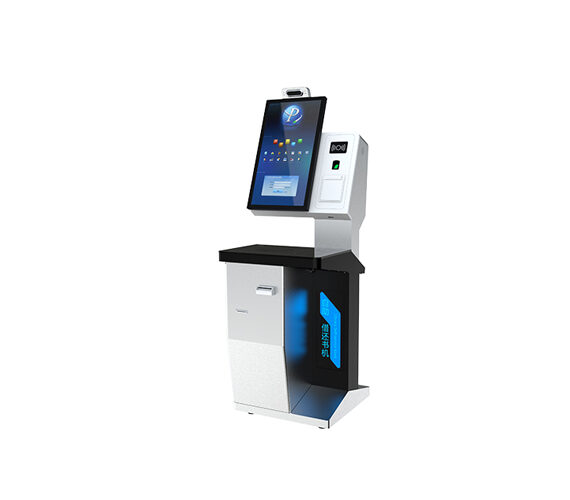

Library Self-service Borrow and Return Machine in Qatar
In today’s fast-paced, technology-driven world, libraries across the globe are embracing automation to enhance user experience, reduce staff workload, and increase operational efficiency. One of the most transformative technologies in modern libraries is the Library Self-service Borrow and Return Machine. These innovative systems empower patrons to borrow and return books independently, without waiting in queues or relying on library staff.
In Qatar, Axle Systems is a leading supplier and system integrator of Library Self-service Borrow and Return Machine, offering intelligent, RFID-based solutions that cater to public libraries, academic institutions, and private knowledge centers.
What is a Library Self-service Borrow and Return Machine?
A Library Self-service Borrow and Return Machine is a kiosk-style device equipped with RFID (Radio Frequency Identification) or barcode scanning technology, designed to allow library users to borrow or return books without staff assistance. These Library Self-service Borrow and Return Machine typically feature a touch screen interface, a scanning module, a receipt printer, and often an integrated book drop system.
They streamline circulation processes, reduce queues, and allow libraries to offer 24/7 services in some cases. The Library Self-service Borrow and Return Machine are usually linked directly to the library’s Integrated Library System (ILS) or Library Management System (LMS), ensuring real-time updates of the item’s status and user account.

Key Features of Library Self-service Borrow and Return Machine
A Library Self-service Borrow and Return Machine is designed with cutting-edge technology to revolutionize how library resources are accessed, managed, and circulated. It is more than just a kiosk—it is a fully integrated solution that simplifies processes, enhances user satisfaction, and future-proofs library operations.
Below is a detailed look at the key features that make these Library Self-service Borrow and Return Machine indispensable in modern libraries:
1. RFID and Barcode Compatibility
Modern Library Self-service Borrow and Return Machine are equipped with dual scanning technologies—RFID readers and barcode scanners—making them adaptable to libraries in all stages of automation.
- RFID (Radio Frequency Identification): Allows for instant and simultaneous identification of multiple books. Users can place a stack of books on the scanner, and all items will be processed in a single scan.
- Barcode Scanning: Useful for libraries that still use barcode-based systems. Offers backward compatibility and easy transition for institutions shifting to RFID later.
- Benefits: Speed, accuracy, contactless interaction, and minimized wear-and-tear on books.
2. User-friendly Touchscreen Interface
The system includes a large, responsive touchscreen (typically 15″ or more) that provides a clean, intuitive interface for users of all ages.
- Step-by-step instructions make it easy for anyone to follow borrowing and return procedures.
- Visual icons and voice-guided prompts (optional) enhance accessibility for non-tech-savvy users.
- Multilingual options allow users to select their preferred language, commonly Arabic and English in Qatar.
3. Integration with Library Management Systems (LMS/ILS)
One of the strongest features is its ability to seamlessly integrate with various Integrated Library Systems (ILS) or Library Management Systems (LMS).
- Supports real-time data synchronization, ensuring that book statuses are instantly updated in the system.
- Compatible with Koha, Aleph, Sierra, Symphony, Evergreen, and other major platforms.
- Staff can monitor usage, overdue items, and transaction history directly from the central system.
4. High-speed Transaction Processing
Thanks to RFID technology and powerful internal processors, the Library Self-service Borrow and Return Machine enables quick and efficient processing of checkouts and returns.
- A typical transaction (borrowing or returning a book) takes less than 15 seconds.
- Multiple books can be scanned and issued/returned in one go, dramatically reducing queue times during peak hours.
5. Automated Receipt Printing
The system prints detailed receipts after each transaction, which can include:
- List of books borrowed or returned.
- Due dates for borrowed items.
- User ID and transaction ID for future reference.
- Overdue fine alerts (if applicable).
- Customizable templates allow branding with library logos and QR codes.
6. Security System Integration (EAS & Gates)
Most Library Self-service Borrow and Return Machine come with Electromagnetic (EM) or RFID-based EAS integration, allowing:
- Books to be automatically deactivated (at checkout) or reactivated (at return).
- Security gates to detect if a book has not been issued properly.
- Enhanced anti-theft measures for valuable collections.
7. Return Book Drop Integration
Many return stations are built with integrated book drop modules:
- Users can deposit books directly into a secure drop slot.
- The system automatically identifies the returned items and updates the library database.
- Internal sorting systems can categorize books by section or genre (in advanced models).
- Minimizes handling time for staff.
8. Self-Check-in and Self-Checkout Capabilities
The dual function of issuing and returning books from a single station allows for a fully self-service experience.
- Check-out: Users authenticate themselves, place books on the scanner, and confirm the transaction.
- Check-in: Users place returned books in the tray or drop box, and the system automatically deactivates them in the system.
- Optional: Renewal or reservation of books directly from the kiosk.
9. Multilingual and Customizable Interface
Given Qatar’s multicultural population, the Library Self-service Borrow and Return Machine support multiple languages, including:
- Arabic
- English
- French, Hindi, and more (as per client request)
10. User Authentication Options
To ensure secure transactions and prevent misuse, the Library Self-service Borrow and Return Machine supports a wide range of authentication methods:
- Library card barcode scanning
- RFID card swipes
- Student ID card integration
- National ID/passport verification (in advanced systems)
- OTP or password-based login (when integrated with institutional databases)
11. Data Logging and Reporting
Each transaction is logged in real-time and stored for analytics and reporting purposes.
- Generates usage reports (daily, weekly, monthly)
- Tracks popular titles, user behavior, and peak usage times
- Helps library administrators make data-driven decisions
- Integration with BI tools available for large academic systems
12. Energy-efficient Operation
The Library Self-service Borrow and Return Machine are designed to be energy-saving and eco-friendly:
- Sleep mode during idle times
- Low-power LED backlights
- Optional solar-powered models for outdoor or semi-mobile installations
13. Robust Construction and Aesthetic Design
Built for public spaces, the Library Self-service Borrow and Return Machine feature:
- Tamper-proof design
- Anti-glare screens and rugged body construction
- Compact footprints for small libraries
- Elegant exterior finishes to match modern architectural aesthetics
14. Accessibility and Inclusiveness
Ensuring universal access, these Library Self-service Borrow and Return Machine include:
- ADA-compliant models
- Screen height adjustability for wheelchair access
- Voice assistance and braille labels (optional)
- Touch-free operation for hygiene-conscious environments
15. Modular and Scalable Architecture
The system can be expanded or customized based on evolving library needs:
- Add-on modules for fine payment, reservation pickup lockers, or document printing
- Cloud-based or on-premise deployment
- Scalable to support multiple branches in a library network
Benefits of Library Self-service Borrow and Return Machine
The introduction of Library Self-service Borrow and Return Machine is one of the most significant technological upgrades libraries can implement. These intelligent systems offer far-reaching advantages—enhancing efficiency, improving user experience, and future-proofing library operations. Whether installed in a bustling university library, a quiet public branch, or a corporate knowledge center, the benefits are tangible and transformative.
Here is a deep dive into the key benefits:
1. Enhanced User Convenience and Independence
One of the primary drivers of self-service technology adoption is user convenience.
- Library users no longer have to wait in line for staff at the circulation desk.
- They can simply walk up to the Library Self-service Borrow and Return Machine, scan their library card, place the books on the scanner, and complete the transaction within seconds.
- Transactions are intuitive and straightforward, even for first-time users.
Impact:
This fosters a sense of independence and encourages users—especially students and busy professionals—to interact more frequently with the library.
2. Faster Borrowing and Returning Processes
Thanks to RFID technology, patrons can scan and process multiple items at once, drastically reducing the time spent on issuing and returning books.
- Traditional barcode scanning is one-by-one; RFID allows for stack-based processing.
- Even during peak hours, the queue is minimized, and the system runs continuously.
Impact:
Libraries can handle higher footfall without increasing staff, maintaining a smooth flow of users.
3. Reduced Workload for Library Staff
Staff in traditional libraries spend a considerable portion of their time on repetitive circulation tasks.
- With a Library Self-service Borrow and Return Machine in place, librarians are freed from routine issuing/returning duties.
- They can focus on more valuable services such as cataloging, user training, digital resource development, and research assistance.
Impact:
Improved staff morale and more personalized services for patrons.
4. Round-the-Clock Access
Library Self-service Borrow and Return Machine can be installed in lobbies, vestibules, or externally accessible areas, enabling 24/7 access to book returns and checkouts.
- Especially useful in academic institutions where students study late or over weekends.
- Public libraries can extend services without increasing operating hours.
Impact:
Library services become more flexible and more accessible, even outside standard working hours.
5. Minimized Queues and Improved Flow
By decentralizing the borrowing and returning functions, the system eliminates congestion at the main circulation desk.
- Users can complete their transactions independently, without waiting for others.
- Some libraries choose to install multiple kiosks across floors or departments for decentralized service.
Impact:
Faster movement through the library, less crowding, and a more relaxed, user-friendly environment.
6. Enhanced User Privacy
Not all users are comfortable interacting with staff or revealing their reading choices.
- Self-service transactions are private, discreet, and non-intrusive.
- Users can issue or return books without verbal communication.
Impact:
Greater adoption of library services by introverted users and those accessing sensitive or personal materials.
7. Real-time Synchronization with Library Systems
These Library Self-service Borrow and Return Machine integrate directly with your LMS (Library Management System), providing instant updates.
- When a user borrows a book, it immediately reflects on their profile.
- Returned items are instantly marked available for others to borrow.
Impact:
Better resource tracking, improved availability accuracy, and reduced system errors.
8. Higher Circulation Volumes
Libraries that implement self-service technology report an increase in the number of items borrowed and returned.
- Ease of use encourages more borrowing, especially among occasional users.
- The ability to serve more users efficiently increases engagement.
Impact:
More active user base, higher content circulation, and increased library visibility.
9. Support for Multilingual and Diverse User Groups
With customizable interfaces, these Library Self-service Borrow and Return Machine are language-inclusive. In Qatar, this is particularly useful due to its multicultural population.
- Common language support includes Arabic, English, French, and others.
- Libraries can accommodate users of different nationalities and age groups easily.
Impact:
Wider accessibility and greater inclusivity across community libraries, schools, and universities.
10. Increased System Accuracy and Reduced Human Errors
Manual circulation processes are susceptible to errors—mis-scanned items, wrong due dates, or incorrect user accounts.
- Automated machines eliminate such risks.
- The system ensures each transaction is verified and logged accurately.
Impact:
More accurate records, fewer disputes, and better inventory control.
11. Promotes Digital Transformation in Libraries
The adoption of a Library Self-service Borrow and Return Machine is often the first step toward library automation and digital transformation.
- Encourages the use of digital catalogs and e-services.
- Supports other smart integrations like automated sorting systems or reservation lockers.
Impact:
Positions the library as a modern, tech-forward space ready for the next generation of users.
12. Optimized Library Operations
Library Self-service Borrow and Return Machine generate detailed usage reports and analytics:
- Track high-demand books
- Identify peak usage times
- Monitor user trends
Impact:
Allows administrators to make data-driven decisions about acquisitions, staffing, and resource allocation.
13. Cost-effective Over the Long Term
While the initial investment in Library Self-service Borrow and Return Machine might seem high, the operational savings add up quickly:
- Reduced staffing needs at circulation desks
- Lowered manual processing costs
- Extended service hours without extra personnel
Impact:
Return on investment (ROI) becomes evident within the first 1–2 years for high-traffic libraries.
14. Improved Hygiene and Health Safety
Post-COVID, hygiene is a greater concern than ever:
- Touchless RFID scanning minimizes contact
- Library Self-service Borrow and Return Machine can be cleaned easily and frequently
- Optional voice commands and motion sensors reduce surface contact
Impact:
Creates a safer public environment, particularly in healthcare and academic settings.
15. Encourages Responsible Use and Digital Literacy
With users responsible for their own borrowing and returning:
- They become more aware of due dates, fines, and reading habits.
- The digital interface introduces them to self-service systems—improving digital literacy.
Impact:
Empowered library patrons who are better informed and more engaged.
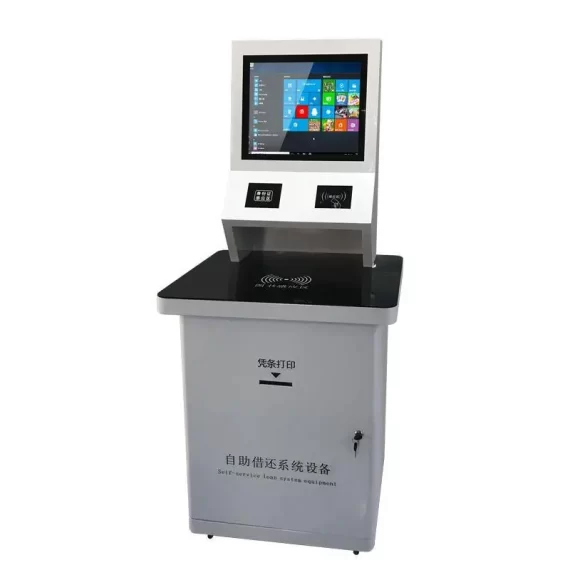
Uses of Library Self-service Borrow and Return Machine
The Library Self-service Borrow and Return Machine is a versatile, scalable, and highly adaptable solution designed to meet the needs of various institutions and environments. Its ability to operate autonomously, integrate with existing systems, and streamline circulation processes makes it suitable for a wide range of settings beyond just public libraries.
Below is an in-depth look at the diverse use cases for Library Self-service Borrow and Return Machine across sectors in Qatar and globally:
1. Public Libraries
Public libraries are the most common and effective setting for Library Self-service Borrow and Return Machine. These libraries often serve large and diverse populations, including students, working professionals, senior citizens, and young readers.
How it helps:
- Reduces long queues at service desks, especially during weekends and holidays.
- Allows users to borrow and return books independently, even outside standard working hours if placed in accessible lobbies.
- Enhances accessibility for patrons who prefer minimal interaction or require privacy.
Use Case Example in Qatar:
A municipal library in Doha could deploy a Library Self-service Borrow and Return Machine in the entrance lobby to allow returns and pickups after-hours, improving accessibility for working professionals.
2. University and Academic Libraries
Universities in Qatar such as Qatar University, Hamad Bin Khalifa University, and international institutions in Education City serve thousands of students and faculty daily. Managing circulation manually in such environments can be highly labor-intensive.
How it helps:
- Students can issue textbooks, journals, and references without waiting.
- Library Self-service Borrow and Return Machine can be placed in multiple locations across campus—within faculties, dormitories, or common study areas.
- Allows 24/7 return of resources, especially important during exam periods.
Use Case Example:
Installing borrow and return kiosks in student dorms or study lounges enables students to return books at their convenience, even at midnight.
3. School Libraries (Primary & Secondary Education)
Primary and secondary school libraries can benefit from automation to encourage reading habits and reduce the workload on limited staff.
How it helps:
- Children learn how to independently borrow and return books, promoting responsibility.
- Simplifies the checkout process during short library periods.
- Can be configured with a child-friendly interface, animations, and sound cues.
Use Case Example:
A private school in Al Wakrah could install a Library Self-service Borrow and Return Machine with Arabic and English interface options for bilingual students to use independently.
4. Corporate Knowledge Centres
Multinational corporations and government institutions often maintain in-house libraries for training, research, or professional development.
How it helps:
- Employees can access technical manuals, journals, and HR documents as needed.
- Promotes autonomous use of learning resources.
- Integrates with the company’s internal access systems for secure transactions.
Use Case Example:
An oil and gas company in Ras Laffan could use a Library Self-service Borrow and Return Machine in their training department library, allowing engineers to check out technical manuals or project files after-hours.
5. National and Research Libraries
These institutions house vast repositories of valuable knowledge and historical archives. Automation improves circulation while maintaining strict control over resources.
How it helps:
- Ensures secure and traceable checkouts of rare or high-value items.
- Reduces physical handling of materials by staff, preserving archival integrity.
- Integrates with reservation systems for controlled access to sensitive collections.
Use Case Example:
Qatar National Library (QNL) could deploy self-service units in their public reading zones to facilitate fast borrowing and returns of frequently used items like language learning books or daily newspapers.
6. Medical and Healthcare Institution Libraries
Hospitals, universities with medical faculties, and healthcare research centers manage a large volume of books, journals, and multimedia materials related to medicine and health.
How it helps:
- Medical professionals and students can borrow reference books during shifts or rotations.
- 24/7 access improves the availability of up-to-date research and protocols.
- Reduces circulation desk congestion in high-traffic environments.
Use Case Example:
Sidra Medicine’s research library may benefit from a self-service kiosk allowing clinicians to check out pediatric references or surgical manuals independently.
7. Museum and Cultural Center Libraries
Museums and cultural organizations often host research libraries that are accessible to researchers, scholars, and the general public.
How it helps:
- Allows visitors to check out reading materials related to exhibitions or artifacts.
- Integrates with visitor management systems for smooth user access.
- Supports multilingual interfaces for international guests.
Use Case Example:
A cultural library at Katara Cultural Village could install a kiosk to allow visitors to borrow books related to Qatari art, history, or poetry during their visit.
8. Mobile Libraries and Bookmobiles
For rural and underserved communities, mobile libraries play a vital role in promoting literacy and education.
How it helps:
- Compact models of Library Self-service Borrow and Return Machine can be installed in mobile library vans.
- RFID systems allow easy scanning and tracking of books on the move.
- Promotes library automation even in regions without the internet by syncing data upon reconnection.
Use Case Example:
A mobile library initiative by Qatar Foundation could include self-service kiosks in buses that travel to schools in Al Khor or Dukhan.
9. Special Libraries (Law, Architecture, Engineering)
These specialized libraries often deal with niche content used by a specific group of users—legal professionals, architects, or engineers.
How it helps:
- Enables secure circulation of specialized materials, manuals, and journals.
- Allows users to manage their materials without library staff present.
- Helps track usage patterns and high-demand references.
Use Case Example:
A law firm in Doha could have a Library Self-service Borrow and Return Machine in their internal legal library to issue case law collections or legal handbooks.
10. Libraries in Government Institutions and Ministries
Government departments maintain libraries for policy references, regulatory documents, and training materials.
How it helps:
- Staff can access necessary information quickly and efficiently.
- Enhances document traceability and audit compliance.
- Reduces dependence on staff to manage the collection.
Use Case Example:
The Ministry of Education could implement a self-service system in its documentation center to allow personnel to borrow curricula and research reports independently.
11. Libraries with 24/7 Access Zones
Some libraries have after-hours access areas or extended service zones where staff is not always present.
How it helps:
- Library Self-service Borrow and Return Machine in these zones allow continued access to books during unstaffed hours.
- Useful for universities, co-working spaces, and knowledge hubs.
Use Case Example:
Education City libraries could deploy these systems in 24-hour reading zones, enabling users to borrow materials at 2 AM during final exams.

Axle Systems: Your Partner for Library Innovation in Qatar
Axle Systems is a proud and trusted supplier of advanced technology solutions, including Library Self-service Borrow and Return Machine, across Qatar. Established in 2012, we are an ISO 9001-2008 certified company and an industry-leading system integrator specializing in a wide range of electronic low voltage (ELV) systems. Our commitment to excellence, customer satisfaction, and cutting-edge technology makes us the ideal partner for libraries looking to modernize their services.
We understand the unique needs of libraries in Qatar and are dedicated to providing tailor-made solutions that enhance the patron experience and optimize library operations. Our team of expert engineers ensures seamless installation, integration with existing library management systems, and comprehensive after-sales support.
Contact Axle Systems Today:
Ready to transform your library with the power of self-service technology? Get in touch with Axle Systems!
- Phone: +974 44682391, +974 77443731
- Email: info@axlesys.com
- Address: P.O. Box 200081, Al Khalidiya Street, Najma, Doha, Qatar
- Website: www.axlesys.com
Common FAQs about Library Self-service Borrow and Return Machine
Q1: How do I use the Library Self-service Borrow and Return Machine a book?
A1: Typically, you’ll start by scanning your library card (or entering your ID/PIN). Then, place your items one by one (or a stack if it’s an RFID system) on the scanning area. The Library Self-service Borrow and Return Machine will register each item. Once all items are scanned, confirm your transaction on the screen, and you’ll usually have the option to print or email a receipt. Remember to desensitize your items at the designated area if required.
Q2: Can I return books to the Library Self-service Borrow and Return Machine?
A2: Yes, most Library Self-service Borrow and Return Machine are designed for both borrowing and returning. Simply follow the on-screen instructions, usually involving placing the book in a designated slot. The Library Self-service Borrow and Return Machine will automatically update your borrower record.
Q3: What if an item doesn’t scan or register correctly?
A3: If an item isn’t scanning, try repositioning it on the scanning area. For RFID systems, ensure the item is fully on the pad. If you continue to have issues, or if the Library Self-service Borrow and Return Machine indicates a problem, please see a library staff member for assistance.
Q4: Can I renew my loans at the Library Self-service Borrow and Return Machine?
A4: Many machines offer a renewal option. After logging in, you should be able to view your borrowed items and select the ones you wish to renew. Please note that renewals may be subject to library policies (e.g., if an item is reserved by another patron).
Q5: Can I pay my library fines at the Library Self-service Borrow and Return Machine?
A5: Yes, many modern Library Self-service Borrow and Return Machine are equipped to accept payments for fines and fees, often through card payments. Check for the payment options available on the machine’s interface.
Q6: What if I forget my PIN or library card?
A6: The process for forgotten PINs or lost cards varies by library. Generally, you would need to contact library staff at the circulation desk to reset your PIN or obtain a new card. Some libraries may offer temporary digital card options through their app.
Q7: Are Library Self-service Borrow and Return Machine accessible for everyone?
A7: Reputable Library Self-service Borrow and Return Machine suppliers prioritize accessibility. Look for machines with features like adjustable screen heights, large text options, and multi-language support to ensure they cater to diverse user needs.
Q8: Do these Library Self-service Borrow and Return Machine replace library staff?
A8: No, Library Self-service Borrow and Return Machine do not replace library staff. Instead, they free up staff from routine transactional duties, allowing them to focus on providing more personalized assistance, conducting educational programs, and managing the library’s extensive resources. They enhance the overall efficiency and quality of library services.
Conclusion
In an age where digital transformation is shaping every aspect of life, libraries are no exception. The Library Self-service Borrow and Return Machine is a step toward smarter, more efficient, and user-friendly library services. Whether you’re a public library, academic institution, or private archive, adopting this technology significantly enhances the user experience while optimizing staff operations.
Axle Systems is proud to be at the forefront of this transformation in Qatar, offering cutting-edge library automation solutions tailored to your needs.