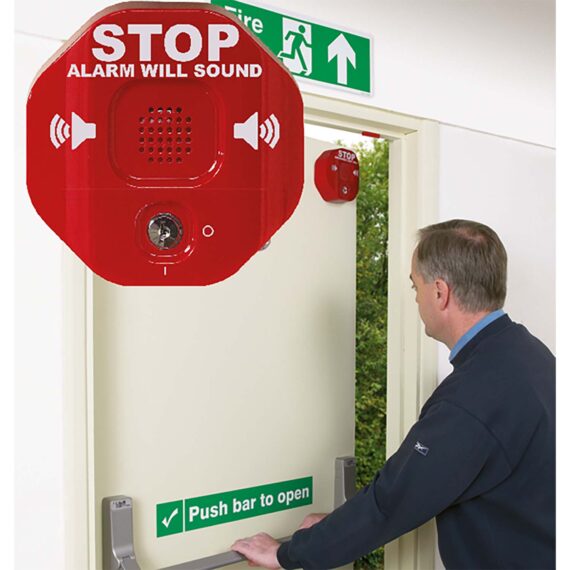

Exit Stopper in Qatar
In today’s security-conscious world, controlling unauthorized access and preventing misuse of emergency exits are vital concerns for building managers, facility supervisors, and safety officers. The Exit Stopper is a versatile and robust solution that addresses these issues by providing a reliable alarm system to deter unauthorized exit through emergency doors.
Axle Systems, a leading security systems supplier in Qatar, offers cutting-edge Exit Stopper devices designed to enhance safety, comply with regulations, and protect people and property. In this blog post, we’ll explore everything you need to know about Exit Stopper devices, their benefits, key features, applications, and why Axle Systems is your ideal partner for Exit Stopper solutions in Qatar.
What is an Exit Stopper?
An Exit Stopper is a multifunction door alarm system that provides an audible and visual alert when an emergency exit or restricted door is opened without authorization. It is commonly installed on fire exit doors, emergency exits, and restricted access doors in commercial, industrial, and public buildings.
Originally developed by STI (Safety Technology International), Exit Stopper models are now globally recognized for their reliability, ease of installation, and effectiveness in preventing unauthorized exits and tailgating.
Benefits of Exit Stopper – A Comprehensive Overview
Exit Stoppers provide a practical and powerful way to monitor emergency exits without restricting their legal use. Below are the key benefits of installing Exit Stopper devices in commercial, industrial, and public buildings in Qatar:
1. Deters Unauthorized Exit
One of the primary functions of an Exit Stopper is to prevent unauthorized use of emergency exits. The system emits a high-decibel alarm—typically ranging from 95 to 105 dB—immediately when the door is opened without proper authorization. This sudden, loud sound acts as a strong deterrent against intentional misuse or casual exits by customers, students, employees, or visitors.
Unauthorized exits not only pose security risks but may also violate building safety protocols. By installing Exit Stoppers, facilities can reinforce safety policies and ensure that emergency exits are used only during real emergencies or authorized situations.
2. Cost-Effective Security
Unlike complex and expensive access control systems that require card readers, door controllers, and extensive cabling, Exit Stoppers are budget-friendly while still offering strong security benefits. They can be installed independently on a door, making them ideal for small to medium-sized businesses, schools, retail outlets, and other institutions with limited budgets but high safety requirements.
The low initial investment, minimal infrastructure changes, and low maintenance needs make Exit Stoppers a cost-effective option for improving building security and exit management.
3. Easy to Install
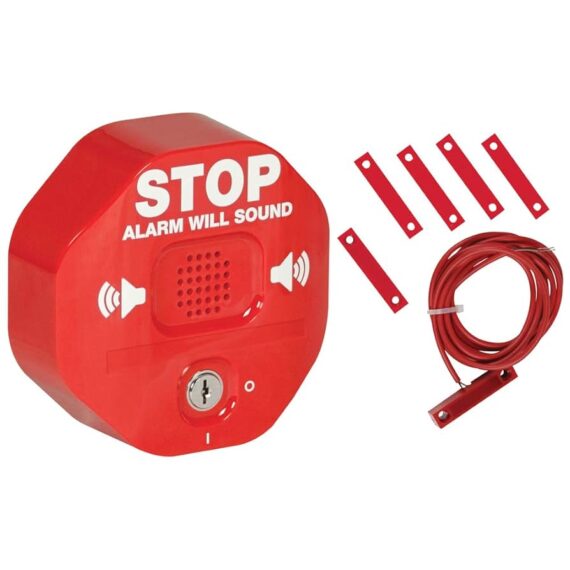
Installation is one of the major advantages of Exit Stopper devices. Most models can be mounted directly onto the door, frame, or adjacent wall without requiring extensive wiring or modifications to the existing door hardware. Battery-powered units eliminate the need for electrical connections, saving time and labor costs.
This plug-and-play setup makes Exit Stoppers an excellent solution for both new constructions and retrofitting older buildings where electrical work may be challenging or costly.
4. Battery Operated with Long Life
Exit Stoppers are typically powered by long-lasting batteries that can operate efficiently for one to three years, depending on usage. Many models are designed with low battery indicators or alerts, allowing facility managers to schedule timely replacements without system downtime.
Because they are battery-operated, Exit Stoppers are not affected by power outages and continue to provide security during emergencies, which is especially important in critical environments like hospitals, data centers, or airports.
5. Reduces False Alarms
False alarms are a common problem with basic door alarms, causing frustration and disrupting operations. Exit Stoppers are engineered with adjustable time delay settings that prevent the alarm from activating instantly. For example, the device can be programmed with a 15-second delay, allowing authorized personnel or short-term exits to occur without triggering the alarm.
This feature is particularly helpful in high-traffic environments where doors may be briefly opened for cleaning, deliveries, or maintenance. By minimizing false alerts, Exit Stoppers maintain credibility and avoid desensitizing staff to real security breaches.
6. Complies with Fire Safety Standards
A crucial concern when installing any device on an emergency exit door is fire safety compliance. Exit Stoppers are designed to alert, not restrict, the door from opening. They do not interfere with the mechanical operation of the door, allowing unrestricted egress in case of fire or other emergencies.
Many models are equipped with inputs to integrate with fire alarm systems, automatically deactivating the alert function during a fire alarm activation. This ensures full compliance with Qatar Civil Defence Department (QCDD) regulations and international fire safety standards such as NFPA (National Fire Protection Association).
7. Visual Alarm Options
In environments with high ambient noise levels—such as factories, warehouses, or large public venues—an audio alarm alone may not be sufficient. For this reason, several Exit Stopper models include visual indicators, such as flashing strobe lights or LED beacons that activate when the door is opened.
These visual cues increase the chances of detection and intervention, especially in loud settings or during emergency situations when multiple alarms may be sounding simultaneously. They are also beneficial for alerting hearing-impaired individuals to door security breaches.
8. Customizable Settings
Exit Stoppers offer multiple configuration options to tailor the system to specific operational needs. These include:
- Alarm Duration: Set how long the alarm sounds after activation (e.g., 30 seconds, 3 minutes, continuous until reset).
- Volume Control: Adjust the decibel level to suit different environments (e.g., lower for hospitals, higher for factories).
- Delay Timer: Choose delay before alarm sounds—useful for temporary door access.
- Keypad or Remote Reset: Customize how the system is silenced, whether via a key switch, PIN code, or remote controller.
- Multilingual Warnings: Label the unit with warnings in Arabic, English, or other languages as per Qatar’s multilingual settings.
This flexibility makes Exit Stoppers highly adaptable to a wide range of industries and building layouts, ensuring that safety measures align with operational workflows.

Key Features of Exit Stopper
The Exit Stopper is a compact yet powerful security device designed to secure emergency exits and restricted doors without compromising safety compliance. Its robust feature set ensures it meets the diverse needs of commercial, industrial, educational, and public buildings in Qatar. Below is a detailed look at the key features that make the Exit Stopper an essential part of any building’s safety system.
1. Highly Audible Alarm (95–105 dB)
At the core of every Exit Stopper is a high-decibel alarm that activates when the protected door is opened. The sound level typically ranges between 95 to 105 decibels, making it loud enough to alert personnel or security teams even in large or noisy environments like malls, airports, or warehouses.
This instant auditory warning acts as a deterrent to unauthorized users and draws immediate attention to the breach, allowing for quick response.
2. Built-In Key Reset or Code Override
Every Exit Stopper includes a method for authorized personnel to reset or deactivate the alarm. This can be in the form of a key switch, digital keypad, or remote control override, depending on the model.
This feature ensures that supervisors, security guards, or authorized staff can manage the system easily without disabling the alarm permanently.
3. Tamper-Resistant Housing
The device housing is built with durable, impact-resistant polycarbonate material, similar to that used in protective helmets. Many models include tamper-proof screws, making it difficult for vandals or unauthorized individuals to disable or remove the unit.
This is particularly important in public facilities where devices may be subject to accidental damage or intentional interference.
4. LED or Strobe Visual Indicators
In addition to a loud siren, many Exit Stopper models are equipped with flashing strobe lights or LED indicators that activate during an alarm event. These visual cues are especially valuable in:
- Loud environments (factories, airports)
- Low-light conditions (basement exits, stairwells)
- Facilities with hearing-impaired occupants
5. Adjustable Time Delay Settings
Exit Stoppers are engineered with programmable time delay features. Users can set a delay before the alarm is triggered (e.g., 5, 15, or 30 seconds) to allow authorized individuals a brief window to pass through the door without activating the siren.
This feature is useful in locations where doors are occasionally accessed for maintenance, deliveries, or cleaning.
6. Multilingual Warning Labels
To accommodate Qatar’s diverse population, Exit Stopper devices come with bilingual or multilingual warning decals, often in English and Arabic. These labels clearly communicate the function of the alarm and the consequences of opening the door without authorization.
7. Fire Alarm Integration
One of the most critical features is the ability to integrate the Exit Stopper with fire alarm or life safety systems. When connected, the Exit Stopper can automatically deactivate during a fire alarm event, ensuring the door is not obstructed during evacuation.
This functionality allows the device to comply with Qatar Civil Defence (QCDD) and international fire codes, ensuring both safety and legality.
8. Long-Lasting Battery Operation
Exit Stoppers are generally battery-powered, offering an extended battery life of up to one to three years. This makes them ideal for locations without easy access to power or where minimizing electrical work is preferred.
Many models also include low-battery warning indicators, so you’re never caught off guard.
9. Compact and Versatile Design
Exit Stopper devices are designed with a compact footprint and sleek casing, allowing them to blend into most commercial or industrial environments. Their versatile design enables installation on various door types, including:
- Metal fire exit doors
- Glass doors with metal frames
- Wooden service doors
- Emergency push-bar exit doors
10. Remote Alarm Monitoring (Advanced Models)
Some high-end Exit Stopper models support integration with building management systems (BMS) or central security panels. This allows alarms to be remotely monitored and logged, helping security teams to keep a record of exit door usage.
11. Custom Alarm Duration and Tones
The alarm’s duration and sound type can be customized in many models. Whether you want the alarm to sound for 30 seconds or continue until manually reset, Exit Stoppers can be tailored to suit your operational needs.
Different tones are available to help distinguish between test alarms, real alerts, or maintenance events.
12. Standalone or Networked Operation
Exit Stoppers can function as standalone devices or be part of a broader security network depending on the model selected. This flexibility makes them suitable for small installations as well as large commercial complexes.
Applications and Uses of Exit Stopper in Qatar
Exit Stopper devices are indispensable in today’s fast-paced, security-conscious environments. In a country like Qatar—home to rapid infrastructure development, strict safety codes, and high standards for facility management—ensuring that emergency exits are used appropriately is essential. Exit Stoppers serve this need by offering an efficient, reliable, and affordable solution.
Below is a detailed breakdown of where and how Exit Stoppers are commonly used across various sectors in Qatar.
1. Commercial Buildings & Office Towers
In the thriving business districts of Doha, Lusail, and West Bay, commercial buildings must balance accessibility with security and compliance. Exit Stoppers are frequently used in:
- Emergency exit doors on each floor
- Stairwell doors
- Utility and service exits
- Fire escape routes
Benefit: Prevents misuse of emergency exits, ensures safety compliance, and helps security personnel monitor building access.
2. Shopping Malls and Retail Stores
Retail centers in Qatar such as Villaggio Mall, Doha Festival City, and City Center attract thousands of daily visitors. Managing exits in such large spaces is critical for:
- Preventing theft or shoplifting through emergency doors
- Avoiding misuse of fire exits by shoppers or staff
- Monitoring back-of-store and stockroom access
Benefit: Enhances retail loss prevention strategies while maintaining safety compliance.
3. Educational Institutions
Schools, colleges, and universities across Qatar—from Qatar University to private international schools—use Exit Stoppers to:
- Prevent students from exiting campus through unauthorized doors
- Monitor staff-only zone
- Secure science labs, exam storage rooms, or IT centers
Benefit: Promotes student safety and reduces unauthorized exit or access to restricted areas.
4. Hospitals and Healthcare Facilities
In critical environments like Hamad Medical Corporation, Sidra Medicine, and private clinics, Exit Stoppers are used to:
- Prevent unauthorized access to wards or pharmacies
- Secure staff-only emergency exits
- Monitor doors in psychiatric or pediatric departments
- Prevent wandering of vulnerable patients (e.g., dementia care)
Benefit: Protects patients, controls movement, and enhances hospital safety without obstructing evacuation routes.
5. Airports and Transportation Hubs
Qatar’s state-of-the-art Hamad International Airport (HIA) and major metro stations utilize Exit Stoppers to:
- Secure emergency exits in terminals and baggage claim areas
- Monitor restricted staff-only entrances
- Prevent accidental access to airside zones
Benefit: Maintains security protocols, prevents breaches, and supports international aviation safety standards.
6. Hotels and Hospitality Venues
Qatar’s thriving hospitality sector—including luxury hotels, resorts, and boutique accommodations—requires strong safety measures to meet Civil Defence and international visitor expectations. Exit Stoppers are used to:
- Monitor service exits
- Secure stairwells
- Deter guests from using fire exits unnecessarily
Benefit: Enhances guest safety and supports QCDD compliance without disrupting customer experience.
7. Industrial Sites, Warehouses & Logistics Centers
Qatar’s industrial areas such as Ras Laffan, Mesaieed, and New Industrial Area require strict security and safety oversight. Exit Stoppers are ideal for:
- Securing emergency exits in high-risk zones
- Preventing unauthorized egress of materials or personnel
- Alerting to door breaches in hazardous or sensitive environments
Benefit: Prevents inventory theft, enhances worker safety, and ensures proper emergency protocols.
8. Government Offices & Public Sector Buildings
From ministry offices to municipal service centers, Exit Stoppers are vital to:
- Control public flow in sensitive departments
- Monitor staff-only emergency exits
- Support evacuation readiness and safety
Benefit: Reinforces access policies while maintaining public safety standards.
9. Stadiums, Arenas, and Event Venues
In venues such as Lusail Stadium, Education City Stadium, or Qatar National Convention Centre (QNCC), Exit Stoppers help to:
- Secure perimeter exits during large events
- Prevent spectators from using restricted emergency doors
- Support event staff in monitoring crowd movement
Benefit: Ensures crowd control, public safety, and proper exit route usage.
10. Residential Complexes & High-Rise Apartments
Modern housing developments and gated communities in Qatar use Exit Stoppers for:
- Monitoring fire exits in common areas
- Preventing children or pets from exiting without supervision
- Alerting security to emergency door misuse
Benefit: Enhances residential safety, especially for families, and maintains exit route functionality.
Axle Systems: Your Trusted Partner for Security in Qatar
Axle Systems is a leading systems integrator based in Doha, Qatar, committed to delivering cutting-edge electronic security and low-voltage (ELV) solutions. Established in 2012, we have built a reputation for providing top-notch quality products and unparalleled service to a diverse clientele across various sectors, including government, healthcare, retail, hospitality, and corporate.
Our mission at Axle Systems is to provide comprehensive, reliable, and innovative security solutions that not only meet but exceed the expectations of our clients. We believe that security is paramount, and we strive for perfection in delivering systems that offer peace of mind and operational efficiency.
What sets Axle Systems apart:
- Expertise and Experience: With years of experience in the Qatari market, our team possesses in-depth knowledge and technical expertise in designing, installing, and maintaining a wide range of security systems.
- Comprehensive Solutions: We offer an extensive portfolio of security and ELV systems, including Electronic Article Surveillance (EAS) systems, access control, CCTV, parking management solutions, queue management systems, audio-visual systems, time attendance systems, and more. This holistic approach allows us to cater to all your security needs under one roof.
- Quality Products: We partner with globally recognized manufacturers and suppliers, ensuring that we provide only the highest quality, most reliable products, like the Exit Stopper, that meet international standards.
- Customer-Centric Approach: At Axle Systems, customer satisfaction is our top priority. We work closely with our clients to understand their unique requirements and tailor solutions that perfectly align with their operational needs and budget. Our dedicated support team ensures prompt assistance and effective after-sales service.
- Installation and Maintenance Excellence: We emphasize meticulous design and professional installation to ensure optimal system performance. Furthermore, we offer comprehensive Annual Maintenance Contracts (AMCs) to guarantee the longevity and continuous functionality of your security infrastructure.
- Commitment to Innovation: We stay abreast of the latest technological advancements in the security industry, continuously exploring and integrating innovative solutions to provide our clients with the most effective and future-proof systems.
Axle Systems Contact Details:
If you are in Qatar and seeking reliable security solutions, including the robust and effective Exit Stopper, look no further than Axle Systems. Our team is ready to assist you with expert advice, detailed consultations, and seamless implementation.
- Phone : +974 44682391, +974 77443731
- Email: info@axlesys.com
- Address: P.O. Box 200081, Al Khalidiya Street, Najma, Doha, Qatar
- Website: www.axlesys.com
We encourage you to visit our website or contact us directly to learn more about how Axle Systems can enhance the security and safety of your premises in Qatar.
Common FAQs about the Exit Stopper
To further clarify any queries you might have about the Exit Stopper, here are some frequently asked questions:
Q1: How does the Exit Stopper work?
A1: The Exit Stopper is a self-contained alarm unit typically mounted on or next to a door. It uses a magnetic switch or a reed switch mechanism. When the protected door is opened, breaking the magnetic contact, the alarm is triggered, emitting a loud siren and often a visual flash. A key-operated override allows authorized personnel to disarm or silence the alarm.
Q2: Is the Exit Stopper easy to install?
A2: Yes, the Exit Stopper is designed for easy installation. It’s a self-contained unit that can be mounted on the door itself or on the wall adjacent to it (top, right, or left). Most installations involve a few screws and positioning the magnet correctly. Specific models for double doors are also available.
Q3: What powers the Exit Stopper?
A3: Most standard Exit Stopper models are powered by a 9V alkaline battery (usually included). Some models also offer an option for wired power (12-24 VDC), with the battery acting as a backup in case of power failure.
Q4: How loud is the alarm? Can the volume be adjusted?
A4: The Exit Stopper typically emits a powerful alarm ranging from 95 dB to 105 dB, designed to be heard across large areas and in noisy environments. Many models offer selectable volume settings (e.g., high or low) via internal dip switches.
Q5: Can the alarm duration be customized?
A5: Yes, most Exit Stopper models allow you to program the alarm duration. Common settings include 30 seconds, 3 minutes, or continuous alarm until disarmed with the key. Some also offer an annunciator mode, which provides a series of beeps instead of a prolonged alarm.
Q6: Is there a delay option for the alarm?
A6: Yes, many Exit Stopper models offer programmable delays. You can set an arming delay (e.g., 15 seconds) which allows an authorized user to turn on the unit and exit before it fully arms. Similarly, a trip delay can be set, providing a short window (e.g., 15 seconds) for authorized personnel to open the door and disarm the unit before the alarm sounds.
Q7: Is the Exit Stopper suitable for outdoor use?
A7: No, the standard Exit Stopper units are generally recommended for indoor use only. They are not designed to be exposed to water or extreme outdoor weather conditions.
Q8: What happens when the battery is low?
A8: The Exit Stopper typically includes a low battery detection feature. When the battery is low, the unit will usually emit a series of warning beeps and/or flashes to alert you that the battery needs to be replaced. It’s recommended to change the 9V battery twice a year for optimal performance.
Q9: Can the Exit Stopper be integrated with other security systems?
A9: Some advanced Exit Stopper models come with a dry contact Form C relay option. This allows for integration with other security systems, such as CCTV, central alarm monitoring systems, or access control systems, to provide enhanced incident reporting and coordinated responses. Wireless models can transmit signals to a central receiver for remote monitoring.
Q10: What is the “annunciator mode”?
A10: Annunciator mode is an alternative setting where, instead of a continuous loud alarm, the unit emits a series of short beeps (e.g., 5 beeps) when the door is opened. The alarm then resets when the door is closed. This mode is useful in situations where a loud, prolonged alarm is not desired, but an alert for door opening is still necessary.
Conclusion
The Exit Stopper is a powerful tool in ensuring safety, controlling unauthorized exits, and complying with security regulations across all types of buildings in Qatar. Whether you manage a hospital, school, mall, or office complex, Exit Stopper alarms from Axle Systems provide peace of mind and professional-grade protection.
With our certified devices, expert installation, and responsive support, Axle Systems is the go-to supplier for Exit Stopper solutions in Qatar. Don’t compromise on safety—secure your exits the smart way.
Contact Axle Systems today to find the right Exit Stopper solution for your facility.