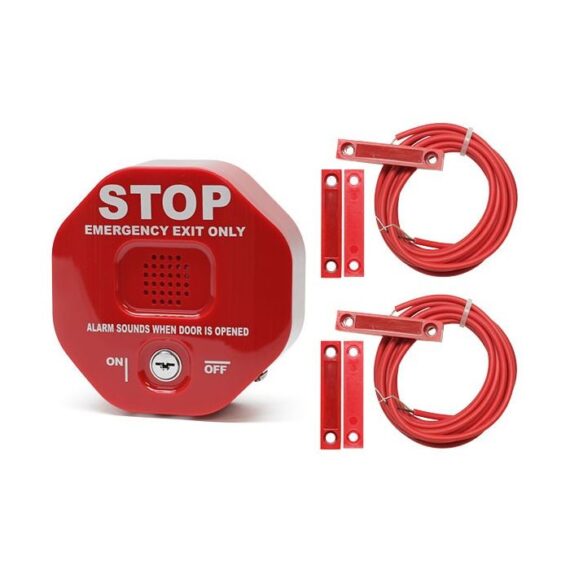

Exit Door Alarm System in Qatar
In today’s world, where safety and security are paramount for every commercial, industrial, and institutional facility, Exit Door Alarm System play a vital role. These systems act as both deterrents and early-warning devices, helping to prevent unauthorized access, theft, and breaches of emergency exits.
Whether it’s a retail outlet in a mall, a school campus, a hospital emergency exit, or a corporate office, ensuring that emergency doors are used only in emergencies is essential. That’s where Exit Door Alarm System come into play.
In this blog, we will take a deep dive into the importance of Exit Door Alarm System, their features, benefits, uses, and why Axle Systems is the trusted supplier in Qatar for installing and supporting these essential systems.
What is an Exit Door Alarm System?
An Exit Door Alarm System is a security and safety mechanism installed on emergency or secondary exit doors. It sounds a loud alarm when someone tries to open the door without authorization, unless it is during a legitimate emergency.
These systems are commonly used in:
- Hospitals
- Shopping malls
- Airports
- Warehouses
- Educational institutions
- Government buildings
- Hotels
- Office buildings
Exit Door Alarms ensure that:
- Emergency exits remain unobstructed and functional.
- Unauthorized entry or exit through restricted doors is prevented.
- Theft and security breaches are minimized.
- Fire safety and QCDD compliance is achieved in public buildings.
Benefits of Exit Door Alarm System
Implementing Exit Door Alarm System is a strategic move for any organization aiming to enhance both safety and security. These systems go beyond simply alerting staff—they act as integrated solutions to manage access, prevent unauthorized movement, and ensure compliance with regulatory requirements. Here’s a detailed breakdown of the top benefits:
1. Enhanced Security and Access Control
One of the core purposes of an Exit Door Alarm System is to prevent unauthorized access or egress. Whether it’s a customer attempting to sneak out through a restricted exit, an employee misusing emergency doors, or an intruder trying to bypass main entry points, these systems provide an immediate alert. This ensures only authorized individuals can use the doors under controlled conditions.
Use Case:
- In shopping malls, Exit Door Alarm System prevent the use of fire exits as shortcuts or escape routes for theft.
- In offices, they safeguard backdoor areas from external threats.
2. Theft Prevention and Loss Reduction
Retail stores, warehouses, and logistics hubs are particularly vulnerable to internal theft or product loss. Exit doors that lead to the outside or non-monitored zones can become hotspots for unauthorized removal of goods. Exit Door Alarm System acts as a powerful deterrent and intervention mechanism.
Use Case:
- Retailers can minimize shoplifting incidents by alarming all secondary exits.
- Logistics managers can track attempted unauthorized movement of goods during off-hours.
3. Emergency Exit Compliance (QCDD and International Standards)
In Qatar, the Qatar Civil Defense Department (QCDD) mandates clear access to emergency exits but also emphasizes preventing misuse. An Exit Door Alarm System helps maintain the delicate balance between accessibility and control. It ensures that:
- Doors are not obstructed
- Misuse triggers alerts
- In case of fire, doors unlock automatically when integrated with fire panels
Use Case:
Hospitals, hotels, and malls achieve fire safety compliance while ensuring proper use of emergency exits.
4. Audible and Visual Alerts for Immediate Response
Exit Door Alarm System emit loud sirens (typically between 90-120 decibels) upon unauthorized door activity. Many models also feature flashing lights for visual attention. These dual alerts help ensure that:
- On-site security teams can respond quickly
- Individuals attempting to misuse the door are deterred
- In noisy environments, visual alerts help staff detect the breach
Use Case:
In factories or noisy warehouses, flashing lights alert supervisors even if the siren is not clearly audible.
5. Staff and Visitor Safety Enhancement
In facilities like hospitals, elder care centers, or psychiatric units, it’s vital to ensure that vulnerable individuals do not accidentally leave through emergency doors. Exit Door Alarm System alert staff to such events, enabling quick intervention before someone exits the building unsafely.
Use Case:
Hospitals monitor patient movement to prevent wandering or accidental exits, especially in maternity, geriatric, or mental health wards.
6. Deterrent Against Misuse and Loitering
Even before the alarm is triggered, the visible presence of an Exit Door Alarm System—complete with warning labels—acts as a psychological deterrent. People are less likely to misuse doors when they see security devices installed.
Use Case:
In educational institutions, students are discouraged from using fire exits as unauthorized shortcuts or escape routes.
7. Integration with Building Management Systems (BMS)
Modern Exit Door Alarm System can be integrated with:
- Access control systems (for authorized bypass)
- Fire alarm systems (for emergency unlocking)
- BMS dashboards (for real-time monitoring)
- CCTV surveillance (for visual confirmation of events)
This seamless integration enhances centralized management, reduces manual monitoring, and enables faster decision-making.
Use Case:
Corporate buildings and airports with centralized security can manage multiple exit alarms from a single control room.
8. Delayed Egress for Controlled Exit
Many systems support a delayed egress function, usually a 15-second delay between opening the door and sounding the alarm. This feature allows:
- Security personnel time to react
- A warning period before the situation escalates
- Emergency release if needed (in compliance with fire codes)
Use Case:
In government buildings or high-security areas, delayed egress can prevent unauthorized escapes without physically locking people in.
9. Cost-Effective Compared to Full-Time Security Staff
Hiring security personnel to monitor every emergency or rear exit door can be prohibitively expensive. An Exit Door Alarm System provides 24/7 monitoring at a fraction of the cost, and it does so consistently without breaks or human error.
Use Case:
Retail chains and shopping malls reduce security costs by installing alarmed exits instead of employing dedicated guards for each door.
10. Customizable Operation for Specific Needs
Exit Door Alarm System are highly customizable to meet different operational requirements:
- Adjustable alarm volume
- Reset via key, code, or RFID
- Bypass for cleaning or deliveries
- Time-based activation/deactivation
Use Case:
Hotels can disable alarm functions during scheduled maintenance or deliveries, while keeping them active during peak guest hours.
11. Battery Backup and Fail-Safe Operation
Power outages shouldn’t compromise safety. Most professional-grade Exit Door Alarm System come with built-in rechargeable batteries to keep the alarm functioning even during electrical failures.
Use Case:
During blackouts or emergencies, alarms continue to function, maintaining building security and fire safety compliance.
12. Logs and Analytics for Incident Review
Advanced exit alarm systems provide logs of:
- Alarm triggers (time/date)
- Reset activities
- User authentication logs (if bypassed)
This data can be useful for incident investigations, compliance auditing, and security reviews.
Use Case:
Facility managers review access logs to identify repeat violations or security lapses.
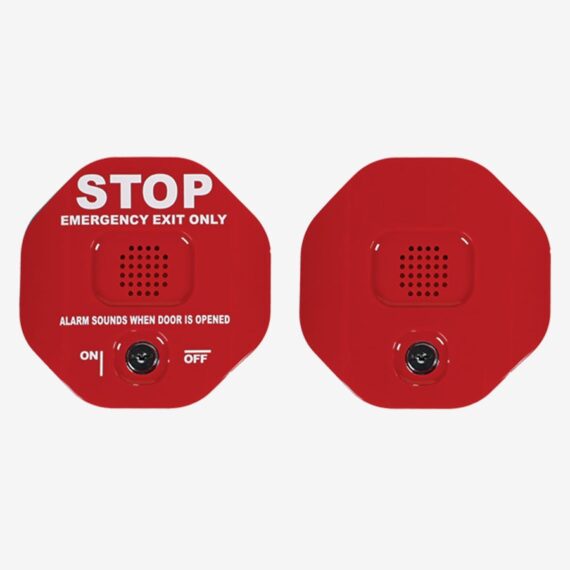
Key Features of Exit Door Alarm Systems
A high-quality Exit Door Alarm System is designed with precision and built to serve two critical functions — security enforcement and emergency preparedness. As technology continues to evolve, these systems have incorporated several advanced features that make them suitable for various environments, from small retail stores to large commercial complexes.
Below is a comprehensive breakdown of the essential and advanced features you can expect from a modern Exit Door Alarm System:
1. High-Decibel Audible Alarm (90–120 dB)
At the heart of the system is a powerful siren that activates when an unauthorized person attempts to open the exit door. The alarm typically sounds in the 90–120 dB range, which is loud enough to:
- Alert on-site security personnel
- Draw attention from nearby staff or the public
- Deter the person attempting unauthorized egress
Some models allow users to adjust the volume based on environmental noise levels or regulatory limitations.
Example:
- In a quiet hospital ward, the alarm can be set to 90 dB.
- In a busy shopping mall, it can be increased to 120 dB for maximum impact.
2. Visual Indicators (Flashing Strobes or LEDs)
In addition to the audible alarm, many systems come equipped with flashing strobe lights or LED indicators. These visual cues help:
- Improve visibility in noisy environments
- Notify staff members with hearing impairments
- Clearly indicate which door has been triggered
This feature is especially effective in factories, malls, airports, and other areas with high ambient noise.
3. Delayed Egress Function
A popular feature in many commercial-grade systems, delayed egress provides a programmable time delay (typically 15–30 seconds) after the door is pushed or opened before the alarm activates. This delay offers:
- A chance for security to respond
- An opportunity to cancel the alarm if the user is authorized
- Compliance with life safety codes, which allow delay to prevent theft without compromising emergency evacuation
Optional customization:
- Adjustable timer: 5 to 30 seconds
- Warning beeps and visual countdown during the delay
4. Automatic Reset or Manual Reset Options
Depending on the installation site, systems can be configured for either:
- Automatic reset: The alarm stops sounding once the door is closed again.
- Manual reset: The alarm continues until an authorized person resets it using a key, PIN code, or RFID badge.
Manual reset is especially valuable in high-security environments, ensuring that every incident is investigated.
5. Integration with Access Control Systems
Modern exit alarm systems are no longer standalone. They can seamlessly integrate with access control systems to:
- Allow authorized personnel to disarm the alarm using ID cards, biometric authentication, or mobile access
- Log access events for auditing and review
- Trigger automatic unlocking when fire alarms are activated
Compatible technologies:
- RFID / proximity cards
- Keypad/PIN entry
- Fingerprint readers
- Mobile-based access via apps
6. Tamper-Proof Housing and Sensors
Security doesn’t stop at the door — the alarm unit itself is tamper-resistant. Most systems come with:
- Anti-tamper switches that trigger the alarm if the housing is removed or manipulated
- Durable, vandal-proof enclosures made from steel or reinforced polycarbonate
- Lockable covers or internal mounting for high-risk areas
This ensures that the system cannot be bypassed or damaged easily by intruders or insiders.
7. Battery Backup for Uninterrupted Operation
Power failure should never compromise security. Quality Exit Door Alarm System include internal rechargeable batteries or backup power options. This ensures:
- Continuous protection during blackouts
- Compliance with fire and safety codes
- Alarms can still sound in emergencies even if the building loses power
Battery status indicators and low-battery alerts are also available in many models.
8. Flexible Installation Options
Exit Door Alarm System are available in various form factors and configurations to suit different installation needs:
- Surface-mount units for simple retrofits
- Recessed-mount options for aesthetic integration
- Panic bar-mounted versions for fire-rated doors
- Vertical rod or rim latch compatibility
They can be installed on metal, wooden, or glass doors with the right mounting accessories.
9. Remote Monitoring and Centralized Control
For enterprise-level applications, some systems support remote monitoring via software platforms or integration with a centralized Building Management System (BMS) or Security Operation Center (SOC). This allows:
- Real-time event notifications via SMS/email
- Remote disarming or acknowledgment of alarms
- Central log storage and activity tracking
Ideal for hospitals, government facilities, airports, and retail chains.
10. Event Logging and Incident Records
Advanced models include internal memory or cloud-based storage to log:
- Date and time of each door opening
- Who disarmed or bypassed the alarm
- Duration of alarm activation
- Response time (when connected to a monitoring station)
These records can be crucial for compliance audits, investigations, or internal reviews.
11. Fire Alarm and Emergency Integration
In line with fire safety regulations, Exit Door Alarm System must release their hold in case of an actual emergency. When integrated with the fire alarm system, the door automatically unlocks and silences the alarm when:
- A fire alarm is triggered
- Emergency evacuation is in progress
This integration ensures unhindered egress, which is required by QCDD and international fire safety codes.
12. Customizable Alert Settings and Scheduling
Facility managers can customize the system to:
- Operate only during non-working hours
- Trigger different alerts based on zone (e.g., siren in storage room, flashing light at reception)
- Change access methods (PIN during day, RFID at night)
These flexible options allow a more tailored solution for every environment.
13. User-Friendly Controls
Simplicity matters. Most units offer:
- Intuitive key switches or touchscreens
- Multilingual audio messages or digital displays
- Maintenance-friendly diagnostics and alerts
This makes them easy to operate by both security personnel and facility staff.
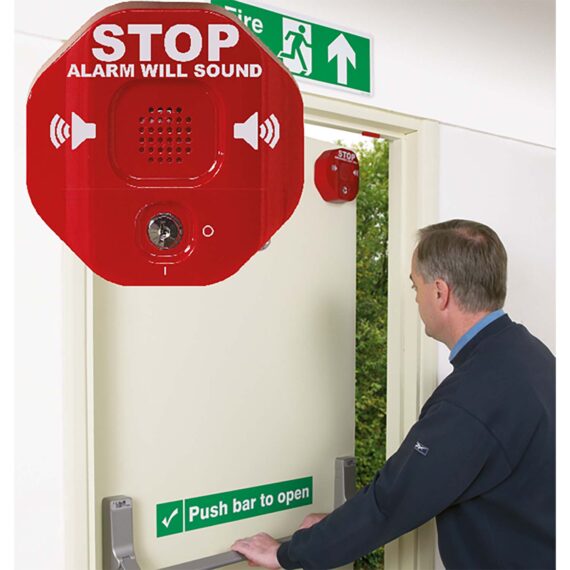
Uses of Exit Door Alarm System
Exit Door Alarm System are essential safety and security tools in a wide range of environments. Whether used for preventing unauthorized exits, safeguarding restricted areas, or ensuring regulatory compliance, these systems provide unmatched value across industries.
Let’s explore the diverse use cases by sector, highlighting how Exit Door Alarm System contribute to operational efficiency, safety, and loss prevention.
1. Commercial Office Buildings
In corporate environments, Exit Door Alarm System help maintain a controlled flow of personnel and protect sensitive zones such as data centers, server rooms, and archives. They also discourage unauthorized shortcuts through fire exits or service corridors.
Benefits in Offices:
- Prevents employees from bypassing main entry/exit points.
- Protects emergency exits from being used for non-emergency reasons.
- Alerts facility managers to unauthorized movements after working hours.
2. Retail Stores and Shopping Malls
Retail environments are prone to internal theft, shoplifting, and unauthorized employee movement. Exit Door Alarm System act as both deterrents and real-time alerting mechanisms.
Benefits in Retail:
- Prevents backdoor theft by employees or intruders.
- Helps security monitor staff entry/exit in stockrooms.
- Ensures emergency exits are not obstructed or misused.
3. Hotels and Resorts
Hospitality environments have multiple access points, including staff-only areas, maintenance zones, and fire exits. Exit Door Alarm System help maintain guest safety, employee control, and asset security.
Benefits in Hotels:
- Prevents unauthorized guests from accessing restricted zones.
- Alerts staff if fire exits are misused.
- Ensures compliance with QCDD fire evacuation protocols.
4. Hospitals and Healthcare Facilities
Healthcare environments require strict control over exits, particularly for patient safety, emergency access, and infection control. Exit alarms help monitor exits without compromising emergency readiness.
Benefits in Hospitals:
- Prevents patients (especially children, elderly, or mentally ill) from wandering off.
- Allows emergency evacuation doors to remain unblocked yet secure.
- Supports infection control by managing zone access during health crises.
5. Schools, Colleges, and Universities
Educational institutions must secure multiple entry and exit points. Exit Door Alarm System protect students from leaving without permission and ensure emergency exits are kept secure and functional.
Benefits in Education:
- Prevents truancy and unauthorized campus exits.
- Alerts security to unauthorized staff or visitor movement.
- Enhances student safety during emergency drills and evacuations.
6. Industrial Facilities and Warehouses
Industrial facilities house expensive machinery, confidential processes, and large inventories. Managing employee access to these zones is critical for safety, compliance, and asset protection.
Benefits in Industry:
- Prevents unapproved exit or access to production areas.
- Helps manage shift workers and delivery schedules.
- Alerts during power loss or emergencies when unauthorized movement may occur.
Real Scenario:
A logistics warehouse in the Qatar Free Zones Authority integrated door alarms into their security system to ensure dock doors remained secure except during approved loading times.
7. Mosques and Religious Centers
During large gatherings such as Friday prayers or Ramadan, religious buildings need controlled exits to manage crowd movement and prevent congestion or panic.
Benefits in Mosques:
- Prevents misuse of fire exits during non-emergencies.
- Ensures emergency paths are not blocked or misused.
- Assists in orderly evacuation planning.
8. Government Offices and Embassies
Government buildings handle sensitive information and restricted personnel access, making Exit Door Alarm System essential for securing confidential zones and monitoring unauthorized exits.
Benefits in Government Spaces:
- Protects data centers, file rooms, and restricted offices.
- Ensures emergency exits remain functional but secure.
- Integrates with biometric access systems for high-security doors.
9. Airports and Transportation Hubs
Airports, seaports, and transit terminals have multiple controlled access points. Exit Door Alarm System enhances passenger security and prevents entry to restricted airside or customs areas.
Benefits in Transportation:
- Prevents passengers from entering secure zones without clearance.
- Monitors staff movement in baggage and cargo areas.
- Ensures emergency exits are not blocked or misused.
10. Shopping Centers and Hypermarkets
Large-scale retail spaces with multiple levels and complex layouts must manage crowd movement and emergency routes efficiently. Exit alarms ensure that fire exits remain functional yet protected from misuse.
Benefits in Shopping Centers:
- Enhances loss prevention efforts in anchor stores.
- Improves customer safety during emergency evacuations.
- Reduces the need for constant manned surveillance at all exits.
11. Elderly Care Homes and Rehabilitation Centers
In care environments, protecting vulnerable residents from accidental wandering is critical. Exit Door Alarm System can prevent falls, injuries, or individuals leaving unattended.
Benefits in Care Homes:
- Monitors exits used by dementia or Alzheimer’s patients.
- Alerts nurses and caregivers in real-time.
- Integrates with nurse call or paging systems.
12. Banks and Financial Institutions
Security is paramount in financial institutions. Exit Door Alarm System are essential for monitoring emergency doors, secure zones, teller rooms, and currency transport corridors.
Benefits in Banking:
- Prevents unauthorized egress from vault areas.
- Deters internal theft and ensures surveillance triggers on movement.
- Supports emergency response readiness.
13. Data Centers and IT Infrastructure Sites
In technology environments where uptime and access control are critical, Exit Door Alarm System secure server rooms, power rooms, and emergency exits from unauthorized access.
Benefits in Data Centers:
- Protects high-value digital infrastructure.
- Prevents tampering or intrusion through emergency exits.
- Enables integration with access logs and video surveillance.
Axle Systems: Your Trusted Partner for Exit Door Alarm System in Qatar
In a market that demands both cutting-edge technology and unwavering reliability, Axle Systems stands as the premier supplier and installer of Exit Door Alarm System in Qatar. With years of experience and a deep understanding of the local security landscape, we are committed to providing tailored solutions that meet the specific needs of businesses and organizations across the country.
Why Choose Axle Systems for Your Exit Door Alarm System Needs?
- Specialized Expertise: At Axle Systems, security is our priority number one. We are digital security experts, offering end-to-end products and services. Our team possesses in-depth knowledge of various Exit Door Alarm System technologies, local regulations, and the unique security challenges faced by different sectors in Qatar. We don’t just sell products; we provide comprehensive security solutions.
- Leading Brand Partnerships: We partner with globally renowned manufacturers like STI UK (Safety Technology International) and Satel – Poland, ensuring that we supply only the highest quality, most reliable, and technologically advanced Exit Door Alarm System available on the market. These partnerships allow us to offer a diverse range of wired and wireless solutions, including the popular STI 6400 and STI 6402 series.
- Customer-Centric Approach: We believe in customer satisfaction through providing top-notch quality products at an unequaled price. We understand the objectives of our clients and are very functional in delivering the right requirements on time, with a cut above the rest. Our local presence in Qatar means we offer prompt, responsive, and personalized support.
Contact Axle Systems Today:
Protect your property, enhance safety, and ensure compliance with Axle Systems’ advanced Exit Door Alarm System. Our team is ready to provide you with a tailored solution that brings peace of mind and robust security.
Axle Systems WLL P.O. Box 200081 Al Khalidiya Street, Najma, Doha, Qatar
Phone: +974 44 682391, +974 77443731
Email: info@axlesys.com
Website: www.axlesys.com
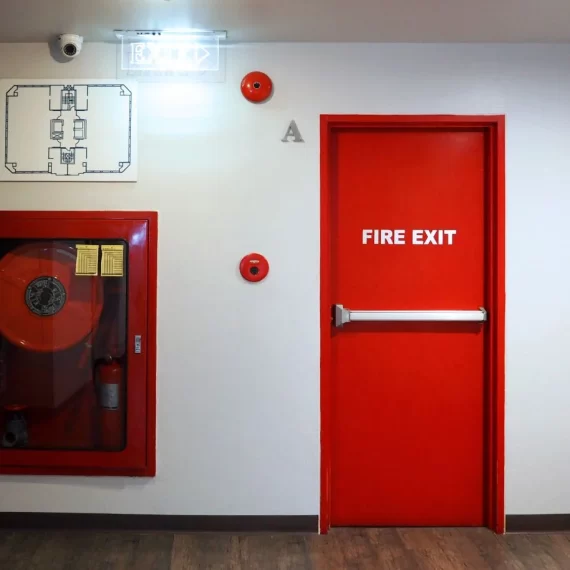
Common FAQs About Exit Door Alarm System
Understanding the nuances of Exit Door Alarm System is key to making informed decisions. Here are some frequently asked questions to provide further clarity:
Q1: What is the main difference between a regular door alarm and an emergency Exit Door Alarm System?
A1: While both alert to door openings, an emergency Exit Door Alarm System has a primary function of allowing unimpeded egress during an emergency. It’s typically paired with panic hardware (push bars) that ensures the door can always be opened from the inside, even if the alarm is armed. Regular door alarms might simply detect forced entry or opening for general security. Emergency exit alarms must comply with stricter life safety codes that prioritize evacuation.
Q2: Are Exit Door Alarm System difficult to install?
A2: The complexity of installation varies. Simple, self-contained battery-operated units can be relatively easy to mount. However, for hardwired systems, those integrated with existing security infrastructure (access control, CCTV), or systems requiring specific delayed egress functionalities, professional installation is highly recommended. Axle Systems provides expert installation services to ensure proper functionality and compliance.
Q3: How long do the batteries last in wireless Exit Door Alarm System?
A3: Battery life depends on usage frequency, alarm activation frequency, and the specific model. Many modern battery-operated units are designed for extended battery life, often lasting up to 2-3 years under normal usage conditions. They typically include low battery indicators to alert you when replacement is needed. For high-traffic doors, hardwired systems with battery backup are usually preferred.
Q4: Can these systems prevent “tailgating” or “piggybacking” (where an unauthorized person follows an authorized person through the door)?
A4: While a basic Exit Door Alarm System will sound if the door is held open too long, more advanced systems, especially those integrated with sophisticated access control, can include anti-passback features or specialized sensors (like optical turnstiles or dual sensors) designed to detect and prevent tailgating. However, for a simple alarm on a panic bar, it primarily detects the door opening, not the number of people passing through.
Q5: What is “delayed egress” and when is it used?
A5: Delayed egress is a specific feature where, when the door is pushed to exit, there’s a short delay (e.g., 15-30 seconds) before the door fully unlocks and the alarm sounds. During this delay, an audible alert typically warns the person they are attempting to use an alarmed exit. This delay provides security personnel time to respond to the door and prevent an unauthorized exit before it occurs. It’s commonly used in healthcare facilities.
Q6: Can an Exit Door Alarm System be integrated with my existing CCTV or access control system?
A6: Yes, absolutely. Modern Exit Door Alarm System are often designed for seamless integration. Axle Systems specializes in integrating these alarms with your existing CCTV to trigger recording upon alarm activation, and with access control systems to allow authorized entry/exit via credentials while maintaining security. This integration creates a more robust and efficient security ecosystem.
Q7: How do I choose the right Exit Door Alarm System for my facility?
A7: Choosing the right system depends on several factors:
- Purpose: Is it primarily for theft deterrence, patient safety, or regulatory compliance?
- Type of Door: Is it a single door, double door, or a specialized fire door?
- Traffic Volume: How frequently is the door expected to be used?
- Power Availability: Is hardwiring feasible, or is a wireless solution needed?
- Integration Needs: Do you want it linked to other security systems?
- Budget: Costs vary based on features and complexity. Axle Systems offers expert consultation to help you assess these factors and recommend the ideal solution.
Q8: What kind of maintenance do these systems require?
A8: Regular maintenance is crucial. This typically includes:
- Battery checks/replacement (for wireless units): Usually annually or as indicated by low battery alerts.
- Functionality testing: Regularly testing the alarm, override mechanism, and any integrated features.
- Sensor cleaning/inspection: Ensuring sensors are free from debris and properly aligned.
- Firmware updates (for advanced systems): To ensure optimal performance and security. Axle Systems provides comprehensive maintenance services to ensure your systems are always operational and compliant.
Q9: What are the legal requirements for emergency exit doors in Qatar?
A9: In Qatar, building codes and fire safety regulations, often aligned with international standards like NFPA (National Fire Protection Association), dictate requirements for emergency exits. These generally stipulate that emergency exits must be unobstructed, clearly marked, and readily openable from the inside without a key or special knowledge. While alarms are permissible for security, they must never impede emergency egress. Systems with delayed egress must adhere to strict time limits and release mechanisms linked to fire alarms. Axle Systems ensures all supplied systems comply with relevant local and international standards.
Q10: Can false alarms be an issue, and how can they be prevented?
A10: While less common with modern systems, false alarms can occur due to improper installation, faulty sensors, or extreme environmental conditions. Prevention measures include:
- Professional Installation: Ensuring sensors are correctly aligned and systems are calibrated.
- Regular Maintenance: Identifying and addressing potential issues before they cause false alarms.
- High-Quality Equipment: Investing in reliable systems less prone to malfunction.
- User Training: Ensuring staff understand how to properly use and disarm the system.
- Customizable Delays: Setting appropriate entry/exit delays to allow authorized users time to disarm.
In conclusion, an Exit Door Alarm System is an indispensable component of a holistic security strategy for any establishment in Qatar. By understanding their functions, benefits, and features, and by partnering with a trusted expert like Axle Systems, you can effectively safeguard your premises, ensure compliance, and prioritize the safety of everyone within your facility. Contact Axle Systems today to discuss your security needs and discover how our advanced solutions can provide you with unparalleled peace of mind.