

Electronic Key Management: The Future of Secure Key Control
In today’s increasingly connected and security-conscious world, managing physical keys may seem like a minor concern — until the moment a key is lost, misplaced, or used without authorization. For organizations that manage multiple locations, vehicles, assets, or secure areas, traditional key storage methods like key hooks, drawers, or simple lockboxes are no longer sufficient. This is where Electronic Key Management (EKM) systems step in — transforming how companies secure, track, and control key usage.
Axle Systems is proud to be a leading supplier of state-of-the-art Electronic Key Management solutions — designed to bring efficiency, accountability, and high-level protection to operations of all sizes.
In this extensive guide, we’ll dive deep into the world of Electronic Key Management: what it is, how it works, key features, benefits, real-world uses, best practices, and answers to frequently asked questions.
What is Electronic Key Management?
Electronic Key Management (EKM) is a smart, automated system that controls access to physical keys through digital authentication and tracking technologies. Rather than relying on manual key sign-out sheets or unsecured storage, EKM systems use electronic hardware and software interfaces to manage keys securely.
At its core, an EKM system:
- Monitors who has access to which keys
- Records when keys are removed and returned
- Controls key access through user authentication (PIN, card, biometric)
- Integrates with existing security infrastructure
Ultimately, EKM provides a centralized, secure means of managing physical keys that would otherwise be prone to loss, misuse, or theft.
Why Traditional Key Management No Longer Suffices
Traditional methods — such as key hooks, simple lockboxes, or manual sign-out logs — are fraught with vulnerabilities:
- No accountability: Anyone can take a key without authorization or oversight.
- Human error: Keys are misplaced, logs are incomplete, and tracking is challenging.
- Security risks: Lost keys or unauthorized access can lead to breaches, theft, or liability exposure.
- Operational inefficiencies: Wasted time searching for keys or verifying who has access.
As organizations grow and security demands increase, these limitations become real business problems — impacting safety, compliance, and overall productivity.
Electronic Key Management eliminates these vulnerabilities by using technology to enforce accountability and streamline key workflows.
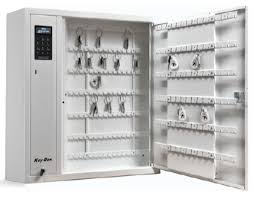
How Electronic Key Management Works
An Electronic Key Management system typically consists of the following components:
1. Key Cabinets or Lockers
These are secure enclosures equipped with electronic locks, sensors, and key tags that securely store the keys. Each key is individually monitored and accounted for.
2. Authentication Methods
Users must authenticate themselves before accessing keys. Common methods include:
- PIN codes
- Proximity cards / access badges
- Biometric verification (fingerprint, facial recognition)
Authentication ensures only authorized individuals can access designated keys.
3. Integrated Software Platform
The Electronic Key Management system software:
- Tracks key issuance and return time-stamps
- Generates audit reports
- Sends alerts for overdue keys
- Manages user permissions
This software can be cloud-based or installed on a local server, depending on the organization’s needs.
4. Alerts and Notifications
The system can be configured to send alerts via email or SMS for events like:
- Late key returns
- Unauthorized access attempts
- System errors
5. Audit Trail and Reporting
Every key movement is recorded in a tamper-proof log — creating a comprehensive history that supports compliance, accountability, and investigations.
Key Features of Electronic Key Management
Electronic Key Management systems are designed to go far beyond simple key storage. They combine intelligent hardware with powerful software to deliver complete visibility, control, and security over physical keys. Below is a detailed explanation of the core and advanced features that make Electronic Key Management an essential solution for modern organizations.
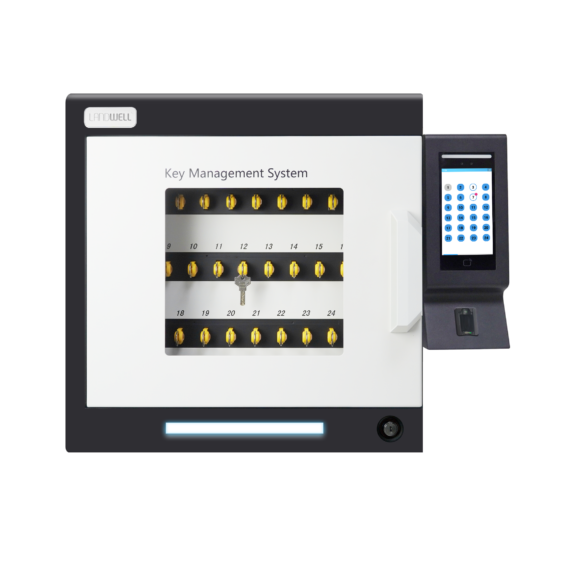
1. Secure Electronic Key Cabinets
At the heart of any Electronic Key Management system is a high-security electronic key cabinet. These cabinets are purpose-built to store and protect physical keys in a controlled environment.
Key characteristics include:
- Robust metal construction to resist tampering or forced entry
- Electronically controlled locking mechanisms
- Individual key slots with electronic sensing
- Tamper detection and alarm functionality
Each key is securely attached to a smart key tag or electronic fob, ensuring that the system can detect when a key is removed or returned. This eliminates the risk of keys being taken unnoticed and ensures every movement is recorded.
2. Advanced User Authentication Methods
Electronic Key Management systems rely on strong user authentication to prevent unauthorized access. Depending on organizational requirements, systems can support one or multiple authentication methods, including:
- PIN-based access
- RFID or proximity cards
- Smart ID cards
- Biometric authentication (fingerprint, facial recognition)
- Multi-factor authentication (e.g., card + PIN)
This ensures that only authorized individuals can access specific keys. Authentication methods can be configured based on security levels, roles, or departments.
3. Role-Based Access Control (RBAC)
One of the most powerful features of Electronic Key Management is role-based access control. Instead of granting blanket access, administrators can define permissions based on:
- Job role
- Department
- Shift timing
- Seniority level
- Project or operational responsibility
For example:
- Maintenance staff can access equipment room keys only during work hours
- Fleet drivers can access only assigned vehicle keys
- Managers may have broader access privileges
This granular control significantly reduces internal security risks and enforces the principle of least privilege.
4. Real-Time Key Tracking and Visibility
Electronic Key Management provides real-time visibility into the status of every key in the system.
Administrators can instantly see:
- Which keys are currently in the cabinet
- Which keys are checked out
- Who has taken a key
- When the key was taken
- How long the key has been out
This real-time tracking eliminates confusion, prevents disputes, and ensures operational continuity — especially in high-traffic environments.
5. Automated Audit Trails and Activity Logs
Every action within an Electronic Key Management system is automatically recorded, creating a tamper-proof audit trail.
Logged data typically includes:
- User identity
- Key ID or description
- Date and time of key removal
- Date and time of key return
- Failed access attempts
- System alerts and warnings
These logs are invaluable for:
- Security audits
- Internal investigations
- Regulatory compliance
- Incident analysis
Audit reports can be exported in multiple formats for management or compliance teams.
6. Time-Based Key Control and Scheduling
Electronic Key Management systems allow administrators to set time-based access rules, ensuring keys are only available when needed.
Key scheduling options include:
- Access during specific shifts or hours
- Temporary access for contractors or visitors
- Automatic denial outside approved time windows
- Time-limited key checkouts
This feature is especially useful for facilities operating in shifts, shared workspaces, or environments with rotating staff.
7. Overdue Key Alerts and Notifications
To prevent keys from being retained longer than allowed, Electronic Key Management systems include automated alert mechanisms.
Alerts can be triggered when:
- A key is overdue
- A key is not returned within a defined time
- An unauthorized access attempt occurs
- A cabinet door is forced or tampered with
Notifications can be sent via:
- On-screen alerts
- Email notifications
- SMS (depending on system configuration)
This proactive alerting helps administrators respond quickly and maintain strict key discipline.
8. Centralized Management Dashboard
Administrators manage the entire system through a centralized software dashboard, which provides a clear and intuitive overview of key activity.
The dashboard typically allows:
- User management and permission setup
- Key assignment and labeling
- Report generation
- Alert configuration
- System health monitoring
This centralized control simplifies administration, even for organizations managing hundreds or thousands of keys across multiple locations.
9. Multi-Site and Scalable Architecture
Modern Electronic Key Management systems are highly scalable, making them suitable for organizations of all sizes.
Scalability features include:
- Support for multiple cabinets
- Centralized control across multiple branches or sites
- Expansion without replacing existing infrastructure
- Modular cabinet designs
This ensures long-term value and flexibility as organizations grow or restructure.
10. Integration with Other Security Systems
Electronic Key Management does not operate in isolation. It can be integrated with other enterprise security and IT systems, such as:
- Access Control Systems (ACS)
- Time and Attendance systems
- Visitor Management Systems
- Active Directory or HR databases
- CCTV and security monitoring platforms
Integration creates a unified security ecosystem, enhancing overall operational control and reducing administrative duplication.

Major Benefits of Electronic Key Management
Electronic Key Management is not just a security upgrade — it is a strategic investment that delivers measurable operational, financial, and compliance benefits. By replacing manual key control methods with automated, intelligent systems, organizations gain complete visibility, accountability, and control over one of their most overlooked security assets: physical keys.
Below are the major benefits of Electronic Key Management explained in depth.
1. Significantly Enhanced Security
One of the most critical benefits of Electronic Key Management is dramatically improved security. Traditional key storage methods offer little to no protection against unauthorized access, duplication, or misuse. Electronic Key Management systems eliminate these weaknesses by enforcing strict access control policies.
Key security improvements include:
- Restricted access based on user identity
- Prevention of unauthorized key removal
- Immediate detection of suspicious activity
- Tamper alerts and system monitoring
By ensuring that only authorized individuals can access specific keys, organizations drastically reduce the risk of internal and external security breaches.
2. Complete Accountability and Transparency
Electronic Key Management introduces full accountability into key handling processes. Every key transaction is automatically logged and linked to a specific user and time stamp.
This transparency ensures:
- No anonymous key usage
- Clear responsibility for assets and spaces
- Reduced disputes over lost or damaged keys
When employees know that key usage is monitored, responsible behavior increases naturally, creating a culture of accountability.
3. Elimination of Lost and Misplaced Keys
Lost keys are a costly and persistent problem in organizations using manual systems. Replacing keys often requires:
- Rekeying locks
- Issuing new keys
- Operational downtime
- Security risk mitigation
Electronic Key Management significantly reduces lost keys by:
- Ensuring keys are always stored securely
- Tracking every key movement
- Sending alerts for overdue or missing keys
This leads to reduced replacement costs and enhanced operational continuity.
4. Improved Operational Efficiency
Manual key control consumes valuable time and administrative resources. Staff often spend time searching for keys, checking logs, or resolving access issues.
Electronic Key Management improves efficiency by:
- Providing instant access to authorized keys
- Eliminating manual sign-out procedures
- Reducing administrative workload
- Automating access approvals and tracking
Operations become smoother, faster, and more predictable — especially in high-activity environments such as facilities management, logistics, and healthcare.
5. Reduced Risk of Internal Theft and Misuse
Internal theft and misuse of assets often occur due to weak access controls and lack of traceability. Electronic Key Management directly addresses this risk.
By maintaining a detailed audit trail, the system:
- Discourages unauthorized access
- Enables quick identification of misuse
- Supports investigations and disciplinary actions
This proactive approach helps protect assets and maintain organizational integrity.
6. Strong Compliance and Audit Readiness
Many industries operate under strict regulatory frameworks that require documented access control and audit trails. Electronic Key Management systems simplify compliance by automatically recording all key activities.
Compliance benefits include:
- Tamper-proof logs
- Exportable audit reports
- Demonstrable access control enforcement
- Reduced risk of non-compliance penalties
This is particularly valuable in healthcare, government, education, finance, and critical infrastructure environments.
7. Enhanced Asset Protection
Keys often control access to high-value or high-risk assets such as:
- Vehicles and fleets
- Secure rooms and data centers
- Machinery and equipment
- Storage areas
Electronic Key Management ensures these assets are protected by:
- Limiting access to authorized personnel
- Tracking usage history
- Enforcing time-based controls
This minimizes asset damage, misuse, and unauthorized access.
8. Real-Time Visibility and Control
Electronic Key Management systems provide administrators with real-time insight into key usage across the organization.
Administrators can instantly view:
- Which keys are currently in use
- Who is using them
- How long they have been checked out
- Any overdue or restricted keys
This level of visibility enables faster decision-making and proactive security management.
9. Lower Operational and Security Costs
While Electronic Key Management is an investment, it delivers significant cost savings over time by reducing:
- Key replacement costs
- Lock rekeying expenses
- Security incident response costs
- Administrative labor
The long-term return on investment (ROI) makes EKM a cost-effective solution for organizations of all sizes.
10. Scalable Security for Growing Organizations
As organizations expand, traditional key management becomes increasingly unmanageable. Electronic Key Management systems are designed to scale effortlessly.
Scalability advantages include:
- Support for thousands of keys
- Multi-location management
- Modular cabinet expansion
- Centralized control
This ensures the system grows with your business without disruption.
Who Uses Electronic Key Management? Common Use Cases
Electronic Key Management (EKM) systems are incredibly versatile and are used across a wide range of industries and sectors. Any organization that manages valuable assets, restricted access areas, or multiple users handling keys can benefit. Below, we break down the most common use cases, highlighting the specific challenges each sector faces and how EKM resolves them.
1. Corporate Offices
Challenges:
Corporate environments often have multiple offices, secure rooms, IT server closets, and storage areas. Traditional key management can lead to lost keys, unauthorized access, and wasted administrative time tracking who has which key.
How EKM Helps:
- Tracks employee access to secure areas and equipment rooms
- Limits key access based on department, role, or shift
- Automates sign-in/out logs for auditing and compliance
- Reduces administrative workload for office managers
2. Fleet Management and Vehicle Operations
Challenges:
Companies that manage vehicle fleets — rental agencies, logistics firms, government transport agencies — face risks including unauthorized vehicle use, lost keys, and difficulty tracking vehicle assignments.
How EKM Helps:
- Assigns vehicle keys to specific drivers with time-limited access
- Tracks vehicle key usage and duration
- Sends alerts for overdue key returns or unauthorized access attempts
- Helps reduce operational loss and improve fleet accountability
3. Healthcare Facilities
Challenges:
Hospitals, clinics, and laboratories manage sensitive areas containing medications, patient records, lab samples, and expensive equipment. Key mismanagement can compromise patient safety and violate regulations.
How EKM Helps:
- Controls access to pharmacy rooms, diagnostic labs, and restricted areas
- Provides audit trails for regulatory compliance (e.g., ISO, HIPAA)
- Sends automatic notifications for overdue or misplaced keys
- Enhances overall patient and staff safety
4. Government and Military Facilities
Challenges:
Government agencies, defense departments, and security-sensitive facilities require stringent access control. Traditional methods cannot prevent unauthorized entry or provide tamper-proof audit trails.
How EKM Helps:
- Ensures Electronic Key Management to secure offices, armories, and equipment rooms are tightly controlled
- Maintains detailed logs for all key withdrawals and returns
- Enables multi-factor authentication for high-security Electronic Key Management
- Integrates with existing access control systems for seamless security operations
5. Educational Institutions
Challenges:
Universities, colleges, and schools have multiple buildings, labs, administrative offices, and dormitories. Managing keys manually can lead to theft, lost keys, and disruption of daily operations.
How EKM Helps:
- Tracks faculty, staff, and maintenance staff key usage
- Controls access to laboratories, storage rooms, and administration offices
- Reduces downtime caused by lost keys
- Supports safety and compliance for students and staff
6. Hospitality and Property Management
Challenges:
Hotels, resorts, and multi-property residential complexes handle multiple keys daily, including guest room keys, master keys, and service keys. Mismanagement can impact guest safety, privacy, and operational efficiency.
How EKM Helps:
- Provides secure storage for master keys and access cards
- Tracks staff access to rooms, facilities, and storage areas
- Assigns temporary key access for contractors or service personnel
- Reduces risk of lost or misused keys
7. Manufacturing and Industrial Facilities
Challenges:
Factories and industrial sites house machinery, equipment, chemicals, and high-value assets. Unauthorized access to equipment or restricted areas can lead to safety incidents or production downtime.
How EKM Helps:
- Restricts machinery keys to trained and authorized operators
- Monitors key usage for safety compliance
- Tracks access to high-risk zones and critical assets
- Integrates with employee access management systems
8. Retail Chains and Warehouses
Challenges:
Retail stores, distribution centers, and warehouses deal with high traffic areas, storage rooms, cash management, and expensive inventory. Electronic Key Management mismanagement can result in inventory shrinkage or unauthorized access.
How EKM Helps:
- Controls access to cash rooms, stock rooms, and display areas
- Tracks who accessed keys and when
- Provides audit trails for loss prevention and compliance
- Reduces incidents of internal theft
9.Critical Infrastructure and Utilities
Challenges:
Power plants, water treatment facilities, telecom centers, and data centers require precise control over access to sensitive areas. Key loss or misuse can compromise operational safety and security.
How EKM Helps:
- Secures keys for control rooms, server rooms, and high-risk equipment
- Supports multi-layer authentication for critical access
- Provides real-time alerts for unauthorized attempts or overdue keys
- Maintains detailed audit logs for regulatory compliance
Example:
A telecom provider uses EKM to manage access to network hubs and server rooms, ensuring only authorized technicians can access critical equipment during assigned windows.
10. Logistics and Supply Chain Management
Challenges:
Logistics companies handle vehicles, warehouses, and goods that move across multiple locations. Ensuring keys are available to the right personnel at the right time is essential for operational efficiency.
How EKM Helps:
- Assigns keys to drivers, warehouse staff, and supervisors with time-bound access
- Tracks key usage across multiple sites
- Reduces delays due to missing or misplaced keys
- Integrates with fleet and warehouse management systems

Why Choose Axle Systems for Electronic Key Management?
Axle Systems is a trusted supplier of secure, reliable, and scalable Electronic Key Management solutions tailored to your organization’s needs.
What Sets Us Apart
- Customized Solutions – We assess your environment and recommend systems that fit your workflow and scale.
- Cutting-Edge Technology – Our solutions use the latest authentication, tracking, and reporting capabilities.
- Expert Support – From installation to user training and ongoing maintenance, Axle Systems provides full support.
- Industry Experience – We serve a wide range of sectors — from corporate offices and healthcare to logistics and government.
- Reliable Performance – Our solutions are robust, secure, and designed for long-term operations.
Axle Systems ensures your keys are not just stored — they’re protected and managed with precision and accountability.
Contact Axle Systems
Location: P.O.Box: 200081, Al Khalidiya Street, Najma, Doha, Qatar
Email: info@axlesys.com
Phone: +974 44682391/77443731
Website: www.axlesys.com
Have a security challenge? Contact our team for a personalized consultation or demo of our Electronic Key Management solutions.
Common FAQs About Electronic Key Management
Here are some frequently asked questions and answers to help you understand Electronic Key Management in more detail:
Q1: What is the difference between a traditional key box and an Electronic Key Management system?
A traditional key box is a physical storage method that may be locked but has no tracking, user authentication, or logging features. An Electronic Key Management system includes electronic locks, authentication, automated tracking, audit logs, and reporting — providing security, accountability, and efficiency that traditional systems can’t match.
Q2: Do EKM systems integrate with access control systems?
Yes — many EKM systems can integrate with building access control, employee directories, and security platforms to streamline user verification and strengthen overall security posture.
Q3: Can I track who has keys in real time?
Yes — EKM systems provide real-time monitoring and can show exactly which keys are out, who has them, and for how long.
Q4: Are Electronic Key Management systems suitable for small businesses?
Absolutely. EKMs are scalable and can provide value for small businesses looking to tighten security and prevent key loss, as well as for large enterprises managing thousands of keys.
Q5: What happens if a user doesn’t return a key on time?
The system can send automated alerts to administrators and the user, showing the overdue status and helping ensure prompt return.
Q6: Are biometric authentication options secure?
Yes. Biometric authentication — such as fingerprint or facial recognition — adds a layer of security that is difficult to forge, providing higher assurance compared to simple PINs or cards.
Q7: How are audit reports generated?
The system automatically logs every key transaction. Administrators can then generate customized reports based on date, user, key type, or event — which can be exported for compliance and review.
Q8: Is cloud-based key management better than local servers?
It depends on your needs. Cloud-based systems offer remote access, automated updates, and lower IT overhead. Local installations may be preferred for sensitive environments requiring on-premise control and network isolation.
Q9: Can Electronic Key Management systems prevent unauthorized key duplication?
While EKM systems don’t physically prevent key duplication, they secure access and track usage so that any unauthorized key use or duplication attempts are quickly noticeable through audit logs.
Q10: How do I get started with Electronic Key Management?
Contact a trusted supplier like Axle Systems for a consultation. We will assess your needs, recommend the right solution package, handle installation, and support you throughout deployment and usage.
Conclusion
Effective key control is no longer optional — it’s a necessity for organizations that value security, accountability, and operational efficiency. Electronic Key Management systems provide the technology, visibility, and automation needed to transform key control from a liability into a strategic asset.
As a leading supplier of Electronic Key Management, Axle Systems is ready to help you upgrade your security infrastructure with solutions tailored to your industry and business requirements.
Don’t let outdated key practices hold your organization back. Contact Axle Systems today to learn how Electronic Key Management can secure your keys, protect your assets, and streamline your operations.
Email: info@axlesys.com
Phone: +974 44682391/77443731
Website: www.axlesys.com