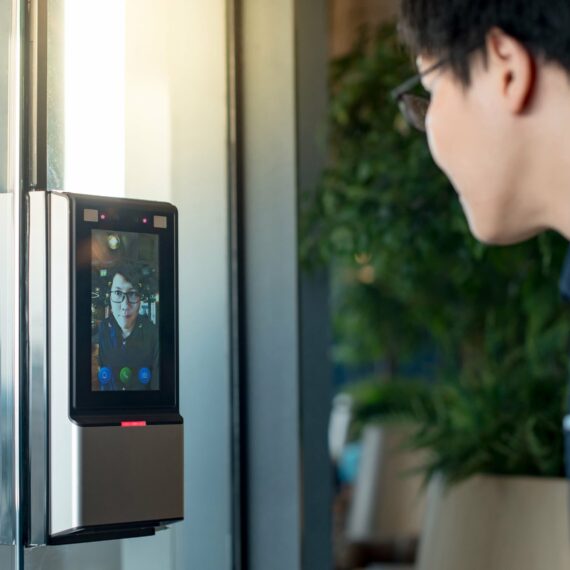

Door Access Control System in Qatar
In today’s world, security is not optional—it’s a necessity. Whether it’s an office, residential building, data center, or government institution, securing doorways and entry points is critical to ensuring safety, compliance, and control. One of the most effective ways to secure and manage access is by implementing a Door Access Control System.
In Qatar, as businesses and organizations increasingly adopt smart security technologies, the demand for Door Access Control System has surged. That’s where Axle Systems, a trusted security solutions provider, comes in—offering state-of-the-art Door Access Control System from globally reputed brands such as Suprema, Matrix, and ZKTeco (ZKT).
What is a Door Access Control System?
A Door Access Control System is an electronic security solution designed to restrict or allow entry through controlled doors. It uses identification methods such as keycards, biometric scans (fingerprint or face recognition), PIN codes, or mobile credentials to verify and grant access to authorized personnel while blocking unauthorized access.
These systems can be standalone or integrated into a larger access control and building management ecosystem, providing a central platform for monitoring, management, and auditing of entry events.
Benefits of a Door Access Control System
Implementing a Door Access Control System provides a comprehensive layer of security, efficiency, and control to any facility. Whether for a small office or a large-scale enterprise, the benefits go beyond just locking and unlocking doors.
1. Enhanced Security
The primary purpose of a Door Access Control System is to prevent unauthorized access. Only authenticated users can enter specific areas, which greatly reduces the risk of internal theft, external intrusion, or unintentional security breaches. By leveraging biometric verification, smart cards, PINs, or mobile access, organizations can eliminate the vulnerabilities associated with physical keys.
In highly sensitive environments such as data centers, financial institutions, research labs, and government facilities, the security of access points is mission-critical. These systems not only deter unauthorized personnel but also support real-time threat responses.
2. Audit Trails and Monitoring
Every access event is recorded—who entered, when, and through which door. This automated logging creates a comprehensive audit trail that is crucial for:
- Compliance with regulations (such as ISO standards or cybersecurity frameworks)
- Conducting investigations in case of incidents
- Managing employee behavior and accountability
- Providing reports to stakeholders or auditors
Advanced systems even generate real-time alerts on suspicious access attempts or unusual patterns, allowing security teams to act swiftly.
3. Eliminates Traditional Keys
Physical keys are easily lost, stolen, copied, or misplaced, posing a serious security threat. With digital access control, there’s no need to rekey locks or replace entire systems after a lost key incident. Instead:
- Access can be instantly revoked or modified
- Users can authenticate via fingerprints, facial recognition, or smartphone apps
- Temporary access can be granted to visitors or contractors without issuing permanent credentials
This shift to keyless entry ensures greater control, lower operational risk, and improved user convenience.
4. Scalable and Flexible
Door Access Control System are inherently modular and scalable. You can start with just one door and expand the system to cover multiple buildings or branches across Qatar and beyond.
- Add new users, doors, or credentials easily as your organization grows
- Customize access policies for different departments or roles
- Support future integrations with third-party systems (e.g., HR software, elevators, or CCTV)
This flexibility makes the system future-proof and adaptable to changing organizational needs.
5. Remote Access Management
Modern cloud-based systems allow you to control and monitor Door Access Control System from anywhere. Whether you’re in the building or halfway around the world, you can:
- View access logs in real time
- Grant or revoke access permissions instantly
- Lock down doors during emergencies remotely
- Set scheduling rules for doors to automatically unlock or lock at specific times
This is ideal for multi-location businesses, hybrid work environments, and property managers handling multiple sites.
6. Increased Operational Efficiency
Streamlining entry and exit points with digital access speeds up day-to-day operations:
- Employees gain quick and secure access to workspaces
- Integrated time & attendance tracking eliminates manual punch-in systems
- Receptionists and security personnel can focus on high-value tasks rather than managing physical keys or sign-in sheets
- Visitor management is automated through QR codes, temporary passes, or scheduled access
This not only saves time but also improves productivity and reduces administrative overhead.
7. Custom Access Levels and Schedules
Door Access Control System enable granular permissions management, meaning:
- Specific users can access only designated areas (e.g., HR staff to payroll office, maintenance to server room)
- Temporary access can be granted to visitors or cleaning staff during predefined hours
- Emergency services can be granted override access in specific scenarios
This ensures internal segregation, boosts security, and supports regulatory compliance, especially in industries dealing with sensitive data (e.g., finance, healthcare).
8. Integrated Safety and Emergency Features
In addition to controlling access, modern door access systems integrate with safety and emergency protocols:
- Link with fire alarms to automatically unlock doors during evacuation
- Integrate with CCTV for video verification of entry attempts
- Enable emergency lockdowns at the touch of a button in case of threats
- Pair with intrusion detection to trigger alerts if unauthorized access is attempted
These systems turn doors into intelligent safety checkpoints, contributing not only to security but also to occupant safety.
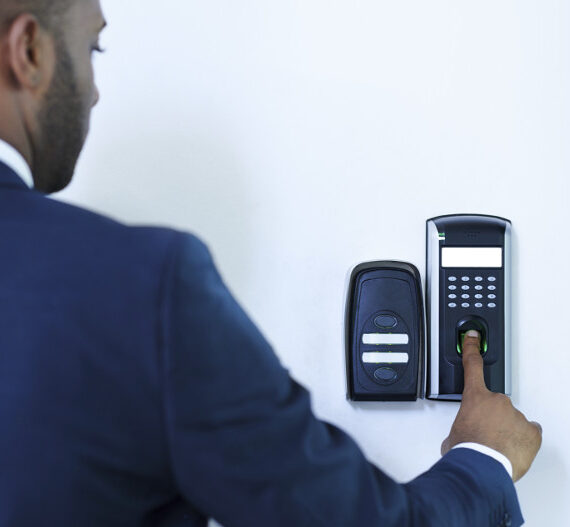
Key Features of Modern Door Access Control System
Beyond the core benefits, modern Door Access Control System boast a plethora of advanced features that further enhance security and operational efficiency:
- Multi-Factor Authentication (MFA): For heightened security, systems can require users to present multiple forms of credentials (e.g., a card swipe and a PIN, or a fingerprint scan and a card).
- Biometric Authentication: Leveraging unique physiological characteristics for authentication, including:
- Fingerprint Recognition: Highly secure and convenient.
- Facial Recognition: Fast and contactless, ideal for high-traffic areas.
- Iris/Retina Scans: Offering the highest level of security.
- Mobile Access Control: Allowing users to unlock doors using their smartphones via Bluetooth, NFC, or even secure cloud-based connections. This offers ultimate convenience.
- Cloud-Based Management: Enables remote management of the Door Access Control System from anywhere with an internet connection, offering flexibility and real-time control for businesses with multiple locations.
- Anti-Passback: Prevents users from passing their credentials back to another person to gain unauthorized entry after they have already entered an area.
- Duress Alarm: Allows a user to discreetly signal an emergency by entering a specific code or performing a particular action, triggering an alarm without alerting an intruder.
- Man Trap/Interlock: A security feature that creates a “double door” system, where one door must close before the next can open, ensuring only one person enters at a time.
- Guard Tour: Allows security personnel to follow a predefined patrol route, ensuring all areas are checked regularly.
- Visitor Management Integration: Streamlines visitor registration, badging, and tracking, ensuring only authorized visitors enter and providing a clear record of their presence.
- Time and Attendance Integration: Many Door Access Control System can double as time and attendance solutions, accurately tracking employee work hours and simplifying payroll.
- Elevator Control: Integrates with elevator systems to restrict floor access based on user permissions.
- Remote Lockdown Capabilities: In emergency situations, administrators can initiate a full or partial lockdown of the facility remotely.
- Event Logging and Reporting: Comprehensive logs of all access events, including successful entries, denied attempts, and system alarms, with customizable reporting features.
- Integration with Video Surveillance (CCTV): Links access events with video footage, allowing security personnel to visually verify who entered or attempted to enter, enhancing forensic analysis.
- Power over Ethernet (PoE) Support: Simplifies installation by delivering both power and data over a single Ethernet cable, reducing cabling costs and complexity.
- Scalable Architecture: Designed to easily expand and adapt to growing security needs, accommodating additional doors, users, and functionalities.
Applications and Uses of Door Access Control System in Qatar
The versatility and security of Door Access Control System make them suitable for a wide range of applications across various industries and environments in Qatar. As the country continues to modernize its infrastructure across public and private sectors, the adoption of intelligent access control technologies has become not just a matter of convenience, but a necessity for safety, compliance, and operational efficiency.
Below are detailed applications and use cases for Door Access Control System in Qatar:
Corporate Offices and Business Centers
Corporate environments demand strict access control to manage the flow of employees, visitors, and contractors. Door Access Control System help secure:
- Executive offices and meeting rooms
- Server rooms and IT departments
- HR and finance departments with sensitive information
Using ID badges, fingerprints, or mobile credentials, businesses can ensure only authorized personnel can access confidential areas. Furthermore, these systems integrate with time attendance software for seamless workforce tracking.
Example: In West Bay’s office towers and business hubs, access control is widely used for managing access to multi-tenant buildings and shared co-working spaces.
Hospitals and Healthcare Facilities
Healthcare settings require special attention to both security and hygiene. Door Access Control System provide:
- Controlled access to operating theatres, ICUs, and medicine storage
- Restricted areas for medical records and patient data
- Hands-free access with touchless biometrics or wave sensors
Additionally, systems can be configured to grant temporary access to visitors or mobile medical teams, ensuring patients and staff are protected.
Example: Major hospitals in Doha, such as Hamad Medical Corporation facilities, benefit from access control integrated with surveillance and nurse call systems.
Educational Institutions
Schools, universities, and training institutes in Qatar use door access control to enhance campus security and protect students, faculty, and property.
Key areas of implementation include:
- Dormitories and staff housing
- Libraries and laboratories
- Administration offices and examination halls
Using student ID cards or biometric access, institutions can regulate entry based on schedules or academic privileges, while also keeping records of attendance and movement.
Example: Qatar Foundation’s Education City uses advanced access control systems for controlling access to research labs and high-tech classrooms.
Government Buildings and Ministries
Government entities require stringent control over who enters which department. Door Access Control System help:
- Authenticate civil servants and authorized staff
- Restrict access to document storage, national data centers, and VIP offices
- Monitor visitors and temporary contractors using pre-issued QR codes or access cards
Centralized access management ensures compliance with state security protocols and smooth inter-departmental operations.
Example: Ministries in Al Dafna and Lusail employ multi-tier access control solutions to secure different levels of personnel clearance.
Construction Sites and Industrial Facilities
In high-risk industrial and construction environments, Door Access Control System not only improves security but also enhances safety compliance.
Applications include:
- Limiting access to hazardous zones, such as chemical storage or machine rooms
- Monitoring worker attendance through integrated biometric systems
- Preventing unauthorized entry during off-hours
Mobile-based or ruggedized access control devices are often used in harsh environments.
Example: Construction firms working on World Cup stadiums and the Lusail development area used access control to manage thousands of workers and ensure site safety.
Retail Stores, Malls, and Warehouses
Retailers and distribution centers rely on access control for both loss prevention and operational control.
Implementations include:
- Limiting access to stockrooms, cash offices, and management areas
- Time-bound access for delivery personnel and cleaning crews
- Integration with EAS systems and CCTV for a holistic security approach
Warehouse operators benefit from integrating Door Access Control System with inventory management systems for better logistics control.
Example: Major mall operators in Doha such as Mall of Qatar and Doha Festival City use access control to secure back-end service areas.
Residential Complexes and High-Rise Apartments
Door Access Control System add a layer of safety and convenience for residents, replacing traditional keys with RFID cards, fingerprint readers, or mobile app-based entry.
Benefits include:
- Securing main entrances, parking gates, and elevators
- Managing visitor access through intercom and QR systems
- Monitoring domestic staff entry/exit
Door Access Control System also contributes to luxury living experiences in gated communities and smart homes.
Example: Lusail Marina District and The Pearl Qatar residences incorporate access control in their smart building infrastructure.
Airports and Transport Hubs
Transportation facilities demand multi-layered security due to high footfall and sensitive operational zones. Door access control systems help:
- Secure customs and immigration areas, control towers, baggage handling zones
- Authenticate airline staff, ground crew, and security personnel
- Enable multi-factor authentication in high-security areas
Integration with boarding systems and facial recognition ensures seamless, secure travel experiences.
Example: Hamad International Airport uses advanced biometric access control for secure staff movement across terminals.
Banks and Financial Institutions
In the financial sector, trust and compliance are paramount. Door Access Control System are used for:
- Protecting vaults, ATM maintenance rooms, and data centers
- Managing employee roles and privileges
- Maintaining logs for compliance with financial regulations
Two-factor authentication (e.g., card + PIN or card + biometric) is often standard in high-value locations.
Example: National and international banks operating in Qatar, such as QNB and HSBC, implement access control systems across all branches and data rooms.
Hotels and Hospitality
Hotels use smart access control to enhance both security and guest experience. Key uses include:
- Contactless room entry using mobile apps or RFID keycards
- Restricted access to staff-only zones (kitchens, service lifts, housekeeping)
- Managing conference rooms and VIP areas
Access logs also aid in tracking service delivery and guest movement for personalized experiences.
Example: 5-star hotels in West Bay and The Pearl integrate access control with PMS (Property Management Systems) and concierge services.
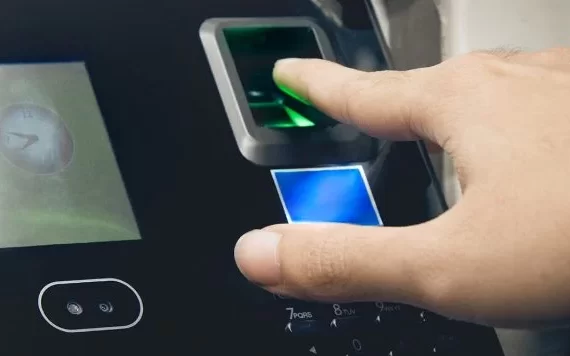
Leading Brands in Door Access Control Systems
Axle Systems partners with globally renowned brands to bring you the best-in-class Door Access Control System. We are proud suppliers of solutions from:
Suprema
Suprema is a global leader in biometrics and security technology, renowned for its innovative and high-performance access control solutions. Their systems leverage cutting-edge biometric authentication methods, offering unparalleled security and convenience.
Key features of Suprema Door Access Control System:
- Advanced Biometric Technology: Suprema excels in fingerprint, facial, and iris recognition technologies, providing highly accurate and secure identification. Their AI-based facial authentication, for instance, can recognize moving faces in high-traffic areas within 0.2 seconds, even with masks or glasses.
- BioStar 2 Platform: This web-based, open, and integrated security platform offers comprehensive functionality for Door Access Control System, time attendance, and visitor management. It’s designed for flexibility and scalability, allowing customized system architectures for any scale.
- Multi-Credential Support: Beyond biometrics, Suprema devices support various credentials including RFID cards, PINs, and mobile IDs (BLE, NFC).
- Centralized Management: BioStar 2 allows for centralized user and device management, real-time monitoring of events, and robust reporting.
- Enhanced Security: Features like secure element for sensitive data storage, data encryption (AES-256), secure boot, and ISO 27001/27701 certifications ensure robust cybersecurity.
- Flexible and Scalable: Suprema products are highly customizable to meet the requirements of diverse locations, from small businesses to large enterprises, healthcare facilities, and government agencies.
- Seamless Integration: Suprema systems can be integrated with other security solutions like alarms, video surveillance, and visitor management systems, boosting overall security control.
- Robust Hardware: Their devices, such as BioStation 3 and CoreStation, are built for high performance, durability (often with IP65/67 and IK08 ratings for outdoor use), and large user/log capacities.
Matrix
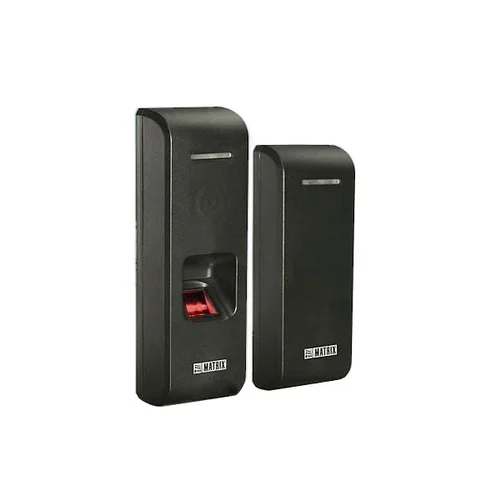
Matrix Comsec is a prominent provider of telecom and security solutions, offering a comprehensive range of Door Access Control System known for their reliability and advanced features. Matrix systems focus on secure, robust, and scalable solutions for various business needs.
Key features of Matrix Door Access Control System:
- Multiple Credential Support: Matrix systems support a wide array of credentials including face recognition, fingerprint, RFID cards, mobile authentication, PIN, and QR codes.
- COSEC Platform: Matrix’s COSEC platform provides extensive web-based functionality for access control, time-attendance, and visitor management, accessible from any location.
- Advanced Access Control Features: They offer a suite of sophisticated security features such as Anti-Passback, 2-Person Rule, First-In User, Blocked Users, Door Auto Re-lock, Guard Tour, Man-Trap, and Duress Detection, ensuring foolproof security for physical assets and personnel.
- Real-time Monitoring and Notifications: Administrators receive real-time updates on device status, entry-exit events, access violations, and device failures through SMS and email notifications, enabling quick response.
- Seamless Integration: Matrix solutions integrate effortlessly with third-party devices and systems, including fire alarm systems and video surveillance, allowing for automated responses during emergencies (e.g., unlocking doors during a fire alarm).
- Distributed Architecture with PoE+: Their systems utilize a distributed architecture on Ethernet, CAT6, and PoE+ for seamless connectivity and power supply to panels, controllers, readers, and locks, reducing cabling and installation costs.
- High User and Event Capacity: Matrix controllers and readers are designed for large user bases and extensive event log storage, making them suitable for large enterprises.
- Informative Reports: Generate comprehensive reports in various formats (PDF, Excel) for quick interpretation and decision-making, crucial for security audits and compliance.
- Secured Communication: Data transmission is secured with SSL encryption, ensuring a highly reliable and hack-proof solution.
ZKTeco
ZKTeco is a globally recognized provider of security and time management solutions, particularly known for its innovative biometric technology and cost-effective Door Access Control System. They offer a wide range of devices suitable for various applications.
Key features of ZKTeco Door Access Control System:
- Diverse Biometric Solutions: ZKTeco provides a broad spectrum of biometric authentication options, including fingerprint, facial recognition, and palm vein recognition. Their devices often incorporate advanced algorithms for reliable and fast identification, even for challenging conditions like dry or wet fingers.
- Multi-Verification Methods: Systems offer flexibility with combinations of PIN, password, card (Proximity, MiFare, HID, UHF), and biometric verification.
- Comprehensive Software Platform: ZKTeco’s ZKBioAccess IVS and ZKBioSecurity software provide centralized management for access control, time attendance, video surveillance, and visitor management, offering a holistic security solution.
- Robust and Durable Devices: Many ZKTeco devices are designed for both indoor and outdoor environments with metallic casings and IP ratings (e.g., IP65, IK04/06 ratings for vandalism, water, and dust resistance).
- Flexible Communication Interfaces: Devices typically support TCP/IP, RS485, and Wiegand protocols for seamless connection with various control panels and third-party systems. Wi-Fi and Bluetooth options are also available for enhanced connectivity.
- Real-time Monitoring and Reporting: The software allows for real-time monitoring of door status, entry/exit events, and detailed reporting for security analysis and auditing.
- Standalone and Networked Solutions: ZKTeco offers both standalone access control devices (suitable for single doors or smaller applications) and networked systems for comprehensive multi-door management.
- Cost-Effective Solutions: ZKTeco is known for providing feature-rich Door Access Control System at competitive price points, making advanced security accessible to a wider range of businesses.
Axle Systems: Your Trusted Partner for Door Access Control System in Qatar
As a leading security systems provider in Qatar, Axle Systems is committed to delivering state-of-the-art Door Access Control Systems that meet the highest standards of security, reliability, and innovation. Our expertise spans across various sectors, including residential, commercial, retail, healthcare, and defense.
Why choose Axle Systems for your Door Access Control System needs?
- Expertise and Experience: With over a decade of experience in the Qatari market, our team of highly trained and experienced technicians possesses in-depth knowledge of access control technologies and industry best practices. We are an ISO 9001-2008 certified company, ensuring quality and professionalism in all our services.
- Leading Brand Partnerships: We partner with globally recognized leaders like Suprema, Matrix, and ZKTeco to offer you a diverse portfolio of high-quality, reliable, and cutting-edge access control solutions. This allows us to provide systems that are perfectly matched to your specific security requirements and budget.
- Tailored Solutions: We understand that every organization has unique security needs. Our approach involves a thorough assessment of your premises and operations to design and implement a customized Door Access Control System that delivers optimal protection and efficiency.
- Comprehensive Services: Beyond supplying products, Axle Systems offers end-to-end services, including:
- Consultation and Needs Assessment: Guiding you through the selection process to identify the ideal solution.
- System Design and Engineering: Creating a robust and efficient access control architecture.
- Professional Installation: Ensuring seamless integration and optimal performance.
- Configuration and Customization: Tailoring the system to your precise access rules and policies.
- Training and Support: Empowering your staff to effectively manage and utilize the system.
- Maintenance and After-Sales Service: Providing ongoing support and preventative maintenance to ensure continuous operation and longevity of your investment.
- Local Presence and Responsiveness: Being based in Doha, Qatar, we offer prompt and efficient service, ensuring that your security needs are addressed quickly and effectively. Our local presence means direct support and a deep understanding of the regional market dynamics.
- Commitment to Customer Satisfaction: At Axle Systems, client satisfaction is our top priority. We strive to build long-term relationships by providing exceptional products and unparalleled service.
Whether you are looking to secure a single office door, manage access across a multi-story building, or implement a complex security solution for a large industrial facility, Axle Systems has the expertise and the portfolio to deliver.
Contact Axle Systems Today!
Ready to elevate your security with a state-of-the-art Door Access Control System? Contact Axle Systems today for a free consultation or quote. Our team is ready to discuss your specific requirements and propose the best solution for your premises.
Axle Systems Contact Details:
- Phone: +974 4468 2391
- Email: info@axlesys.com
- Website: www.axlesys.com
- Address: P.O. Box 200081, Al Khalidiya Street, Najma, Doha, Qatar
We look forward to partnering with you to secure your future.
Common FAQs about Door Access Control System
Here are some frequently asked questions about Door Access Control System to help you better understand this crucial security technology:
Q1: How does a Door Access Control System actually work?
A1: At its basic level, a user presents a credential (like a card, fingerprint, or face) to a reader. The reader sends this information to a central control panel (or controller). The controller verifies the credential against a database of authorized users and predefined access rules (who can go where and when). If authorized, the controller sends a signal to an electric lock, which then unlocks the door. The entire transaction is recorded in the system’s logs.
Q2: What are the different types of credentials used in the Door Access Control System?
A2: Common credentials include: * Proximity/RFID Cards & Key Fobs: Physical cards or fobs that are scanned by a reader. * PIN Codes: Numerical codes entered on a keypad. * Biometrics: Unique physical characteristics like fingerprints, facial scans, or iris patterns. * Mobile Credentials: Smartphones using Bluetooth or NFC to gain access. * QR Codes: Increasingly used for visitor management or temporary access.
Q3: Is a biometric Door Access Control System truly more secure than a card-based system?
A3: Generally, yes. Biometric systems identify the person themselves (e.g., their unique fingerprint), whereas card-based systems identify the card. If a card is lost or stolen, it can be used by an unauthorized person. While biometric systems are highly secure, a multi-factor authentication approach (e.g., fingerprint + PIN) can offer even greater security.
Q4: Can I integrate my Door Access Control System with other security systems like CCTV or alarm systems?
A4: Absolutely. Modern access control systems are designed for seamless integration. Integrating with CCTV allows you to link access events with video footage for visual verification and forensic analysis. Integration with alarm systems can trigger alarms upon forced entry attempts or automatically unlock doors during fire alarms for safe evacuation. This creates a unified and more effective security ecosystem.
Q5: What happens if there’s a power outage? Will the doors remain locked or unlocked?
A5: This depends on how the electric locks are configured, which is a critical safety consideration. * Fail-Secure Locks: These locks remain locked when power is lost. They are typically used for high-security areas where maintaining security is paramount, even during a power failure. * Fail-Safe Locks: These locks unlock when power is lost. They are crucial for emergency exits and areas where safety and rapid egress are priorities during a power outage or fire. A well-designed system will incorporate both types as needed and often include battery backups (UPS) for critical components to ensure continued operation.
Q6: Can I manage my Door Access Control System remotely?
A6: Yes, many modern Door Access Control System, especially cloud-based or web-based solutions, allow for remote management. Administrators can manage user permissions, view access logs, and even lock/unlock doors from anywhere with an internet connection using a web browser or mobile application.
Q7: How do I manage visitors with an Door Access Control System?
A7: Many access control systems offer integrated visitor management functionalities. This typically involves: * Pre-registration of visitors. * Automated check-in/check-out processes. * Issuance of temporary access cards or QR codes. * Visitor tracking and reporting. * Integration with intercoms for verification.
Q8: What is “Anti-Passback,” and why is it important?
A8: Anti-Passback is a security feature that prevents a user from “passing back” their credential to another person after they have entered a secured area. It requires users to “check out” of an area before they can “check in” again, ensuring that only one person enters per credential use. This is crucial for preventing tailgating and maintaining accurate occupancy counts.
Final Thoughts
In a rapidly advancing world where security, efficiency, and convenience are key, Door Access Control System have become an essential component of modern infrastructure. Whether it’s about preventing unauthorized access, simplifying operations, or integrating multiple systems into one cohesive security network, Axle Systems is here to deliver world-class access control solutions in Qatar.
We bring together technology, expertise, and customer service to offer you the most reliable and future-ready Door Access Control System—designed to protect what matters most.