

Crowd Monitoring System with Environmental Analyzer by Axle Systems
Keeping public and commercial washrooms clean, safe and efficient is no longer a “nice to have” — it’s an expectation. A Crowd Monitoring System with Environmental Analyzer (a smart washroom management system) helps facility managers move from schedule-driven cleaning to evidence-driven service: automatic occupancy and crowd tracking, real-time environmental sensing (odor, VOC, CO₂, humidity, temperature, particulate), and intelligent alerts that improve hygiene, reduce costs, and elevate user satisfaction.
What is a Crowd Monitoring System with Environmental Analyzer?
A Crowd Monitoring System with Environmental Analyzer is an integrated IoT solution combining people/occupancy sensing with environmental sensors tailored for indoor spaces — in this case, public or private washrooms. It collects real-time data about how many people use the space, when queues form, the intensity and duration of occupancy, and environmental conditions such as odor levels, VOC (volatile organic compounds), humidity, temperature, and air quality.
When applied to washroom management, the system provides actionable insights and automated triggers: notify cleaning staff when a restroom reaches a threshold occupancy or odor level, switch on extra ventilation when CO₂ or humidity rises, or send inventory alerts when soap or paper dispensers are low. The result: cleaner washrooms, better user experience, optimized manpower, and lower operational costs.
Why Crowd Monitoring System with Environmental Analyzer matters
Traditional restroom cleaning is time-based — e.g., clean every two hours — which leads to two core inefficiencies: Crowd Monitoring System with Environmental Analyzer
- Under-cleaning during peak times: high user volumes cause messy or unhygienic conditions between scheduled cleanings, creating complaints and health risks.
- Over-cleaning during off-peak: staff visit unused restrooms, wasting labor and increasing operating costs.
Other pain points smart washroom systems address:
- Odor and air-quality complaints from users and tenants.
- Out-of-stock dispensers (soap, paper towels, toilet paper) leading to poor experience.
- Crowding and queues leading to lost time and negative reviews for establishments like malls, stadiums and airports.
- Lack of actionable data to plan staffing, cleaning schedules and HVAC adjustments.
Crowd Monitoring System with Environmental Analyzer change the paradigm from predictable but inefficient schedules to real-time, demand-driven operations.
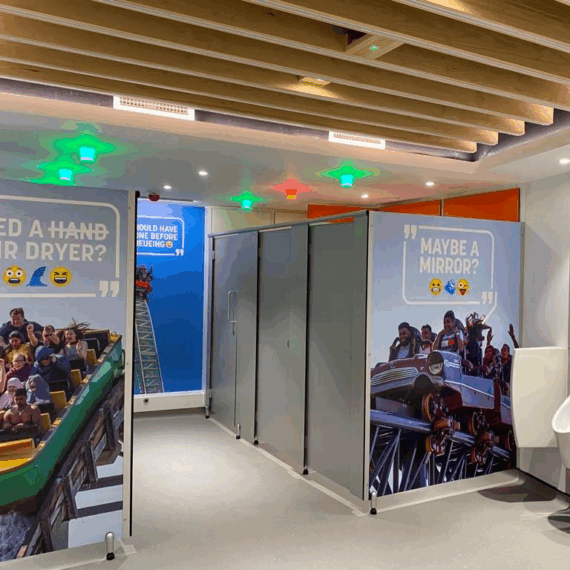
Core components & how the Crowd Monitoring System with Environmental Analyzer works
A typical Crowd Monitoring System with Environmental Analyzer for washroom management includes:
- Occupancy / people-counting sensors
- Overhead stereo/3D cameras (privacy-preserving, count-only modes)
- Infrared/thermal counters
- Break-beam or doorway sensors for turnstile-style ingress/egress counts
- Radar or PIR arrays for presence/occupancy detection
- Environmental sensors
- VOC / TVOC sensors (detect odors and chemical signatures from cleaning agents, human bioeffluents)
- CO₂ sensors (proxy for occupancy and ventilation adequacy)
- Humidity and temperature sensors (affect comfort and microbial growth)
- Particulate sensors (PM2.5) for air quality in enclosed restrooms
- Ammonia / hydrogen sulfide (H₂S) sensors for specific odor detection (optional)
- Sound level meters (optional) for detecting abnormal events or occupancy surges
- Consumable-level sensors
- Paper towel / toilet roll dispensers with refill-level sensors
- Soap dispenser sensors or flow meters
- Flush and faucet usage counters (plumbing telemetry)
- Gateway and connectivity
- LoRaWAN, NB-IoT, Wi-Fi, or BLE gateways that gather sensor data and securely forward it to the cloud or an on-premise server.
- Cloud or edge analytics platform
- Real-time processing, thresholds, machine learning to detect patterns and predict needs.
- Dashboard for facility managers and mobile alerts for cleaning staff.
- Integration APIs
- Connect to BMS, CAFM (Computer-Aided Facility Management), housekeeping workflows, and building dashboards.
Key Features — What to Expect from a Modern Installation
A Crowd Monitoring System with Environmental Analyzer is more than a simple sensor network; it’s a complete intelligent ecosystem designed to create data-driven, hygienic, and energy-efficient washroom environments. These Crowd Monitoring System with Environmental Analyzer combine advanced occupancy detection, environmental sensing, and predictive analytics with easy-to-use dashboards and automated alerts. Below are the major features that make this technology indispensable for modern facilities in Qatar.
1.Accurate and Anonymous People Counting: Crowd Monitoring System with Environmental Analyzer
At the heart of any Crowd Monitoring System with Environmental Analyzer is the ability to accurately count and track how many people are using the facility in real time.
Modern systems use AI-powered stereo vision sensors, thermal imaging, or infrared detectors to monitor occupancy and movement — without ever recording personal details or images.
- Privacy-first design: All processing occurs at the edge, meaning raw images never leave the sensor. Only statistical data (e.g., number of entries and exits) is transmitted.
- High accuracy: Advanced algorithms achieve over 95% accuracy in differentiating between people, cleaning staff, and equipment such as trolleys.
- Directional detection: Sensors can distinguish between people entering and exiting, offering true in/out flow analysis.
- Real-time occupancy visualization: Facility managers can see how crowded each restroom is at any given moment, and when usage thresholds are being reached.
This data is crucial for dynamic cleaning scheduling — ensuring washrooms are cleaned after a certain number of users, rather than simply by time intervals.Crowd Monitoring System with Environmental Analyzer
2. Multi-Parameter Environmental Analysis: Crowd Monitoring System with Environmental Analyzer
The Environmental Analyzer component adds a second layer of intelligence by continuously monitoring air quality, comfort levels, and hygiene-related indicators.
These Crowd Monitoring System with Environmental Analyzer integrate several smart sensors into one compact unit to measure:
- Volatile Organic Compounds (VOC/TVOC) — Detects odors and gases that indicate poor air quality or inadequate ventilation.
- Carbon Dioxide (CO₂) — Serves as a proxy for crowding and ventilation effectiveness.
- Temperature and Humidity — Important for user comfort and for preventing bacterial and mold growth.
- Ammonia (NH₃) and Hydrogen Sulfide (H₂S) — Identifies specific foul odors typical of washrooms, allowing targeted cleaning and ventilation responses.
- Particulate Matter (PM2.5, PM10) — Measures fine particles in the air, ensuring compliance with indoor air quality standards.
With these measurements, the Crowd Monitoring System with Environmental Analyzer can automatically trigger ventilation systems or alert staff to investigate abnormalities, helping to maintain a consistently fresh and hygienic environment.
3. Smart Consumable Monitoring: Crowd Monitoring System with Environmental Analyzer
A clean restroom isn’t just about hygiene — it’s also about availability of essential supplies.
Modern Crowd Monitoring System with Environmental Analyzer integrate wireless consumable-level sensors into soap dispensers, paper towel holders, and toilet roll dispensers. These sensors detect low levels and send alerts to cleaning teams before supplies run out.
- Automatic refill notifications prevent user dissatisfaction.
- Historical usage patterns help managers forecast inventory requirements and plan restocking schedules.
- Integration with maintenance apps allows tasks to be logged automatically when consumables are low.
This feature helps eliminate the embarrassing “out of stock” moments that can negatively affect user perception of facility quality.
4. Real-Time Alerts and Smart Notifications
Every piece of data collected by the Crowd Monitoring System with Environmental Analyzer has one goal — to make washroom management responsive.
Through configurable thresholds, facility managers can set automatic alerts for various scenarios: Crowd Monitoring System with Environmental Analyzer
- High occupancy or crowd density
- Poor air quality or odor detection
- Low consumable levels
- Unusual environmental readings (e.g., humidity spikes suggesting leaks)
Alerts can be delivered in multiple ways:
- Push notifications to cleaning staff mobile apps
- SMS or email to supervisors
- Integration with Building Management Systems (BMS) or Facility Management Platforms (CAFM)
- On-screen pop-ups on centralized dashboards
Each alert can also include priority levels and geolocation tags so that cleaning staff can immediately address the issue in the correct washroom without delay.
5. Dashboard and Reporting System: Crowd Monitoring System with Environmental Analyzer
Data is most valuable when it’s easy to understand.
The system provides a centralized management dashboard accessible via web browser or mobile device. Key dashboard features include:
- Live occupancy views — instantly see which washrooms are occupied, idle, or need service.
- Environmental heatmaps — visualize odor, humidity, or air quality trends.
- Customizable reports — daily, weekly, or monthly summaries of occupancy, cleaning frequency, and environmental conditions.
- Performance analytics — track SLAs, cleaner response times, and consumable refill efficiency.
- Export options — share reports with management in Excel or PDF format for operational analysis.
The dashboard helps facility teams make informed decisions and justifies investments with hard data and KPIs.
6. Integration with HVAC and Facility Management Systems
One of the most powerful features of a Crowd Monitoring System with Environmental Analyzer is its ability to interact with other building systems.
Through API integration, the system can:
- Automatically activate ventilation fans or air purifiers when VOC or CO₂ levels rise.
- Sync occupancy data with smart lighting systems to optimize energy use.
- Connect with housekeeping management software so cleaning tasks are generated and assigned automatically.
- Feed data into BMS dashboards for unified control of building operations.
This interconnectivity turns a standalone monitoring system into a holistic Smart Facility Ecosystem.
7. Predictive Analytics and Machine Learning
Advanced platforms use AI and machine learning algorithms to identify patterns and predict future trends.
Examples include:
- Predicting peak usage times to schedule cleaning in advance.
- Forecasting consumable depletion based on historical usage.
- Identifying ventilation inefficiencies through CO₂ trends.
- Detecting anomalies such as leaks, equipment malfunction, or unusual humidity changes.
This predictive intelligence helps facility managers shift from reactive maintenance to proactive management — saving both time and costs.
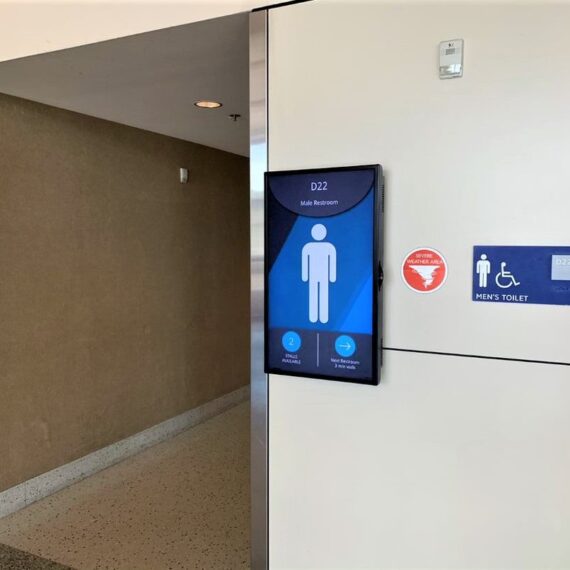
Benefits — Measurable Improvements for Operations, Hygiene, and Cost
Implementing a Crowd Monitoring System with Environmental Analyzer in washrooms is one of the smartest decisions facility managers can make. The benefits are not just theoretical — they translate directly into cleaner facilities, better user experiences, lower costs, and stronger sustainability performance.
1. Enhanced Operational Efficiency: Crowd Monitoring System with Environmental Analyzer
Traditional washroom maintenance operates on a fixed schedule — for example, cleaning every two hours regardless of actual use. This often leads to wasted resources and inefficiencies.
With a Crowd Monitoring System with Environmental Analyzer, operations become data-driven and dynamic, ensuring that staff respond to actual usage and conditions.
- Demand-based cleaning: Instead of cleaning by the clock, cleaning is triggered automatically when a certain number of people have used the washroom or when air quality parameters fall below a set threshold.
- Real-time workforce allocation: Supervisors can view occupancy data and direct staff to the areas that need attention the most, reducing idle time and labor waste.
- Reduced unnecessary inspections: By eliminating redundant cleaning visits, facilities save valuable manpower hours.
- Optimized scheduling: Historical usage trends help plan staff rosters according to real demand — for example, increasing cleaning shifts during mall peak hours or reducing them late at night.
In large facilities such as malls, airports, stadiums, and hospitals, this optimization can lead to a 20–40% improvement in manpower utilization.
2. Superior Hygiene and Cleanliness
Cleanliness is not just a visual measure — it’s a critical hygiene factor that affects health, comfort, and customer satisfaction. The environmental analyzer component ensures scientific hygiene management by continuously monitoring the key indicators that affect cleanliness.
- Odor and VOC control: Sensors detect foul odors early (from VOCs or gases like ammonia), prompting immediate ventilation or cleaning action.
- Humidity regulation: Excess humidity is a breeding ground for bacteria, mold, and unpleasant smells. The Crowd Monitoring System with Environmental Analyzer identifies and corrects these issues promptly.
- Timely cleaning alerts: When occupancy crosses a threshold (say 50 people), cleaners are automatically notified, ensuring no washroom becomes unhygienic before the next scheduled visit.
- Better air circulation: Integration with HVAC systems allows the system to trigger fans automatically when CO₂ or humidity increases.
The result is a washroom that stays clean and fresh throughout the day, not just right after cleaning.
3. Improved User Experience and Satisfaction
In malls, hotels, airports, and offices, the condition of washrooms strongly influences customer perceptions of overall quality.
A poorly maintained restroom can negatively impact the reputation of even the most luxurious facilities.
The Crowd Monitoring System with Environmental Analyzer ensures that users always encounter a clean, well-ventilated, and well-stocked washroom by:
- Reducing wait times: Occupancy data helps managers identify peak times and ensure cleaning doesn’t happen during user surges.
- Maintaining comfort: Consistent air quality and temperature control improve user comfort.
- Guaranteeing availability of consumables: Smart dispensers send alerts before soap, paper, or sanitizer runs out, ensuring every user has what they need.
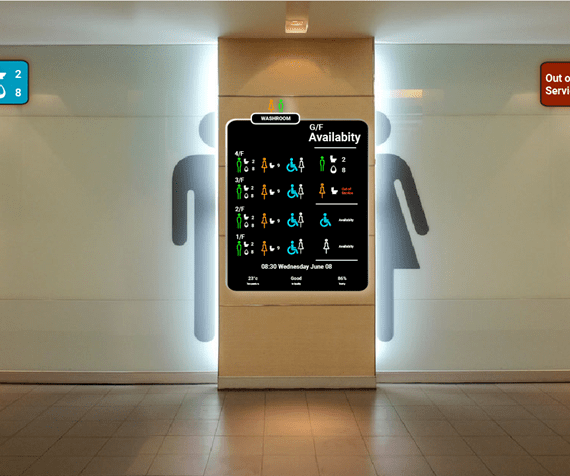
- Providing transparency: Some facilities display digital “cleaned recently” or “air quality” dashboards outside restrooms to reassure visitors of their cleanliness and safety.
These improvements directly increase visitor satisfaction, loyalty, and trust — critical for customer-facing environments such as malls, restaurants, and entertainment venues.
4. Reduced Operational Costs
A key advantage of smart washroom management is its positive financial impact. By combining accurate data with automation, the system helps reduce operating costs in multiple ways:
- Labor cost savings: Facilities can reduce unnecessary cleaning rounds, redirect staff to high-priority areas, and manage manpower more efficiently.
- Consumable cost reduction: Real-time usage data prevents overstocking and waste of paper towels, tissue rolls, and soap.
- Reduced chemical usage: Targeted cleaning minimizes excessive use of detergents and cleaning agents.
- Energy savings: The system triggers ventilation and lighting only when needed, reducing electricity consumption significantly.
Many facilities report that the investment in smart washroom technology pays for itself within 12 to 18 months due to these savings.
5. Data-Driven Decision Making
Facility management becomes far more effective when decisions are based on accurate data rather than assumptions.
With detailed insights provided by the Crowd Monitoring System with Environmental Analyzer, managers can:
- Identify usage patterns — such as which restrooms see the most traffic and when.
- Plan cleaning schedules and manpower allocation based on historical analytics.
- Compare performance between sites or washrooms.
- Generate compliance and performance reports for management or clients.
These actionable insights turn maintenance from a reactive service into a strategic operational process, enabling continuous improvement and accountability.
6. Faster Issue Detection and Resolution
One of the most important benefits of smart monitoring is early problem detection. Environmental sensors can spot irregularities long before they turn into user complaints or maintenance emergencies.
- Detect rising humidity or CO₂ levels that might indicate ventilation failure.
- Identify odor spikes that signal cleaning or plumbing issues.
- Monitor unusual occupancy patterns that may suggest a blocked stall or malfunction.
- Receive alerts for low consumables before users are affected.
This proactive capability minimizes downtime, prevents negative customer feedback, and ensures washrooms always operate at the highest standard.
7. Improved Safety and Health Standards
By maintaining optimal air quality and cleanliness, these Crowd Monitoring System with Environmental Analyzer contribute directly to user health and safety.
In environments such as hospitals, airports, and schools — where hygiene is critical — these Crowd Monitoring System with Environmental Analyzer support compliance with health and sanitation standards.
- Better ventilation reduces the concentration of airborne bacteria and viruses.
- Controlled humidity and temperature help prevent mold and bacterial growth.
- Reduced cross-contamination risk due to cleaner, better-maintained surfaces and facilities.
This feature has become especially valuable in a post-pandemic world, where building occupants expect visible and measurable hygiene assurance.
8. Sustainability and Environmental Impact
Sustainability is a major focus for organizations in Qatar, especially under the country’s National Vision 2030.
A Crowd Monitoring System with Environmental Analyzer aligns perfectly with sustainability goals:
- Energy conservation: Demand-based ventilation and lighting reduce carbon footprint.
- Waste reduction: Targeted cleaning and smart dispensers minimize paper and soap waste.
- Resource optimization: Cleaning staff and equipment are used efficiently, cutting unnecessary travel and emissions.
- Environmental reporting: Data from the system can be included in sustainability and ESG reports.
By adopting such technologies, organizations demonstrate environmental responsibility while saving money.
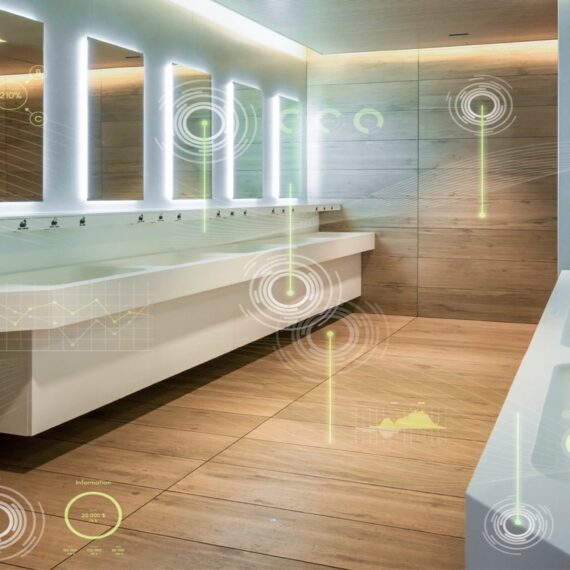
Use Cases — Where It Helps Most
The Crowd Monitoring System with Environmental Analyzer is a versatile smart facility management solution that can be deployed across many sectors where hygiene, user comfort, and operational efficiency are critical. Whether it’s an international airport, a busy shopping mall, a hospital, or a corporate office, the system provides actionable data that improves cleanliness, reduces maintenance costs, and enhances overall user satisfaction.
1. Airports and Transportation Hubs
Airports like Hamad International Airport (HIA) in Qatar handle tens of millions of passengers annually. Maintaining hygienic, odor-free washrooms in such high-traffic areas is an immense operational challenge.
With a Crowd Monitoring System with Environmental Analyzer, airport facility teams can achieve unmatched visibility and control over washroom conditions.
How It Helps:
- Monitors real-time crowd flow to trigger cleaning alerts after a defined number of users.
- Tracks air quality, humidity, and temperature to maintain a pleasant environment.
- Integrates with the airport’s central Building Management System (BMS) for unified control.
- Prevents complaints by identifying washrooms that need cleaning before passengers notice any issues.
- Enhances passenger satisfaction ratings, which are crucial for airports competing for global recognition.
2. Shopping Malls and Retail Complexes
Qatar’s shopping malls — such as Doha Festival City, Mall of Qatar, and Place Vendôme — attract thousands of visitors daily. Washroom conditions directly affect shoppers’ comfort and their perception of the mall’s overall quality.
How It Helps:
- Detects heavy traffic periods (e.g., weekends, evenings) and adjusts cleaning schedules dynamically.
- Monitors air quality and sends alerts when odors or high humidity levels are detected.
- Helps mall management plan manpower according to real visitor data instead of fixed routines.
- Provides reports for tenants and management teams to review facility performance.
- Enhances brand reputation by ensuring washrooms stay fresh and clean all day.
3. Hospitals and Healthcare Facilities
In healthcare environments, hygiene is not a convenience — it’s a critical safety requirement. Hospitals like Hamad Medical Corporation or Sidra Medicine must maintain stringent sanitation standards at all times.
The Crowd Monitoring System with Environmental Analyzer helps healthcare facilities ensure continuous cleanliness, protect patient health, and comply with infection control guidelines.
How It Helps:
- Continuously measures air quality to detect airborne contaminants.
- Provides occupancy data to trigger cleaning after usage thresholds.
- Monitors temperature and humidity, crucial for infection prevention.
- Generates compliance reports to meet Ministry of Public Health (MOPH) standards.
- Reduces staff workload by directing cleaning teams based on data, not guesswork.
4. Office Buildings and Corporate Facilities
Corporate buildings and business centers in Qatar, especially in areas like West Bay and Lusail, focus on providing modern, comfortable workspaces for employees and visitors. Smart washroom management aligns perfectly with their goal of improving workplace satisfaction and efficiency.
How It Helps:
- Tracks restroom usage across different floors to optimize cleaning frequency.
- Alerts housekeeping when consumables like soap or paper towels are running low.
- Maintains consistent air quality for employee comfort.
- Reduces energy usage through intelligent ventilation and lighting control.
- Provides facilities managers with detailed analytics on cleaning performance.
5. Hotels and Hospitality
Guest satisfaction in hotels depends heavily on perceived cleanliness. From the lobby restrooms to the guest floor washrooms, hygiene directly affects online reviews and repeat bookings.
The Crowd Monitoring System with Environmental Analyzer provides hotels with real-time insights into restroom conditions, ensuring the highest level of comfort and hygiene for guests.
How It Helps:
- Monitors odor, temperature, and humidity in guest and public restrooms.
- Sends instant alerts for maintenance or cleaning needs.
- Provides data-driven reports for housekeeping efficiency.
- Reduces consumable waste and improves resource allocation.
- Supports sustainability initiatives by optimizing energy and water usage.
6. Stadiums, Arenas, and Event Venues
Large-scale event venues like Lusail Stadium or Education City Stadium face extreme crowd surges during events. Managing washrooms efficiently during these peaks can be difficult without automation.
The Crowd Monitoring System with Environmental Analyzer provides the visibility needed to handle large crowds smoothly.
How It Helps:
- Tracks occupancy in real-time to dispatch cleaners when usage spikes.
- Measures air quality, CO₂, and humidity to ensure proper ventilation.
- Integrates with event control systems for live facility status monitoring.
- Prevents odor or waste build-up during long events.
- Helps maintain international hygiene standards for visitors and athletes.
7. Educational Institutions
Schools, colleges, and universities see consistent daily usage of restrooms by hundreds of students and staff. Managing these facilities manually often results in inconsistent hygiene.
By installing the Crowd Monitoring System with Environmental Analyzer, educational institutions can ensure a healthy environment conducive to learning.
How It Helps:
- Monitors student traffic and identifies busy times for cleaning.
- Tracks humidity and air quality to prevent mold or bacterial growth.
- Reduces paper and soap wastage through data-driven consumable refilling.
- Promotes better hygiene standards among students.
Why Choose Axle Systems in Qatar
When it comes to implementing a Crowd Monitoring System with Environmental Analyzer for smart washroom management, choosing the right partner is just as important as the technology itself. Axle Systems has established itself as Qatar’s leading provider of advanced facility management solutions, delivering cutting-edge technology, expert guidance, and comprehensive support for organizations across industries.
1. Proven Expertise in Smart Facility Solutions
Axle Systems has decades of combined experience in supplying, installing, and maintaining IoT-based smart facility solutions. We specialize in:
- Crowd Monitoring System with Environmental Analyzer for high-traffic environments such as airports, malls, and stadiums.
- Environmental analyzers that monitor air quality, humidity, odors, and other critical hygiene indicators.
- Integration with Building Management Systems (BMS), ensuring seamless operation across multiple facility systems.
Our team understands the unique challenges of Qatar’s facility management landscape and delivers solutions that are accurate, reliable, and future-ready.
2. End-to-End Services
Axle Systems provides a complete lifecycle solution — from consultation to installation, training, and ongoing maintenance. This means that customers don’t just purchase a system; they receive a turnkey solution that works optimally from day one. Services include:
- Needs Assessment: We analyze your facilities and workflows to recommend the right sensor placements and system configurations.
- Installation & Configuration: Our certified technicians ensure sensors, analyzers, and dashboards are installed correctly, integrated with existing systems, and optimized for performance.
- Training & Support: Staff receive hands-on training to use dashboards, respond to alerts, and manage maintenance schedules efficiently.
- Maintenance & Upgrades: Regular check-ups, software updates, and system monitoring guarantee long-term performance.
This comprehensive approach eliminates downtime, reduces operational errors, and ensures that the Crowd Monitoring System with Environmental Analyzer consistently delivers value.
3. Local Knowledge and On-Ground Support
Operating in Qatar requires an understanding of local regulations, environmental conditions, and user expectations. Axle Systems’ local presence provides:
- Rapid response times: On-site support ensures technical issues are addressed immediately.
- Regulatory compliance: We adhere to Qatar’s privacy, safety, and sanitation standards for public and corporate facilities.
- Cultural understanding: System configurations, dashboard language options, and maintenance schedules are tailored for local usage patterns and facility requirements.
This local expertise ensures smooth deployment, legal compliance, and optimized system performance.
4. Cutting-Edge Technology Partnerships
Axle Systems partners with global leaders in smart sensing and environmental monitoring to bring the latest innovations to Qatar. Our solutions incorporate:
- AI-powered crowd counting and predictive analytics for accurate usage data.
- Advanced environmental analyzers for odor, VOC, CO₂, humidity, temperature, and particulate matter monitoring.
- Integration-ready platforms that work with HVAC, lighting, and facility management systems.
By combining global technology with local implementation, Axle Systems ensures clients have best-in-class solutions that are tailored to Qatar’s facilities.
5. Customizable Solutions for Every Facility
Every facility is unique — from a small corporate office to a massive international airport. Axle Systems provides customized system configurations to meet diverse needs:
- Tailored sensor placement for different building layouts.
- Adjustable cleaning thresholds based on traffic patterns.
- Personalized dashboards with user roles and reporting preferences.
- Integration with existing facility management software.
Our flexible solutions guarantee that every washroom, regardless of size or traffic, operates at peak efficiency while maintaining the highest hygiene standards.
6. Focus on Data-Driven Operations
At Axle Systems, we don’t just install hardware — we provide actionable insights. Our systems deliver real-time dashboards, trend analytics, and predictive insights that enable:
- Optimized cleaning schedules.
- Reduced consumable waste.
- Faster issue detection.
- Evidence-based reporting for management or regulatory compliance.
By turning data into actionable decisions, Axle Systems helps organizations improve operations, reduce costs, and enhance user satisfaction.
7. Commitment to Sustainability
Axle Systems aligns with Qatar’s National Vision 2030 by promoting sustainability through smart facility management:
- Energy efficiency: Intelligent ventilation and lighting reduce electricity use.
- Resource optimization: Consumables and cleaning efforts are used efficiently, reducing waste.
- Environmental reporting: Data from our Crowd Monitoring System with Environmental Analyzer can support ESG reporting for corporate or government clients.
Choosing Axle Systems means adopting technology that is not only smart but also environmentally responsible.
8. Trusted by Leading Organizations
Axle Systems has successfully implemented smart facility solutions across multiple sectors in Qatar, including:
- Airports and transportation hubs
- Hospitals and healthcare facilities
- Hotels and resorts
- Corporate offices and business centers
- Shopping malls and retail complexes
- Stadiums and event venues
Our track record demonstrates reliability, performance, and measurable results, making us a trusted partner for high-profile clients.
9. Easy Communication and Support
We ensure that clients always have direct access to our team for consultation, troubleshooting, and guidance. Support channels include:
- Phone and email assistance
- On-site technical support
- Remote monitoring and diagnostics
- Personalized account management
This ensures a smooth, worry-free experience from initial installation to long-term operation.
10. Peace of Mind with a Trusted Supplier
When you choose Axle Systems in Qatar, you are not just purchasing a Crowd Monitoring System with Environmental Analyzer; you are gaining a strategic partner. Our solutions deliver:
- Reliable, high-accuracy sensors and analyzers.
- Real-time insights for proactive management.
- Reduced operational costs and improved hygiene standards.
- Full local support, installation, and maintenance.
With Axle Systems, organizations can focus on their core operations while we handle all aspects of smart washroom management.
Contact Axle Systems Today:
- Phone: +974 44682391 / +974 77443731
- Email: info@axlesys.com
- Website: www.axlesyst.com
Common FAQs about Crowd Monitoring System with Environmental Analyzer
Q1: How does a people-counting sensor respect privacy?
A1: Modern people counters use overhead stereo imaging, thermal arrays or edge-processed vision that only outputs anonymized counts. No identifiable images are stored or transferred. Privacy settings can be locked and audited.
Q2: Do these Crowd Monitoring System with Environmental Analyzer store video or sound recordings?
A2: Not by default. The system processes video at the edge to generate counts and discards frames immediately. Sound meters typically only measure decibel levels, not conversations.
Q3: What environmental metrics are most important for washrooms?
A3: VOC (odor), CO₂ (ventilation proxy), humidity and temperature. Optional sensors include PM2.5 and ammonia for specific odor signatures.
Q4: Can the Crowd Monitoring System with Environmental Analyzer trigger ventilation automatically?
A4: Yes. The analytics platform can send control signals to HVAC/extraction systems when thresholds are exceeded.
Q5: How are cleaning tasks dispatched?
A5: Alerts can be routed as push notifications, SMS, or integrated into your CAFM/housekeeping app. Alerts include location, reason and priority.
Q6: What is required for installation?
A6: A site survey to identify sensor locations, power and connectivity plans (Wi-Fi/LoRa/NB-IoT), and coordination with facility teams for HVAC integration if needed.
Q7: How accurate are people counts in washrooms?
A7: With overhead stereo or thermal counters properly positioned, accuracy commonly exceeds 95% for count totals; directional accuracy (in/out) depends on mounting and traffic patterns.
Q8: How do you avoid false positives (e.g., cleaning carts triggering counts)?
A8: Analytics can be tuned to ignore slow-moving objects or detect patterns consistent with cleaning carts. Placement and sensitivity settings reduce false positives.
Q9: Can the Crowd Monitoring System with Environmental Analyzer monitor consumables like soap and paper?
A9: Yes. Smart dispensers or retrofit level sensors provide refill alerts and usage statistics.
Q10: Is the solution scalable for multi-site deployments?
A10: Absolutely. The platform supports multi-site management with centralized dashboards and role-based access.
Q11: What connectivity options exist?
A11: Wi-Fi, LoRaWAN, NB-IoT, BLE and wired Ethernet are commonly supported.
Q12: Are sensor calibrations needed?
A12: Some environmental sensors (CO₂, VOC) benefit from periodic calibration. Axle Systems includes calibration guidance and support in maintenance packages.
Q13: What languages does the dashboard support?
A13: English and Arabic support is standard for Qatar deployments, and other languages can be added as needed.
Q14: Can we keep data on-premises?
A14: Yes. Axle Systems supports cloud, hybrid and fully on-premise deployments to satisfy security and policy requirements.
Q15: Are there success stories or pilots available?
A15: Axle Systems runs pilot programs to demonstrate value. Contact our team to arrange a pilot tailored to your site.
Conclusion
In today’s fast-paced, high-traffic environments, maintaining clean, hygienic, and comfortable washrooms is no longer a matter of routine schedules — it’s a matter of intelligent, data-driven management. The Crowd Monitoring System with Environmental Analyzer transforms traditional washroom maintenance into a smart, responsive, and efficient operation, providing facility managers with the insights and tools needed to ensure optimal hygiene, user comfort, and operational efficiency.
From real-time occupancy monitoring to environmental analysis of air quality, humidity, temperature, and odors, this system equips organizations with actionable data. Predictive analytics, automated alerts, and integration with HVAC and facility management platforms ensure that cleaning, ventilation, and resource usage are perfectly aligned with actual demand, reducing costs, minimizing waste, and enhancing user satisfaction.
Across a wide range of sectors in Qatar — including airports, hospitals, shopping malls, hotels, corporate offices, stadiums, and public facilities — the Crowd Monitoring System with Environmental Analyzer proves invaluable. It helps manage peak traffic periods, ensures compliance with hygiene standards, and provides measurable performance reports that support both operational decisions and regulatory requirements.
Choosing Axle Systems as your trusted supplier ensures that these cutting-edge solutions are implemented seamlessly. With local expertise, end-to-end services, and ongoing support, Axle Systems delivers not only advanced technology but also a tailored approach that meets Qatar’s unique operational needs and environmental conditions.
Ultimately, the Crowd Monitoring System with Environmental Analyzer is more than a technological upgrade — it’s a strategic investment in hygiene, efficiency, sustainability, and user experience. Organizations that adopt this solution can expect cleaner facilities, smarter operations, reduced costs, and stronger satisfaction among employees, visitors, and customers alike.