

Baggage Scanners in Qatar
A Baggage Scanners is a security device that uses X-ray imaging and intelligent software to inspect the contents of bags, suitcases and parcels. The system produces an image that allows an operator — or automated algorithms — to identify prohibited items such as weapons, explosives, contraband and other threat items without opening the bag. Depending on the model and use case, Baggage Scanners can be handheld, tabletop, or tunnel style (conveyor-based) units for screening at checkpoints.
Key characteristics:
- Non-invasive inspection (no need to open bags)
- Rapid screening throughput (seconds per bag)
- Image enhancement and threat detection software
- Multiple energy levels (single-energy, dual-energy) for material discrimination
- Various tunnel sizes to accommodate different item dimensions
How Baggage Scanners work — simple explanation
Most modern baggage scanners are X-ray systems. They work like this:
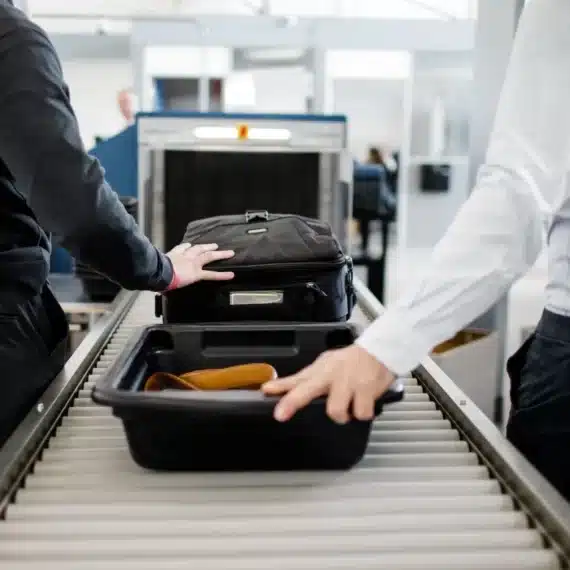
- X-ray generation: An X-ray tube emits a beam that passes through the bag on a conveyor.
- Detection: An array of detectors on the other side captures X-rays that pass through. Materials inside the bag absorb X-rays to varying degrees.
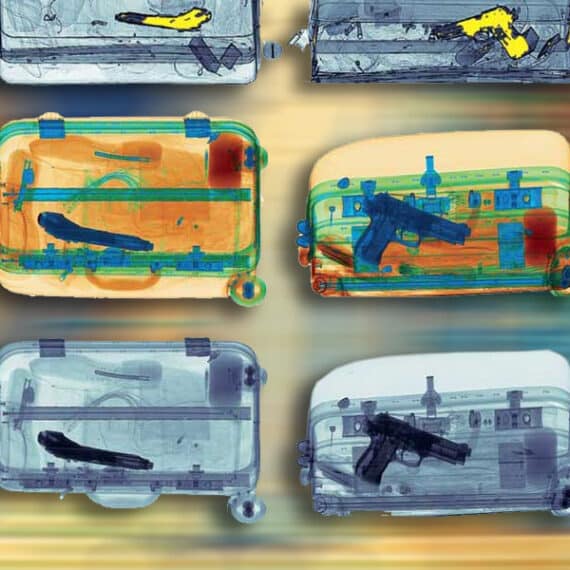
- Image formation: The detector signals are converted into a grayscale or pseudo-colored image where different densities and materials show different contrast.
- Image processing: Software enhances the image (edge highlighting, zoom, filters) and in many systems applies automatic detection algorithms that flag suspicious shapes (guns, knives, explosives).
- Operator review or auto-alarm: A trained operator inspects the image and takes action, or the system generates an alarm for secondary inspection.
More advanced units use dual-energy or multi-energy detectors to better discriminate organic materials (explosives, drugs) from inorganic materials (metals), improving detection accuracy and reducing false alarms.
Types of Baggage Scanners
Choosing the right type depends on the screening environment and the items you need to inspect.
1. Tunnel X-ray Baggage Scanners (conveyor)
- Use: Checkpoints at airports, train stations, courthouses, hotels, museum entrances.
- Strengths: High throughput, continuous flow, available in various tunnel sizes (small for handbags, large for checked bags or parcels).
- Typical tunnel sizes: Small (e.g., 300×200 mm) to large (1000×1000 mm+).
- Operator workflow: Items placed on conveyor → pass through tunnel → operator monitors images.
2. Tabletop or benchtop X-ray Baggage Scanners
- Use: Retail loss prevention, mailrooms, government offices.
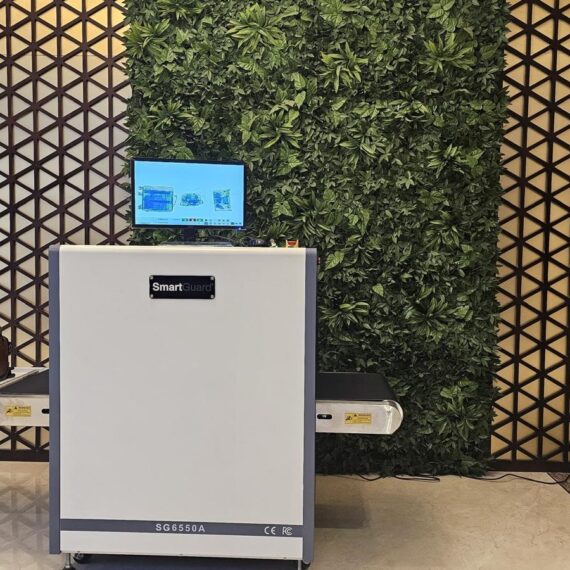
- Strengths: Compact footprint, lower cost, suitable for low-volume screening.
- Limitations: Reduced tunnel size and throughput.
3. Mobile & handheld scanners
- Use: Spot checks, vehicle inspections, field operations.
- Strengths: Portability and flexibility.
- Limitations: Limited imaging capability compared to fixed systems.
4. CT (Computed Tomography) Baggage Scanners
- Use: Modern airport checkpoints and high-security installations.
- Strengths: 3D imaging, excellent material discrimination, allows automated detection and simplified passenger procedures (e.g., no need to remove laptops/liquids in some airports).
- Limitations: Higher cost and more complex installation.
5. Parcel & freight scanners
- Use: Logistics centers, customs, courier hubs.
- Strengths: Designed for large, irregularly shaped, or high-volume parcels; may integrate with sorting lines.
Core Features to Look For When Choosing a Baggage Scanners
Selecting the right Baggage Scanners is a long-term security investment. The features you choose will directly impact detection quality, speed, operator performance, and overall security efficiency. Below is a deeply expanded, more detailed guide to each feature that matters.
1. Imaging Technology & Detection Capability
Modern Baggage Scanners rely heavily on imaging quality and detection algorithms. Strong imaging performance ensures operators can interpret images accurately and quickly.
Single-Energy Imaging
- Produces basic grayscale image based on density.
- Suitable for low-risk environments like hotels or small offices.
- Cost-effective but not as advanced in material identification.
Dual-Energy Imaging
- Uses two different X-ray energy levels.
- Detects differences between organic, inorganic, and metallic objects.
- Threat items like explosives and narcotics (organic) are highlighted in specific colors.
- Significantly reduces false alarms and improves detection accuracy.
Material Discrimination
- Automatically categorizes materials into:
- Organic (e.g., explosives, drugs, gels)
- Inorganic (e.g., ceramics, powders)
- Metallic (e.g., weapons, sharp objects)
- Enhances operator decision-making, especially in high throughput environments.
Advanced Threat Detection (ATD)
AI-assisted detection software that:
- Flags weapons (guns, knives, blades)
- Identifies explosive components
- Recognizes liquor bottles or prohibited liquids
- Detects narcotics or suspicious shapes
- Alerts operators instantly with visual/audio alarms
3D Imaging (CT Scanners)
- Generates 360-degree rotational images.
- Provides extremely clear internal structure identification.
- Highest accuracy for threat detection.
- Often used in airport checkpoints, VIP protection zones, and critical government installations.
2. Tunnel Size, Conveyor Speed & Throughput Capacity
When choosing a Baggage Scanners, these are among the MOST critical hardware specifications.
Tunnel Size
Tunnel size determines what type of baggage the Baggage Scanners can accommodate:
- Small Tunnels (e.g., 350×250 mm): Ideal for mailrooms, small parcels, handbags.
- Medium Tunnels (e.g., 600×400 / 650×500 mm): Standard for hotels, office buildings, event venues.
- Large Tunnels (e.g., 1000×800 / 1000×1000 mm): Suitable for checked luggage, hotel luggage carts, and large parcels.
- Extra-Large Tunnels (more than 1000 mm): For cargo, logistics hubs, and industrial environments.
Conveyor Speed
- Determines how quickly bags pass through the Baggage Scanners.
- Standard speeds: 0.20 – 0.35 m/s.
- Higher speeds = more throughput but require skilled operators.
Throughput Capacity
Measured as bags per hour (BPH).
- Low-volume sites: 200–300 BPH.
- Medium-volume sites: 500–800 BPH.
- High-volume hubs: 1,200+ BPH.
Choosing the right combination of tunnel size and throughput ensures smooth checkpoint operations.
3. Image Enhancement Tools & Operator Interface
Operators rely on visual clarity to make quick decisions. High-quality software tools improve accuracy and reduce fatigue.
Key Image Enhancement Tools Include:
- Zoom & Super Zoom: For close inspection of suspicious objects.
- Organic/Inorganic Stripping: Highlights material categories.
- Negative Image: Enhances outlines of concealed items.
- High Penetration Mode: Clears dense bags without rescanning.
- Pseudo-color Filters: Color-coded layers for easier identification.
- Atomic Number-based Filtering: Advanced feature in high-end systems.
Operator Console & UI Design
- Ergonomic keyboard with dedicated shortcut keys.
- High-resolution dual monitors.
- Intuitive software layout for quick learning curve.
- Touchscreen support on some models.
- Foot pedal controls (optional) for hands-free operation.
Operator Performance Tools
- Real-time tip alerts.
- Automated threat recognition highlights.
- Built-in training mode for ongoing skill improvement.
4. Safety, Compliance & Radiation Protection
Safety is a non-negotiable aspect of any X-ray system.
Radiation Shielding
Modern Baggage Scanners include:
- Lead-lined curtains
- Leakage-proof tunnels
- Automatic X-ray cutoff systems
All certified Baggage Scanners ensure radiation stays far below international limits.
Compliance Certifications
Look for Baggage Scanners certified under:
- IEC 61010 (safety)
- IEC 61032 (radiation leakage)
- CE certification
- ISO 9001 / ISO 14001 manufacturing standards
- Airport-specific certifications like ECAC, TSA, or STAC (optional, based on use)
Safety Interlocks
- Automatic X-ray shutdown if panel is opened.
- Emergency stop buttons.
- Motion sensors to prevent injury.
Operator & Public Safety
Well-designed Baggage Scanners ensure:
- Zero exposure to harmful radiation.
- Noise reduction (important for hotel lobbies or quiet buildings).
- Stable, durable construction for continuous operation.
5. System Integration & Networking
Modern installations require seamless integration with security infrastructure.
Networking & Connectivity Options
- Ethernet TCP/IP
- Wi-Fi (selected models)
- Real-time image transfer
- Centralized command center viewing
Integration with Security Ecosystem
- CCTV systems to record screening sessions
- Access Control & Turnstiles
- Visitor Management Systems
- Building management systems (BMS)
- Alarm systems
Data Logging & Reporting
- Automatic image archiving
- Operator action logs
- Daily/weekly reports for audits
- Tamper-proof logs for compliance
Cybersecurity
Critical for network-enabled Baggage Scanners:
- Encrypted communication
- Secure password management
- Firmware update protection
- Multi-level user access control
Benefits of Baggage Scanners
Baggage Scanners play an essential role in securing public and private spaces. From airports to corporate headquarters, these machines provide a critical layer of protection by detecting prohibited, dangerous, or suspicious items before they can become a threat. Their benefits extend far beyond basic security — they improve operational efficiency, enhance visitor experience, and support compliance with safety regulations.
1. Enhanced Security & Threat Detection
Detects Dangerous Items Instantly
Baggage Scanners are designed to detect:
- Weapons (guns, knives, blades)
- Explosives and explosive components
- Hazardous liquids, gels, or powders
- Flammable materials
- Narcotics and contraband
- Sharp or prohibited objects
This real-time detection prevents dangerous items from entering restricted or high-risk areas.
Reduces Human Error
Manual bag checking is time-consuming and prone to errors.
With a Baggage Scanners:
- Operators see detailed internal images
- Advanced software highlights potential threats
- AI automatically flags suspicious shapes
This combination significantly reduces mistakes and increases screening accuracy.
Acts as the First Line of Defense
Before people enter high-security zones, their belongings are screened.
This early detection helps:
- Prevent security breaches
- Deter malicious intent
- Reduce the risk of incidents
In events, hotels, and corporate buildings, the Baggage Scanners becomes a proactive security barrier.
2. Faster Screening & Improved Operational Efficiency
High Throughput for Busy Locations
Modern Baggage Scanners can screen hundreds of bags per hour.
This ensures:
- Minimal delays
- Smooth flow of people
- Faster check-in or entry processes
It’s especially useful during peak hours in hotels, events, airports, and government offices.
Reduces Manual Bag Checking
Manual inspection is slow and intrusive.
Baggage Scanners:
- Allow bags to be checked without opening them
- Reduce waiting lines
- Save manpower and time
This boosts productivity and keeps operations running smoothly.
Automation & AI Improve Efficiency
Advanced scanners come with features like:
- Automatic threat detection
- Real-time image enhancement
- Auto archiving
These reduce operator workload and speed up the decision-making process.
3. Improved Visitor Experience
Smooth & Professional Entry Process
Visitors don’t like long queues or repeated security checks.
Baggage Scanners:
- Provide a fast, smooth experience
- Make visitors feel safe
- Reduce the need for intrusive manual inspections
Hotels, malls, museums, and corporate offices benefit from a more welcoming, professional environment.
Enhances Customer Confidence
When people see a Baggage Scanners at an entrance, they feel:
- More protected
- More confident in the facility’s safety measures
This is particularly important in:
- Luxury hotels
- Government facilities
- Embassies
- High-profile events
4. Compliance With Safety & Regulatory Requirements
Helps Meet Security Standards
Many industries have strict requirements about baggage screening.
Baggage Scanners help organizations comply with:
- Local safety regulations
- International security standards
- Insurance requirements
- Industry-specific mandates
Reduces Liability
If an incident happens due to improper screening, the organization may face:
- Legal issues
- Penalties
- Reputation damage
Using certified Baggage Scanners ensures proper security procedures are followed.
5. Detects Hidden & Concealed Items More Effectively
Unlike manual inspections, which rely on surface-level checking, X-ray Baggage Scanners can see inside objects.
Capable of Inspecting:
- Multi-layered bags
- Thick luggage
- Metal containers
- Electronics
- Heavy parcels
Identifies Concealed Threats
Baggage Scanners accurately detect:
- Items hidden deep inside bags
- Shielded objects
- Irregular shapes
- Disguised compartments
This level of detection is impossible with manual inspection alone.
6. Cost-Effective Long-Term Security Solution
Reduces Manpower Costs
One operator can manage a large number of bags with the help of:
- Dual monitors
- AI-assisted software
- Automatic threat detection
Over time, this significantly reduces the need for multiple security staff.
Minimizes Operational Delays
Faster screening translates into:
- Reduced waiting time
- More throughput
- Higher efficiency
This saves time and operational costs, especially in high-traffic locations.
Durable & Long-Lasting
Most Baggage Scanners:
- Are built with industrial-grade components
- Have a long lifecycle
- Require minimal maintenance
This makes them a stable, long-term investment.
7. Supports Integration With Existing Security Systems
Baggage Scanners can integrate seamlessly with:
- CCTV surveillance
- Access control systems
- Visitor management systems
- Alarm systems
- Central monitoring stations
Real-Time Alerts
If a threat is detected:
- Cameras can record the incident
- Access doors can lock
- Security staff are alerted instantly
This creates a complete, unified security ecosystem.
8. Provides Digital Records & Evidence
Modern scanners can store:
- Images of scanned bags
- Operator logs
- Detection alerts
- Time stamps
Useful For:
- Audits
- Investigations
- Security compliance
- Reporting
- Training purposes
These digital records help organizations maintain accountability and transparency.
9. Reduces Risks of Theft & Misuse
Because Baggage Scanners show the contents of bags:
- Security staff can identify suspicious behavior
- Employees are less likely to smuggle items
- Visitors are discouraged from carrying prohibited materials
This improves internal security and reduces losses.
10. Enhances Staff Training & Operational Control
Advanced scanners come with:
- Simulated threat images
- Built-in training modules
- Real-time operator guidance
This helps maintain a high level of operator skill, ensuring consistent detection performance.
Typical Uses & Industries for Baggage Scanners
Baggage Scanners have become an essential part of modern security infrastructure, supporting a wide range of industries where the safe movement of people, goods, and equipment is a priority. Whether it is a high-traffic airport, a corporate building, or a five-star hotel, the need to detect prohibited items and ensure a secure environment has made these scanners indispensable. Below is an in-depth look at the various sectors where Baggage Scanners are widely used, along with real-world scenarios, operational requirements, and industry-specific benefits.
1. Airports & Aviation Security
Airports are the largest and most critical users of Baggage Scanners. Every passenger bag, cargo parcel, and employee kit must go through X-ray scanning before entering secure zones.
How Baggage Scanners are used in airports:
- Screening cabin baggage at security checkpoints
- Scanning check-in baggage before loading into the aircraft
- Examining staff belongings entering restricted zones
- Screening courier and cargo shipments
Why airports depend heavily on scanners:
- To detect weapons, explosives, drugs, and hazardous materials
- To comply with international aviation safety regulations (ICAO, IATA)
- To avoid delays and security risks
- To ensure fast passenger flow during peak travel periods
Large tunnel scanners are used for baggage, while compact units are deployed at staff gates or small checkpoints.
2. Hotels, Resorts & Hospitality Industry
Hotels are increasingly adopting Baggage Scanners due to the rising need for guest safety and asset protection.
Common hotel applications:
- Guest baggage screening during check-in
- Screening deliveries entering back-of-house and service areas
- Inspecting staff bags during entry/exit
- Enhancing VIP and event security
Why hospitality businesses use scanners:
- To prevent entry of weapons or restricted objects
- To maintain a safe environment for international guests
- To meet security requirements for government events or high-profile visitors
- To reduce theft incidents from staff and suppliers
Luxury hotels, especially in regions like Qatar, use X-ray Baggage Scanners to maintain world-class safety standards.
3. Government Institutions & Public Sector Buildings
Government offices, municipal buildings, ministries, embassies, and courthouses have strict security protocols requiring controlled access.
Use cases include:
- Screening visitor bags at entrances
- Real-time identification of suspicious objects
- Ensuring safe operation during public meetings and hearings
- Protecting sensitive government data and officials
Typical threats such as knives, harmful chemicals, USB devices containing malware, and explosive components can be efficiently detected through baggage scanning systems.
4. Corporate Offices & Business Centers
With increased risks related to workplace violence, data theft, and sabotage, many organizations—especially high-security sectors—use Baggage Scanners as part of their building access strategy.
Industries particularly dependent on scanners:
- Financial institutions
- Energy & oil companies
- Data centers
- Technology parks
- High-rise commercial buildings
Benefits for corporations:
- Preventing entry of weapons and dangerous items
- Protecting intellectual property and sensitive documents
- Screening contractors, vendors, and visitors
- Maintaining a controlled and accountable security environment
Large-scale corporations frequently deploy scanners at main entrances, loading bays, and staff checkpoints.
5. Shopping Malls & Retail Complexes
Malls receive thousands of visitors daily, making them vulnerable to security threats.
How scanners support mall operations:
- Screening visitor bags at all entry points
- Checking parcels, stock deliveries, and shop supplies
- Enhancing crowd safety during peak hours and events
- Preventing theft and smuggling of suspicious objects
In regions with heavy tourism or large-scale retail activity, baggage scanning equipment becomes a critical part of the mall’s security system.
6. Industrial Facilities & Manufacturing Plants
Industries that deal with chemicals, valuable raw materials, or sensitive output often require strict security measures.
Industries that commonly use scanners:
- Oil & gas facilities
- Chemical plants
- Manufacturing factories
- Warehouses and distribution centers
- Recycling plants
Purpose of deployment:
- Prevent internal theft
- Ensure hazardous objects do not enter high-risk work areas
- Secure sensitive production lines
- Inspect large shipments entering or leaving the facility
In many industrial plants, Baggage Scanners are integrated with access control systems for complete monitoring.
7. Logistics, Cargo & Freight Companies
The logistics sector requires fast, efficient, and accurate scanning to prevent illegal goods from entering the supply chain.
Use cases include:
- Screening parcels before dispatch
- Scanning inbound and outbound cargo
- Complying with customs and shipping regulations
- Detecting contraband and prohibited materials
High-powered Baggage Scanners with large tunnels are popular in logistics hubs and customs zones, especially those preparing shipments for export.
8. Schools, Universities & Educational Institutions
Educational campuses also face increasing security challenges.
How scanners are used:
- Screening bags during events, exams, and guest entry
- Ensuring students do not carry dangerous objects
- Protecting staff, property, and high-value lab equipment
Institutions with large student populations benefit from automated scanning systems to maintain safe learning environments.
9. Event Venues, Stadiums & Entertainment Zones
Mass-gathering events demand strict security to ensure public safety.
Baggage Scanners are used for:
- Screening attendees at concerts, sports events, conferences, etc.
- Checking vendor and technician equipment
- Verifying artist and VIP belongings
Events with large foot traffic rely on fast-throughput Baggage Scanners to avoid crowd build-up at entrances.
10. Healthcare Facilities & Hospitals
Hospitals require baggage scanning solutions to prevent harmful items from entering sensitive areas.
Key uses:
- Screening visitors entering emergency and ICU zones
- Securing pharmacy and medical supply storage
- Preventing the smuggling of dangerous items by visitors
Hospitals also use Baggage Scanners to maintain compliance with internal safety policies.
Why Choose Axle Systems as Your Baggage Scanners Supplier?
Selecting the right supplier for security screening equipment is as critical as choosing the right technology itself. The effectiveness, reliability, and longevity of a baggage scanner system depend not only on the hardware but also on the expertise, support, and guidance of the supplier. Axle Systems stands out as a trusted provider of baggage scanning solutions in Qatar, offering a comprehensive range of products, services, and end-to-end support. Here’s why partnering with Axle Systems ensures a secure, efficient, and future-proof security solution for your organization.
1. Local Presence & Extensive Project Experience
Axle Systems has a strong, on-the-ground presence in Qatar, with a team of security professionals who understand local regulations, facility requirements, and operational challenges.
What this means for you:
- Quick response times: On-site support is available promptly for installation, maintenance, and troubleshooting.
- Tailored solutions: Our team evaluates each facility individually to recommend Baggage Scanners that fit your space, throughput requirements, and security needs.
- Proven track record: We have successfully deployed scanners in diverse settings, including hotels, airports, government buildings, event venues, and corporate facilities across Qatar.
2. End-to-End Service Offering
A Baggage Scanners is not just a machine — it’s a complete system that requires proper integration, commissioning, and maintenance. Axle Systems provides full-spectrum services, covering every stage of your security project:
- Consultation & Needs Assessment
- Site surveys to evaluate space, access points, and infrastructure requirements.
- Recommendations on scanner type, tunnel size, throughput capacity, and integration options.
- Product Supply
- Access to industry-leading baggage scanning systems: single-energy, dual-energy, CT scanners, handheld units, and parcel scanners.
- Options tailored for passenger screening, parcel inspection, corporate security, or high-risk environments.
- Professional Installation & Commissioning
- Turnkey service including power setup, network integration, and alignment of conveyor systems.
- Radiation safety verification and compliance checks as per international standards.
- Operator Training
- Comprehensive, hands-on training for your security team to interpret images, handle alarms, and optimize throughput.
- Refresher and advanced courses for ongoing operational excellence.
- Maintenance & After-Sales Support
- Preventive maintenance contracts to maximize scanner uptime.
- Rapid response for technical support and spare parts replacement.
- Remote diagnostics and software updates for the latest threat detection algorithms.
This end-to-end approach ensures that your security investment delivers maximum performance over its lifecycle.
3. Vendor-Agnostic Expertise
Unlike some suppliers tied to a single manufacturer, Axle Systems evaluates your operational needs first and recommends the most suitable technology regardless of brand.
Benefits of this approach:
- Access to a wide selection of scanners (single-energy, dual-energy, CT) and complementary security equipment.
- Customized solutions for different operational environments: airports, hotels, government offices, or logistics centers.
- Flexibility to scale or upgrade your systems without vendor lock-in.
Our vendor-agnostic approach ensures you get the best value, best technology, and future-proof solution.
4. Regulatory Compliance & Safety Assurance
Security equipment must meet strict local and international standards. Axle Systems ensures that every Baggage Scanners we supply complies with:
- Radiation safety regulations in Qatar
- International certifications such as CE, IEC, and ISO standards
- Airport and critical infrastructure screening standards (as applicable)
Our commitment: Peace of mind that your baggage scanning system is safe for operators and the public, fully compliant with regulatory requirements, and capable of passing inspections and audits.
5. Integration with Existing Security Infrastructure
Modern facilities require Baggage Scanners that seamlessly integrate with other security systems. Axle Systems can implement solutions that link Baggage Scanners with:
- CCTV and video surveillance systems
- Access control systems and turnstiles
- Alarm management and centralized monitoring
- Visitor management and incident reporting platforms
This integration creates a unified security ecosystem, improving situational awareness, operational efficiency, and response times.
6. Local Spare Parts & Rapid Technical Support
Downtime in security systems can lead to serious operational risks. Axle Systems maintains:
- Local stock of spare parts for rapid replacement
- Certified service engineers for onsite maintenance
- Service contracts tailored to your operational schedule
This ensures minimal downtime, consistent scanner performance, and extended equipment lifespan.
7. Customizable Packages & Training Programs
Every client has unique security requirements. Axle Systems provides:
- Baggage Scanners tailored to throughput needs and tunnel sizes
- Customized training programs for operators and technical teams
- Optional upgrades such as AI-assisted threat detection, multi-monitor setups, or remote monitoring
- Ongoing operational consultancy for evolving security threats
By combining technology with expertise, Axle Systems ensures your facility is protected today and prepared for the future.
8. Proven Reputation & Trusted References
Axle Systems has successfully implemented Baggage Scanners in:
- High-end hotels across Doha and other regions in Qatar
- Government offices and secure facilities
- Corporate headquarters and industrial plants
- Event venues and conference centers
We are recognized for our professional service, technical competence, and dedication to client satisfaction, making us a reliable partner for security investments.
Frequently Asked Questions (FAQ)
Q1: What’s the difference between single-energy and dual-energy scanners?
A: Single-energy scanners produce a grayscale image based primarily on density. Dual-energy scanners use two X-ray energies to help distinguish organic materials (like explosives, drugs) from inorganic materials (like metals). Dual-energy improves material discrimination and reduces false positives.
Q2: Are Baggage Scanners safe for operators and the public?
A: Yes. Modern Baggage Scanners have shielding and meet international safety standards (e.g., IEC) and local regulatory limits for radiation leakage. Proper installation and maintenance ensure safety.
Q3: Do Baggage Scanners detect liquids and gels?
A: Baggage Scanners highlight the presence of liquids and dense organic packages. CT scanners with advanced algorithms are better at discriminating potentially hazardous liquids and detecting concealed containers.
Q4: How fast can a baggage scanner process items?
A: Throughput depends on the model and conveyor speed. Typical checkpoint tunnel scanners process several hundred items per hour. High-capacity logistics scanners handle thousands of parcels per hour when integrated into sorting lines.
Q5: What tunnel size do I need?
A: Choose tunnel size based on the largest items you expect to screen. For passenger carry-on, a 600×400 mm tunnel is common; for checked luggage or large parcels, 1000×1000 mm or larger may be necessary.
Q6: Can Baggage Scanners detect small weapons or improvised devices?
A: Baggage Scanners can detect a wide range of threat items. Detection performance depends on imaging resolution, operator skill and concealment methods. Advanced software and CT imaging increase detection capability.
Q7: What maintenance is required?
A: Regular preventive maintenance (belt, rollers, detectors, X-ray tubes), image quality checks, software updates and calibration. A service contract with local support minimizes downtime.
Q8: Do baggage scanners require special room conditions?
A: Systems have environmental specifications (temperature, humidity, dust). Follow manufacturer guidance; some heavy-duty models tolerate a wider range of conditions.
Q9: Can images be stored and used for audits?
A: Yes — most modern systems can log images, alarms and operator actions for auditing, investigations and training. Follow local privacy regulations on retention and access control.
Q10: Is operator training necessary?
A: Absolutely. Effective detection and low false positives rely on skilled operators who can interpret images and apply escalation procedures.
About Axle Systems — Supplier & Integrator in Qatar
Axle Systems is a specialist supplier and integrator of security screening equipment in Qatar. We deliver baggage scanning solutions tailored to the needs of airports, hotels, event venues, corporate campuses, logistics operators and government facilities.
Our services include:
- Technology selection and specification
- Site surveys and turnkey installation
- Commissioning and regulatory compliance checks
- Operator and technical training
- Preventive maintenance and rapid response support
- Spare parts and upgrades
Contact Axle Systems (Qatar)
- Phone: +974 44682391/77443731
- Email: info@axlesys.com
- Website: www.axlesys.com
- Office Address: Al Khalidiya Street, Najma, Doha, Qatar