

Baggage Scanner Machines in Qatar
In today’s world, ensuring safety and security at airports, transit hubs, public buildings, and large events is more important than ever. One of the central tools in maintaining this security is the Baggage Scanner Machines — a sophisticated X‑ray inspection system designed to thoroughly inspect luggage, parcels, and baggage to identify concealed threats or prohibited items.
As a leading supplier in Qatar, Axle Systems is proud to offer top‑quality Baggage Scanner Machines — combining cutting-edge technology with reliability and efficiency to meet the demanding security needs of airports, government facilities, logistics centers, and public venues across the country.
What are Baggage Scanner Machines?
A Baggage Scanner Machines — often referred to as an X‑ray Baggage Scanner Machines — is a security inspection system that uses X‑ray technology to peer through baggage and reveal the contents inside. Instead of physically opening each bag and inspecting manually, the scanner produces high-resolution images that show the internal items, their shape, density, and composition. This allows security personnel to detect prohibited, dangerous, or contraband items such as weapons, explosives, illicit substances, or other hidden threats.
Modern Baggage Scanner Machines go far beyond simple 2D X-ray Baggage Scanner — many feature advanced imaging, dual-energy detection, color‑coding, automatic threat recognition, and even 3D or multi‑angle imaging to improve accuracy and detection capability.
Because of their speed, precision, and non-intrusive nature, Baggage Scanner Machines have become indispensable in airports, transportation hubs, government buildings, event venues, logistics centers, courthouses — virtually anywhere security screening of baggage is critical.
How Baggage Scanner Machines Work
Understanding the inner workings of a Baggage Scanner Machines helps to appreciate its sophistication and why it’s more reliable than manual inspection. Here’s a simplified breakdown of the process:
- Baggage Placement & Conveyor Belt
- The baggage or luggage is placed on a conveyor belt. The belt automatically moves the bag through the scanner’s tunnel.
- X‑ray Generation & Penetration
- Once the bag enters the tunnel, the machine emits X‑rays from a carefully controlled high-energy source (an X-ray tube). The X-rays pass through the bag and its contents.
- As the X-rays pass through different materials, they are absorbed at different rates depending on material density and composition (e.g., metal, plastic, organic items).
- Detection & Image Capture
- On the opposite side of the X-ray source, detectors capture the X-rays that passed through the bag. These detectors convert the received signals into digital data.
- The system then processes the data to produce a high‑resolution image representing the contents of the bag. Many scanners render the result in grayscale or use color-coding to help distinguish materials.
- Image Analysis & Threat Detection
- Security personnel (operators) review the images to identify suspicious items — shapes, densities, or arrangements that may indicate prohibited items.
- In modern systems, automatic threat detection software or AI algorithms can highlight potential threats automatically — such as weapons, explosives, or contraband. This significantly speeds up the detection process and reduces risk of human error.
- Some advanced scanners offer multi-angle imaging, dual-energy detection (to differentiate organic vs inorganic materials), or even 3D imaging — providing more comprehensive inspection capabilities.
- Operator Decision & Follow-up Actions
- After image review (and potential alarm), the operator decides whether further action is needed (e.g., manual inspection, confiscation, rejection, further security screening).
Through this workflow, baggage scanners deliver a fast, efficient, reliable, and non-intrusive way to inspect luggage — making them indispensable for high-security environments.
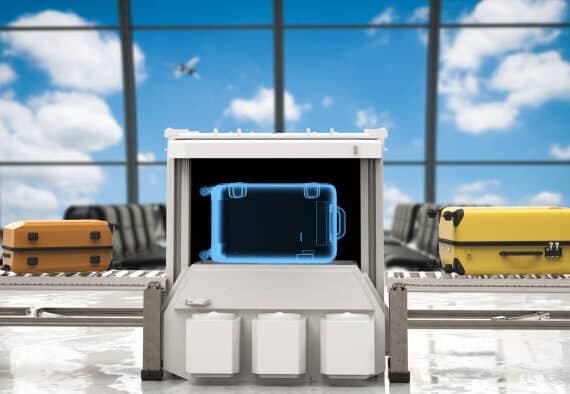
Features & Benefits of Baggage Scanner Machines
Investing in a high-quality Baggage Scanner Machines is a strategic decision that enhances security, operational efficiency, and customer experience. Modern scanners come with a variety of advanced features, each offering specific benefits that make them essential for airports, public transport hubs, logistics centers, and high-security facilities.
1. High-Resolution Imaging
Feature: Modern Baggage Scanner Machines provides high-definition X-ray Baggage Scanner images, displaying internal contents with exceptional clarity.
Benefit:
- Operators can easily detect small or concealed items that may otherwise go unnoticed, such as small knives, electronics, or explosives.
- Reduces the likelihood of false negatives, ensuring higher security.
- Supports faster inspection since operators can instantly recognize suspicious items without manual checks.
2. Dual-Energy & Material Differentiation
Feature: Dual-energy scanners use two X-ray Baggage Scanner Machines energy levels to differentiate between organic, inorganic, and metallic materials.
Benefit:
- Quickly identifies potential threats like explosives (organic), firearms (metallic), and liquids or plastics (inorganic).
- Helps prioritize bags for secondary inspection if any suspicious material is detected.
3. Color-Coded / Multi-Color Display
Feature: Baggage Scanner Machines assign different colors to materials on the screen — for instance, orange for organic, blue for metals, green for mixed or plastic items.
Benefit:
- Simplifies operator interpretation of complex bag contents.
- Enhances the speed of threat detection since operators can visually identify potentially dangerous materials at a glance.
4. Automatic Threat Detection / AI-Assisted Detection
Feature: Advanced scanners include AI-powered threat recognition software that automatically highlights suspicious items or patterns in baggage.
Benefit:
- Reduces human error by assisting operators with complex detection tasks.
- Enhances efficiency, allowing operators to focus on flagged items while other bags move quickly through the system.
- Improves safety by identifying potentially overlooked threats.
5. Multi-View / Multi-Angle / 3D Imaging
Feature: Some high-end scanners offer multi-angle imaging or 3D reconstruction of baggage contents.
Benefit:
- Provides a more complete picture of bag contents, reducing blind spots or hidden compartments.
- Facilitates accurate identification of threats in densely packed luggage.
6. User-Friendly Interface
Feature: Scanners are designed with intuitive controls, touchscreens, and clear display layouts.
Benefit:
- Minimal training is required for operators, reducing onboarding time.
- Simplifies inspection workflow, increasing throughput without compromising accuracy.
7. Automated Conveyor Belt & High Throughput
Feature: Conveyor systems automatically move Baggage Scanner Machines through the scanner at a consistent speed.
Benefit:
- Maintains smooth and continuous inspection flow, even during peak traffic hours.
- Reduces manual handling of luggage, minimizing labor costs and risk of operator fatigue.
8. Durability & Reliability
Feature: Scanners are built with robust materials and components to handle continuous operation in high-traffic environments.
Benefit:
- Ensures long-term service life with minimal downtime.
- Reduces maintenance costs and extends return on investment.
9. Network Connectivity & Remote Monitoring
Feature: Many scanners can connect to centralized systems for monitoring, updates, and reporting.
Benefit:
- Allows remote troubleshooting, system upgrades, and centralized control of multiple scanners across locations.
- Facilitates security analytics and reporting for management decisions.
10. Adjustable Tunnel Sizes & Customizable Configurations
Feature: Baggage Scanner Machines come in various tunnel sizes, from compact scanners for carry-on luggage to large scanners for cargo or oversized items.
Benefit:
- Offers flexibility to meet the specific needs of different environments — airports, logistics hubs, event venues, or corporate offices.
- Ensures that every type of baggage, from backpacks to large crates, can be screened efficiently.
11. Safety & Radiation Shielding
Feature: Baggage Scanner Machines are equipped with shielding and safety protocols to protect operators and passengers from X-ray Baggage Scanner exposure.
Benefit:
- Ensures compliance with international radiation safety standards.
- Allows continuous operation without health risks to staff or travelers.
12. Cost-Effectiveness Over Time
Feature: Despite an initial investment, scanners reduce long-term costs by automating inspections, minimizing manual labor, and avoiding security breaches.
Benefit:
- Reduces operational expenses while improving security efficiency.
- Offers significant ROI through faster processing, fewer human errors, and enhanced threat detection.
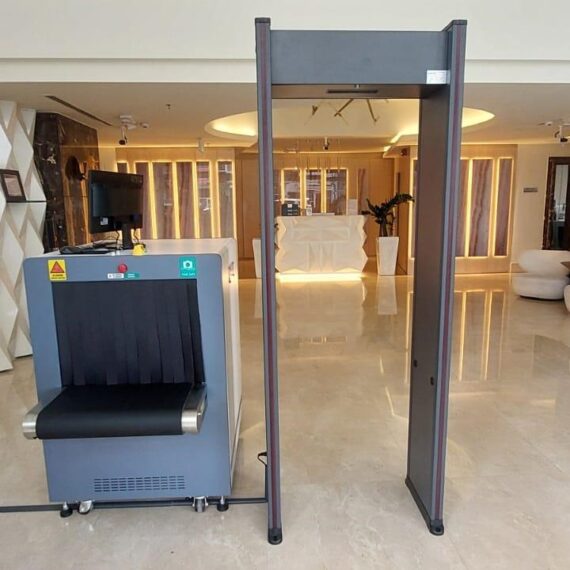
Typical Uses & Applications of Baggage Scanner Machines
Baggage Scanner Machines are highly versatile security tools, serving a wide range of industries and environments. Their ability to efficiently detect weapons, explosives, narcotics, and other prohibited items makes them indispensable wherever safety, access control, and asset protection are critical. Below is a detailed exploration of their typical uses and applications in real-world scenarios:
1. Airports
Application: Screening passenger baggage, cargo, and cargo shipments.
Details & Benefits:
- Airports are high-risk environments where safety and compliance with international aviation security standards are paramount.
- Baggage Scanner Machines allows quick inspection of carry-on and checked luggage without the need for manual searches.
- Dual-energy and AI-assisted scanners can detect a variety of threats, including firearms, explosives, flammable liquids, and concealed weapons.
2. Train Stations, Metro Stations, and Public Transport Hubs
Application: Screening passengers’ bags in transit areas.
Details & Benefits:
- Public transportation hubs can experience large crowds, making security screening challenging.
- Baggage Scanner Machines facilitates fast and non-intrusive inspection, helping to prevent prohibited items from entering trains or buses.
- AI-assisted detection and multi-angle imaging help operators identify suspicious items even in compact, high-traffic environments.
3. Government Buildings and Courthouses
Application: Inspecting visitors’ and employees’ baggage to prevent entry of prohibited items.
Details & Benefits:
- High-security areas like courthouses or government offices require strict access control.
- Scanners help ensure visitors do not carry firearms, knives, or hazardous materials into sensitive areas.
- Automated detection reduces the need for intrusive bag searches, improving visitor experience while maintaining security.
4. Event Venues, Stadiums, Concerts, and Conferences
Application: Screening bags, backpacks, vendor equipment, and packages entering event sites.
Details & Benefits:
- Large events can attract thousands of attendees, making manual inspection impractical.
- Baggage Scanner Machines reduces queues and allows security staff to focus on high-risk items flagged automatically.
- Multi-view imaging ensures densely packed backpacks or equipment cases are inspected thoroughly.
5. Logistics Centers and Warehouses
Application: Screening parcels, packages, and cargo shipments.
Details & Benefits:
- Logistics and courier centers handle thousands of parcels daily, some of which may contain contraband or prohibited items.
- Baggage Scanner Machines help prevent illegal goods, explosives, or smuggled items from entering supply chains.
- Large-tunnel scanners can accommodate oversized parcels or cargo pallets, ensuring no gaps in security.
6. Corporate Offices and High-Security Commercial Buildings
Application: Screening employees, visitors, and their personal items before entering office premises.
Details & Benefits:
- In sensitive commercial or corporate environments, scanners prevent weapons or hazardous materials from entering the building.
- User-friendly interfaces and automated threat detection make operations efficient even in busy office lobbies.
7. Educational Institutions
Application: Ensuring safety on campuses by screening student bags, parcels, or deliveries.
Details & Benefits:
- Universities, colleges, and schools can deploy scanners at main entrances during events, examinations, or high-traffic periods.
- Prevents prohibited items such as knives, lighters, or explosives from entering campuses.
8. Hospitals and Medical Facilities
Application: Screening visitors’ bags and medical deliveries.
Details & Benefits:
- Ensures safety in hospitals by preventing weapons, flammable liquids, or unauthorized items from entering sensitive areas.
- Facilitates safe delivery of medical supplies and equipment without manual inspection delays.
- Real-World Example: High-traffic hospitals can maintain security while ensuring patients and staff have smooth access to medical facilities.
9. Hotels and Hospitality Venues
Application: Screening guest luggage at high-end hotels, resorts, or international chains.
Details & Benefits:
- Enhances security for VIP guests, staff, and property.
- Helps prevent dangerous items from being brought into the hotel, maintaining a safe environment.
- Real-World Example: Luxury hotels hosting international conferences or high-profile guests use Baggage Scanner Machines to ensure discreet yet effective security.
10. Border Crossings and Immigration Checkpoints
Application: Inspecting luggage and cargo at borders, ports, or customs points.
Details & Benefits:
- Prevents smuggling of illegal goods, weapons, or narcotics.
- Dual-energy X-ray scanners help customs officials identify hidden items quickly without delaying trade and passenger flow.
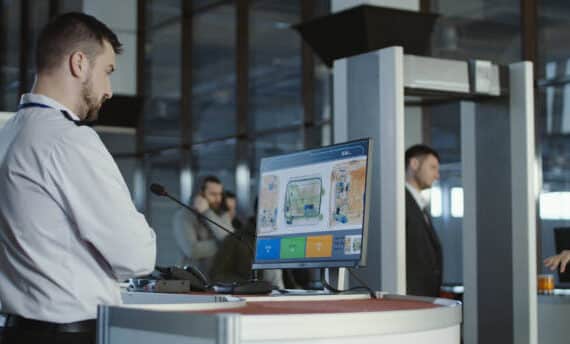
Common FAQs About Baggage Scanner Machines
Baggage Scanner Machines are essential for security operations, but many organizations have questions about their functionality, safety, and suitability.
Q1: What types of items can a Baggage Scanner Machines detect?
Answer:
Baggage Scanner can detect a wide range of items depending on the model and technology:
- Weapons: Knives, firearms, bullets, and other metallic objects.
- Explosives: Powders, liquids, or solid compounds that may be dangerous.
- Flammable materials: Alcohol, chemicals, or fuel containers.
- Contraband: Drugs, illegal substances, or smuggled goods.
- Miscellaneous prohibited items: Sharp tools, electronic devices, or concealed objects.
Benefit: Operators can rapidly flag suspicious items without opening each bag, increasing throughput while maintaining security.
Q2: Are Baggage Scanner safe for passengers and luggage?
Answer:
Yes. Modern X-ray Baggage Scanner Machines are designed with safety standards that limit radiation exposure:
- Passengers and luggage are not exposed to harmful radiation.
- Electronic items such as laptops, tablets, and phones remain safe during scanning.
- Operators are protected by shielding built into the scanner.
Q3: Can Baggage Scanner Machines handle liquids, gels, or powders?
Answer:
Yes. Dual-energy or multi-energy scanners differentiate between organic, inorganic, and metallic materials:
- Liquids and gels appear differently than metals or plastics.
- Powdered substances can be flagged for manual inspection if density or shape appears suspicious.
Benefit: This capability helps airports, logistics hubs, and government facilities comply with security regulations regarding liquids and powders.
Q4: Do all Baggage Scanner Machines offer automatic threat detection?
Answer:
Not all scanners include AI or automatic threat detection:
- Basic models provide 2D or 3D imaging, requiring manual inspection.
- Advanced models include software that automatically highlights suspicious items, reducing human error and speeding up inspections.
Real-world Benefit: High-traffic locations like airports or stadiums benefit from AI-assisted scanners to maintain efficiency and accuracy.
Q5: What sizes of baggage can scanners accommodate?
Answer:
Baggage Scanner Machines come in a variety of tunnel sizes:
- Small tunnels: Carry-on luggage, backpacks, handbags.
- Medium tunnels: Checked luggage, medium parcels.
- Large tunnels: Cargo, oversized parcels, and pallets.
Benefit: Organizations can choose a scanner that meets their specific operational needs, ensuring that all types of baggage are screened effectively.
Q6: How fast is the scanning process?
Answer:
- Modern scanners typically inspect a bag in a few seconds.
- Conveyor belts and automated imaging support continuous throughput, even in peak traffic situations.
Benefit: Efficient scanning reduces queues, prevents bottlenecks, and improves the overall visitor or passenger experience.
Q7: How reliable are Baggage Scanner Machines? Do they require frequent maintenance?
Answer:
- High-quality scanners are designed for continuous, 24/7 operation in airports, logistics hubs, or events.
- Regular maintenance is recommended: cleaning, calibration, software updates, and component checks.
- With proper care, scanners can remain operational for many years.
Benefit: Reliability ensures consistent security and prevents costly downtime.
Q8: Can Baggage Scanner Machines be integrated with existing security systems?
Answer:
Yes. Many modern scanners support:
- Network connectivity for centralized monitoring.
- Integration with access control or surveillance systems.
- Remote diagnostics for troubleshooting and reporting.
Benefit: Centralized management allows security teams to monitor multiple scanners simultaneously, optimize staffing, and improve incident response.
Q9: Are these machines compliant with international safety and security standards?
Answer:
Yes. Reputable scanners comply with international standards, including:
- Radiation safety standards for operators and the public.
- Aviation security regulations (e.g., ICAO, TSA, ECAC).
- Material detection and screening protocols for government, corporate, and public venues.
Benefit: Ensures legal compliance while maintaining high security levels.
Q10: Can scanners detect hidden compartments or irregularly packed items?
Answer:
Advanced scanners with 3D or multi-angle imaging are capable of:
- Identifying unusual shapes or density variations.
- Detecting hidden compartments or layered items inside luggage.
- Highlighting objects obscured by dense packing.
Benefit: Reduces the likelihood of dangerous items slipping through unnoticed, even in complex baggage.
Conclusion
In an era where safety and security are more critical than ever, investing in the right tools is not just a precaution—it’s a strategic necessity. Baggage Scanner Machines represent one of the most effective, reliable, and technologically advanced solutions available for protecting people, assets, and infrastructure across a wide variety of environments.
Whether it’s the fast-paced environment of international airports, the high-traffic zones of public transport hubs, sensitive government buildings, or high-profile event venues, the need for accurate, efficient, and non-intrusive security screening has never been more pressing. Baggage scanners meet this need by combining advanced X-ray imaging, AI-assisted threat detection, and versatile operational capabilities into a single, comprehensive solution.
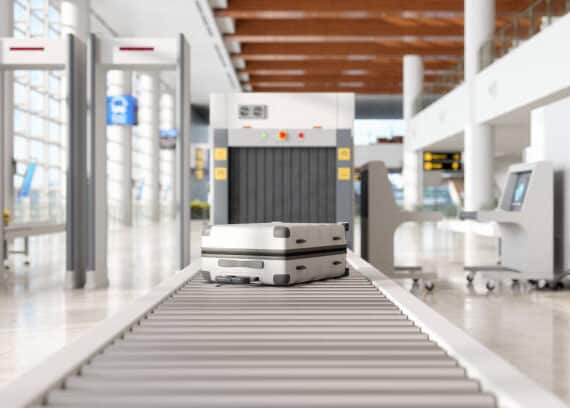
Why Baggage Scanner Machines are a Smart Investment
- Enhanced Security Across Multiple Environments
- Scanners provide a reliable way to detect weapons, explosives, contraband, and other prohibited items before they can cause harm.
- By reducing the risk of security breaches, organizations protect not only people and property but also their reputation and operational integrity.
- Efficiency and High Throughput
- With automated conveyor systems, fast imaging, and AI-assisted detection, baggage scanners enable rapid inspection of high volumes of luggage or cargo.
- This ensures minimal delays in airports, event entrances, or logistics centers, balancing safety with operational efficiency.
- Cost-Effective Long-Term Solution
- Although the initial investment may be significant, Baggage Scanner Machines reduce long-term operational costs by minimizing manual inspections, lowering the risk of costly security incidents, and optimizing staffing.
- Over time, the return on investment is realized through improved safety, faster throughput, and compliance with regulatory requirements.
- Versatility for Diverse Applications
- Modern Baggage Scanner Machines are adaptable to different tunnel sizes, imaging technologies, and threat detection capabilities, making them suitable for airports, train stations, corporate offices, hotels, stadiums, logistics hubs, and temporary events.
- This versatility ensures that security needs are met, regardless of the environment or scale of operations.
- Compliance with Safety and Regulatory Standards
- High-quality scanners meet international safety standards for X-ray exposure and adhere to aviation, customs, and local security regulations.
- This ensures that organizations can operate legally, safely, and confidently while maintaining public trust.
Axle Systems: Trusted Partner in Qatar
For organizations in Qatar, Axle Systems is the trusted provider of Baggage Scanner Machines, offering not only state-of-the-art equipment but also unparalleled local support. With years of experience supplying security solutions across multiple sectors, Axle Systems ensures:
- Tailored Solutions: From compact carry-on scanners to large cargo inspection systems, solutions are customized to meet the specific security requirements of each client.
- Local Service & Maintenance: Rapid response for repairs, maintenance, and software updates ensures continuous, reliable operations.
- Expert Guidance: Professional consultations help organizations select the most suitable model, implement efficient workflows, and train operators effectively.
Contact Information:
- Email: info@axlesys.com
- Phone: +974 4468 2391 / +974 7744 3731
- Address: P.O. Box 200081, Al Khalidiya Street, Najma, Doha, Qatar