

Smart Washroom System by Axle Systems
In today’s fast-moving world, hygiene, sustainability, operational efficiency, and customer experience are more important than ever. Traditional washrooms are no longer enough for modern commercial spaces, airports, hospitals, malls, offices, schools, stadiums, hotels, and public facilities. Organizations are now moving toward intelligent and connected facilities that provide real-time monitoring, better hygiene standards, efficient resource management, and improved user satisfaction.
This transformation has led to the rise of the Smart Washroom System — an innovative technology-driven solution that combines IoT sensors, automation, data analytics, and real-time monitoring to create intelligent washroom environments.
As a leading supplier of advanced smart facility solutions in Qatar, Axle Systems proudly offers premium Smart Washroom Systems powered by the globally recognized brand Verteco. Verteco is known for its innovative Smart Washroom System, intelligent monitoring systems, water-saving solutions, and data-driven facility management platforms.
Table Of Contents
- 1 What is a Smart Washroom System?
- 1.1 Why Smart Washroom Systems are Important
- 1.2 Features of Smart Washroom System
- 1.3 Benefits of Smart Washroom System
- 1.4 Uses of Smart Washroom Systems
- 1.4.1 1. Smart Washroom System in Airports
- 1.4.2 Key Applications in Airports
- 1.4.3 2. Smart Washroom System in Hospitals and Healthcare Facilities
- 1.4.4 Key Applications in Healthcare
- 1.4.5 Benefits for Healthcare Facilities
- 1.4.6 3. Smart Washroom Systems in Shopping Malls
- 1.4.7 Key Applications in Shopping Malls
- 1.4.8 Benefits for Shopping Malls
- 1.4.9 4. Smart Washroom System in Commercial Office Buildings
- 1.4.10 Key Applications in Offices
- 1.4.11 Benefits for Corporate Offices
- 1.4.12 5. Smart Washroom System in Hotels and Hospitality
- 1.4.13 Key Applications in Hotels
- 1.4.14 Benefits for Hotels
- 1.5 Why Choose Axle Systems for Smart Washroom System?
- 1.6 Contact Axle Systems
- 1.7 Frequently Asked Questions (FAQ)
- 1.8 Conclusion
What is a Smart Washroom System?
A Smart Washroom System is an advanced digital washroom management solution that uses smart sensors, IoT connectivity, cloud-based analytics, automation, and real-time monitoring to improve washroom hygiene, maintenance, operational efficiency, and user experience.
Unlike traditional washrooms that rely on manual inspections and fixed cleaning schedules, smart washrooms operate using real-time data. Sensors installed inside the washroom continuously monitor various conditions such as:
- Occupancy levels
- Footfall traffic
- Consumable levels
- Air quality
- Water usage
- Leakage detection
- Cleaning schedules
- Waste bin levels
- Equipment performance
- User satisfaction
The collected data is analyzed through intelligent dashboards that help facility management teams make informed decisions instantly.
According to Verteco Smart Washroom System, smart washrooms integrate environmental and operational sensors with digital monitoring platforms to improve cleanliness, operational efficiency, resource management, and customer satisfaction.
Why Smart Washroom Systems are Important
Modern facilities face several challenges in maintaining washrooms efficiently:
- High maintenance costs
- Increasing water consumption
- Poor hygiene monitoring
- Lack of real-time visibility
- Consumable shortages
- Complaints from users
- Unnecessary cleaning routines
- Equipment failures
- Overflowing waste bins
- Increased operational workload
Traditional washroom maintenance methods are reactive. Problems are usually identified only after complaints occur.
Smart Washroom System change this approach completely by enabling proactive maintenance and predictive facility management.
With real-time alerts and automated monitoring, facility teams can identify issues before users experience problems.
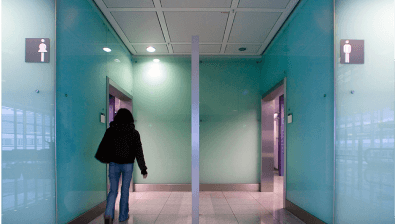
Features of Smart Washroom System
Modern Smart Washroom System are far more than automated washrooms. They are intelligent facility management ecosystems designed to improve hygiene, efficiency, sustainability, and user experience through real-time monitoring and data-driven operations. Powered by IoT technology, cloud analytics, smart sensors, and automation, these systems transform ordinary washrooms into highly efficient and intelligent environments.
1. Real-Time Occupancy Monitoring
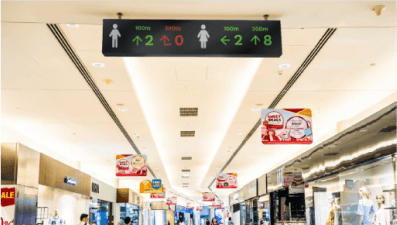
One of the most important features of a Smart Washroom System is real-time occupancy monitoring. Advanced sensors installed inside washrooms continuously monitor usage patterns and occupancy levels.
The system can detect:
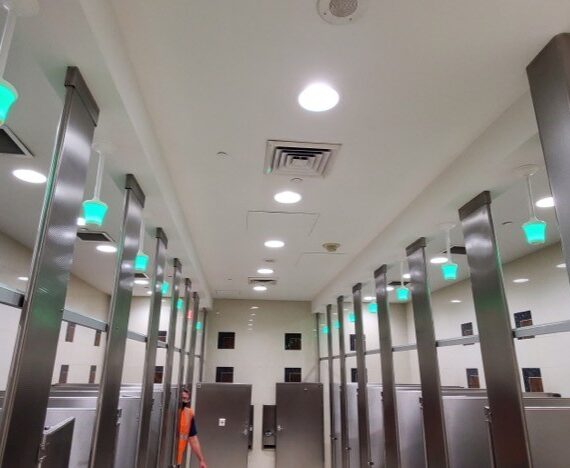
- Which cubicles are occupied
- Which cubicles are available
- Peak usage timings
- User traffic flow
- Queue formation
- Washroom overcrowding
- Average usage duration
This information is displayed instantly on centralized dashboards and mobile applications.
In large facilities such as airports, malls, stadiums, and office buildings, occupancy monitoring helps reduce waiting times and improves visitor convenience. Facility managers can identify heavily used washrooms and allocate resources more efficiently.
Real-time occupancy data also helps improve cleaning efficiency. Instead of cleaning all washrooms at fixed intervals, staff can prioritize washrooms with high traffic.
Benefits include:
- Reduced waiting time
- Better crowd management
- Improved user satisfaction
- Optimized cleaning schedules
- Better resource allocation
- Enhanced operational visibility
Verteco smart occupancy systems help facilities improve traffic management and operational efficiency through intelligent sensor technology.
2. Smart Consumable Monitoring
Traditional washroom maintenance often relies on manual inspections to check soap dispensers, tissue holders, and sanitizers. This process is time-consuming and inefficient.
Smart Washroom System solve this problem using intelligent consumable monitoring sensors.
These sensors continuously monitor the levels of:
- Toilet tissue
- Hand towels
- Soap dispensers
- Sanitizer dispensers
- Air fresheners
- Cleaning chemicals
When consumable levels become low, automated alerts are immediately sent to maintenance teams.
This ensures that Smart Washroom System remain fully stocked at all times.
The system can also provide:
- Usage statistics
- Refill frequency reports
- Consumption trends
- Inventory optimization data
This feature significantly improves customer experience because users rarely encounter empty dispensers or unavailable hygiene products.
Additional benefits include:
- Reduced manual inspections
- Lower labor costs
- Better inventory management
- Reduced wastage
- Faster refill response
- Improved hygiene compliance
Smart consumable management also supports sustainability initiatives by reducing unnecessary replacement and waste generation.
3. Intelligent Cleaning Management
Cleaning is one of the largest operational expenses in facility management. Traditional washroom cleaning schedules are usually fixed and do not consider actual usage conditions.
Smart Washroom System introduce intelligent cleaning management powered by real-time data.
The system tracks:
- Footfall traffic
- Occupancy frequency
- Washroom usage intensity
- User feedback
- Hygiene conditions
Based on this data, cleaning staff receive alerts only when cleaning is genuinely required.
For example:
- A low-traffic washroom may not require frequent cleaning
- A high-traffic washroom may require immediate attention
This approach is known as demand-based or data-driven cleaning.
Smart cleaning systems can also provide:
- Staff task assignments
- Cleaning verification
- Time tracking
- Cleaning history reports
- Service response monitoring
Benefits include:
- Reduced operational costs
- Improved cleaning quality
- Better workforce efficiency
- Increased accountability
- Reduced unnecessary cleaning
- Faster response to issues
Verteco smart cleaning platforms help organizations optimize workforce management and improve hygiene performance.
4. Air Quality and Environmental Monitoring
Indoor environmental quality is critical for washroom comfort and hygiene.
Smart Washroom System use environmental sensors to continuously monitor:
- Temperature
- Humidity
- CO2 concentration
- Ammonia levels
- Volatile Organic Compounds (VOCs)
- Odor conditions
- Air circulation quality
Poor air quality can negatively affect user comfort and may also indicate ventilation problems.
Real-time environmental monitoring allows facility managers to:
- Improve ventilation efficiency
- Reduce unpleasant odors
- Maintain healthy environments
- Improve user satisfaction
- Prevent mold growth
- Maintain hygiene standards
Automated alerts can notify staff if environmental conditions exceed acceptable thresholds.
This feature is especially important in:
- Hospitals
- Airports
- Hotels
- Commercial buildings
- Public washrooms
Advanced environmental monitoring also contributes to healthier and more sustainable buildings.
5. Smart Water Usage Monitoring
Water conservation is becoming increasingly important for modern facilities and smart cities.
Smart Washroom System include intelligent water monitoring technologies that track:
- Total water consumption
- Flush frequency
- Faucet usage
- Peak water demand
- Abnormal water flow
- Leak conditions
The system analyzes water usage patterns and identifies inefficiencies in real time.
For example, if excessive water usage is detected in a particular area, maintenance teams can investigate immediately.
Smart water monitoring helps organizations:
- Reduce water wastage
- Lower utility costs
- Improve sustainability
- Meet environmental goals
- Detect hidden leaks
- Improve operational efficiency
Verteco smart water management technologies are designed to help facilities improve sustainability while reducing operational expenses.
6. Leak Detection and Prevention
Water leaks are a major issue in large facilities. Undetected leaks can cause:
- Structural damage
- High repair costs
- Mold growth
- Water wastage
- Equipment damage
- Increased utility bills
Smart leak detection sensors continuously monitor pipelines, fixtures, and water systems.
The moment abnormal leakage is detected, the system sends instant notifications to facility management teams.
Some advanced systems can even:
- Automatically shut off water supply
- Isolate affected areas
- Generate maintenance tickets
- Track repair history
Benefits include:
- Reduced water loss
- Faster maintenance response
- Lower repair costs
- Improved building protection
- Increased equipment lifespan
This proactive approach helps organizations avoid major operational disruptions.
Benefits of Smart Washroom System
Smart Washroom Systems are transforming the way organizations manage hygiene, maintenance, and operational efficiency. Beyond simply automating washroom functions, these intelligent systems create data-driven, responsive, and highly efficient environments that improve user satisfaction while reducing costs and supporting sustainability goals.
Powered by advanced IoT sensors, cloud-based analytics, and intelligent automation, Smart Washroom Systems provide measurable benefits for organizations across multiple sectors including airports, hospitals, malls, offices, hotels, schools, and public facilities.
With Verteco Smart Washroom Systems, supplied and supported by Axle Systems, organizations can modernize their washroom infrastructure and create cleaner, safer, and smarter facilities.
Below is a detailed overview of the major benefits of Smart Washroom Systems.
1. Improved Hygiene and Sanitation Standards
One of the most important benefits of Smart Washroom System is the significant improvement in hygiene and cleanliness.
Traditional washroom maintenance often depends on fixed cleaning schedules and manual inspections, which can lead to delayed responses when hygiene issues arise. Smart Washroom System eliminate this problem by continuously monitoring washroom conditions in real time.
Sensors can detect:
- Washroom usage levels
- Cleaning requirements
- Consumable shortages
- Waste bin status
- Water leaks
- Air quality conditions
This allows maintenance teams to respond immediately before hygiene problems affect users.
Smart systems also support touch-free technologies such as:
- Automatic soap dispensers
- Sensor-based faucets
- Touchless flush systems
- Automatic hand dryers
- Motion-activated doors
These touch-free solutions help reduce cross-contamination and limit the spread of bacteria and viruses, making washrooms safer for everyone.
This is especially beneficial in environments where hygiene is critical, such as:
- Hospitals
- Airports
- Schools
- Restaurants
- Shopping centers
- Healthcare facilities
Improved hygiene standards enhance user trust and contribute to healthier public environments.
2. Enhanced User Experience and Customer Satisfaction
Washroom cleanliness and functionality directly impact how users perceive a facility. A poorly maintained washroom can create a negative impression of an entire organization.
Smart Washroom System improve the user experience by ensuring:
- Clean and hygienic facilities
- Fully stocked soap and tissue dispensers
- Reduced waiting times
- Better air quality
- Faster issue resolution
- Comfortable washroom environments
Real-time occupancy monitoring can even help direct users to less crowded washrooms, reducing queues and improving convenience.
Users are more likely to feel satisfied when they encounter:
- Functional equipment
- Pleasant odors
- Clean surfaces
- Reliable consumable availability
- Minimal congestion
For businesses such as hotels, malls, airports, and office buildings, better washroom experiences contribute significantly to brand reputation and customer loyalty.
A positive washroom experience often influences overall facility satisfaction more than organizations realize.
3. Significant Reduction in Operational Costs
One of the strongest business advantages of Smart Washroom System is cost savings.
Traditional washroom management often involves:
- Frequent manual inspections
- Fixed cleaning schedules
- Excessive labor allocation
- Reactive repairs
- Resource wastage
Smart systems optimize operations through data-driven decision-making.
Major cost-saving areas include:
Reduced Cleaning Costs
Instead of cleaning washrooms based on fixed schedules, cleaning can be triggered based on actual usage and real-time conditions.
This reduces:
- Unnecessary cleaning rounds
- Labor hours
- Cleaning material consumption
Cleaning teams can focus only where attention is needed.
Reduced Consumable Waste
Smart monitoring prevents over-refilling and unnecessary replacement of:
- Soap
- Tissue paper
- Hand towels
- Sanitizers
Organizations can manage inventory more efficiently and minimize waste.
Lower Repair Costs
Predictive maintenance alerts help identify equipment problems before failures occur.
This reduces:
- Emergency maintenance expenses
- Equipment replacement costs
- Downtime
Reduced Utility Bills
Smart monitoring of water and energy usage helps organizations reduce monthly utility costs.
Overall, Smart Washroom System can deliver substantial long-term operational savings.
4. Intelligent Resource Optimization
Smart Washroom System allow organizations to allocate resources more efficiently.
Facility managers can optimize:
- Cleaning staff deployment
- Maintenance schedules
- Inventory replenishment
- Budget planning
- Utility management
By analyzing real-time usage data, organizations can determine:
- Which washrooms need immediate attention
- Which washrooms are underutilized
- Peak usage times
- Staffing requirements
- Supply demand patterns
This prevents overstaffing, understaffing, and inefficient resource allocation.
Resource optimization improves productivity and operational efficiency across the facility.
5. Real-Time Visibility and Monitoring
One of the most powerful benefits of Smart Washroom System is complete visibility into washroom operations.
Facility managers can monitor washroom status through centralized dashboards showing:
- Occupancy levels
- Cleaning status
- Consumable levels
- Air quality
- Water usage
- Leak alerts
- Equipment health
- Waste bin levels
This real-time visibility allows immediate action when issues arise.
Instead of waiting for complaints, facility teams can proactively solve problems before users notice them.
Benefits include:
- Faster decision-making
- Better accountability
- Improved service delivery
- Increased operational transparency
Real-time monitoring transforms washroom management from reactive to proactive.
Uses of Smart Washroom Systems
Smart Washroom Systems are becoming an essential part of modern infrastructure across multiple industries. As organizations increasingly focus on hygiene, sustainability, operational efficiency, user satisfaction, and smart building technologies, intelligent washroom management systems are rapidly replacing traditional maintenance methods.
Powered by IoT sensors, cloud connectivity, automation, real-time monitoring, and advanced analytics, Smart Washroom Systems can be customized for a wide range of environments and facility types.
From airports and hospitals to schools and commercial buildings, smart washroom technologies help organizations maintain cleaner, safer, and more efficient facilities while reducing operational costs and improving overall user experience.
Below is a detailed explanation of the major uses and applications of Smart Washroom Systems across different industries.
1. Smart Washroom System in Airports
Airports are among the busiest public environments in the world. Thousands of passengers use airport washrooms every day, making hygiene management extremely challenging.
Traditional cleaning methods often struggle to maintain washroom standards during peak passenger traffic.
Smart Washroom Systems help airports manage:
- High passenger volumes
- Peak traffic periods
- Real-time occupancy
- Cleaning efficiency
- Consumable replenishment
- Water management
- User satisfaction
Key Applications in Airports
Real-Time Occupancy Monitoring
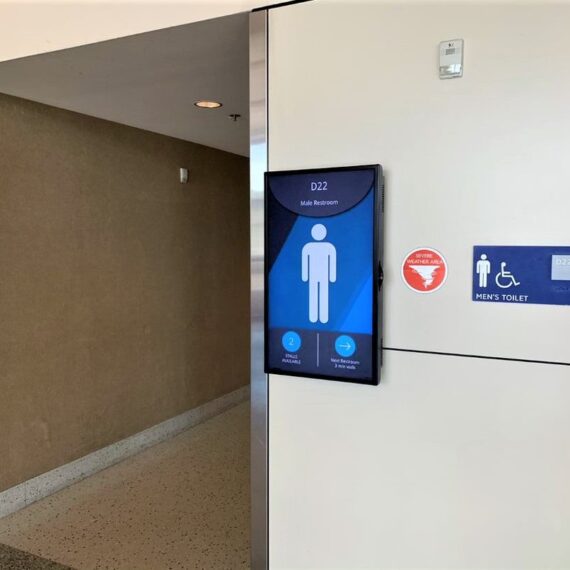
Airport passengers can quickly identify available washrooms or cubicles using occupancy monitoring systems.
This reduces:
- Congestion
- Waiting times
- Passenger frustration
Dynamic Cleaning Management
Cleaning schedules can be adjusted automatically based on footfall data and occupancy levels.
High-traffic washrooms receive immediate attention when needed.
Consumable Monitoring
Smart sensors ensure that soap dispensers, tissue holders, and sanitizers are always stocked.
Water Usage Optimization
Large airports consume significant amounts of water. Smart systems help reduce wastage and monitor abnormal usage.
Enhanced Passenger Experience
Clean and modern washrooms improve overall airport service quality and passenger satisfaction.
For international airports, washroom quality plays a major role in customer perception and service ratings.
2. Smart Washroom System in Hospitals and Healthcare Facilities
Healthcare environments require the highest hygiene standards to prevent infections and maintain patient safety.
Washrooms in hospitals, clinics, laboratories, and medical facilities must remain continuously clean and properly maintained.
Smart Washroom Systems support healthcare facilities through intelligent hygiene management and touch-free technology.
Key Applications in Healthcare
Infection Prevention
Touch-free systems reduce physical contact and minimize the spread of germs and bacteria.
Examples include:
- Automatic faucets
- Sensor flush systems
- Touch-free soap dispensers
- Motion-based doors
Real-Time Hygiene Monitoring
Sensors continuously monitor washroom cleanliness and consumable availability.
Air Quality Monitoring
Environmental sensors help maintain healthy indoor conditions by monitoring humidity, odor, and ventilation quality.
Predictive Maintenance
Healthcare facilities cannot afford equipment failures. Smart monitoring prevents disruptions through early issue detection.
Cleaning Verification
Digital cleaning logs improve accountability and ensure hygiene compliance.
Benefits for Healthcare Facilities
- Improved infection control
- Better patient safety
- Faster maintenance response
- Enhanced regulatory compliance
- Improved hygiene standards
Smart washroom technologies help healthcare providers create safer and more hygienic environments for patients, staff, and visitors.
3. Smart Washroom Systems in Shopping Malls
Shopping malls experience large and unpredictable visitor traffic throughout the day.
Maintaining consistently clean washrooms across multiple floors and zones is a major operational challenge.
Smart Washroom Systems help mall operators improve customer satisfaction while reducing operational costs.
Key Applications in Shopping Malls
Footfall-Based Cleaning
Washrooms with high visitor traffic receive immediate cleaning attention.
Occupancy Monitoring
Visitors can locate less crowded washrooms quickly.
Consumable Management
Real-time alerts prevent empty tissue or soap dispensers.
Waste Bin Monitoring
Overflowing bins are detected instantly.
Customer Feedback Systems
Visitors can provide digital feedback regarding washroom cleanliness and conditions.
Benefits for Shopping Malls
- Better customer experience
- Improved brand image
- Reduced maintenance costs
- Faster issue resolution
- Improved operational efficiency
Modern shoppers expect high-quality facilities, and clean smart washrooms contribute significantly to positive customer experiences.
4. Smart Washroom System in Commercial Office Buildings
Corporate offices and commercial towers require clean and efficient facilities to support employee well-being and workplace productivity.
Smart Washroom Systems help businesses create healthier and more sustainable work environments.
Key Applications in Offices
Employee Comfort
Maintaining clean, fully stocked washrooms improves employee satisfaction.
Resource Optimization
Smart monitoring reduces unnecessary cleaning and resource waste.
Sustainability Management
Organizations can monitor water and energy consumption to support ESG initiatives.
Centralized Facility Management
Facility managers can monitor multiple office floors and buildings from a single dashboard.
Predictive Maintenance
Equipment problems are identified before they disrupt operations.
Benefits for Corporate Offices
- Improved workplace experience
- Lower operational costs
- Better sustainability performance
- Reduced maintenance workload
- Enhanced facility management efficiency
Smart office infrastructure is becoming increasingly important in modern corporate environments.
5. Smart Washroom System in Hotels and Hospitality
Guest experience is the highest priority in the hospitality industry.
Hotel washrooms must maintain exceptional standards of cleanliness, comfort, and luxury.
Smart Washroom Systems help hotels deliver premium guest experiences while improving operational efficiency.
Key Applications in Hotels
Luxury Touch-Free Features
Modern hotels integrate:
- Sensor faucets
- Smart mirrors
- Automatic lighting
- Touch-free dispensers
Real-Time Maintenance Alerts
Housekeeping teams receive instant notifications about washroom issues.
Guest Satisfaction Monitoring
Hotels can collect digital feedback regarding washroom conditions.
Water and Energy Management
Hotels can reduce operational expenses through efficient resource monitoring.
Benefits for Hotels
- Improved guest satisfaction
- Better hygiene standards
- Reduced operational costs
- Enhanced luxury experience
- Improved sustainability performance
Smart washroom technology supports modern hospitality standards and premium guest expectations.
Why Choose Axle Systems for Smart Washroom System?
Axle Systems is a trusted supplier of advanced technology and smart infrastructure solutions in Qatar.
Axle Systems supplies premium Smart Washroom System powered by Verteco technology to help businesses improve hygiene, sustainability, operational efficiency, and customer satisfaction.
Axle Systems Provides
- Smart Washroom Solutions
- IoT Monitoring Systems
- Occupancy Monitoring
- Smart Cleaning Systems
- Water Management Solutions
- Leak Detection Systems
- Consumable Monitoring
- Smart Facility Management Solutions
- Installation and Integration
- Technical Support and Maintenance
Why Partner with Axle Systems?
Industry Expertise
Axle Systems has extensive experience in delivering advanced smart technology solutions across multiple industries.
High-Quality Solutions
We provide globally recognized brands and reliable technologies that ensure long-term performance.
Customized Solutions
Every facility is different. Axle Systems provides customized Smart Washroom System based on customer requirements.
Professional Support
Our team provides installation, configuration, technical support, and after-sales service.
Commitment to Innovation
We continuously introduce modern technologies that improve operational efficiency and sustainability.
Contact Axle Systems
Location: Al Khalidiya Street, Najma, Doha, Qatar
Contact: +974 44682391/77443731
Email: info@axlesys.com
Website: www.axlesys.com
Frequently Asked Questions (FAQ)
What is a Smart Washroom System?
A Smart Washroom System is an IoT-based washroom management solution that uses sensors and real-time monitoring to improve hygiene, maintenance, and operational efficiency.
How does a Smart Washroom System work?
The system uses smart sensors installed throughout the washroom to monitor occupancy, consumables, air quality, water usage, leaks, and cleaning requirements. Data is analyzed through cloud dashboards and alerts are sent automatically.
What are the benefits of Smart Washroom Systems?
Benefits include:
- Better hygiene
- Reduced operational costs
- Water savings
- Improved customer experience
- Efficient cleaning management
- Predictive maintenance
- Sustainability improvements
Where can Smart Washroom Systems be used?
They are suitable for:
- Airports
- Hospitals
- Shopping malls
- Hotels
- Offices
- Schools
- Stadiums
- Public facilities
What is occupancy monitoring?
Occupancy monitoring tracks washroom usage and cubicle availability in real time using sensors.
How do Smart Washroom System save water?
Smart systems monitor water usage, detect leaks, and optimize flushing operations to reduce wastage.
Can Smart Washroom System reduce maintenance costs?
Yes. Predictive maintenance and real-time alerts reduce emergency repairs, unnecessary inspections, and operational expenses.
What is data-driven cleaning?
Data-driven cleaning uses real-time occupancy and usage data to schedule cleaning only when needed.
Conclusion
Smart Washroom System are redefining the future of hygiene management, facility operations, and smart infrastructure. As businesses, institutions, and public organizations continue to embrace digital transformation, the demand for intelligent and automated facility solutions is growing rapidly. Washrooms, once considered simple utility spaces, are now becoming an important part of the overall user experience, sustainability strategy, and operational efficiency of modern buildings.
Traditional washroom management methods are no longer sufficient for today’s high-demand environments. Manual inspections, fixed cleaning schedules, delayed maintenance responses, excessive water consumption, and inefficient resource management often result in poor hygiene standards and increased operational costs. Modern facilities require smarter, faster, and more efficient solutions that can adapt to real-time conditions and deliver measurable improvements.
This is where Smart Washroom System provide exceptional value.
By integrating IoT sensors, cloud connectivity, occupancy monitoring, touch-free technologies, predictive maintenance, intelligent cleaning systems, and real-time analytics, Smart Washroom Systems create a fully connected and data-driven washroom environment. These systems help organizations move from reactive maintenance to proactive facility management, ensuring higher hygiene standards, improved sustainability, reduced operational costs, and enhanced user satisfaction.
The advantages of Smart Washroom Systems extend across multiple industries and applications. Airports can manage passenger traffic more efficiently. Hospitals can improve infection control and patient safety. Shopping malls can enhance customer experience. Hotels can provide luxury touch-free environments. Educational institutions can promote better hygiene among students. Commercial offices can optimize resource management and improve workplace well-being. Stadiums and public facilities can manage large crowds more effectively while maintaining cleanliness and operational efficiency.
In every environment, Smart Washroom Systems help organizations achieve better control, improved visibility, and smarter decision-making.
One of the most significant benefits of Smart Washroom System is their ability to support sustainability and environmental responsibility. Water conservation, energy efficiency, reduced paper waste, optimized cleaning operations, and intelligent resource management all contribute toward greener and more sustainable facilities. As governments and organizations increasingly focus on ESG goals and environmental regulations, smart washroom technology becomes an important investment for long-term sustainability planning.
Another major advantage is the ability to collect and analyze operational data in real time. Facility managers no longer need to rely on assumptions or delayed reports. Smart dashboards provide immediate visibility into occupancy levels, consumable usage, maintenance requirements, air quality conditions, and system performance. This data-driven approach improves planning, workforce allocation, maintenance efficiency, and overall facility performance.
Predictive maintenance capabilities also help organizations avoid costly breakdowns and emergency repairs. By identifying potential problems before failure occurs, smart systems reduce downtime, extend equipment lifespan, and improve operational reliability. This proactive maintenance model significantly lowers long-term operational expenses and improves return on investment.
The growing popularity of touch-free technology has further accelerated the adoption of Smart Washroom System. Modern users expect safer, cleaner, and more hygienic environments. Sensor-based faucets, automatic flush systems, touchless dispensers, and automated doors reduce physical contact and help minimize the spread of germs and bacteria. These features not only improve hygiene but also increase user confidence and comfort.
As smart buildings and smart cities continue to evolve, Smart Washroom System will become an increasingly important part of intelligent infrastructure development. Future advancements in artificial intelligence, machine learning, automation, and IoT integration will further enhance the capabilities of these systems. We can expect even more advanced predictive analytics, automated cleaning robotics, AI-powered maintenance management, advanced environmental controls, and fully integrated smart facility ecosystems in the coming years.
Organizations that invest in Smart Washroom System today are preparing themselves for the future of intelligent building management.
With globally recognized technologies from Verteco and professional implementation support from Axle Systems, businesses and institutions in Qatar can confidently modernize their facilities with reliable, innovative, and future-ready Smart Washroom System.
Verteco is known for delivering advanced IoT-based Smart Washroom System that combine operational intelligence, sustainability, hygiene management, and smart facility automation. Their intelligent solutions help organizations achieve measurable improvements in efficiency, hygiene standards, customer satisfaction, and environmental performance.