

What Are the Best Access Control Solutions for Businesses in Qatar in 2026?
Quick Take
If you’re running a business today, access control isn’t just about locking doors anymore. The best solutions in 2026 combine security, convenience, and flexibility—think mobile access, biometrics, and cloud-based control. The right system depends on how your business operates, but one thing is clear: smart, connected systems are quickly becoming the standard.
So, What Exactly Is an Access Control System?
In simple terms, an access control system decides who gets in, where they can go, and when. That’s it.But in reality, it’s doing a lot more behind the scenes—tracking movement, logging activity, and helping you stay in control without constantly checking doors or relying on physical keys.
For businesses in Qatar, this has become especially important as offices, warehouses, and commercial spaces grow more complex. You’re not just protecting assets—you’re managing people, data, and operations all at once.
What Types of Access Control Solutions Are Businesses Actually Using?
Let’s break this down without overcomplicating it.
Card-Based Systems (The Familiar Option)
These are the classic swipe cards or key fobs. They’re easy to use and still widely used.
Good for: Small to mid-sized offices that need something simple and reliable.
Biometric Systems (High Security, No Guesswork)
Fingerprint or facial recognition systems make sure the person entering is exactly who they claim to be.
Good for: Places where security really matters—like server rooms or restricted areas.
Mobile Access (No Cards, No Hassle)
This is becoming a favorite. Employees use their phones instead of cards.
Why people like it: No more lost cards, and everything feels faster and cleaner.
Cloud-Based Systems (Control From Anywhere)
These systems let you manage access remotely. You can add or remove permissions without being on-site.
Best for: Businesses with multiple locations or teams working across different sites.
Hybrid Systems (Everything Working Together)
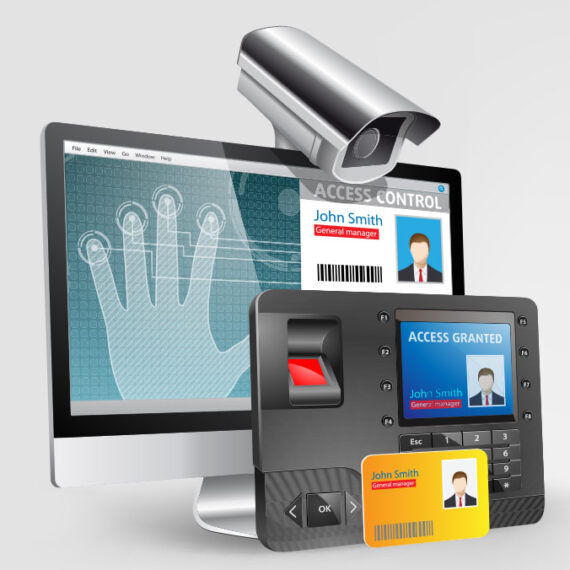
This is where things get interesting. You combine access control with CCTV, alarms, and even visitor systems.
Result: A complete security ecosystem, not just a door lock.
How Do You Choose the Right One?
This is where most people get stuck.
Instead of asking “What’s the best system?”, a better question is: “What does my business actually need?”
Here’s a quick way to think about it:
| If you need | Go for |
| Basic security on a budget | Card-based system |
| Maximum security | Biometric system |
| Flexibility and remote control | Cloud-based system |
| Convenience for employees | Mobile access |
| Full control + integration | Hybrid system |
No one-size-fits-all here. It really depends on your setup.
What Features Should You Not Compromise On?
No matter which system you choose, a few things are non-negotiable:
- Real-time tracking: You should know who entered and when
- Remote access: Especially useful if you’re not always on-site
- Role-based permissions: Not everyone needs access to everything
- Integration: Your system should “talk” to CCTV or HR tools
- Scalability: Because your business won’t stay the same forever
What Do Businesses Actually Gain From This?
Let’s keep it practical.
- Better Security: You’re not relying on keys that can be copied or lost.
- Less Manual Work: No more tracking attendance or managing physical access logs.
- Easier Expansion: Adding a new employee or location doesn’t feel like a headache.
- Cleaner Visitor Management: You know exactly who’s coming in and out—no guesswork.
And honestly, there’s also peace of mind. You’re not constantly wondering if something slipped through the cracks.
Where Are These Systems Being Used the Most?
Pretty much everywhere—but here’s where they make the biggest difference:
- Offices: Managing employees and visitors
- Warehouses: Controlling access to inventory
- Healthcare: Restricting sensitive areas
- Construction Sites: Tracking workforce movement
- Large projects: Especially where security and scale go hand in hand
A Few Questions People Often Ask
Q. Is biometric better than card-based access?
A. It’s more secure, yes. But it’s also more expensive. If security is critical, it’s worth it.
Q. What happens if someone loses their access card?
A. You deactivate it instantly. That’s one of the biggest advantages over traditional keys.
Q. Is cloud-based access control safe?
A. Yes, as long as it’s set up properly. In many cases, it’s actually safer because updates and monitoring happen in real time.
Q. Can I connect this with CCTV?
A. Absolutely, and you should. It gives you a complete picture of what’s happening.
Q. Is mobile access reliable?
A. Very. It’s quickly becoming the go-to option because it’s simple and secure.
Final Thoughts
If there’s one thing to take away, it’s this:
Access control is no longer just about security—it’s about control, visibility, and flexibility.
The best solution is the one that fits naturally into your business without making things complicated.
That’s exactly where Axle Systems comes in. They don’t just offer off-the-shelf products—they help you build a system that actually works for your space, your team, and your future plans.
If you’re considering upgrading or setting up access control, it might be worth having a conversation with them. Sometimes, the right setup can solve problems you didn’t even realize you had.