

Fingerprint Access Control System in Qatar
In today’s fast-paced world, security has become one of the most critical concerns for businesses, institutions, residential buildings, and industrial facilities. Traditional security methods such as keys, passwords, and ID cards are no longer sufficient to protect sensitive areas and valuable assets.
This is where the Fingerprint Access Control System comes into play.
A fingerprint access control system is a modern biometric security solution that uses an individual’s unique fingerprint to grant or deny access to a secured area. Since no two fingerprints are the same, this system provides one of the highest levels of security available today.
At Axle Systems, we specialize in supplying and installing advanced Fingerprint Access Control System across Qatar. We deliver reliable, scalable, and cost-effective security solutions tailored to the needs of modern businesses.
What is a Fingerprint Access Control System?
A Fingerprint Access Control System is a biometric security system that identifies and verifies a person based on their fingerprint patterns.
Instead of using keys or access cards, users simply place their finger on a scanner. The system compares the fingerprint with stored data in the database:
- If it matches → Access is granted
- If it does not match → Access is denied
This ensures only authorized individuals can enter restricted areas.
Fingerprint systems are widely used in:
- Corporate offices
- Government buildings
- Hospitals
- Schools and universities
- Industrial facilities
- Residential apartments
Because fingerprints are unique and cannot be shared, duplicated, or lost easily, this system is considered one of the most secure access control technologies available today.
Key Features of Fingerprint Access Control System
Fingerprint Access Control System are not just simple door security devices—they are intelligent biometric platforms designed to manage identity, access rights, and security operations in real time. Modern systems combine advanced hardware, artificial intelligence-based recognition algorithms, and flexible management software.
Below is a detailed breakdown of the most important features that make fingerprint access control systems a preferred choice for organizations worldwide.
1. Advanced Biometric Authentication Technology
At the core of every Fingerprint Access Control System is biometric authentication, which relies on the unique ridge patterns of a human fingerprint.
Unlike passwords or access cards that can be forgotten, stolen, or duplicated, biometric data is:
- Unique to every individual
- Extremely difficult to replicate
- Permanent throughout a person’s life
Modern fingerprint scanners use:
- Optical sensors
- Capacitive sensors
- Ultrasonic scanning technology
These sensors capture high-resolution fingerprint images and convert them into encrypted biometric templates. The Fingerprint Access Control System then compares these templates with stored records for verification.
This ensures a high level of accuracy and security, reducing the risk of unauthorized access.
2. High-Speed Identification and Verification
One of the most important features of Fingerprint Access Control System is rapid recognition speed.
Advanced systems can:
- Verify a fingerprint in less than 1 second
- Process multiple users without delay
- Handle high-traffic entry points efficiently
This is particularly useful in environments such as:
- Corporate offices during peak hours
- Factories with shift changes
- Educational institutions with large student populations
Fast authentication ensures smooth entry flow and eliminates long waiting times at access points.
3. Large User Capacity and Scalable Architecture
Modern Fingerprint Access Control System are designed to support a wide range of user capacities, making them suitable for both small businesses and large enterprises.
Depending on the model, systems can store:
- 100 users (basic systems)
- 1,000–5,000 users (mid-range systems)
- 10,000+ users (enterprise-level systems)
Additionally, these Fingerprint Access Control System are scalable, meaning:
- Multiple devices can be connected across different locations
- Centralized management software can control all access points
- New users can be added without system redesign
This makes Fingerprint Access Control System ideal for growing organizations.
4. Real-Time Access Monitoring and Reporting
Fingerprint Access Control System provide real-time monitoring capabilities, allowing administrators to track every access event as it happens.
Key monitoring features include:
- Live entry/exit logs
- User-specific access history
- Time-stamped records of all activities
- Alerts for unauthorized access attempts
This feature is highly valuable for:
- Security audits
- Employee attendance tracking
- Compliance reporting
- Incident investigations
With detailed logs, organizations gain full visibility over movement within their premises.
5. Intelligent Access Control Management Software
The software component of Fingerprint Access Control System is just as important as the hardware.
Advanced management software allows administrators to:
- Register and delete users easily
- Assign access levels (e.g., admin, staff, visitor)
- Define time-based access rules
- Restrict access to specific doors or zones
For example:
- Employees may only access office floors during working hours
- Management staff may have 24/7 access
- Visitors may have temporary access rights
This level of control ensures that security policies are enforced automatically without manual intervention.
6. Multi-Authentication Modes (Hybrid Security Options)
While fingerprint recognition is the primary method, many systems support multi-factor authentication, including:
- Fingerprint + PIN code
- Fingerprint + RFID card
- Fingerprint + facial recognition (in advanced systems)
This hybrid approach enhances security by requiring more than one form of verification.
It is especially useful in:
- High-security government facilities
- Banking environments
- Data centers
- Research laboratories
Multi-layer authentication significantly reduces the risk of unauthorized access even if one credential is compromised.
7. Anti-Spoofing and Liveness Detection Technology
Modern Fingerprint Access Control System include advanced anti-spoofing mechanisms to prevent fraudulent attempts.
These Fingerprint Access Control System can detect:
- Fake silicone fingerprints
- Printed fingerprint images
- Molded or synthetic replicas
Liveness detection ensures the fingerprint being scanned belongs to a living person physically present at the device.
This is achieved using:
- Temperature detection
- Pulse detection
- Skin conductivity analysis
- Micro-movement detection
This feature significantly enhances system reliability and prevents security breaches.
8. Seamless Integration with Security Ecosystems
Fingerprint Access Control System are designed to integrate with other security technologies, creating a complete security ecosystem.
Common integrations include:
- CCTV surveillance systems
- Intrusion alarm systems
- Automatic door locks and barriers
- Elevator control systems
- Fire alarm and emergency systems
For example:
- When unauthorized access is attempted, CCTV can automatically record the event
- Access logs can be synchronized with video footage
- Emergency unlock can be triggered during fire alarms
This integration provides a centralized and intelligent security infrastructure.

Benefits of Fingerprint Access Control System
Fingerprint Access Control Systems have become one of the most trusted and widely adopted security technologies across the world. Their popularity is driven by their ability to combine high security, operational efficiency, and user convenience into a single solution.
Unlike traditional key-based or card-based systems, fingerprint access control relies on biometric identity verification, making it significantly more secure and reliable.
Below is a detailed explanation of the key benefits that make fingerprint access control systems an essential upgrade for modern organizations.
1. Maximum Level of Security and Unauthorized Access Prevention
One of the most significant advantages of fingerprint access control systems is the exceptional level of security they provide.
Since fingerprints are:
- Unique to each individual
- Impossible to duplicate accurately
- Not transferable like keys or cards
They eliminate many common security risks such as:
- Stolen access cards
- Shared passwords
- Lost keys
- Unauthorized duplication of credentials
Even in cases where a card or PIN can be shared or compromised, a fingerprint cannot be replicated easily. This ensures that only authorized individuals gain access to restricted areas.
For organizations handling sensitive data, valuable assets, or restricted operations, this level of security is essential.
2. Eliminates the Risk of Lost or Stolen Credentials
Traditional access control systems rely heavily on physical items such as:
- ID cards
- Key fobs
- Mechanical keys
These can be:
- Lost
- Stolen
- Forgotten
- Damaged
Each of these scenarios creates a security vulnerability and operational inconvenience.
Fingerprint systems completely eliminate this issue because:
- The “credential” is the user’s own fingerprint
- No physical item is required
- No replacement costs for lost cards or keys
This results in greater convenience and lower long-term operational costs.
3. Fast and Efficient Access Control
Fingerprint authentication is extremely fast, typically taking less than a second for verification.
This speed provides several operational advantages:
- Reduces congestion at entry points
- Improves employee movement efficiency
- Minimizes waiting time during peak hours
- Supports high-traffic environments
In places such as corporate offices, factories, and educational institutions, this ensures smooth and uninterrupted entry flow.
Unlike traditional systems that require manual checking or card scanning, fingerprint systems provide instant identity verification.
4. Accurate Attendance Tracking and Workforce Management
Fingerprint access control systems are widely used for automated attendance management.
Each entry and exit is:
- Time-stamped
- Linked to a specific user
- Stored in a centralized database
This eliminates manual attendance recording and reduces errors such as:
- Buddy punching (someone marking attendance for another person)
- Manual register manipulation
- Human data entry mistakes
Organizations benefit from:
- Accurate payroll calculations
- Transparent attendance records
- Reduced administrative workload
- Improved workforce accountability
This makes fingerprint systems a powerful tool for HR and management teams.
5. Cost Savings Over Time
Although fingerprint systems require an initial investment, they provide significant long-term cost savings.
Savings come from:
- No need to replace lost access cards or keys
- Reduced administrative overhead
- Lower manpower requirements for access control
- Minimal maintenance costs
Additionally, improved security reduces the risk of:
- Theft
- Unauthorized access incidents
- Operational disruptions
Over time, the system pays for itself through reduced operational and security expenses.
6. Enhanced Accountability and Transparency
Fingerprint systems ensure that every access event is:
- Clearly recorded
- Time-stamped
- Linked to a verified individual
This creates a strong level of accountability within an organization.
Benefits include:
- Clear audit trails for investigations
- Prevention of unauthorized entry disputes
- Transparent employee movement records
- Improved discipline and compliance
In industries where compliance and monitoring are important, this feature is extremely valuable.
7. No Possibility of Credential Sharing
One of the major weaknesses of traditional systems is the ability to share access credentials.
For example:
- Employees sharing ID cards
- Password sharing among staff
- Unauthorized duplication of keys
Fingerprint systems eliminate this risk completely because:
- Each fingerprint is tied to one individual
- Physical sharing is impossible
- System detects and rejects mismatched identities
This ensures that security policies are strictly enforced without loopholes.
8. Scalable for Small, Medium, and Large Organizations
Fingerprint access control systems are highly scalable and can be adapted to organizations of any size.
They support:
- Single-door access for small offices
- Multi-door systems for corporate buildings
- Multi-location integration for enterprises
As the organization grows, the system can expand without replacing the entire infrastructure.
This scalability makes it a future-ready investment for businesses planning long-term growth.
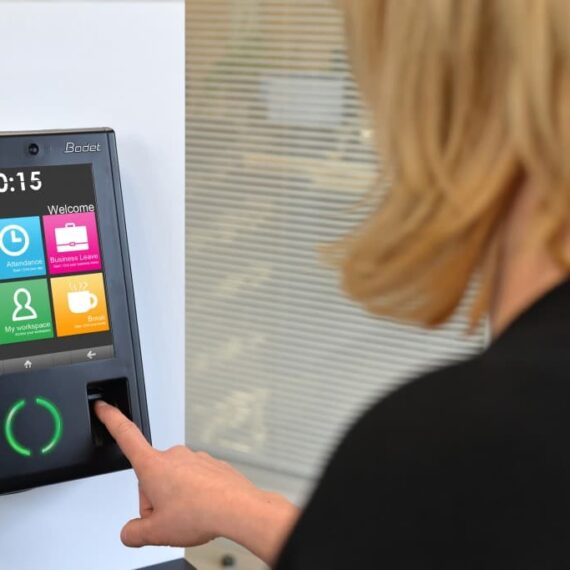
Uses of Fingerprint Access Control System
Fingerprint Access Control System are widely used across multiple industries due to their ability to provide secure, efficient, and reliable identity verification. Unlike traditional access methods, fingerprint systems are not limited to a single type of environment—they are highly adaptable and can be implemented in small offices, large enterprises, and high-security facilities.
Their versatility makes them one of the most important components of modern security infrastructure.
Below is a comprehensive overview of the key real-world applications and uses of fingerprint access control systems.
1. Corporate Offices and Business Environments
One of the most common applications of Fingerprint Access Control System is in corporate offices and business buildings.
In modern workplaces, managing employee movement and securing sensitive areas is essential. Fingerprint Access Control System help organizations achieve this efficiently.
Key uses in offices:
- Employee entry and exit control
- Department-wise access restriction
- Server room and IT infrastructure protection
- Executive office security
- Meeting room access management
Benefits for corporate environments:
- Prevents unauthorized access to confidential areas
- Eliminates the use of physical ID cards
- Ensures accurate employee attendance tracking
- Enhances workplace discipline and accountability
By implementing fingerprint access control, companies can maintain a secure and well-regulated working environment.
2. Industrial Facilities and Manufacturing Plants
Industrial environments often involve expensive machinery, hazardous zones, and restricted operational areas. Fingerprint Access Control System are essential for maintaining safety and security in such locations.
Key industrial applications:
- Restricting access to production floors
- Controlling entry to machinery control rooms
- Managing access to chemical storage areas
- Monitoring shift-based workforce entry
- Securing warehouse and inventory zones
Advantages in industrial use:
- Prevents unauthorized handling of equipment
- Reduces workplace accidents caused by untrained access
- Ensures only certified personnel enter restricted zones
- Provides detailed access logs for compliance audits
In industrial settings, fingerprint systems play a critical role in safety compliance and operational control.
3. Government Buildings and High-Security Facilities
Government institutions require strict security protocols due to the sensitive nature of their operations and data.
Fingerprint Access Control System are widely used in:
- Ministries and administrative offices
- Defense and military facilities
- Immigration and border control offices
- Public service departments
- High-security archives and data centers
Key functions:
- Restricting access to classified information zones
- Managing multi-level security clearance systems
- Monitoring staff and visitor movement
- Ensuring compliance with national security standards
These Fingerprint Access Control System help government organizations maintain maximum security and controlled access at all times.
4. Educational Institutions (Schools, Colleges, and Universities)
Fingerprint Access Control System are increasingly being adopted in educational environments to enhance safety and improve administrative efficiency.
Applications in education:
- Staff and faculty access control
- Student attendance tracking
- Library access management
- Laboratory and research facility security
- Hostel and dormitory entry systems
Benefits:
- Prevents unauthorized campus entry
- Eliminates manual attendance marking
- Enhances student safety
- Improves monitoring of campus movement
Educational institutions benefit from a secure and well-organized campus environment with reduced administrative workload.
5. Hospitals and Healthcare Facilities
Healthcare environments require strict access control due to the sensitivity of patient data, medical equipment, and restricted areas.
Fingerprint Access Control System are used in:
- Operation theatres
- Pharmacy and medicine storage rooms
- Intensive Care Units (ICU)
- Medical records departments
- Laboratory and research areas
Key advantages in healthcare:
- Protects patient confidentiality
- Restricts access to critical medical zones
- Prevents unauthorized handling of medicines
- Ensures compliance with healthcare regulations
By implementing fingerprint access control, hospitals can ensure a safe and controlled medical environment for patients and staff.
6. Residential Buildings and Apartments
Modern residential complexes increasingly use Fingerprint Access Control System to enhance security for residents.
Common residential applications:
- Main building entrance control
- Elevator access restriction
- Parking area access management
- Gym and recreational facility entry
- Visitor management systems
Benefits for residential use:
- Eliminates need for physical keys
- Prevents unauthorized entry by outsiders
- Enhances safety for residents
- Provides convenience for daily access
Fingerprint Access Control System create a secure and smart living environment in modern residential communities.
7. Retail Stores and Commercial Shops
Retail businesses and commercial establishments use fingerprint access control systems to secure staff-only areas and manage internal operations.
Applications in retail:
- Staff entry and exit control
- Cash counter security
- Inventory and stock room access
- Managerial office protection
Advantages:
- Prevents internal theft and unauthorized access
- Tracks employee working hours
- Enhances operational transparency
- Protects valuable stock and cash areas
Retail businesses benefit from improved security and better staff accountability.
8. Data Centers and IT Infrastructure Facilities
Data centers require extremely high levels of security due to the sensitivity of stored digital information.
Fingerprint Access Control System are used for:
- Server room access control
- Network infrastructure protection
- Data storage facility security
- Backup system access management
Key benefits:
- Prevents unauthorized access to critical servers
- Ensures only certified IT personnel enter restricted zones
- Provides detailed audit logs for every access attempt
- Enhances cybersecurity physical layer protection
In IT environments, Fingerprint Access Control System are a critical component of physical cybersecurity.
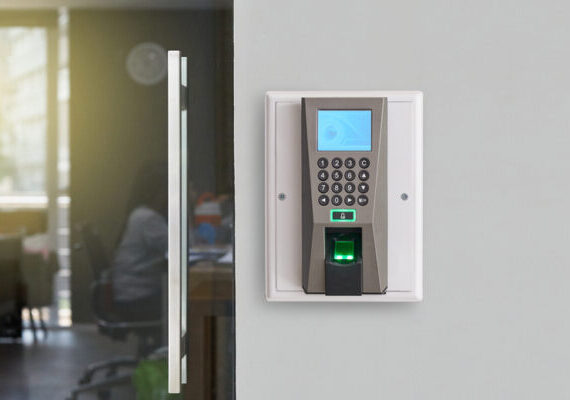
Axle Systems – Your Trusted Security Solutions Provider in Qatar
In today’s rapidly evolving security landscape, organizations require more than just basic protection—they need intelligent, reliable, and scalable security systems that can adapt to modern challenges. This is exactly where Axle Systems stands out as a trusted and established provider in Qatar.
Axle Systems is a specialized company focused on delivering advanced security, surveillance, and access control solutions, with a strong emphasis on Fingerprint Access Control System, biometric technologies, and integrated security infrastructure.
With a commitment to quality, innovation, and customer satisfaction, Axle Systems has become a preferred partner for businesses, institutions, and residential developments seeking dependable security solutions across Qatar.
Who We Are
Axle Systems is a professional security solutions provider dedicated to designing, supplying, and installing cutting-edge technology systems that enhance safety and operational efficiency.
We work closely with clients across multiple industries, offering customized solutions tailored to specific security requirements.
Our expertise includes:
- Fingerprint Access Control System
- Biometric Attendance Systems
- CCTV Surveillance Systems
- Door Access Control Solutions
- Smart Security Integration Systems
- Maintenance and Technical Support Services
We focus on delivering systems that are not only technologically advanced but also practical, user-friendly, and cost-effective.
Our Mission
At Axle Systems, our mission is to provide high-quality, reliable, and future-ready security solutions that help organizations protect their people, assets, and operations.
We aim to:
- Enhance security standards across Qatar
- Deliver innovative and scalable technologies
- Ensure customer satisfaction through professional service
- Build long-term partnerships with clients
- Provide continuous technical support and system reliability
Our approach is built on trust, performance, and excellence in execution.
Contact Axle Systems
For reliable and advanced Fingerprint Access Control System in Qatar, Axle Systems is your trusted partner.
Axle Systems
Location: P.O.Box: 200081, Al Khalidiya Street, Najma, Doha, Qatar
Phone: +974 44682391 / 77443731
Email: info@axlesys.com
Website: www.axlesys.com
Our team is ready to assist you with consultation, product selection, site surveys, and complete installation services.
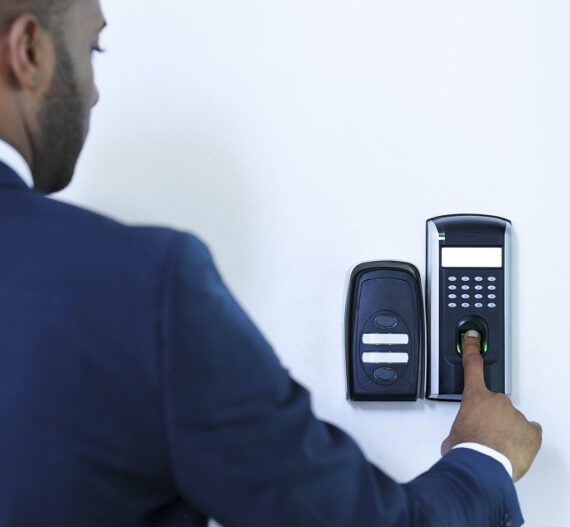
Frequently Asked Questions (FAQ)
1. What is a Fingerprint Access Control System?
It is a biometric system that uses fingerprints to verify identity and control access to secured areas.
2. Is fingerprint access control safe?
Yes. It is one of the most secure systems because fingerprints are unique and cannot be duplicated easily.
3. Can the Fingerprint Access Control System work without internet?
Yes. Many systems work offline using local storage, while advanced models support cloud connectivity.
4. What happens if a fingerprint is not recognized?
Users may be denied access or can use backup methods like PIN or access card if enabled.
5. Can Fingerprint Access Control System be used for attendance?
Yes, many organizations use them for employee attendance tracking.
6. How many users can be stored?
Depending on the model, systems can store from 100 to over 10,000 users.
7. Does the system work in outdoor environments?
Yes, but weatherproof models are recommended for outdoor installation.
8. Can fingerprint systems be integrated with other security systems?
Yes, they can be integrated with CCTV, alarms, and door locking systems.
9. Is maintenance required?
Minimal maintenance is required, mainly cleaning the sensor and software updates.
10. Why choose Axle Systems?
Axle Systems provides professional-grade solutions, installation, and support services tailored to client needs in Qatar.
Conclusion
In an era where security threats are becoming increasingly sophisticated, organizations can no longer rely on traditional methods such as keys, passwords, or ID cards alone. The need for accurate, intelligent, and tamper-proof security systems has made biometric technologies—especially Fingerprint Access Control System—an essential part of modern infrastructure.
Fingerprint Access Control System offer a powerful combination of security, convenience, and operational efficiency. By using the unique biological identity of each individual, these systems eliminate many of the vulnerabilities associated with conventional access methods. Unauthorized access, credential sharing, and security breaches are significantly reduced, ensuring that only verified individuals can enter restricted areas.
Beyond security, these Fingerprint Access Control System also contribute to improved organizational performance. Features such as automated attendance tracking, real-time monitoring, and detailed access logs help businesses maintain transparency and accountability. This not only strengthens internal control but also reduces administrative workload and human error.
Another key advantage is the scalability and flexibility of fingerprint access control solutions. Whether it is a small office, a large corporate building, an industrial facility, or a multi-site organization, these systems can be easily adapted and expanded to meet evolving security needs. Their ability to integrate with CCTV, alarm systems, and other security infrastructure further enhances their value as a complete security solution.
For industries such as healthcare, education, banking, and government institutions, fingerprint systems provide an added layer of protection where security and compliance are critical. They ensure that sensitive areas remain protected while maintaining smooth and efficient access for authorized personnel.
At the heart of this transformation is the shift toward smart, automated, and data-driven security management. Fingerprint Access Control System are not just tools for restricting entry—they are comprehensive solutions that support better decision-making, improved safety standards, and enhanced operational control.
At Axle Systems, we are committed to delivering advanced fingerprint access control solutions that meet the highest standards of reliability and performance. Our goal is to help organizations across Qatar build secure environments that protect people, assets, and information while supporting long-term growth and efficiency.
As security requirements continue to evolve, investing in a robust Fingerprint Access Control System is no longer optional—it is a strategic necessity for modern organizations aiming to stay secure, efficient, and future-ready.