

Building Access Control System in Qatar
In today’s modern world, building security has become more critical than ever. Whether it’s a corporate office, residential building, hospital, school, warehouse, or retail store, controlling who enters and exits your premises is essential for safety, efficiency, and operational control. This is where Building Access Control System play a vital role.
A Building Access Control System helps organizations manage and monitor entry into buildings, restricted areas, and sensitive zones using advanced authentication technologies such as RFID cards, biometric fingerprint, facial recognition, PIN, mobile access, and more. These systems provide a secure, automated, and reliable way to protect people, assets, and information.
What is a Building Access Control System?
A Building Access Control System is a security solution designed to regulate and monitor entry and exit points in buildings. Instead of traditional locks and keys, these systems use electronic authentication methods to grant or deny access.
These systems allow only authorized personnel to enter specific areas, ensuring improved security and operational efficiency. Access can be granted using:
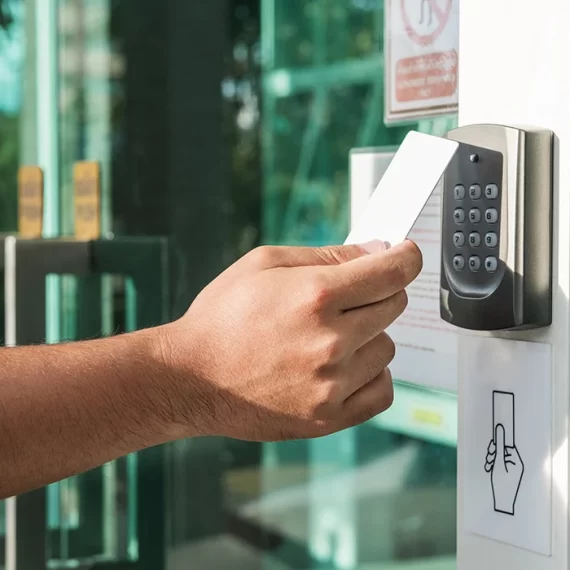
- RFID Cards
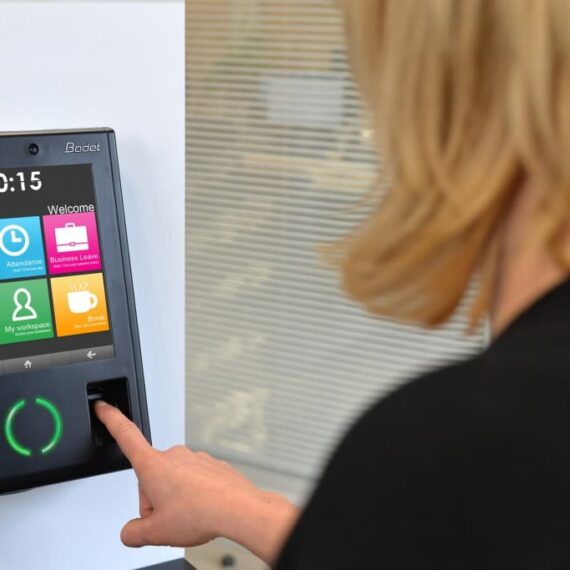
- Fingerprint
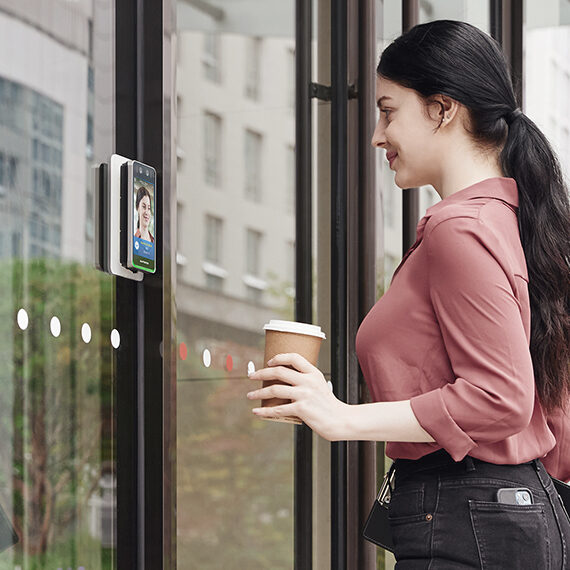
- Facial Recognition
- PIN Code
- Mobile Access
- Palm Recognition
- Retina Scan
- Bluetooth Access
Modern access control systems also allow real-time monitoring, remote access control, and reporting, making them essential for modern buildings and organizations.
Types of Building Access Control System
1. Card-Based Access Control
RFID or proximity cards are used to unlock doors. This is commonly used in:
- Offices
- Hotels
- Hospitals
- Educational institutions
Advantages:
- Easy to use
- Cost-effective
- Quick authentication
2. Biometric Access Control
Biometric systems use physical traits such as:
- Fingerprint
- Face recognition
- Iris recognition
- Palm recognition
Biometric systems offer higher security because biometric traits are difficult to duplicate or steal compared to traditional cards or passwords.
3. PIN-Based Access Control
Users enter PIN codes to access restricted areas.
Common uses:
- Server rooms
- Storage rooms
- Restricted office areas
4. Mobile Access Control
Users access buildings using:
- Smartphone apps
- Bluetooth access
- NFC access
5. Multi-Factor Authentication
Combines multiple authentication methods:
- Card + PIN
- Fingerprint + Card
- Face + PIN
This provides maximum security.
Benefits of Building Access Control System
Implementing a Building Access Control System offers numerous advantages for businesses, residential complexes, educational institutions, hospitals, and industrial facilities. These systems not only enhance security but also improve operational efficiency, streamline employee management, and provide complete control over building access.
Below is a detailed breakdown of the key benefits of Building Access Control System:
1. Enhanced Security and Protection
One of the primary benefits of a Building Access Control System is enhanced security. Traditional locks and keys can easily be lost, duplicated, or stolen, which increases the risk of unauthorized access. Building Access Control System eliminate these risks by allowing only authorized personnel to enter the building.
With advanced authentication methods such as fingerprint recognition, face recognition, RFID cards, or PIN codes, organizations can significantly reduce unauthorized access and security breaches.
Enhanced security benefits include:
- Prevent unauthorized entry
- Protect sensitive areas
- Reduce internal theft
- Improve employee safety
- Control visitor access
- Secure confidential information
This is particularly important for:
- Corporate offices
- Banks and financial institutions
- Government buildings
- Data centers
- Hospitals
By controlling access, organizations can ensure that only approved individuals enter specific zones within the building.
2. Elimination of Traditional Keys
Traditional key-based systems create multiple challenges, including:
- Lost keys
- Duplicate keys
- Unauthorized key sharing
- Costly lock replacements
Building Access Control System completely eliminate these problems. Instead of physical keys, access credentials such as cards, biometrics, or mobile access are used.
If an employee loses a card, administrators can simply disable access immediately without changing locks. This improves both security and convenience.
Advantages of keyless access:
- No need to replace locks
- Easy credential management
- Instant deactivation
- Better access control
- Reduced security risks
This makes access control systems more efficient and cost-effective in the long run.
3. Real-Time Monitoring and Tracking
Building Access Control System provide real-time monitoring of all entry and exit activities. Administrators can see who entered the building, when they entered, and which door they accessed.
This feature is beneficial for:
- Employee monitoring
- Security management
- Visitor tracking
- Incident investigation
Real-time monitoring helps organizations:
- Detect suspicious activities
- Monitor restricted areas
- Track employee movement
- Improve accountability
Security teams can instantly receive alerts for unauthorized access attempts, forced door entry, or unusual activity.
4. Remote Access Management
Modern Building Access Control Systems allow administrators to manage access remotely. This is particularly beneficial for organizations with multiple locations or remote management requirements.
Remote access features include:
- Unlock doors remotely
- Add users remotely
- Remove users remotely
- Monitor activity from anywhere
- Receive instant alerts
This is useful for:
- Multi-branch companies
- Warehouse facilities
- Remote offices
- Property management companies
Remote access management increases operational flexibility and reduces the need for on-site security personnel.
5. Time-Based Access Control
Building Access Control System allow organizations to set time-based access permissions. This means access can be granted only during specific hours.
Examples include:
- Office staff access during working hours
- Cleaning staff access after office hours
- Contractor access for limited time
- Weekend access restrictions
Benefits of time-based access:
- Improved security
- Reduced unauthorized entry
- Better shift management
- Enhanced control
This feature is especially useful for large organizations with multiple shifts.
6. Audit Trails and Reporting
One of the most powerful features of Building Access Control System is audit trail and reporting. The system records all access events and generates detailed reports.
Reports include:
- Entry and exit logs
- User activity reports
- Door access history
- Unauthorized attempts
- Attendance tracking
These reports help organizations:
- Investigate incidents
- Improve accountability
- Monitor employee activity
- Maintain compliance
Audit trails are particularly useful in:
- Government offices
- Financial institutions
- Hospitals
- Data centers
7. Improved Employee Safety
Employee safety is a top priority for any organization. Building Access Control System enhances employee safety by restricting access to authorized personnel only.
Safety benefits include:
- Prevent unauthorized visitors
- Control visitor entry
- Emergency lockdown capability
- Quick evacuation tracking
In case of emergencies, administrators can quickly:
- Lock down the building
- Unlock emergency exits
- Identify employees inside
This improves emergency response and safety management.
8. Multi-Location Management
Organizations with multiple branches can manage all locations from a centralized platform. This reduces operational complexity and improves control.
Benefits include:
- Centralized management
- Uniform security policy
- Real-time monitoring
- Easy user management
This is beneficial for:
- Retail chains
- Corporate offices
- Educational institutions
- Hospitals
Centralized control ensures consistent security across all locations.
Features of Building Access Control System
A Building Access Control System is not just a door-opening solution—it is a complete intelligent security management platform designed to control, monitor, and optimize access across an entire building or multiple sites. Modern systems come with advanced features that go far beyond traditional locking mechanisms, offering automation, intelligence, and integration capabilities.
Below is a detailed expansion of the key features of a Building Access Control System:
1. Multi-Authentication Methods
One of the strongest features of modern access control systems is the ability to support multiple authentication methods. This ensures flexibility and higher security depending on the environment and risk level.
Common authentication methods include:
- RFID / Smart Cards
- Fingerprint Recognition
- Facial Recognition
- PIN / Password Entry
- Mobile App Access (Bluetooth / NFC)
- QR Code Access
- Palm Vein Recognition
Why this is important:
- Provides flexibility for different user types
- Allows multi-factor authentication (MFA)
- Enhances security by combining methods
- Reduces risk of unauthorized access
For example, a high-security server room may require fingerprint + card access, while an office entrance may only require a card or face recognition.
2. Centralized Management System
A Building Access Control System includes a centralized software platform that allows administrators to manage the entire system from one dashboard.
Centralized control includes:
- User enrollment and deletion
- Door configuration
- Access level assignment
- Real-time monitoring
- Report generation
Benefits:
- Easy system management
- Reduced manual work
- Faster decision-making
- Unified control across multiple buildings
This is especially useful for large organizations with multiple branches or floors.
3. Access Level Control (Role-Based Access)
Access control systems allow administrators to define who can access what areas and when.
Examples:
- HR staff → HR department only
- IT staff → Server room access
- Cleaning staff → After-hours access only
- Managers → Full access
Benefits:
- Prevents unauthorized access
- Ensures data and asset protection
- Reduces internal security risks
- Organizes workforce movement
This feature is essential for maintaining structured security within a building.
4. Real-Time Monitoring and Alerts
Modern systems provide live monitoring of all access activities. Every door entry or exit is recorded instantly in the system.
Features include:
- Live door status monitoring
- Entry and exit tracking
- Unauthorized access alerts
- Forced door open alarms
- Door left open notifications
Benefits:
- Immediate response to threats
- Improved situational awareness
- Enhanced security control
- Faster incident detection
Security teams can react instantly to suspicious activities.
5. Cloud-Based Access Control (Optional Feature)
Many modern systems support cloud-based platforms, allowing access control from anywhere in the world.
Cloud features include:
- Remote user management
- Web-based dashboard access
- Data backup and storage
- Multi-site management
Advantages:
- No need for on-site servers
- Easy scalability
- Remote accessibility
- Secure data storage
This is ideal for companies managing multiple locations globally.
6. Time Scheduling and Access Restrictions
Access can be configured based on time schedules and rules.
Examples:
- Employees: 8 AM – 6 PM access only
- Cleaning staff: After office hours only
- Contractors: Temporary access for specific duration
Features:
- Weekly schedules
- Holiday restrictions
- Temporary access cards
- Expiry-based access
Benefits:
- Better control over movement
- Reduced security risks after hours
- Automated enforcement of rules
Uses of Building Access Control System
A Building Access Control System is used across a wide range of industries and environments to regulate, monitor, and secure entry points. Its applications go far beyond simply opening doors—it plays a key role in security management, workforce control, asset protection, and operational efficiency.
Below is a detailed and expanded explanation of the uses of Building Access Control Systems across different sectors.
1. Corporate Offices and Business Buildings
One of the most common uses of Building Access Control Systems is in corporate environments.
How it is used:
- Controlling employee entry and exit
- Restricting access to sensitive departments (HR, Finance, Server rooms)
- Managing meeting room access
- Monitoring staff movement within the building
Benefits in offices:
- Prevents unauthorized entry
- Enhances internal security
- Improves employee accountability
- Supports hybrid and flexible work environments
Large corporate buildings often use multi-floor access control systems, ensuring employees can only access assigned areas.
2. Residential Buildings and Apartments
Building Access Control System are widely used in residential towers, apartment complexes, and gated communities.
How it is used:
- Main entrance access control
- Elevator access restriction per floor
- Parking area control
- Visitor management system
Benefits in residential use:
- Prevents unauthorized visitors
- Enhances tenant safety
- Controls movement within the building
- Provides secure visitor entry tracking
Modern residential buildings often integrate access control with intercom systems and mobile apps for convenience.
3. Hospitals and Healthcare Facilities
Hospitals require strict access control due to sensitive areas and patient safety requirements.
How it is used:
- Restricting access to operation theatres
- Controlling pharmacy and medicine storage rooms
- Managing ICU and emergency unit access
- Staff-only access to restricted zones
Benefits in hospitals:
- Protects patient data and medical records
- Prevents unauthorized access to critical areas
- Ensures hygiene and controlled movement
- Supports emergency lockdown systems
Hospitals often use biometric Building Access Control System for higher accuracy and security.
4. Educational Institutions (Schools, Colleges, Universities)
Building Access Control System are widely used in educational environments to ensure student and staff safety.
How it is used:
- Main gate entry control
- Classroom and laboratory access
- Staff-only areas (administration, labs)
- Hostel and dormitory access
Benefits in education:
- Improves student safety
- Prevents unauthorized entry
- Tracks attendance and movement
- Enhances campus security
Universities often integrate access control with student ID cards and attendance systems.
5. Government Buildings and Public Sector Offices
Government facilities require high-security access control due to sensitive operations.
How it is used:
- Restricted department access
- Secure document storage rooms
- Employee clearance-based entry
- Visitor registration systems
Benefits:
- Protects confidential information
- Prevents unauthorized public access
- Ensures national security compliance
- Improves operational control
These buildings often use multi-factor authentication systems for enhanced protection.
6. Data Centers and IT Infrastructure Facilities
Data centers require the highest level of security because they store critical digital information.
How it is used:
- Server room access control
- Rack-level security in advanced setups
- Biometric authentication for IT staff
- Restricted maintenance access
Benefits:
- Protects sensitive data and servers
- Prevents cyber-physical breaches
- Ensures compliance with IT security standards
- Provides audit logs of all access events
Many data centers use fingerprint + face recognition systems for dual authentication.
Why Choose Axle Systems for Building Access Control System
When it comes to selecting a reliable partner for Building Access Control System, the choice of supplier and integrator plays a crucial role in the overall performance, security, and long-term stability of the system. A well-designed access control solution is not just about hardware installation—it requires proper planning, expert integration, system scalability, and ongoing technical support.
This is where Axle Systems stands out as a trusted and experienced security solutions provider in Qatar.
1. Strong Expertise in Security Systems
Axle Systems has extensive experience in designing and implementing advanced security and access control solutions for various industries. The company understands the unique security requirements of different environments such as offices, residential buildings, hospitals, retail stores, and industrial facilities.
What this expertise ensures:
- Proper system design based on site requirements
- Selection of the right technology (biometric, RFID, face recognition, etc.)
- Efficient integration with existing infrastructure
- Reduced installation errors and system downtime
This technical expertise ensures that every project is implemented with high precision and reliability.
2. End-to-End Access Control Solutions
Axle Systems provides complete end-to-end solutions, meaning clients do not need multiple vendors for different stages of the project.
Services include:
- Site survey and requirement analysis
- System design and planning
- Supply of genuine access control devices
- Professional installation
- Software configuration and integration
- Testing and commissioning
- After-sales support and maintenance
Benefit:
Clients receive a fully integrated system from a single trusted provider, ensuring better coordination, faster execution, and higher system reliability.
3. Wide Range of Advanced Technologies
Axle Systems offers a variety of modern access control technologies to meet different security levels and budgets.
Technologies include:
- RFID card-based systems
- Fingerprint biometric systems
- Facial recognition systems
- Palm recognition systems
- PIN-based access systems
- Mobile and Bluetooth access solutions
- Multi-factor authentication systems
Advantage:
This flexibility allows clients to choose the most suitable solution based on their security requirements and operational needs.
4. Integration with Multiple Security Systems
One of the strongest advantages of Axle Systems is its ability to integrate access control systems with other security and building management solutions.
Integrated systems include:
- CCTV surveillance systems
- Time attendance systems
- Gate barriers and turnstiles
- Fire alarm systems
- Visitor management systems
- Elevator control systems
Benefits of integration:
- Centralized security management
- Real-time monitoring and alerts
- Automated emergency responses
- Improved operational efficiency
- Reduced manual work
This creates a fully connected smart security environment within the building.
5. Customized Solutions for Every Project
Every building has different security requirements, and Axle Systems understands this clearly.
Customization includes:
- Door-by-door access configuration
- Role-based access control setup
- Time-based access restrictions
- Multi-location system architecture
- Industry-specific security design
Benefit:
Clients receive a tailored solution that fits their exact operational and security needs instead of a generic system.
6. High-Quality Products from Trusted Brands
Axle Systems works with globally recognized security and Building Access Control System brands, ensuring reliability and durability.
Common brands include:
- Suprema
- ZKTeco
- Matrix
- Honeywell
- Hikvision (integrated solutions)
- Bosch (integration support)
Benefits:
- High system reliability
- Long product lifespan
- Reduced maintenance issues
- Advanced technology features
Using premium hardware ensures consistent performance in demanding environments.
7. Professional Installation and Engineering Team
A strong technical team is essential for the success of any access control project. Axle Systems has skilled engineers and technicians who handle installation with precision.
Installation quality includes:
- Proper cabling and wiring standards
- Clean and organized installation
- Correct device placement
- System calibration and testing
- Network and software configuration
Benefits:
- Reduced system failures
- Smooth performance
- Long-term stability
- Faster project completion
Professional execution ensures the system works flawlessly from day one.
8. Scalable and Future-Ready Solutions
Axle Systems designs Building Access Control System that can grow with the client’s business.
Scalability features:
- Easy addition of new doors
- Expansion to multiple buildings
- Integration with future technologies
- Upgrade from basic to advanced systems
Benefits:
- Long-term investment protection
- No need for system replacement
- Easy technology upgrades
- Supports business growth
This makes it ideal for both small businesses and large enterprises.
9. Reliable After-Sales Support and Maintenance
A security system must always remain operational. Axle Systems provides continuous after-sales support to ensure maximum uptime.
Support services include:
- Technical troubleshooting
- System maintenance
- Software updates
- Hardware replacement support
- Remote assistance
- On-site service visits
Benefits:
- Reduced downtime
- Continuous system performance
- Quick issue resolution
- Long-term reliability
This ensures peace of mind for clients even after installation.
10. Compliance with Industry Standards
Axle Systems ensures that all installed Building Access Control System comply with international security and safety standards.
Compliance areas:
- Data security and encryption
- Fire safety integration
- Building safety regulations
- Access control best practices
Benefits:
- Safe and secure installations
- Compliance with legal requirements
- Reduced operational risks
- Industry-approved systems
Axle Systems Contact Details
Axle Systems – Qatar
Office Address: Office #505, Bldg 24, Street 940, Zone 26, Al Bandary Building, Al Khalidiya Street, Doha, Qatar
Phone: +974 4468 2391, +974 4411 6767
Email: info@axlesys.com
Website: www.axlesys.com
Common FAQ – Building Access Control System
1. What is a Building Access Control System?
A system that controls who can enter or exit a building using electronic authentication.
2. What are the types of Building Access Control System?
- Card access
- Biometric access
- PIN access
- Mobile access
3. Is biometric access control safe?
Yes, biometric systems provide high security and are difficult to duplicate.
4. Can access control integrate with CCTV?
Yes, access control integrates with CCTV systems.
5. Can I manage access remotely?
Yes, remote access management is available.
6. Is the Building Access Control System suitable for small offices?
Yes, access control works for both small and large buildings.
7. Can I restrict access by time?
Yes, time-based access is available.
8. What happens during power failure?
Most systems include battery backup.
9. Can I track employees using access control?
Yes, entry logs and attendance reports are available.
10. How many users can be added?
Depending on system capacity, thousands of users can be added.
Conclusion
In today’s fast-evolving security landscape, Building Access Control System have become a fundamental requirement rather than an optional upgrade. Organizations across every industry—whether commercial, residential, industrial, or institutional—are increasingly recognizing the importance of controlling and monitoring who enters their premises, when they enter, and which areas they can access.
Unlike traditional lock-and-key methods, modern access control systems provide a smart, scalable, and highly secure solution that integrates advanced technologies such as biometric authentication, RFID cards, facial recognition, mobile access, and cloud-based management platforms. This shift toward intelligent security systems reflects the growing demand for automation, accuracy, and real-time control in building management.
A well-designed access control system not only enhances security but also improves overall operational efficiency. It helps organizations reduce risks related to unauthorized entry, internal theft, data breaches, and safety incidents. At the same time, it simplifies administrative tasks such as attendance tracking, visitor management, and access monitoring—allowing businesses to operate more smoothly and effectively.
Another major advantage is the ability to create a fully customized security environment. With features such as role-based access, time-based restrictions, multi-location control, and system integration with CCTV and fire alarms, organizations can design a security framework that precisely matches their operational needs. This flexibility ensures that both small businesses and large enterprises can benefit from the same core technology, scaled according to their requirements.
As technology continues to advance, Building Access Control System are also evolving into smarter, more connected solutions. The integration of AI, IoT, and cloud-based platforms is shaping the future of building security, enabling real-time decision-making, remote management, and touchless access experiences. These innovations are making buildings safer, more efficient, and more responsive to modern security challenges.
In conclusion, investing in a reliable Building Access Control System is no longer just about securing doors—it is about building a complete security ecosystem that protects people, property, and information while enhancing operational control and efficiency. Organizations that adopt these systems position themselves for stronger security, better management, and long-term scalability.
With its expertise, advanced technology solutions, and commitment to quality, Axle Systems continues to play a vital role in delivering dependable and future-ready Building Access Control System across Qatar. By combining innovation with practical security needs, Axle Systems helps businesses create safer and smarter environments for today and the future.