

RFID Access Control System
Security is no longer just about locking doors. Modern businesses require smart, automated, and scalable security solutions. One of the most reliable and widely used technologies today is the RFID Access Control System.
From corporate offices and retail stores to hospitals and warehouses, RFID Access Control Systems are becoming the standard for secure and efficient entry management.
In this comprehensive guide, we will cover:
- What is RFID Access Control System
- How RFID Access Control System Works
- Features of RFID Access Control System
- Benefits of RFID Access Control System
- Uses of RFID Access Control System
- Industries Using RFID Access Control
- Why Choose Axle Systems
- RFID System Components
- RFID System Types
- Installation Considerations
- Common FAQ About RFID Access Control
This guide is designed for businesses in Qatar looking to upgrade their security with RFID Access Control Systems from Axle Systems.
If your business requires a reliable and scalable RFID Access Control System, Axle Systems can design a solution tailored to your needs.
What is an RFID Access Control System?
An RFID Access Control System is a security solution that uses Radio Frequency Identification (RFID) technology to control and monitor access to buildings, doors, gates, and restricted areas.
Instead of traditional keys, users are given:
- RFID Cards
- RFID Key Fobs
- RFID Stickers
- Mobile Credentials
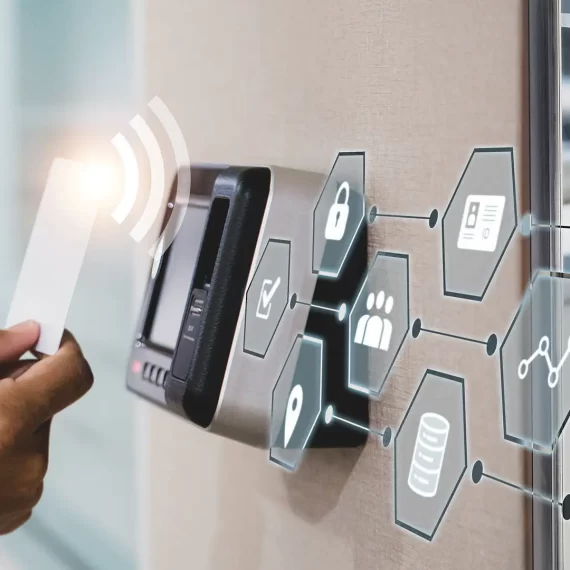
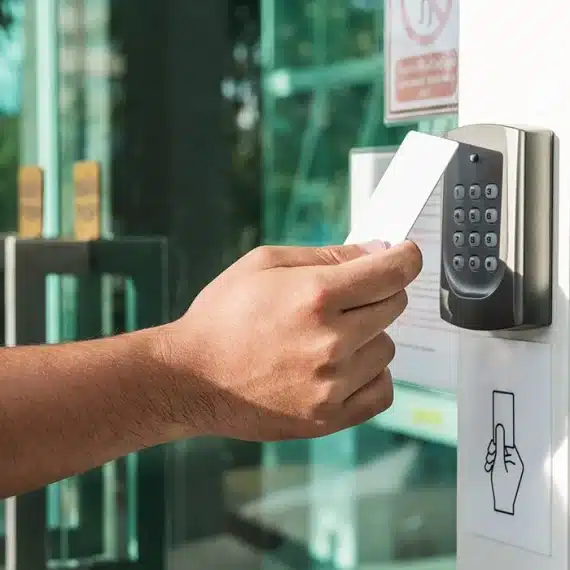
When the card or tag is presented near the RFID reader, the system verifies authorization and unlocks the door automatically.
Unlike traditional locks, RFID systems allow administrators to:
- Issue access instantly
- Remove access remotely
- Track entry history
- Set access permissions
This makes RFID Access Control one of the most secure and efficient security systems available today.
How RFID Access Control System Works
An RFID Access Control System works using wireless radio frequency communication between:
- RFID Card / Tag
- RFID Reader
- Access Controller
- Door Lock
When a user presents the RFID card:
- RFID reader scans the card
- System verifies user credentials
- Access controller sends unlock command
- Door opens automatically
- Entry event gets recorded
Every access is logged, providing a complete audit trail for security and monitoring.
Features of RFID Access Control System
RFID Access Control System offer a wide range of advanced features designed to enhance security, improve operational efficiency, and simplify access management. These systems are highly flexible and can be customized to suit different industries such as offices, retail stores, warehouses, hospitals, schools, and residential buildings.
Below is a detailed explanation of the key features of RFID Access Control System.
1. Contactless Access Technology
One of the main features of RFID Access Control System is contactless entry. Users simply tap or bring their RFID card, key fob, or mobile phone near the reader to gain access.
This provides several advantages:
- Faster entry and exit
- Reduced physical contact
- Long-lasting cards with minimal wear and tear
- Improved convenience for users
Contactless access is especially useful in high-traffic areas such as:
- Office entrances
- Retail stores
- Hospitals
- Warehouses
- Parking gates
This technology also reduces congestion and improves overall operational efficiency.
2. Multi-Door Access Control
RFID Access Control System allow businesses to control multiple doors from a single platform. This is ideal for companies with:
- Multiple departments
- Multiple floors
- Multiple buildings
- Multiple locations
For example:
- HR Department — Only HR staff access
- Server Room — Only IT team access
- Warehouse — Only authorized staff access
This ensures restricted access to sensitive areas and improves overall security.
3. User Access Level Management
RFID systems allow administrators to assign different access levels to different users.
Access can be customized based on:
- Employee role
- Department
- Location
- Time schedule
- Security clearance
Example:
Manager
Access to all areas
Employee
Access to office and pantry only
Visitor
Temporary limited access
This feature provides better control and reduces unauthorized access.
4. Real-Time Monitoring
RFID Access Control System provide real-time monitoring of entry and exit activity.
Administrators can monitor:
- Who entered
- What time they entered
- Which door was accessed
- Entry attempts (successful or denied)
This helps improve security and accountability within the organization.
Real-time monitoring is especially useful for:
- Offices
- Warehouses
- Data centers
- Retail stores
5. Access History and Reports
RFID systems store detailed access logs which can be accessed anytime.
Reports include:
- Entry time
- Exit time
- User name
- Door location
- Access status
These reports help in:
- Attendance tracking
- Security audits
- Incident investigations
- Compliance reporting
Reports can be exported in formats such as:
- Excel
- CSV
6. Time-Based Access Control
RFID Access Control System allows businesses to set time-based permissions.
Example:
Office Staff
Access from 8:00 AM to 6:00 PM
Cleaning Staff
Access from 6:00 PM to 8:00 PM
Security Staff
24-hour access
This feature prevents unauthorized access outside working hours.
7. Anti-Passback Feature
Anti-passback prevents card sharing between employees.
Example:
Employee enters using card
System blocks second entry until exit recorded
This ensures:
- Accurate attendance
- Prevents misuse
- Improves security
This feature is commonly used in:
- Offices
- Factories
- Warehouses
8. Mobile Access Integration
Modern RFID Access Control System support mobile phone access.
Users can:
- Open doors using smartphone
- Receive access notifications
- Use digital credentials
Benefits:
- No need to carry cards
- Convenient access
- Secure mobile authentication
Benefits of RFID Access Control System
RFID Access Control System provide significant advantages over traditional lock-and-key security systems. Businesses across industries are rapidly adopting RFID technology because it offers enhanced security, better management, and improved operational efficiency.
Below is a detailed explanation of the major benefits of RFID Access Control Systems.
1. Enhanced Security
One of the biggest benefits of RFID Access Control System is improved security. Traditional keys can easily be lost, duplicated, or stolen. However, RFID systems eliminate these risks by providing digital access control.
With RFID systems:
- Lost cards can be disabled instantly
- Unauthorized access can be prevented
- Access permissions can be modified anytime
- Entry attempts are recorded automatically
This ensures that only authorized personnel can enter restricted areas, significantly improving overall security.
RFID Access Control System are especially useful for:
- Offices
- Warehouses
- Retail stores
- Data centers
- Hospitals
These systems help protect sensitive areas and valuable assets.
2. No More Physical Keys
Traditional keys create multiple challenges:
- Keys get lost
- Keys get duplicated
- Locks need replacement
- Key management becomes difficult
RFID eliminates all these issues. Instead of keys, users are given:
- RFID cards
- Key fobs
- Mobile access credentials
If a card is lost, administrators can:
- Disable the card instantly
- Issue a new card
- Maintain security without changing locks
This reduces operational complexity and improves convenience.
3. Real-Time Access Monitoring
RFID Access Control System allow businesses to monitor entry and exit activity in real-time.
Administrators can view:
- Who entered the building
- What time they entered
- Which door they accessed
- Unauthorized entry attempts
This level of visibility helps improve security management and accountability.
Real-time monitoring is particularly useful in:
- Corporate offices
- Manufacturing facilities
- Retail stores
- Warehouses
Managers can instantly identify suspicious activity and take appropriate action.
4. Remote Access Management
RFID Access Control System allow administrators to manage access remotely.
This means administrators can:
- Add new users
- Remove access
- Modify permissions
- Unlock doors remotely
This is especially beneficial for businesses with:
- Multiple locations
- Remote offices
- Distributed teams
For example, if a new employee joins, access can be granted immediately without visiting the site.
Similarly, if an employee leaves, access can be revoked instantly.
5. Cost Savings
RFID Access Control System help businesses save money in the long run.
Cost savings include:
- No lock replacement
- No key duplication
- Reduced security staff requirements
- Reduced maintenance costs
Although RFID systems require an initial investment, they reduce operational costs over time.
This makes RFID Access Control System a cost-effective solution.
6. Easy User Management
Managing users is simple with RFID systems.
Administrators can:
- Add new users in seconds
- Assign access levels
- Remove users instantly
- Update permissions easily
This is ideal for businesses with:
- High employee turnover
- Contractors
- Temporary staff
User management becomes fast, efficient, and error-free.
7. Scalable Solution
RFID Access Control System are highly scalable.
Businesses can:
- Add more doors
- Add more users
- Add more locations
As your business grows, the system grows with you.
This eliminates the need to replace the entire system in the future.
8. Improved Employee Productivity
RFID Access Control System improves employee productivity.
Employees can:
- Enter quickly
- Avoid waiting at security desks
- Access permitted areas smoothly
This reduces delays and improves workflow efficiency.
Fast and smooth access is especially useful in:
- Large offices
- Industrial facilities
- Hospitals

Uses of RFID Access Control System
RFID Access Control System are widely used across multiple industries because they provide a secure, flexible, and efficient way to manage entry and exit points. Unlike traditional lock-and-key systems, RFID solutions allow organizations to control access digitally, monitor movement in real time, and improve overall operational security.
Below is a detailed explanation of the key uses of RFID Access Control Systems across different sectors and applications.
1. Office Buildings and Corporate Environments
One of the most common uses of RFID Access Control Systems is in office buildings and corporate environments.
In modern workplaces, security and employee management are critical. RFID systems help companies control access to:
- Main entrances
- Department doors
- Meeting rooms
- Executive offices
- Server rooms
- Restricted HR and finance areas
How it is used in offices:
Employees are issued RFID cards or key fobs. These cards are programmed with access permissions based on their role.
Example:
- HR staff → access HR department only
- IT staff → access server rooms and IT areas
- Management → access all restricted areas
Key benefits in offices:
- Prevents unauthorized entry
- Tracks employee attendance
- Improves workplace security
- Reduces reliance on physical keys
2. Retail Stores and Shopping Malls
RFID Access Control System are widely used in retail environments to secure sensitive areas and manage staff movement.
Common uses in retail:
- Cash counters and billing rooms
- Stockrooms and warehouses
- Staff-only entrances
- Manager offices
- Delivery receiving areas
In shopping malls:
Large malls use RFID systems to control access to:
- Maintenance rooms
- Electrical control rooms
- Security control rooms
- Service corridors
Benefits in retail:
- Protects cash handling areas
- Prevents theft and unauthorized access
- Improves staff accountability
- Enhances security in high-traffic environments
3. Warehouses and Logistics Centers
Warehouses are high-security environments where inventory control is essential. RFID Access Control System play a critical role in securing logistics operations.
Uses in warehouses:
- Controlling entry to storage zones
- Restricting access to high-value goods
- Managing loading/unloading docks
- Securing inventory management areas
Example:
Only authorized warehouse staff can access specific sections based on job roles.
Benefits:
- Reduces internal theft
- Ensures inventory safety
- Tracks staff movement
- Enhances operational efficiency
4. Hospitals and Healthcare Facilities
Hospitals require strict access control to protect patients, staff, and sensitive medical information.
Uses in hospitals:
- Operating theatres
- Pharmacy storage rooms
- Medical equipment rooms
- Laboratories
- Patient restricted areas
- Administrative offices
Example:
Doctors and nurses can access specific medical zones based on department permissions.
Benefits:
- Protects sensitive medication
- Ensures patient safety
- Restricts unauthorized access to critical zones
- Improves hospital compliance and security
5. Educational Institutions (Schools & Universities)
RFID Access Control System are commonly used in schools, colleges, and universities to manage student and staff access.
Uses in education:
- Main entrance gates
- Classroom buildings
- Laboratories
- Libraries
- Staff-only areas
- Hostel buildings
Additional applications:
- Attendance tracking for students and staff
- Exam hall access control
- Visitor monitoring
Benefits:
- Enhances campus security
- Prevents unauthorized entry
- Improves student safety
- Automates attendance management
6. Residential Buildings and Apartments
Modern residential complexes and high-rise buildings use RFID Access Control System to secure entry points.
Uses in residential buildings:
- Main entrance doors
- Apartment building gates
- Parking entry gates
- Gym and pool access
- Elevator control systems
Example:
Residents are issued RFID cards to access only their building and shared facilities.
Benefits:
- Prevents unauthorized entry
- Enhances resident safety
- Controls visitor access
- Improves building management
7. Industrial Facilities and Factories
Factories and industrial plants require strong access control due to safety risks and sensitive operations.
Uses in factories:
- Production areas
- Machinery zones
- Chemical storage rooms
- Control rooms
- Staff changing rooms
- Loading docks
Example:
Only trained operators can access machinery areas using RFID credentials.
Benefits:
- Improves workplace safety
- Prevents unauthorized handling of machinery
- Reduces industrial accidents
- Controls sensitive production areas
8. Data Centers and IT Infrastructure
Data centers store critical and sensitive digital information, making security extremely important.
Uses in data centers:
- Server rooms
- Network operation centers (NOC)
- Backup storage rooms
- Equipment maintenance zones
Example:
Only IT administrators can access server racks using RFID authentication.
Benefits:
- Protects sensitive data
- Prevents unauthorized physical access
- Maintains compliance with IT security standards
- Ensures operational continuity
Axle Systems Contact Details
Phone: +974 44682391/+974 77443731
Email: info@axlesys.com
Website: www.axlesys.com
Axle Systems has over 13+ years of experience providing security systems in Qatar.
Common FAQ About RFID Access Control System
1. What is RFID Access Control System?
RFID Access Control is a system that uses cards or tags to control door access.
2. Is RFID Access Control System Secure?
Yes. RFID systems provide high-level security and access tracking.
3. Can RFID work without internet?
Yes. RFID systems can work offline.
4. Can RFID integrate with time attendance?
Yes. RFID integrates with attendance systems.
5. How many users can RFID support?
From 100 users to 100,000+ users.
6. Can RFID control multiple doors?
Yes. Multi-door access supported.
7. What happens if card is lost?
Disable immediately and issue new card.
8. Can RFID be used for parking?
Yes. RFID supports vehicle access.
9. Is RFID better than biometric?
Depends on requirement.
RFID advantages:
- Faster
- Cheaper
- Easier
10. Can RFID integrate with mobile?
Yes. Mobile access supported.
Conclusion
RFID Access Control System have become an essential part of modern security infrastructure, offering a reliable and efficient way to manage and control access across different types of facilities. Unlike traditional lock-and-key systems, RFID technology provides a smarter and more secure approach by enabling digital authentication, real-time monitoring, and centralized control of all entry points. This not only enhances security but also improves operational efficiency by reducing manual intervention and ensuring that only authorized individuals can access restricted areas. The system is highly flexible and can be adapted to suit various industries such as offices, retail stores, hospitals, warehouses, educational institutions, and residential buildings.
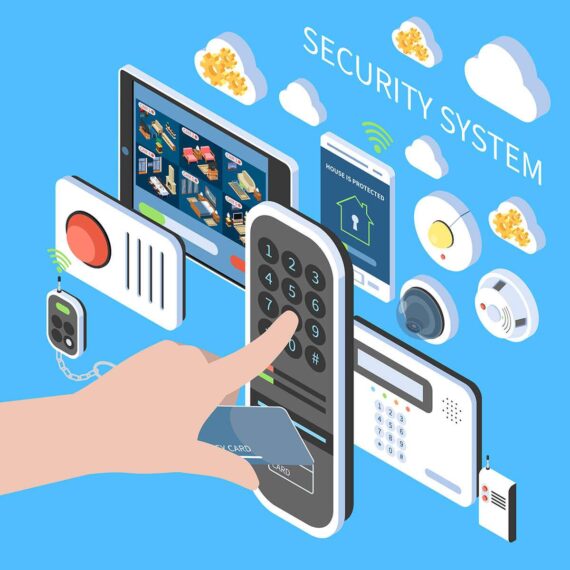
One of the key strengths of RFID Access Control System is their ability to grow with the organization. As businesses expand, the system can easily be scaled to include additional doors, users, and locations without requiring major infrastructure changes. It also integrates seamlessly with other security solutions such as CCTV, time attendance systems, and alarm systems, creating a complete and connected security ecosystem. This level of integration allows organizations to maintain better control, improve accountability, and respond more effectively to security events.
Overall, RFID Access Control System represent a long-term investment in safety, convenience, and efficiency. They reduce operational costs, improve user experience, and provide a higher level of security compared to traditional methods. For businesses looking to modernize their security systems, RFID technology offers a future-ready solution that supports both current needs and future growth. Axle Systems is committed to delivering a reliable RFID Access Control System tailored to meet the specific requirements of clients in Qatar, ensuring secure and intelligent access management for every environment.