

Hospital Queue Management System in Qatar
In today’s fast‑paced world, the expectation for fast, efficient, and seamless service permeates every industry — including healthcare. Hospitals and medical facilities are among the busiest places people visit, and managing patient flow effectively has grown more important than ever. Long waits, disorganized queues, and poor resource planning not only frustrate patients but can also hamper care delivery.
This is where the Hospital Queue Management System (HQMS) steps in — a modern, intelligent solution designed to streamline patient flow, improve communication, optimize resources, and elevate the overall healthcare experience. And at the forefront of this transformation is Axle Systems, a trusted supplier of innovative queue management technology tailored for medical environments.
What Is a Hospital Queue Management System?
A Hospital Queue Management System (HQMS) is a digital solution that replaces traditional “take a number and wait” methods with a structured, automated way of managing patient queues across clinics, reception areas, laboratories, pharmacies, and diagnostic departments.
Instead of physically lining up outside counters or waiting rooms, patients receive automated tokens, wait comfortably, and are called forward when it’s their turn. Behind the scenes, staff and administrators can monitor queue status in real time, predict wait times, assign staff, and manage workflow more efficiently.
Hospitals that adopt queue management systems typically see improvements in patient satisfaction, lower waiting times, reduced staff overload, and streamlined operations.
Core Features of an Effective Hospital Queue Management System
A modern Hospital Queue Management System (HQMS) is not just about assigning numbers — it’s a sophisticated solution that integrates technology, workflow automation, and patient-centric features. Below is a detailed breakdown of the core features that make HQMS indispensable for hospitals and healthcare facilities.
1. Smart Token Issuance
Smart token systems eliminate the chaos of manual queues and make the patient experience seamless.
Key Components:
- Kiosk-based token generation: Patients can self-register at digital kiosks and receive tokens for specific departments.
- Mobile app or online booking tokens: Patients can pre-book their slot from home, reducing on-site congestion.
- Token categorization: Separate token types for general consultation, emergency, VIP, or special care.
- Priority token handling: Automatically prioritizes urgent or sensitive cases like senior citizens or pregnant women.
Example: A patient visiting a multi-specialty hospital can get a token for cardiology, lab tests, or pharmacy — all through a single kiosk or app, without waiting in different queues.
2. Real-Time Queue Monitoring Dashboard
Hospital administrators need visibility into patient flow. A real-time dashboard offers actionable insights.
Key Features:
- Counter status tracking: Shows which counters are active, idle, or overloaded.
- Live patient tracking: Monitors which patient is being served and estimated completion times.
- Performance overview: Displays average service times, number of patients served, and queue lengths.
- Alerts and notifications: Sends notifications to staff when queues exceed thresholds, preventing bottlenecks.
Benefit: Administrators can allocate resources dynamically — e.g., adding a doctor to a crowded outpatient department instantly.
3. Automated Call & Notification System
Calling patients manually is prone to errors and delays. Automation makes this process smooth.
Key Components:
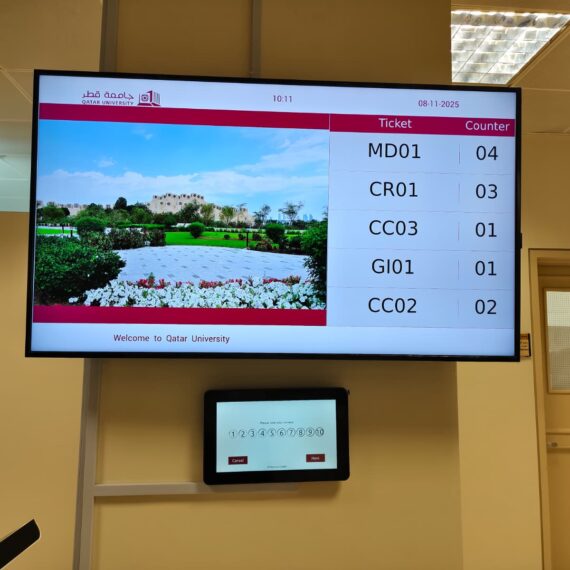
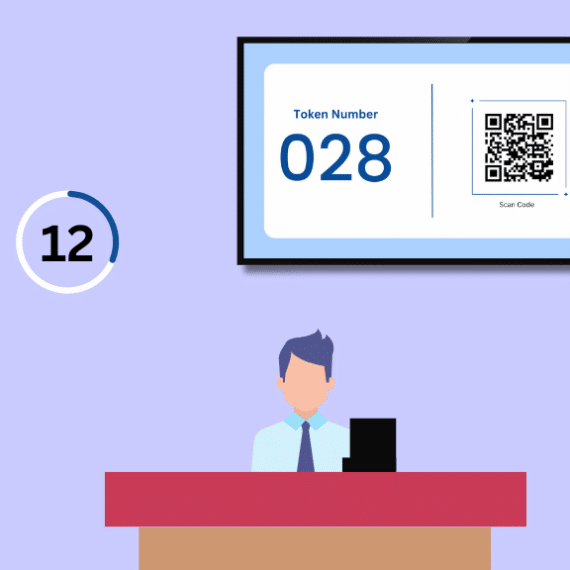
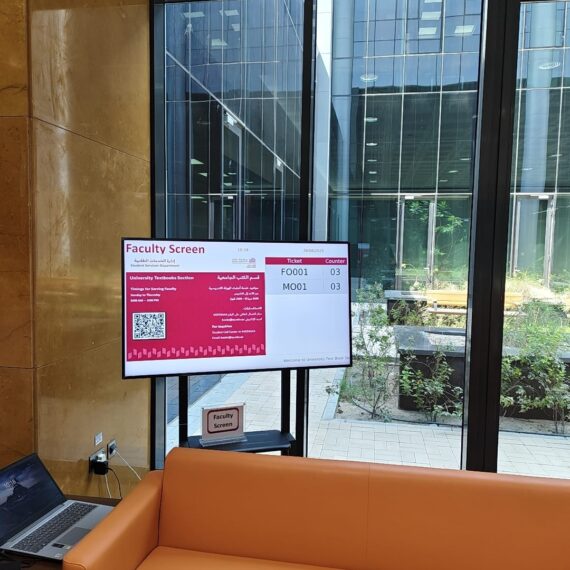
- Digital display screens: Show token numbers, service counters, and directions.
- Audio announcements: Calls patients in multiple languages.
- Mobile notifications: Sends SMS or app notifications when the patient’s turn is near.
- Customizable alerts: Alerts for missed tokens or delayed calls.
Example: In a busy laboratory, patients receive SMS updates when their test samples are ready, reducing congestion at counters.
4. Estimated Wait Time Display
Patients often experience anxiety waiting without knowing how long it will take. Displaying estimated wait times improves the experience.
Key Features:
- Dynamic calculations: Wait times are calculated based on the number of patients, service speed, and department efficiency.
- Real-time updates: Displays adjust as patient flow changes.
- Accessible via mobile and kiosks: Patients can view wait times from anywhere inside the hospital.
Benefit: Reduces patient stress and helps manage expectations effectively.
5. Priority & Special Handling
Healthcare facilities often serve patients with different levels of urgency. Hospital Queue Management System can automatically prioritize them.
Features:
- Emergency triage: Patients with critical conditions are fast-tracked.
- Senior citizen and special needs priority: Automatically queues these patients ahead of regular patients.
- Pregnancy or disability considerations: Ensures comfort and accessibility.
Example: In the pediatric department, children with urgent symptoms are served before routine check-ups without manual intervention.
6. Reporting & Analytics Engine
A Hospital Queue Management System is a goldmine of operational data.
Key Components:
- Patient flow analysis: Identifies peak hours, average wait times, and department load.
- Staff performance reports: Tracks which counters are most efficient.
- Resource optimization: Helps determine staffing needs for each department.
- Customizable reports: Allows hospitals to generate monthly, weekly, or daily performance summaries.
Benefit: Data-driven decisions improve efficiency and enhance patient experience.
7. Integration with Hospital Systems
A hospital’s ecosystem includes EMR, billing, and appointment systems. Integration is essential.
Key Features:
- EMR and patient record integration: Automatically links token data with medical records.
- Billing system synchronization: Generates invoices and tracks payments without manual effort.
- Appointment management: Converts scheduled appointments into digital tokens.
- Pharmacy and lab integration: Automatically updates queue status after tests or medication dispensing.
Benefit: Reduces errors, avoids duplicate records, and creates a seamless operational workflow.
8. Multi-Channel Support
Patients have different preferences for interacting with hospital services. Hospital Queue Management System supports multiple channels.
Options include:
- Self-service kiosks at the hospital
- Web portals for online token booking
- Mobile applications for real-time queue updates
- SMS or WhatsApp notifications for alerts and token confirmations
- Reception desk counters for manual assistance
Benefit: Flexibility ensures that all patients, regardless of tech literacy, have access to efficient service.
9. Customizable Workflow Rules
Hospitals have unique workflows. Hospital Queue Management System allows complete customization.
Customizable options:
- Department-specific queuing rules: E.g., OPD vs pharmacy vs diagnostics.
- Time-based routing: Allocate resources differently during peak and off-peak hours.
- Walk-in vs appointment prioritization: Ensures fairness and smooth flow.
- Escalation rules: Automatically alerts supervisors if wait times exceed limits.
Benefit: Hospitals maintain control over operations without disrupting patient convenience.
10. Digital Signage & Display Systems
Visual communication is key in busy healthcare environments.
Key Features:
- Queue display screens: Show token numbers, counters, and directions.
- Department-specific boards: Separate screens for labs, pharmacies, billing, and consultation rooms.
- Dynamic content display: Display health tips, hospital notices, and promotions while waiting.
- Multi-language support: Ensures clarity for diverse patient populations.
Benefit: Patients can easily navigate the hospital, reducing confusion and congestion.
Major Benefits of Hospital Queue Management System
Implementing a Hospital Queue Management System (HQMS) provides tangible and measurable benefits for both patients and hospital staff. Beyond simply reducing wait times, modern Hospital Queue Management System transform the operational efficiency of healthcare facilities, improve patient satisfaction, and create a more organized, data-driven environment. Below, we explore the major benefits in detail.
1. Faster Patient Flow & Reduced Waiting Time
Long waiting periods are one of the most common complaints from hospital visitors. A Hospital Queue Management System accelerates patient movement throughout the facility by:
- Automated queuing: Patients no longer need to physically stand in line. Tokens are generated digitally, and patients are called based on priority and order.
- Dynamic allocation: Counters and staff are automatically assigned based on real-time load and department demand.
- Peak-hour optimization: The system can predict high-traffic times and pre-allocate resources, reducing congestion.
Example: A busy outpatient department (OPD) can reduce patient waiting times by up to 30–50% by using smart token assignment and real-time monitoring dashboards.
Impact: Faster patient flow means less overcrowding, smoother hospital operations, and a more efficient service experience for everyone.
2. Improved Patient Experience & Satisfaction
Healthcare isn’t just about treatment — it’s about the overall experience. Hospital Queue Management System enhances patient experience by:
- Reducing stress and anxiety: Patients don’t need to worry about missing their turn or standing in long lines.
- Clear communication: Digital displays, mobile notifications, and audio announcements keep patients informed.
- Comfortable waiting: Patients can sit in waiting lounges or even explore hospital facilities while waiting, as the system alerts them when their turn approaches.
- Fairness and transparency: Automated queue allocation ensures every patient is treated fairly, avoiding conflicts at the reception.
Example: In multi-specialty hospitals, patients receiving updates via mobile app notifications and estimated wait times consistently report higher satisfaction scores.
3. Enhanced Staff Productivity & Efficiency
Hospital Queue Management System allows hospital staff to focus on care instead of crowd management:
- Reduced administrative workload: Staff no longer need to manually track token numbers or call patients.
- Optimized staff deployment: Administrators can assign additional staff to overloaded counters in real-time.
- Focus on healthcare delivery: With fewer distractions, doctors, nurses, and support staff can concentrate on patient care rather than operational chaos.
Example: Hospitals that implemented automated queuing observed up to a 25% improvement in staff efficiency because staff spent less time handling queues and more time assisting patients.
4. Data-Driven Decision Making
One of the greatest advantages of a modern Hospital Queue Management System is the analytics it provides:
- Patient flow insights: Identify peak hours, slow periods, and bottleneck areas.
- Service quality assessment: Track how long patients wait at each counter or department.
- Resource allocation: Plan staff schedules and allocate resources based on actual demand patterns.
- Performance improvement: Track the effectiveness of changes and interventions over time.
Example: A hospital analyzing weekly queue data can adjust appointment timings, deploy additional staff for busy hours, and improve service efficiency.
5. Flexibility & Scalability
Hospital Queue Management System are designed to grow with the hospital’s needs:
- Multi-department support: Separate queues for OPD, labs, pharmacy, billing, and emergency services.
- Scalability: Easily add new counters, departments, or locations without disrupting existing operations.
- Adaptable workflows: Adjust queue logic for special events, seasonal spikes, or emergencies.
Example: A hospital network with multiple branches can implement a single integrated Hospital Queue Management System to monitor patient flow across all locations in real time.
6. Reduced Operational Costs
Inefficiencies in manual Hospital Queue Management System increase operational costs:
- Fewer staff hours spent on queue management: Automation reduces administrative overhead.
- Reduced patient complaints and disruptions: Smoother operations minimize conflict resolution and unnecessary interventions.
- Efficient resource use: Staff, equipment, and facilities are utilized optimally without overcrowding or idle time.
Impact: Over time, hospitals experience significant cost savings and improved ROI on operational processes.
7. Better Communication & Transparency
Clear communication improves trust and reduces frustration:
- Real-time updates: Patients always know where they stand in the queue.
- Multi-channel notifications: Digital displays, mobile apps, and SMS alerts ensure no one misses their turn.
- Transparent service allocation: Patients can see how the queue progresses, minimizing complaints about favoritism or unfair treatment.
Example: A hospital using SMS alerts for patients waiting for lab results reported fewer instances of missed appointments and confusion at counters.
8. Enhanced Accessibility for Special Patients
Hospitals serve diverse populations, including patients with special needs. Hospital Queue Management System improves accessibility by:
- Priority queuing: Elderly, pregnant women, children, and patients with disabilities are automatically prioritized.
- Special assistance alerts: Staff are notified when a special-needs patient arrives.
- Inclusive service policies: Ensures equitable access to healthcare services for all patients.
Impact: Promotes patient-centered care and strengthens the hospital’s reputation as an inclusive institution.
9. Improved Compliance & Record Keeping
Modern hospitals must comply with strict regulations:
- Digital logs: Hospital Queue Management System records every token, patient interaction, and service completion.
- Audit trails: Complete history of queue handling can be reviewed for compliance or legal purposes.
- Integration with EMRs: Ensures that patient records are accurate, up-to-date, and secure.
Benefit: Hospitals reduce risks of legal issues and meet healthcare compliance standards effortlessly.
10. Brand & Trust Enhancement
Patients associate efficiency with quality care:
- Professionalism: A well-managed queue reflects a hospital’s commitment to service excellence.
- Patient loyalty: Positive experiences encourage patients to return and recommend the hospital to others.
- Competitive advantage: Hospitals with advanced Hospital Queue Management System are perceived as modern, technologically advanced, and patient-centric.
Example: Clinics implementing Hospital Queue Management System have reported higher patient retention rates compared to competitors relying on traditional manual queuing.

Practical Uses of Hospital Queue Management System
A Hospital Queue Management System (HQMS) is a versatile solution designed to enhance patient experience, optimize workflow, and improve operational efficiency across multiple hospital departments. Its applications are extensive, from reception areas to specialized departments. Let’s explore its practical uses in detail.
1. Reception & Patient Check-In
The hospital reception is the first point of contact and often the busiest area in any medical facility. Hospital Queue Management System streamlines the process:
- Automated token issuance: Patients can receive tokens via kiosks, mobile apps, or online booking.
- Appointment validation: Confirms patient appointments and assigns departments without manual intervention.
- Department routing: Ensures patients are directed to the correct specialty or service.
- Queue notifications: Displays and audio systems alert patients when it’s their turn.
Example: A patient arriving for a cardiology consultation receives a token automatically linked to the doctor’s schedule, eliminating the need to stand in a long line.
Impact: Reduces reception congestion, minimizes errors, and improves the first impression of hospital services.
2. Outpatient Department (OPD) Management
OPDs are usually the busiest sections in hospitals. Hospital Queue Management System improves patient flow by:
- Separate queues for walk-ins and appointments: Ensures fairness and organized service.
- Real-time tracking: Monitors each patient’s position in the queue.
- Department-specific prioritization: Emergency or priority patients are fast-tracked.
- Patient notification via mobile or kiosk: Patients can wait comfortably while being notified when their turn is near.
Example: In a multi-specialty OPD, patients waiting for dermatology, ENT, or ophthalmology are queued separately, reducing confusion and long wait times.
Impact: Faster consultations, reduced crowding, and better overall patient satisfaction.
3. Laboratory & Diagnostic Services
Crowding in labs and diagnostic centers is a common issue, especially in large hospitals. Hospital Queue Management System helps by:
- Token allocation for tests: Blood work, X-rays, MRIs, CT scans, and ultrasounds are queued efficiently.
- Priority for critical tests: Urgent lab tests can be fast-tracked.
- Real-time updates: Patients are notified when their sample processing begins or completes.
- Resource management: Optimizes usage of lab equipment and staff schedules.
Example: A patient visiting a hospital for a blood test can receive SMS updates once the test is ready, avoiding unnecessary waiting at the counter.
Impact: Reduces patient crowding, improves laboratory efficiency, and ensures timely testing and reporting.
4. Pharmacy Counter Management
Pharmacy counters often experience long queues, especially during peak hours. Hospital Queue Management System ensures smooth operations:
- Automated token assignment: Patients waiting for prescriptions are queued digitally.
- Multiple counters: System distributes patients evenly across available counters.
- Notifications: Patients are called when their prescription is ready to avoid congestion.
- Priority handling: VIP patients, emergency cases, or special needs are served first.
Example: A patient completing a doctor consultation is automatically given a token for pharmacy pick-up, reducing waiting time significantly.
Impact: Faster prescription delivery, better crowd control, and improved patient satisfaction.
5. Billing & Payment Counters
Billing is often a pain point in hospitals, leading to delays and confusion. Hospital Queue Management System improves efficiency by:
- Digital queueing for payments: Patients receive tokens for payment counters, reducing physical crowding.
- Integration with billing systems: Automatically links patient records to invoices.
- Notifications for payment readiness: Patients are alerted when their turn is near.
- Multiple counters management: Evenly distributes patients to available billing counters.
Example: A patient who has completed lab tests receives a token for payment, which can be tracked via digital screens or mobile notifications.
Impact: Reduces billing wait times, enhances transparency, and minimizes errors in payment processing.
6. Specialty Clinics & Departments
Specialty departments such as cardiology, dermatology, oncology, or orthopedics can benefit from Hospital Queue Management System in the following ways:
- Separate queues for each specialty: Avoids confusion and ensures organized service.
- Priority for follow-ups: Patients returning for follow-ups can be fast-tracked.
- Appointment and walk-in integration: Manages both types efficiently without manual intervention.
- Real-time monitoring: Administrators can track patient load and staff efficiency.
Example: A hospital oncology department can queue chemotherapy patients, new consultations, and lab tests separately, improving workflow.
Impact: Organized patient flow, reduced wait times, and improved departmental efficiency.
7. Emergency Department (ER) & Triage Management
In emergencies, every second counts. Hospital Queue Management System helps ERs handle critical cases efficiently:
- Triage-based prioritization: Critical patients are automatically fast-tracked to the front of the queue.
- Queue visibility: Staff can monitor all waiting patients and assign doctors based on severity.
- Real-time updates: Alerts are sent to patients and staff as the situation changes.
- Integration with EMR: Patient history and vital data are available immediately for emergency care.
Example: A patient arriving with a heart attack is immediately routed to the ER, bypassing the standard queue, while other patients wait in a structured digital queue.
Impact: Saves lives by ensuring the most urgent cases receive immediate attention while keeping non-critical cases organized.
8. Telemedicine & Virtual Waiting Rooms
Modern hospitals are increasingly offering telemedicine services. Hospital Queue Management System can extend to virtual queues:
- Online appointment booking: Patients can schedule teleconsultations via web or mobile apps.
- Virtual tokens: Patients join a virtual queue instead of a physical waiting room.
- Notifications for consultation start: Alerts via SMS or app when the doctor is ready.
- Integration with EMR & billing: Seamless processing without additional administrative effort.
Example: A patient waiting for an online dermatology consultation receives a virtual token, allowing them to continue daily activities until the appointment begins.
Impact: Reduces the need for in-hospital waiting, improves patient convenience, and allows hospitals to manage remote consultations efficiently.
About Axle Systems — Your Hospital Queue Management System Partner
In today’s fast-evolving healthcare environment, implementing technology that enhances patient experience, streamlines operations, and increases efficiency is no longer optional — it’s essential. Axle Systems stands at the forefront of this transformation, offering cutting-edge Hospital Queue Management System (HQMS) designed to meet the unique needs of modern healthcare facilities.
With years of expertise in providing technology-driven solutions for hospitals, clinics, diagnostic centers, and multi-specialty medical facilities, Axle Systems has built a reputation as a trusted partner for healthcare institutions across Qatar and the region.
Why Choose Axle Systems?
Choosing the right partner for Hospital Queue Management System is critical. Here’s why Axle Systems is the preferred choice for hospitals:
1. Tailored Solutions for Every Facility
No two hospitals are alike. Axle Systems offers customized Hospital Queue Management System solutions designed to fit the specific workflows, patient volumes, and departmental requirements of each facility. Whether it’s a small clinic or a large multi-specialty hospital, our systems are scalable and adaptable.
Example: A 150-bed hospital can deploy a single system that manages OPD queues, laboratory services, pharmacy counters, and billing simultaneously, ensuring seamless integration across all departments.
2. Expertise in Healthcare Workflow Optimization
Axle Systems doesn’t just sell software — we understand hospital operations. Our team works closely with your administration to analyze patient flow, identify bottlenecks, and configure the system to maximize efficiency.
Example: By analyzing peak-hour data, we can help a hospital optimize staff allocation and reduce average patient wait times by 30–50%.
3. End-to-End Implementation & Support
From planning and installation to ongoing maintenance, Axle Systems provides complete support:
- System design and consultation
- Hardware setup (kiosks, display screens, and counters)
- Software installation and integration with hospital systems (HMS, EMR, billing)
- Staff training for smooth adoption
- 24/7 technical support and updates
Benefit: Hospitals can implement Hospital Queue Management System quickly and confidently without worrying about technical challenges or downtime.
4. Advanced Technology & Integration
Our solutions combine state-of-the-art hardware and intelligent software. Axle Systems ensures seamless integration with your hospital’s existing systems for:
- Electronic Medical Records (EMR)
- Hospital Management Systems (HMS)
- Appointment scheduling platforms
- Billing and pharmacy management
Example: When a patient finishes a consultation, the system automatically generates a token for the pharmacy, tracks billing, and updates the hospital database — all without manual intervention.
5. Real-Time Monitoring & Analytics
Axle Systems equips hospitals with real-time dashboards and analytics tools:
- Track patient flow across departments
- Monitor staff performance and service efficiency
- Identify peak hours and predict future demand
- Generate detailed reports for management and compliance
Impact: Administrators gain actionable insights to improve operational efficiency, optimize staffing, and make data-driven decisions.
6. Focus on Patient-Centric Care
At Axle Systems, we believe technology should enhance patient experience, not complicate it. Our Hospital Queue Management System solutions are designed to:
- Reduce patient waiting times
- Provide accurate estimated wait times
- Offer multi-channel notifications (kiosk, SMS, mobile app)
- Prioritize special-needs patients, senior citizens, and emergencies
Result: Patients enjoy a smoother, stress-free, and more organized hospital visit, improving overall satisfaction and loyalty.
Contact Axle Systems
Have questions? Want to implement a Hospital Queue Management System?
Axle Systems
Email: info@axlesys.com
Phone: +974 44682391/77443731
Website: www.axlesys.com
Our team is here to help you choose the right queue management system tailored to your facility’s needs. Contact us today for a free consultation!
Frequently Asked Questions (FAQ)
Q1: What is a Hospital Queue Management System?
A Hospital Queue Management System (HQMS) is a digital solution that organizes and automates patient queuing to reduce waiting times, streamline patient flow, and improve service delivery.
Q2: How does the Hospital Queue Management System work?
Patients receive a token (digitally or at a kiosk), wait in a designated area, and are called when their turn arrives. Staff can manage and view queues via dashboards, and digital displays notify patients accordingly.
Q3: Can patients get queue numbers online?
Yes — modern systems allow patients to get queue numbers through websites or mobile apps before even arriving at the facility.
Q4: Will the system integrate with existing hospital software?
Most Hospital Queue Management System solutions support integration with Hospital Management Systems (HMS), Electronic Medical Records (EMRs), appointment systems, and billing systems.
Q5: Does the system show estimated wait times?
Yes — systems can calculate and display estimated wait times based on real‑time data and historical trends.
Q6: Is a queue management system only for large hospitals?
No. Hospital Queue Management System can be scaled for small clinics, labs, and specialty centers as well.
Q7: How is patient priority handled?
Priority rules such as emergency cases, senior citizens, and pregnant women can be configured, ensuring they receive expedited service.
Q8: Can queue information be sent via SMS or mobile app notifications?
Absolutely. Patients can receive notifications on mobile devices to know when their turn is approaching.
Q9: What are typical benefits of installing an Hospital Queue Management System?
Reduced wait times, improved patient experience, better staff productivity, analytics insights, and higher operational efficiency.
Q10: How long does it take to implement a Hospital Queue Management System?
Implementation time varies by size of facility and customization needs, but many systems can be operational within days of installation and configuration.
Conclusion
In today’s fast-paced healthcare environment, efficiency, organization, and patient satisfaction are no longer optional—they are essential. Hospitals and clinics face the dual challenge of managing large volumes of patients while delivering high-quality care. Traditional manual queue management methods are no longer sufficient, as they lead to long waiting times, administrative inefficiencies, and patient frustration. This is where a Hospital Queue Management System (HQMS) proves to be a transformative solution.
A modern Hospital Queue Management System goes far beyond simply issuing tokens. It is a comprehensive system that integrates digital technology, workflow automation, real-time monitoring, and intelligent analytics to create a seamless patient experience. From reception and outpatient departments to laboratories, pharmacies, billing counters, and emergency departments, Hospital Queue Management System ensures that every aspect of patient flow is streamlined, transparent, and efficient.
The benefits of implementing a Hospital Queue Management System are manifold. Patients enjoy reduced waiting times, better communication, and a more organized and stress-free experience. Hospital staff gain operational efficiency, freeing up valuable time to focus on healthcare delivery rather than administrative chaos. Administrators benefit from data-driven insights that enable them to optimize resource allocation, staff scheduling, and departmental performance. Furthermore, with the added capabilities of mobile notifications, online bookings, and priority queuing for special patients, Hospital Queue Management System ensures equitable and patient-centric care.
For hospitals looking to remain competitive and modernize their operations, adopting a robust queue management solution is a strategic decision. A well-implemented system not only improves workflow but also enhances the hospital’s reputation, patient satisfaction, and overall quality of care. With real-time monitoring, analytics, and integration with hospital management systems, Hospital Queue Management System empowers healthcare providers to make informed decisions and continuously improve services.
Axle Systems, as a leading provider of Hospital Queue Management System in Qatar, combines advanced technology with deep expertise in healthcare operations. Their solutions are tailored to meet the unique requirements of hospitals and clinics, offering end-to-end support from implementation to ongoing maintenance. By choosing Axle Systems, hospitals can ensure that they provide efficient, organized, and patient-friendly care while optimizing resources and reducing operational costs.