

Ticketing Queue System in Qatar
In a world where customer experience is a key differentiator, the way businesses manage queues and ticketing can make or break success. Whether you’re operating a government office, a healthcare facility, a retail store, an airport, or any public-facing service outlet, managing crowds, wait times, and service fairness is key to operational efficiency.
This is where a Ticketing Queue System becomes a must‑have solution — simplifying queue management, reducing wait frustrations, empowering businesses with real‑time data, and improving overall service experience.
At Axle Systems, we are proud to be the leading supplier of Ticketing Queue System in Qatar — delivering robust, scalable, and intelligent queue solutions that transform how organizations manage customer flow.
What is a Ticketing Queue System?
A Ticketing Queue System is a digital solution designed to manage and organize customer traffic in service environments. Instead of lining up physically, customers take a numbered ticket (either physically or digitally) and wait until their number is called. This technology ensures that people are served in the right order, services are predictable, and businesses can optimize their service delivery.
Unlike traditional first-come‑first‑served lines, a ticketing system adds structure, control, and transparency — improving experience for both customers and staff.
Benefits of Ticketing Queue System
A Ticketing Queue System does far more than simply organize customers; it fundamentally transforms the experience for both clients and businesses. Let’s dive deeper into the key benefits, with examples and practical implications.
1. Improves Customer Experience
The core advantage of a ticketing system is the enhanced customer experience.
- Comfortable Waiting: Instead of standing in long, physically stressful lines, customers can sit in waiting areas, browse, or even complete other tasks while waiting. For example, in hospitals, patients can wait in comfortable lounges rather than crowded corridors, making visits less stressful.
- Transparency: Customers know exactly where they are in line, reducing uncertainty and frustration. They can see which number is being served and get estimated wait times.
- Fairness: Every customer is served in order without disputes, creating trust in your service process.
- Engagement: Ticketing systems often integrate screens or digital signage to display promotions, important announcements, or service tips while customers wait, turning waiting time into a productive, informative experience.
2. Reduces Perceived Wait Times
The perceived wait time—how long customers feel they’ve waited—is often more critical than the actual wait. Ticketing systems help minimize this through:
- Visual Queues: Large display screens show ticket numbers, which reassures customers that their turn is coming soon.
- Digital Alerts: SMS or mobile app notifications can alert customers as their turn approaches, so they feel in control of their wait.
- Predictable Flow: By managing service order efficiently, customers experience less anxiety, even during peak hours.
3. Boosts Operational Efficiency
Ticketing systems improve efficiency on multiple levels:
- Service Prioritization: Staff can serve multiple queues efficiently, ensuring specialized counters are allocated correctly.
- Queue Monitoring: Managers can see which counters are overloaded and redistribute resources in real time.
- Data-Driven Decisions: Analytics allow identification of slow-performing counters, peak times, and bottlenecks, enabling informed operational changes.
4. Flexible Service Prioritization
Not all customers or services are equal. Ticketing systems allow:
- Multiple Service Types: Separate queues for billing, customer support, or technical help.
- VIP or Priority Service: Elderly, disabled, or high-value customers can receive priority attention without disrupting other service flows.
- Appointment Integration: Customers who booked ahead can be slotted efficiently without manual tracking.
5. Enhanced Analytics & Business Intelligence
Modern ticketing systems are data-rich solutions that provide valuable insights for decision-making: Ticketing Queue System
- Footfall Analysis: Track how many customers visit daily, weekly, or monthly.
- Service Time Metrics: Measure how long each service takes per customer or per counter.
- Trend Forecasting: Understand peak hours and staff requirements for efficient scheduling.
- Customer Behavior Insights: Identify patterns, such as the most frequently used services or times of high traffic.
6. Reduces Staff Burden and Errors
Manually managing queues is time-consuming and prone to mistakes. Ticketing systems reduce this burden by:
- Automating Queue Assignment: No need for staff to manually track the order of arrivals.
- Minimizing Human Error: Reduces incidents where customers are served out of order.
- Allowing Focus on Service Quality: Staff can dedicate more time to actual customer service instead of crowd management.
7. Scales Easily for Growing Needs
A key advantage is scalability. As your business grows:
- Ticketing systems can support more counters, branches, or service types.
- Digital ticketing makes it easy to handle larger crowds without extra staff.
- Integration with mobile apps and SMS notifications allows for remote queue management.
8. Improves Brand Reputation
Happy customers tell others about positive experiences. By reducing wait times, providing transparency, and improving service flow, ticketing systems enhance:
- Customer Loyalty: Repeat customers are more likely to return.
- Public Perception: Efficient service contributes to a professional and modern image.
- Competitive Advantage: Businesses with organized and smart service systems stand out.
9. Compliance and Accessibility
Ticketing systems can also ensure compliance and accessibility:
- Regulatory Compliance: In sectors like healthcare and government, maintaining order and fairness is crucial.
- Accessibility for Disabled Customers: Priority tickets or remote queueing options ensure inclusivity.
- Hygiene and Safety: Especially post-COVID, reducing physical lines limits overcrowding and potential health risks.
10. Cost-Effectiveness Over Time
While initial investment may vary, the system pays off by:
- Reducing labor costs needed for manual queue management.
- Increasing service throughput, allowing more customers to be served per hour.
- Minimizing losses due to dissatisfied customers or complaints.
Core Features of Ticketing Queue System
A Ticketing Queue System is more than a simple ticket dispenser — it’s a sophisticated solution combining hardware, software, and analytics to optimize customer flow. Modern systems come with advanced features designed to improve efficiency, flexibility, and user experience. Here’s a detailed breakdown of the core features and why they matter:
1. Ticket Issuing (Physical and Digital)
The foundation of any Ticketing Queue System is ticket issuance, which can be physical, digital, or both:
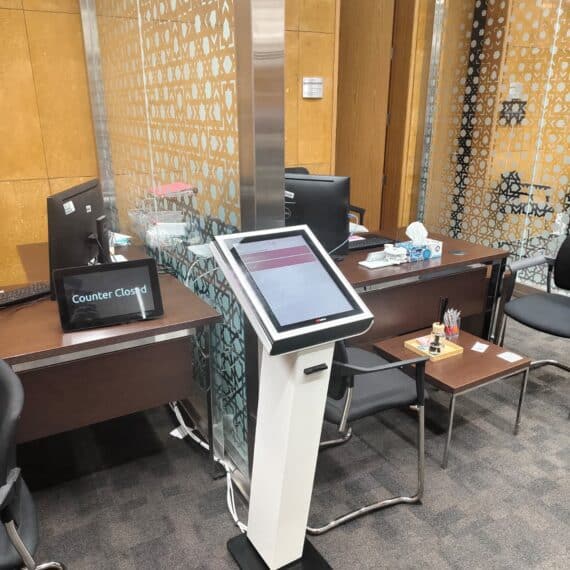
- Physical Ticket Dispensers:
These are self-service kiosks or machines that print tickets with unique numbers. Customers select their service type, press a button, and receive a ticket. Commonly used in hospitals, banks, and government offices, physical tickets provide a tangible sense of order and reassurance. - Digital Ticketing:
In the digital era, ticketing can be done via mobile apps, SMS, or QR codes. Customers can “take a ticket” before arriving, reducing waiting time and preventing overcrowding. For example, a retail store might allow customers to queue for customer service from their phones while shopping.
Practical Benefit: Offering both physical and digital ticket options ensures accessibility for all customer types, including tech-savvy and traditional users.
2. Multi-Service Queues
Modern ticketing systems can handle multiple services simultaneously:
- Customers can select the specific service they need, such as billing, technical support, or consultation.
- Each service category is routed to the appropriate counter or staff member.
- This eliminates the confusion of mixed-purpose queues and ensures that specialized staff handle relevant tasks.
Real-World Example: In a hospital, separate queues for pharmacy, lab tests, general consultation, and emergency services streamline operations, prevent overcrowding, and improve patient satisfaction.
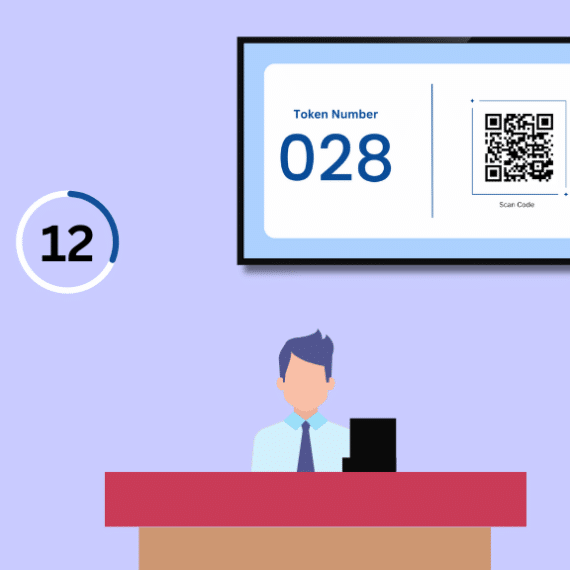
3. Real-Time Dashboard Displays
Display screens are crucial for informing customers about queue status:
- Current Ticket Number: Shows which ticket is being served.
- Counter Assignment: Indicates which counter is ready for the next customer.
- Estimated Wait Time: Gives an idea of how long customers need to wait.
- Service Notifications: Displays messages like delays, announcements, or promotional content.
Insight: Visual feedback reduces customer anxiety and helps staff manage the queue efficiently. In banks, display screens prevent disputes about the order of service and improve transparency.
4. SMS and Mobile Alerts
Advanced Ticketing Queue System often integrate with mobile technology:
- Customers receive alerts on their phones when their number is approaching.
- Notifications can include counter details, estimated wait times, and service instructions.
- Some systems allow remote ticket reservation, enabling customers to join the queue without physically being present.
Benefit: This feature is particularly useful in high-traffic areas like airports, large retail stores, and hospitals, where customers may not want to stand in a crowded waiting area.
5. Priority & VIP Routing
Not all customers are equal — some require priority service:
- VIP Customers: Premium or high-value clients can be served faster without disrupting regular queues.
- Elderly or Disabled Customers: Accessibility features allow priority tickets for those who may need extra assistance.
- Emergency Services: Certain cases can bypass standard queues for urgent attention.
Example: A government office can assign priority to senior citizens during peak hours, while the system still maintains overall fairness and order.
6. Real-Time Reporting & Analytics
One of the most powerful features is real-time data collection: Ticketing Queue System
- Service Efficiency Tracking: Identify which counters are the fastest or slowest.
- Customer Flow Analysis: Determine peak hours and bottlenecks.
- Wait Time Metrics: Average wait time per service type.
- Operational Insights: Use historical data to optimize staffing and service planning.
Impact: Managers can make proactive decisions, such as opening additional counters during peak periods or reallocating staff based on demand.
7. Multiple Call Modes
Staff can call the next customer using various methods:
- Touchscreen Consoles: Intuitive and user-friendly.
- Physical Buttons: Simple, reliable hardware for each counter.
- Remote Controllers: Staff can operate remotely within the service area.
- Mobile App Integration: Advanced systems allow calling numbers through mobile or tablet apps.
Benefit: Flexibility in call modes ensures smooth operation regardless of counter setup or staff preference.
8. Custom Branding and Messaging
Ticketing Queue System are not only functional but also a marketing tool:
- Display screens can show company logos, colors, and branding.
- Messages and promotional content can be displayed while customers wait.
- Announcements or service tips can enhance the customer experience.
Example: A retail chain can display seasonal promotions or loyalty program benefits on screens while customers wait for service.
Use Cases: Who Needs a Ticketing Queue System?
A Ticketing Queue System is not limited to one type of business — it is a versatile solution suitable for any organization that manages customer service, foot traffic, or appointments. Below, we explore in detail the industries and scenarios where such systems provide maximum value.
1. Hospitals and Healthcare Facilities
Healthcare environments are often high-pressure spaces with unpredictable patient volumes. A Ticketing Queue System improves patient flow, reduces stress, and enhances overall safety.
Key Applications:
- Outpatient Clinics: Patients can take tickets for registration, consultation, lab tests, or pharmacy pick-up.
- Specialty Departments: Separate queues for pediatrics, cardiology, or radiology prevent bottlenecks and ensure patients reach the right department efficiently.
- Emergency & Priority Handling: Critical cases can bypass standard queues to receive immediate attention.
Benefits:
- Reduced physical congestion in waiting rooms.
- Transparent wait times for patients.
- Staff focus shifts from managing lines to providing quality care.
Example: A large hospital in Doha implemented a Ticketing Queue System in their outpatient department and reduced average wait times by 35%, while increasing patient satisfaction scores significantly.
2. Government Service Centers
Government offices often experience high daily foot traffic, which can lead to frustration if not managed properly. Ticketing systems bring structure and fairness.
Key Applications:
- Licensing Departments: Vehicle registration, driver’s license issuance, or ID renewals.
- Immigration and Residency Services: Organizing queues for visa applications, permits, and renewals.
- Public Utility Offices: Water, electricity, and telecom service centers handling payments, complaints, or inquiries.
Benefits:
- Ensures fair, first-come-first-served service.
- Reduces disputes about queue order.
- Speeds up operations and enhances transparency.
Scenario: In a busy government service center, customers can now check in via mobile app or kiosk, see their position in the queue, and receive SMS updates, minimizing the need to wait physically and reducing congestion.
3. Banks and Financial Institutions
Banks and financial institutions handle a mix of routine transactions and complex services. A Ticketing Queue System optimizes counter usage, improves customer satisfaction, and boosts operational efficiency.
Key Applications:
- Teller Counters: Manage cash withdrawals, deposits, and account inquiries.
- Customer Service: Handle complaints, card services, and account management efficiently.
- Loan and Mortgage Consultations: Schedule and prioritize appointments.
Benefits:
- Reduces long queues at peak hours.
- Directs customers to the right counter for their specific needs.
- Increases productivity of bank staff.
Example: A leading bank in Qatar adopted a ticketing system across all branches and saw a 25% reduction in customer complaints about waiting and improved teller efficiency.
4. Retail and Customer Service Centers
Retail stores, especially large chains, often face long queues during peak shopping hours, returns, or customer service requests. A queue system improves flow and enhances customer experience.
Key Applications:
- Returns and Exchanges: Separate queues for returns prevent overcrowding.
- Customer Support Counters: Help customers with queries without blocking other areas.
- Fitting Rooms or Specialty Counters: Manage limited resources efficiently.
Benefits:
- Reduces frustration during busy periods.
- Ensures fair service and improves brand reputation.
- Allows staff to manage specific tasks efficiently.
Scenario: In a large electronics store, customers now take a digital ticket for customer service. The system notifies them when it’s their turn, allowing them to browse products while waiting, resulting in a more positive shopping experience.
5. Airports and Transportation Hubs
Airports and transportation terminals manage large, fluctuating crowds daily. A ticketing system ensures smooth flow, prevents congestion, and improves overall passenger experience.
Key Applications:
- Check-in Counters: Organize queues for multiple airlines efficiently.
- Baggage Service Desks: Manage inquiries about lost luggage.
- Information Desks: Handle passenger questions and guide them effectively.
Benefits:
- Reduces congestion in waiting areas.
- Enhances passenger satisfaction and reduces stress.
- Provides operational data for airport management to optimize staff deployment.
Scenario: At Doha Airport, a ticketing system at service counters allows passengers to check their position digitally, improving the flow during peak travel hours.
6. Utility and Public Service Hubs
Utility companies and public service offices often face long queues for billing, complaints, and inquiries. A Ticketing Queue System improves service order and operational efficiency.
Key Applications:
- Electricity and Water Offices: Manage payments, new connections, and service complaints.
- Telecom Service Centers: Handle SIM registration, plan upgrades, or bill payments.
- Municipal Offices: Process permits, applications, or public service requests.
Benefits:
- Improves customer satisfaction by reducing confusion and wait times.
- Provides a structured system for handling multiple service types.
- Allows staff to focus on actual service delivery instead of line management.
Scenario: A telecom service center uses a ticketing system to separate general inquiries, technical support, and VIP customers, reducing wait time and improving customer experience.
Why Choose Axle Systems for Your Ticketing Queue System Solution in Qatar
Selecting the right partner for your Ticketing Queue System is just as important as choosing the system itself. A poorly implemented solution can create frustration rather than solving it. That’s why Axle Systems stands out as the trusted choice for organizations across Qatar. Here’s why:
1. Extensive Industry Expertise- Ticketing Queue System
Axle Systems has years of experience supplying, installing, and supporting queue management solutions in diverse industries:
- Healthcare: Hospitals and clinics rely on our systems to manage patient flow efficiently.
- Government Services: From licensing departments to municipal offices, our solutions bring transparency and fairness.
- Retail & Banking: Large-scale stores and financial institutions use our systems to reduce wait times and improve customer satisfaction.
- Airports & Transport Hubs: Optimizing passenger flow and service counters is one of our specialties.
Our deep understanding of industry-specific requirements ensures that each deployment is tailored to the unique needs of your organization.
2. State-of-the-Art Technology- Ticketing Queue System
Axle Systems delivers modern, feature-rich Ticketing Queue System solutions that leverage the latest technology:
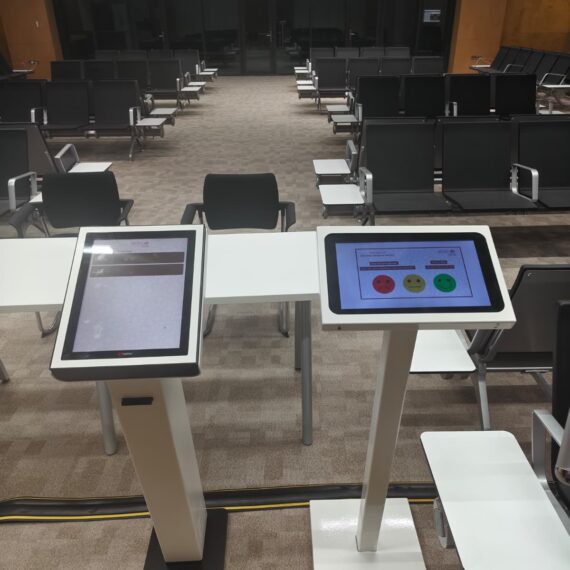
- Physical & Digital Ticketing: Flexible options including kiosks, mobile app tickets, and QR codes.
- Real-Time Dashboards: Display current ticket numbers, service counters, and estimated wait times.
- SMS & Mobile Notifications: Keep customers informed and reduce perceived wait times.
- Analytics & Reporting: Track footfall, service efficiency, and counter performance to optimize operations.
We ensure your system is future-proof, scalable, and capable of meeting both current and growing demands.
3. Customized Solutions for Every Business- Ticketing Queue System
No two organizations are the same. That’s why we provide fully customized ticketing solutions:
- Multi-Service Queues: Configure different counters for specialized services.
- Priority Handling: VIP, elderly, or urgent cases can be routed efficiently.
- Brand Integration: Display company branding, promotional content, and messages on screens.
- Multi-Language Support: Perfect for Qatar’s multicultural environment.
This customization ensures that your system is not just functional but also aligns perfectly with your operational and branding goals.
4. Local Presence and Support- Ticketing Queue System
Being based in Qatar, Axle Systems provides rapid, on-the-ground support:
- Installation & Configuration: Our expert technicians handle complete setup.
- Training & Onboarding: Staff are trained to use the system effectively.
- Maintenance & Updates: We provide regular software updates and maintenance visits to ensure smooth operation.
- 24/7 Technical Support: Quick assistance in case of any issues or queries.
Our local presence guarantees fast response times and a deep understanding of Qatar’s operational environment.
5. Proven Track Record- Ticketing Queue System
Axle Systems has successfully implemented queue management systems for a wide range of organizations, including hospitals, government offices, banks, and large retail chains.
Examples of Success:
- A government service center in Doha reduced customer complaints by 40% after our system implementation.
- A private hospital improved patient flow, reducing wait times by over 30%.
- A retail chain enhanced customer experience during peak hours, increasing satisfaction scores significantly.
Our track record demonstrates our ability to deliver results and measurable improvements in service efficiency.
6. End-to-End Services- Ticketing Queue System
We don’t just supply the system — we provide comprehensive end-to-end services:
- Consultation & Planning: Analyze your needs and design the optimal solution.
- Installation & Integration: Ensure smooth deployment with minimal disruption.
- Training: Equip your staff to operate the system confidently.
- Maintenance & Support: Ongoing support and updates to keep your system running perfectly.
This full-service approach ensures that your investment in a ticketing system delivers maximum value from day one.
7. Focus on Customer Satisfaction- Ticketing Queue System
Our core philosophy is customer satisfaction at every stage:
- Helping businesses enhance the waiting experience.
- Providing tools to reduce queue times and stress for customers.
- Ensuring transparent service flow and reducing disputes.
By focusing on both the business and customer side of the experience, we help organizations create a reputation for professionalism and efficiency.
8. Scalable and Future-Ready Solutions- Ticketing Queue System
Axle Systems provides solutions that grow with your business:
- Scalable Architecture: From a single counter to multi-branch operations, our systems can expand easily.
- Advanced Features: Mobile ticketing, AI-based predictions, and analytics dashboards for smarter decision-making.
- Upgrade Paths: We ensure your system can integrate future enhancements without major overhauls.
Whether you are a small clinic or a large government agency, our solutions are designed to meet your current needs while supporting future growth.
Contact Axle Systems — Qatar’s Trusted Supplier
For more information, consultations, demos, or installations, reach out to:
Axle Systems
Phone: +974 44682391/77443731
Email: info@axlesys.com
Website: www.axlesys.com
Whether you’re evaluating queue management or ready to improve your customer experience, we’re here to help.

Common FAQs About Ticketing Queue Systems
Below are some frequent questions customers ask before choosing a system.
Q1: What is a Ticketing Queue System?
A Ticketing Queue System is a digital solution that manages how customers wait for service — using ticket numbers instead of physical lines to organize service order, reduce confusion, and improve experience.
Q2: How does it reduce wait times?
By giving customers a clear order and status, it minimizes perceived waiting. With digital alerts and estimated wait times, customers know when their turn is coming and don’t feel lost or anxious.
Q3: Can the system handle multiple services?
Yes — modern systems support multiple service queues (e.g., different counters, categories), and customers can choose the service type on arrival.
Q4: Does it integrate with mobile apps?
Most advanced systems can integrate with mobile or SMS alert systems, allowing customers to get updates on their phones.
Q5: Is installation difficult?
Installation depends on the scale. Axle Systems offers full setup, configuration, and training to ensure your system works smoothly.
Q6: How can this help my staff?
It reduces repetitive manual queue management, minimizes errors, and gives staff tools to serve customers more efficiently.
Q7: Is the system suitable for small businesses?
Absolutely. Ticketing systems are scalable and can be adapted for small counters up to large multi‑counter environments.
Q8: Can the system integrate with my existing CRM or POS?
Yes — with customization, most queue management software can integrate with existing platforms to enhance customer service and reporting.
Conclusion
Implementing a Ticketing Queue System is no longer just a modern convenience—it has become a critical element for businesses and organizations that aim to provide excellent customer service, streamline operations, and gain a competitive edge. Across industries—from healthcare, government offices, and banks to retail, transportation hubs, and educational institutions—efficient queue management is no longer optional; it is essential.
A well-designed ticketing system delivers tangible benefits that go beyond simply organizing waiting lines. It improves customer experience by providing clarity, fairness, and comfort while reducing perceived wait times. It empowers staff to focus on what truly matters—delivering quality service rather than managing crowds. Moreover, the data-driven insights offered by modern systems allow managers to optimize staffing, understand customer patterns, and make informed operational decisions, turning what used to be a logistical headache into a source of strategic advantage.
Choosing the right provider is equally crucial. Axle Systems, with its deep expertise, state-of-the-art technology, and local presence in Qatar, ensures that your ticketing solution is not just functional, but fully tailored to your unique business needs. From installation and staff training to ongoing maintenance and analytics reporting, Axle Systems provides end-to-end support, giving you confidence that your investment will deliver lasting results.
In addition, the scalability of modern ticketing solutions ensures that your system can grow with your organization. Whether you are managing a single service counter or multiple branches across Qatar, a ticketing queue system can adapt to increasing customer demand, integrating advanced features such as mobile ticketing, priority routing, and real-time analytics.
At its core, a Ticketing Queue System transforms the way organizations interact with their customers. It moves businesses from a reactive, chaotic service environment to one that is efficient, transparent, and customer-centric. Whether you are a hospital seeking to improve patient flow, a bank looking to reduce teller wait times, or a retail store aiming to enhance the shopping experience, implementing a ticketing system is a smart, forward-thinking decision.
In conclusion, investing in a Ticketing Queue System is not just about managing lines—it’s about creating a seamless, professional, and satisfying customer journey. With Axle Systems as your trusted partner in Qatar, you gain not only the technology but also the expertise, support, and insight needed to elevate your customer service to the next level.
Take the step today to transform the waiting experience for your customers, empower your staff, and optimize your operations. A well-implemented Ticketing Queue System is an investment that pays dividends in customer satisfaction, operational efficiency, and business reputation for years to come