

Retail People Counting with Axle Systems
In today’s increasingly data-driven world, retail businesses — both large and small — are looking for every advantage they can find to understand customer behavior better, increase operational efficiency, and boost profitability. One technology that has become essential for progressive retailers is Retail People Counting.
Retail People Counting is a solution that helps businesses accurately track the number of people entering, exiting, and moving through a store or space. At its core, it provides powerful insight into footfall — the number of visitors a store receives — but modern systems do much more than just count heads. They help analyze trends, measure conversion rates, optimize staffing, improve customer experience, and support smart marketing decisions.
At Axle Systems, we supply leading-edge Retail People Counting solutions that deliver accurate, real-time data and actionable insights for retail stores, shopping malls, exhibitions, and anywhere visitor analytics matter.
What Is Retail People Counting?
Retail People Counting is a technology solution that uses sensors, cameras, or software tools to detect and count people as they enter and move through a physical space. Unlike traditional manual counting methods (like clickers or turnstyle counters), automated people counting provides precise and reliable data with minimal human effort.
These systems are commonly used in retail environments such as:
- Clothing stores
- Grocery stores
- Department stores
- Shopping malls
- Pop-up locations
- Exhibition halls
- Showrooms
- Banks and service counters
The goal is simple: understand real visitor traffic and use that insight to make better business decisions.
But modern Retail People Counting is not just about counting. It’s about interpreting customer flow data to improve business outcomes.
How Does Retail People Counting Work?
Retail People Counting solutions use different technologies depending on accuracy needs, footprint, and budget. Some widely used methods include:
1. Infrared Beam Counters
Infrared sensors are installed above doorways. When someone passes through, the beam breaks and triggers a count. These are simple and cost-effective, but can be less accurate in busy entrances.
2. Stereo 3D Vision Sensors
These sensors use two cameras to create 3D depth perception. They accurately detect human shapes and motion, even in crowded conditions. This makes them ideal for busy stores.
3. Thermal Imaging
Thermal sensors detect heat signatures to count people. They work well in low-light environments and offer high privacy protection as they don’t capture identifiable images.
4. Video Analytics Using AI
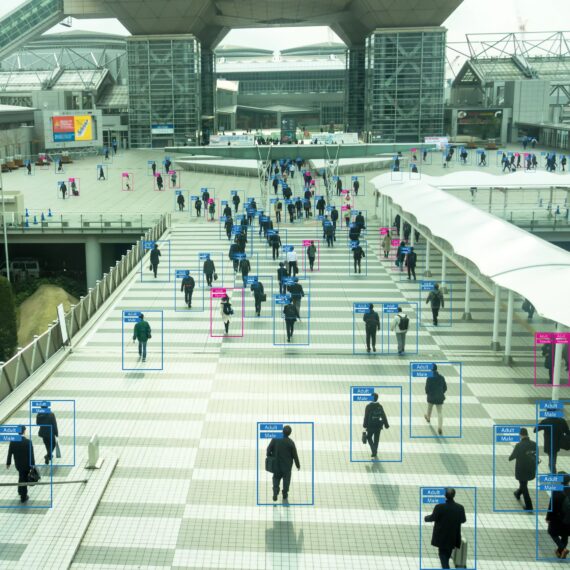
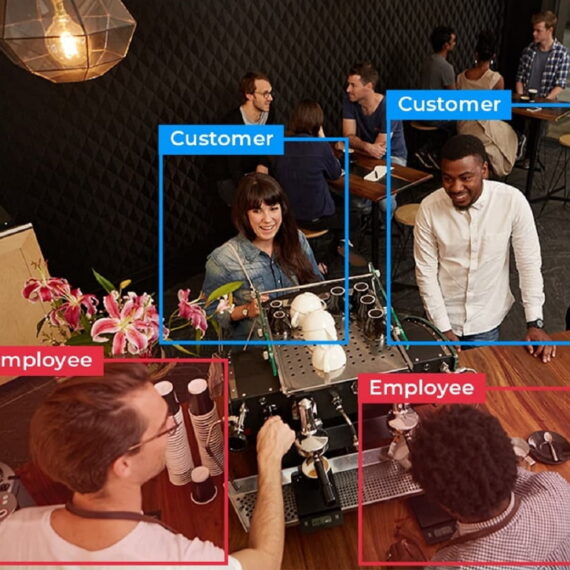
AI-powered cameras detect and track people using advanced algorithms. They can distinguish between adults, children, shopping carts, and more — delivering highly nuanced data.
5. Wi-Fi / Bluetooth Tracking
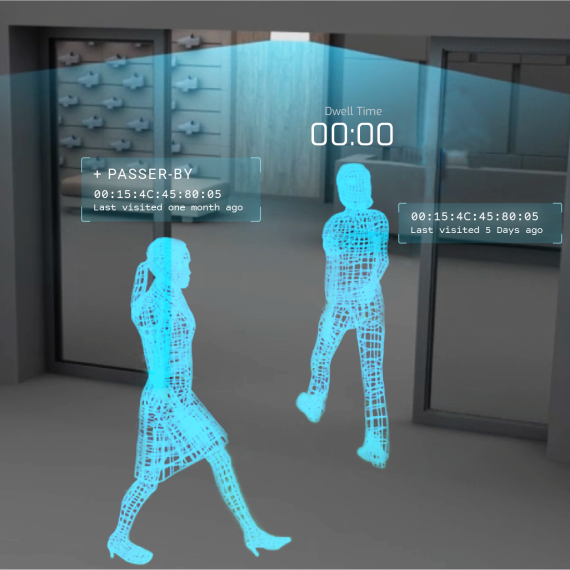
Some systems detect mobile devices with Wi-Fi or Bluetooth enabled. These help measure not just entry counts but also dwell times and repeat visits. (Note: privacy regulations must always be followed.)
6. Hybrid Systems
Many advanced installations combine two or more technologies to maximize accuracy and reliability in different parts of a store.
At Axle Systems, we work with a range of technologies tailored to your store’s size, layout, and analytical goals.
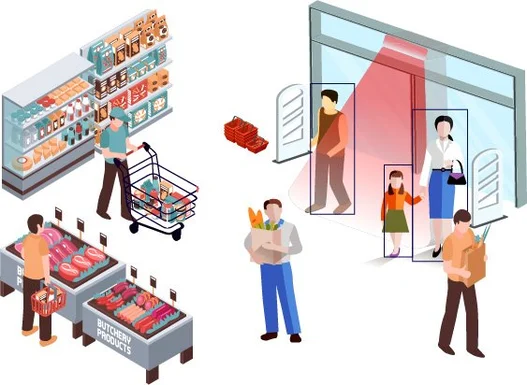
Key Features of Retail People Counting
Modern Retail People Counting systems go far beyond basic entry and exit tracking. Today’s advanced solutions provide retailers with deep, actionable insights into customer behavior, operational efficiency, and overall store performance. Below are the key features that make Retail People Counting an essential tool for data-driven retail management.
High-Accuracy People Detection
Retail People Counting systems are designed to deliver highly accurate visitor data, even in challenging retail environments. Using advanced technologies such as 3D stereo vision, thermal sensors, or AI-based video analytics, these systems can accurately distinguish people from objects like shopping carts, strollers, or trolleys. This ensures reliable data even during peak hours, crowded entrances, or group movements.
Bidirectional Counting (Entry & Exit Tracking)
Advanced people counters can differentiate between people entering and exiting a store. This allows retailers to calculate real-time occupancy levels and net footfall, helping store managers understand how many customers are inside the store at any given moment. This feature is especially useful for safety compliance, capacity management, and operational planning.
Real-Time Footfall Monitoring
Retail People Counting systems provide real-time data through intuitive dashboards. Store managers and business owners can instantly view visitor traffic as it happens, enabling quick decisions such as deploying additional staff during sudden rush periods or managing queues more efficiently.
Time-Based Analytics (Hourly, Daily, Weekly, Seasonal)
One of the most valuable features of Retail People Counting is its ability to analyze traffic patterns over time. Retailers can identify:
- Peak hours and low-traffic periods
- Daily and weekly shopping trends
- Seasonal variations during holidays, sales, or special events
This historical data supports long-term planning and smarter business forecasting.
Conversion Rate Measurement
When integrated with Point of Sale (POS) systems, Retail People Counting enables conversion rate analysis. Retailers can compare the number of visitors with actual sales transactions to understand how effectively a store converts foot traffic into revenue. This insight helps identify gaps in sales strategy, merchandising, or customer service.
Heat Mapping and Zone Analytics
Advanced systems offer heat maps that visually represent customer movement inside the store. These heat maps show high-traffic and low-traffic areas, allowing retailers to:
- Optimize product placement
- Improve store layout and navigation
- Identify underperforming zones
Zone analytics help retailers understand which displays attract attention and which areas need improvement.
Dwell Time Analysis
Dwell time tracking measures how long customers spend in specific areas or within the store overall. Longer dwell times often indicate strong engagement, while shorter visits may suggest layout issues or lack of interest. This feature is particularly useful for evaluating promotional displays, product launches, or in-store marketing campaigns.
Multi-Entrance and Multi-Store Support
Retail People Counting systems can manage multiple entrances within a single store as well as multiple store locations across regions. Data from all locations can be consolidated into one central dashboard, enabling:
- Performance comparison between stores
- Standardized reporting across branches
- Enterprise-level retail analytics
This feature is ideal for retail chains, malls, and franchises.
Cloud-Based Dashboards and Reporting
Most modern Retail People Counting solutions use cloud-based platforms that allow users to access data anytime, anywhere. These dashboards provide:
- Interactive charts and graphs
- Customizable reports
- Secure data storage and backups
Managers can easily export reports for presentations, audits, or performance reviews.
Custom Alerts and Notifications
Retail People Counting systems can be configured to send alerts based on predefined conditions, such as:
- Occupancy exceeding a set limit
- Unexpected drops or spikes in foot traffic
- Peak-hour thresholds being reached
These alerts help retailers respond quickly to changing store conditions without constant manual monitoring.
Integration with Business Systems
Retail People Counting solutions can integrate seamlessly with other business systems such as:
- POS systems
- CRM platforms
- Workforce management tools
- Business intelligence software
This integration enables a holistic view of store performance by combining visitor data with sales, staffing, and customer insights.
Privacy-Compliant and Secure Operation
Privacy is a major concern in modern retail environments. Retail People Counting systems are designed to comply with data protection regulations by:
- Avoiding facial recognition where not required
- Using anonymous thermal or AI-based detection
- Ensuring secure data encryption and access control
This ensures customer privacy while still delivering valuable analytics.
The Benefits of Retail People Counting
Retail People Counting delivers measurable value across every level of a retail organization — from frontline store operations to executive-level strategic planning. By transforming raw footfall data into actionable insights, Retail People Counting enables retailers to operate smarter, improve customer experience, and maximize profitability. Below are the key benefits explained in detail.
1. Accurate Measurement of Store Footfall
One of the primary benefits of Retail People Counting is the ability to measure actual visitor traffic with high accuracy. Unlike manual counting or assumptions based on sales data, people counting systems provide precise data on how many people enter and exit a store.
This allows retailers to:
- Understand true store traffic levels
- Measure store popularity over time
- Eliminate guesswork from performance evaluation
Accurate footfall data forms the foundation for all other retail analytics and decision-making processes.
2. Improved Conversion Rate Optimization
Footfall alone does not guarantee sales. Retail People Counting enables retailers to calculate conversion rates by comparing visitor numbers with completed transactions.
This insight helps businesses:
- Identify underperforming stores or time periods
- Improve sales strategies and merchandising
- Evaluate the effectiveness of in-store staff
By understanding how many visitors actually become customers, retailers can focus on improving the factors that drive purchases.
3. Optimized Staff Scheduling and Labor Cost Control
Labor is one of the highest operational costs in retail. Retail People Counting helps businesses align staffing levels with actual customer traffic.
With accurate traffic insights, retailers can:
- Schedule more staff during peak hours
- Reduce staffing during low-traffic periods
- Improve employee productivity and morale
This ensures customers receive better service when it matters most, while also controlling unnecessary labor expenses.
4. Enhanced Customer Experience
A well-managed store environment directly impacts customer satisfaction. Retail People Counting allows retailers to proactively manage congestion, queues, and service availability.
Key improvements include:
- Reduced wait times at checkout
- Better in-store navigation
- Faster assistance during busy periods
When customers feel comfortable and supported, they are more likely to stay longer, explore more products, and return in the future.
5. Data-Driven Store Layout and Merchandising Decisions
Retail People Counting systems provide valuable insights into how customers move through a store. Heat maps and zone analytics show which areas attract the most attention and which are underutilized.
Retailers can use this data to:
- Optimize shelf and product placement
- Improve signage and store flow
- Increase visibility of high-margin products
These adjustments help maximize sales potential without increasing store size or inventory.
6. Smarter Marketing and Promotion Evaluation
Retailers invest heavily in marketing campaigns, promotions, and seasonal offers. Retail People Counting makes it possible to measure the actual impact of these initiatives.
Retailers can:
- Compare footfall before, during, and after promotions
- Identify which campaigns drive traffic
- Adjust marketing spend based on performance
This ensures marketing budgets are spent efficiently and supported by measurable results.
7. Identification of Peak and Low Traffic Periods
Retail People Counting reveals detailed traffic patterns throughout the day, week, and year. Understanding these patterns helps retailers plan more effectively.
Benefits include:
- Better inventory planning
- Improved staff allocation
- Strategic timing of promotions
Knowing when customers are most likely to visit allows retailers to maximize revenue opportunities during peak periods.
8. Multi-Store Performance Benchmarking
For retailers operating multiple locations, Retail People Counting provides standardized metrics that allow fair performance comparisons.
This enables management to:
- Compare stores by footfall and conversion rate
- Identify best-performing locations
- Replicate successful strategies across stores
Benchmarking helps ensure consistent performance and supports informed expansion decisions.
9. Increased Revenue Through Informed Decision-Making
When decisions are based on accurate data rather than assumptions, revenue growth becomes more predictable and sustainable.
Retail People Counting supports:
- Better pricing strategies
- Improved promotional placement
- Enhanced upselling and cross-selling
These improvements collectively contribute to higher average transaction values and overall revenue growth.
10. Improved Inventory Planning and Demand Forecasting
By analyzing footfall trends alongside sales data, retailers can anticipate demand more accurately.
This helps businesses:
- Reduce overstocking and stockouts
- Align inventory levels with customer demand
- Improve cash flow management
Efficient inventory planning ensures popular products are available when customers want them most.
Uses of Retail People Counting
Retail People Counting is not just a reporting tool — it is a practical, day-to-day business solution that supports smarter decisions across operations, marketing, staffing, safety, and long-term strategy. In real-world retail environments, people counting data is actively used by store managers, operations teams, marketing departments, and senior management to improve performance and profitability.
Below are the most important real-world uses of Retail People Counting, explained in detail.
1. Staff Planning and Workforce Optimization
One of the most common and valuable uses of Retail People Counting is staff optimization. By understanding exactly when customers enter the store, retailers can align staffing levels with actual demand rather than assumptions.
How it helps in real life:
- Identifies peak shopping hours and quiet periods
- Helps schedule more staff during busy times
- Prevents overstaffing during low-traffic hours
- Improves staff productivity and morale
For example, if people counting data shows high footfall between 6 PM and 9 PM, managers can ensure sufficient sales staff and checkout operators during that window. This results in faster service, shorter queues, and better customer satisfaction — without increasing labor costs unnecessarily.
2. Conversion Rate Tracking and Sales Performance Analysis
Retail People Counting allows businesses to measure conversion rates by comparing visitor numbers with actual sales transactions.
Real-world application:
- Identifies times when many visitors enter but few purchases are made
- Highlights performance gaps in sales strategy or customer service
- Helps evaluate staff effectiveness on the shop floor
For instance, a store may notice high footfall on weekends but low conversion rates. This insight can lead to improved staff training, better product presentation, or promotional adjustments — all based on data, not guesswork.
3. Store Layout and Merchandising Optimization
Retail People Counting systems often include heat maps and zone analytics, which show how customers move through the store.
Practical uses:
- Identifying high-traffic and low-traffic areas
- Improving product placement for better visibility
- Adjusting aisle layouts and signage
- Positioning promotions in high-impact zones
In real retail environments, these insights help businesses maximize the value of every square meter of retail space, ensuring that key products receive the attention they deserve.
4. Marketing Campaign Measurement and Optimization
Retailers invest heavily in marketing — but without people counting, it can be difficult to know which campaigns actually drive foot traffic.
Real-world benefits:
- Measure footfall before, during, and after promotions
- Compare the impact of different campaigns
- Evaluate window displays, discounts, and seasonal offers
For example, after launching a social media or outdoor advertising campaign, retailers can immediately see whether foot traffic increased. This allows marketing budgets to be allocated more effectively in future campaigns.
5. Peak Hour and Seasonal Trend Analysis
Retail People Counting provides detailed insights into time-based patterns, including hourly, daily, weekly, and seasonal trends.
Real-world uses:
- Preparing for weekend rushes
- Planning inventory for festive seasons
- Managing sales events and clearance campaigns
- Anticipating demand during holidays or local events
This data helps retailers stay proactive rather than reactive, ensuring they are always prepared for changes in customer behavior.
6. Queue Management and Checkout Optimization
Long queues can significantly impact customer experience and sales. Retail People Counting helps monitor traffic surges and queue buildup.
Practical applications:
- Opening additional checkout counters during busy periods
- Reducing customer wait times
- Improving overall store flow
By reacting in real time to footfall data, store managers can maintain smooth operations and prevent customer frustration, especially during peak hours.
7. Multi-Store and Chain Performance Benchmarking
For retailers operating multiple stores, Retail People Counting enables standardized performance measurement across all locations.
Real-world insights include:
- Comparing footfall across stores
- Identifying top-performing and underperforming branches
- Understanding regional shopping behavior
This allows head office teams to replicate successful strategies across locations and provide targeted support to stores that need improvement.
8. Retail Space Utilization and Rent Justification
In shopping malls and commercial retail spaces, people counting data is often used to assess space value and utilization.
Real-world use cases:
- Evaluating the performance of store locations
- Supporting lease negotiations
- Justifying rental costs based on footfall
Mall operators and retailers alike benefit from accurate visitor data when making decisions related to space allocation and expansion.
9. Inventory Planning and Demand Forecasting
Retail People Counting data, when combined with sales data, helps retailers understand demand more accurately.
Practical outcomes:
- Better stock planning during high-traffic periods
- Reduced overstocking and stock shortages
- Improved cash flow and inventory turnover
Retailers can ensure that popular products are available when customer traffic is highest, improving sales and customer satisfaction.
10. Customer Experience Improvement
Understanding how customers interact with a store helps businesses enhance the overall shopping experience.
Real-world improvements include:
- Better store navigation
- Reduced congestion
- Improved staff responsiveness
When customers feel comfortable and supported, they are more likely to spend more time in the store and return again.
Why Choose Axle Systems for Retail People Counting
Selecting the right Retail People Counting solution is not just about technology — it is about choosing a partner who understands retail environments, business challenges, and long-term growth. Axle Systems stands out as a trusted supplier of Retail People Counting solutions, delivering accurate data, reliable systems, and tailored support to help businesses make smarter decisions.
Below are the key reasons why retailers choose Axle Systems for their People Counting requirements.
1. Proven Expertise in Retail Technology Solutions
Axle Systems brings deep experience in providing advanced retail technology solutions designed specifically for real-world retail environments. We understand the challenges faced by retailers, including fluctuating foot traffic, staffing constraints, customer experience expectations, and the need for measurable results.
Our expertise ensures that every Retail People Counting solution we deliver is practical, effective, and aligned with business goals — not just technically impressive.
2. High-Accuracy People Counting Solutions
Accuracy is the foundation of effective retail analytics. Axle Systems supplies Retail People Counting systems that use advanced technologies such as 3D vision, AI-based analytics, and thermal sensing to ensure precise counting even in complex scenarios.
Our systems:
- Accurately count people in high-traffic areas
- Distinguish individuals from objects like carts or strollers
- Maintain performance during peak hours and group entry
This level of accuracy ensures that business decisions are based on reliable data.
3. Tailored Solutions for Every Retail Environment
No two retail spaces are the same. Axle Systems provides customized Retail People Counting solutions based on store size, layout, entrance design, and business objectives.
We support:
- Single retail stores
- Large shopping malls
- Supermarkets and hypermarkets
- Showrooms and exhibitions
- Retail chains and franchises
Our team evaluates each environment carefully to recommend the most suitable technology and configuration.
4. Scalable Systems That Grow with Your Business
Axle Systems delivers people counting solutions that are fully scalable. Whether you are starting with one location or managing a large retail network, our systems are designed to grow with your business.
Benefits include:
- Easy expansion to additional entrances or stores
- Centralized dashboards for multi-location management
- Consistent analytics across all branches
This scalability protects your investment and supports long-term growth.
5. Advanced Analytics and User-Friendly Dashboards
Raw data alone is not enough — it must be easy to understand and act upon. Axle Systems provides intuitive, cloud-based dashboards that transform people counting data into clear insights.
Our dashboards offer:
- Real-time footfall monitoring
- Historical trend analysis
- Conversion rate tracking
- Heat maps and zone analytics
- Custom reports and exports
This allows store managers and decision-makers to access insights anytime, anywhere.
6. Seamless Integration with Existing Business Systems
Axle Systems solutions can integrate smoothly with existing retail systems, enabling a unified view of store performance.
Integration options include:
- POS (Point of Sale) systems
- Workforce management tools
- CRM platforms
- Business intelligence software
This integration helps retailers connect footfall data with sales, staffing, and customer engagement metrics for deeper insights.
7. Privacy-Compliant and Secure Solutions
Customer privacy is a critical consideration in modern retail. Axle Systems prioritizes data security and privacy compliance in all Retail People Counting solutions.
Our systems:
- Avoid capturing personal or identifiable information
- Support privacy-friendly technologies such as thermal and anonymous AI analytics
- Use secure data encryption and controlled access
This ensures compliance with data protection regulations while maintaining analytical value.
8. Professional Installation and Configuration
Axle Systems provides complete end-to-end service, including professional installation and system configuration. Our experienced technicians ensure that sensors and devices are installed correctly and calibrated for maximum accuracy.
This minimizes disruption to store operations and ensures the system performs optimally from day one.
9. Training and Ongoing Technical Support
Technology is only valuable when users know how to use it effectively. Axle Systems offers comprehensive training and ongoing support to ensure customers get the maximum benefit from their Retail People Counting solution.
Our support services include:
- User training on dashboards and reports
- Technical troubleshooting and maintenance
- System upgrades and optimization
This long-term support ensures consistent performance and customer confidence.
10. Reliable Performance in Local Market Conditions
Axle Systems understands local retail environments and operating conditions. Our solutions are tested and proven to perform reliably across a wide range of store formats and traffic conditions.
This local expertise allows us to recommend solutions that are practical, durable, and effective in real retail settings.
Contact Axle Systems
Are you ready to unlock the power of retail analytics and take your business decisions to the next level?
Phone: +974 44682391/77443731
Email: info@axlesys.com
Website: www.axlesys.com
Office: Al Khalidiya Street, Najma, Doha, Qatar
Our team is ready to answer your questions, provide a custom quote, and help you choose the solution that best fits your retail goals.
Common FAQs About Retail People Counting
Here are answers to frequently asked questions to help you better understand how people counting works and how it can help your business.
1. What exactly does a Retail People Counting system measure?
A Retail People Counting system measures the number of people entering and exiting a location. Many systems also track movement within a space, dwell time, conversion rates, and heat maps of visitor behavior.
2. How accurate are people’s counting systems?
Accuracy depends on the technology used. Advanced systems that use stereo vision, AI analytics, or thermal imaging consistently achieve high accuracy rates (>95%) even in busy environments.
3. Can people counting help increase sales?
Yes. Counting data helps optimize staffing, layout, and marketing — all of which contribute to better customer service and higher conversion rates, leading to increased sales.
4. Do people counting systems invade privacy?
No. Many modern systems are designed with privacy in mind. For example, thermal sensors do not capture identifiable features, and AI vision systems can be configured to avoid recording personal data.
5. Can people counting data be integrated with other systems?
Yes. People counting solutions can integrate with POS systems, CRM platforms, workforce management tools, and business intelligence software to deliver unified analytics.
6. Do I need technical expertise to use people counting?
Most solutions come with intuitive dashboards and reporting tools. Axle Systems provides installation and training so your team can use the data effectively.
7. Can people counting data be accessed remotely?
Absolutely. Cloud-based systems allow users to access dashboards and reports from anywhere using secure logins on computers or mobile devices.
8. How long does installation take?
Installation time varies by store size and system complexity, but many setups can be completed in just a few hours with minimal disruption to operations.
9. Can people counting systems track multiple entrances?
Yes. Most systems can handle multiple entrances and exits, and they can aggregate or differentiate counts by door for detailed analysis.
10. Are there recurring costs?
There may be subscription fees for cloud analytics platforms or support contracts. Axle Systems will clearly outline these costs during your consultation so you know exactly what to expect.
Conclusion
In today’s fast-paced retail environment, relying on intuition or outdated data is no longer sufficient to drive business success. Retail People Counting has emerged as an essential tool for retailers who want to understand their customers, optimize operations, and make informed, data-driven decisions.
By accurately tracking footfall, dwell times, conversion rates, and in-store traffic patterns, retailers gain a clear understanding of how visitors engage with their spaces, allowing them to optimize staffing, improve store layouts, enhance marketing campaigns, and maximize inventory efficiency. Beyond operational benefits, Retail People Counting provides a competitive edge, enabling businesses to identify peak shopping periods, measure the effectiveness of promotions, benchmark performance across multiple locations, and make strategic decisions about expansion and resource allocation.
Partnering with Axle Systems ensures that retailers do not just get cutting-edge technology, but also expert guidance, professional installation, intuitive analytics dashboards, and ongoing support to extract maximum value from their data. With these insights, retailers can deliver a superior shopping experience, improve customer satisfaction, reduce operational costs, and ultimately drive revenue growth. As retail becomes increasingly data-driven, businesses that leverage the power of Retail People Counting gain the clarity, confidence, and intelligence needed to thrive in a competitive market, making it not just a tool for measurement, but a strategic foundation for long-term success — and with Axle Systems as a trusted partner, retailers can fully unlock this potential and position themselves for sustainable growth in the years ahead.