

AV Systems — Audio-Visual Solutions
In today’s hyper-connected world, communication isn’t just about talking — it’s about experiencing. Whether in corporate offices, educational institutions, event venues, government facilities, hospitality, retail spaces, or even homes, Audio-Visual (AV) Systems have become essential infrastructure. These systems enhance engagement, improve collaboration, and elevate experiences.
At Axle Systems, we specialize in supplying and integrating world-class AV Systems in Qatar. From planning to installation, support, and maintenance — we enable organizations to communicate clearly, present beautifully, and operate efficiently.
What Are AV Systems?
Audio-Visual Systems (AV Systems) are integrated collections of hardware, software, and communication technologies that capture, process, distribute, and display audio and video content. They allow people in one location to see, hear, and interact with information — whether broadcasted locally or across the world.
AV Systems can range from simple setups like meeting room projectors with sound to advanced enterprise conferencing solutions with interactive displays, digital signage networks, live streaming, and immersive soundscapes.
Core Components of AV Systems
A well-designed AV System typically includes:
- Display Devices
- LED/LCD screens
- Projectors and projection screens
- Video walls
- Touch-enabled interactive panels
- Audio Equipment
- Microphones (wired/wireless)
- Speakers and amplifiers
- Soundbars and subwoofers
- Conference audio solutions
- Control & Processing Systems
- AV switchers (matrix switchers)
- Video processors and scalers
- Control systems for automation (Crestron, AMX, Extron…)
- Sources & Connectivity
- Computers and media players
- Conferencing endpoints (Zoom Rooms, Teams)
- Streaming devices
- Inputs (HDMI, DisplayPort, USB-C, VGA…)
- Networking & Distribution
- AV over IP (Ethernet-based AV distribution)
- Digital signage networks
- Wireless presentation systems
- Accessories & Furniture
- Cables, mounts, racks
- Control touch panels
- Conference room hardware
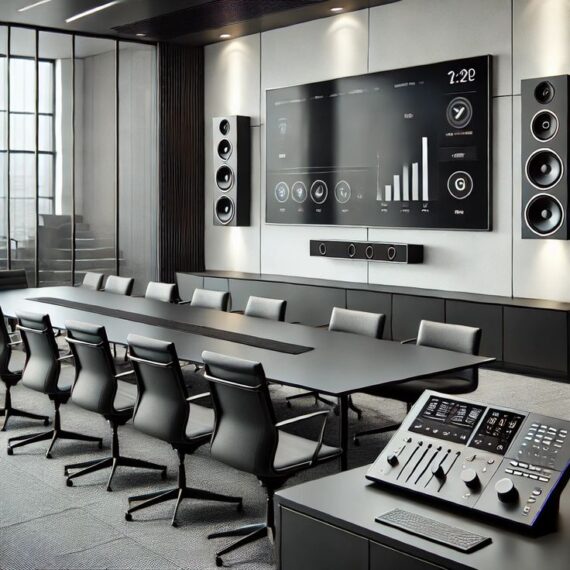
Key Features of Modern AV Systems
Modern Audio-Visual (AV) Systems are no longer standalone audio and display solutions. They are intelligent, interconnected ecosystems that combine hardware, software, networking, and automation to deliver seamless communication experiences. As organizations increasingly rely on digital collaboration, hybrid work environments, and immersive presentations, AV Systems have evolved to meet these demands with advanced features that prioritize performance, reliability, and ease of use.
1. Ultra-High-Definition Visual Display Technology
Modern AV Systems deliver exceptional visual clarity and performance, ensuring content is presented exactly as intended. Display technologies now support:
- Full HD, 4K, and 8K resolution
- High brightness levels for visibility in daylight environments
- Anti-glare and wide viewing angle panels
- Accurate color reproduction and contrast control
These features are critical in environments such as boardrooms, classrooms, auditoriums, and command centers where visual clarity directly impacts comprehension and engagement. High-definition visuals also enhance branding, professionalism, and the overall user experience during presentations and public displays.
2. Advanced Audio Processing and Sound Optimization
Audio quality is just as important as video quality in an effective AV Systems. Modern AV Systems solutions use advanced digital signal processing (DSP) technologies to ensure clear and natural sound delivery. These include:
- Echo cancellation and noise suppression
- Automatic gain control
- Speech enhancement algorithms
- Acoustic feedback elimination
Combined with strategically placed microphones, amplifiers, and speakers, these features ensure even sound distribution throughout the space. Whether it’s a conference call, lecture, or live event, every participant hears clearly without distortion or background interference.
3. Intelligent Camera Systems and Video Conferencing Enhancements
For video conferencing environments, modern AV Systems incorporate smart camera technologies, such as:
- Auto-framing and speaker tracking
- Pan-tilt-zoom (PTZ) cameras
- Multi-camera switching
- AI-based facial recognition and motion detection
These features create a natural and engaging experience for remote participants, making hybrid meetings feel more inclusive and interactive. This is especially valuable for corporate boardrooms, training rooms, and executive meeting spaces.
4. Interactive Displays and Collaborative Tools
Interactive displays are a defining feature of modern AV Systems. These displays support:
- Multi-touch interaction
- Digital whiteboarding and annotation
- Real-time collaboration
- Content saving and sharing
Users can brainstorm, mark up documents, and collaborate visually, turning passive meetings into productive working sessions. This feature is widely used in educational institutions, corporate training rooms, design studios, and innovation labs.
5. Wireless Presentation and Device Connectivity
Modern AV Systems eliminate clutter and complexity by offering wireless connectivity options. Users can instantly connect their devices without cables using secure wireless technologies. Key benefits include:
- Faster meeting start times
- Compatibility with multiple devices and operating systems
- Reduced wear and tear on physical connectors
Wireless presentation systems support screen mirroring, media streaming, and content sharing, making collaboration smoother and more flexible.
6. Unified Communication and Platform Integration
A core feature of modern AV Systems is seamless integration with Unified Communication (UC) platforms, such as:
- Microsoft Teams Rooms
- Zoom Rooms
- Google Meet
- Cisco Webex
This integration ensures consistent audio and video performance across all platforms while providing users with a familiar interface. It supports remote collaboration, global meetings, and hybrid work models without compromising quality or reliability.
7. Centralized Control Systems and Automation
Modern AV Systems are designed to be easy to operate through centralized control and automation platforms. With a single touch panel or mobile interface, users can:
- Power on/off displays, audio, and conferencing systems
- Switch between presentation sources
- Adjust lighting, blinds, and room settings
- Activate predefined operational modes
Automation reduces human error, shortens setup time, and ensures consistent performance across meeting spaces.
8. AV over IP and Network-Based Architecture
One of the most transformative features in modern AV Systems is AV over IP technology. Instead of traditional point-to-point cabling, audio and video signals are transmitted over standard IP networks. This allows:
- Easy expansion across multiple rooms or buildings
- Centralized content distribution
- Simplified infrastructure management
AV over IP is ideal for large enterprises, campuses, airports, control rooms, and government facilities that require flexible and scalable AV solutions.
9. Digital Signage Integration and Content Control
Modern AV Systems support fully integrated digital signage solutions, enabling organizations to deliver dynamic visual content across multiple locations. Features include:
- Centralized content management systems
- Real-time updates and scheduling
- Support for multimedia formats
- Emergency messaging capabilities
Digital signage enhances internal communication, customer engagement, branding, and wayfinding in corporate offices, retail spaces, healthcare facilities, and public areas.
10. Scalability and Modular System Design
Scalability is a critical feature of modern AV Systems. Modular designs allow organizations to:
- Upgrade individual components without system replacement
- Add new displays, rooms, or functionalities
- Adapt to future technologies and business growth
This future-proof approach ensures long-term value and protects the organization’s investment.

Benefits of AV Systems
Audio-Visual (AV) Systems play a critical role in how organizations communicate, collaborate, educate, and engage with audiences. In today’s fast-paced and digitally connected environment, businesses and institutions require reliable, high-quality AV solutions to operate efficiently and professionally. Implementing modern AV Systems offers a wide range of benefits that extend far beyond simple audio and display functionality.
1. Enhanced Communication and Information Delivery
One of the most significant benefits of AV Systems is their ability to improve communication clarity. High-quality audio ensures that speech is clearly heard, while high-definition visuals make information easier to understand and retain.
Whether used for presentations, meetings, lectures, or public announcements, AV Systems ensure that messages are delivered accurately and effectively. This is especially important in large spaces, hybrid meetings, and multi-language environments where clarity is essential.
2. Improved Collaboration and Team Productivity
Modern AV Systems are designed to support collaboration by enabling teams to share content, brainstorm ideas, and work together seamlessly. Features such as interactive displays, wireless screen sharing, and real-time annotation encourage active participation.
In corporate environments, this leads to:
- Faster decision-making
- More engaging meetings
- Reduced misunderstandings
Teams can collaborate efficiently regardless of whether participants are in the same room or joining remotely.
3. Support for Hybrid and Remote Work Environments
With the rise of hybrid work models, AV Systems have become essential infrastructure. Integrated video conferencing solutions allow organizations to connect employees, partners, and clients across different locations with minimal technical barriers.
Professional AV setups ensure:
- High-quality video and audio for remote participants
- Equal engagement between on-site and off-site attendees
- Seamless integration with collaboration platforms
This benefit is particularly valuable for organizations operating across multiple locations or countries.
4. Enhanced Learning and Knowledge Retention
In educational institutions and training environments, AV Systems significantly enhance the learning experience. Visual aids, interactive displays, recorded sessions, and multimedia presentations improve comprehension and retention.
Students and trainees benefit from:
- Visual explanations of complex concepts
- Engaging and interactive lessons
- Access to recorded content for revision
As a result, AV Systems contribute to improved learning outcomes and more effective training programs.
5. Professional Image and Brand Enhancement
High-quality AV Systems help organizations present themselves professionally. Clear visuals, consistent branding on displays, and high-quality sound reflect positively on the organization’s image.
This is especially important in:
- Client presentations
- Board meetings
- Public events and conferences
- Retail and hospitality environments
A polished AV setup reinforces trust, credibility, and professionalism.
6. Increased Audience Engagement
AV Systems are powerful tools for capturing and maintaining audience attention. Dynamic visuals, immersive audio, and interactive content make presentations more compelling and memorable.
In environments such as:
- Conference halls
- Retail stores
- Museums and exhibitions
- Houses of worship
AV Systems help create engaging experiences that leave a lasting impression.
7. Operational Efficiency and Time Savings
Modern AV Systems simplify operations through automation and centralized control. With predefined settings and easy-to-use interfaces, users can start meetings or presentations quickly without technical assistance.
Benefits include:
- Reduced setup time
- Fewer technical disruptions
- Less dependency on IT support
This leads to smoother operations and better use of time across organizations.
8. Cost Savings Over Time
Although AV Systems require an initial investment, they offer long-term cost benefits. Reliable video conferencing reduces the need for travel, while durable equipment minimizes frequent replacements.
Additional cost-saving benefits include:
- Reduced downtime through proactive monitoring
- Energy-efficient equipment lowering power consumption
- Scalable systems that grow without complete replacement
These factors make AV Systems a cost-effective solution over their lifecycle.
9. Scalability and Future Readiness
AV Systems are designed to evolve with organizational needs. Modular and scalable architectures allow businesses to expand their AV infrastructure as they grow.
This ensures:
- Compatibility with future technologies
- Easy system upgrades
- Long-term return on investment
Organizations can confidently invest in AV Systems knowing they are future-proof.
10. Improved Customer and Visitor Experience
In customer-facing environments, AV Systems significantly enhance the visitor experience. Digital signage, interactive kiosks, and audio-visual displays provide information, entertainment, and guidance.
This results in:
- Better customer engagement
- Clear communication of services and offers
- Improved satisfaction and brand loyalty
Retail spaces, hospitals, hotels, and public facilities benefit greatly from this advantage.
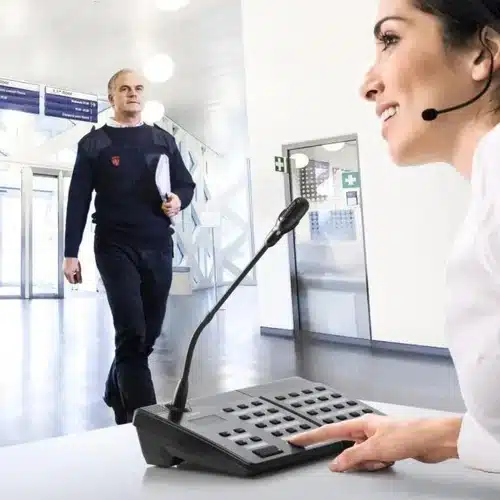
Where Are AV Systems Used?
Audio-Visual (AV) Systems are highly versatile solutions that can be adapted to a wide range of environments and industries. From corporate offices to public spaces, AV Systems play a vital role in improving communication, enhancing experiences, and supporting modern operational needs. As organizations in Qatar continue to embrace digital transformation, the demand for professionally designed AV Systems has grown significantly across multiple sectors.
Below is a detailed overview of where AV Systems are commonly used and how they add value in each environment.
1. Corporate Offices and Business Environments
Corporate offices are among the most common users of AV Systems. Modern workplaces rely heavily on efficient communication and collaboration, especially with the rise of hybrid and remote working models.
AV Systems in corporate environments are used for:
- Meeting rooms and huddle spaces
- Boardrooms and executive conference rooms
- Training and presentation rooms
- Company-wide town halls and announcements
Key AV solutions include video conferencing systems, interactive displays, wireless presentation tools, room scheduling panels, and centralized control systems.
Benefits in Corporate Offices:
- Seamless collaboration between on-site and remote teams
- Professional client presentations
- Faster decision-making and improved productivity
- Consistent meeting experiences across rooms
2. Educational Institutions and Training Centers
AV Systems are widely used in schools, universities, colleges, and professional training centers to enhance teaching and learning experiences.
Common applications include:
- Smart classrooms with interactive displays
- Lecture halls with projection and sound reinforcement
- Distance learning and hybrid classrooms
- Training rooms and simulation labs
By integrating AV technology, educators can deliver engaging lessons using multimedia content, real-time annotations, and recorded sessions.
Benefits in Education:
- Improved student engagement and attention
- Better understanding of complex subjects
- Support for blended and remote learning
- Access to recorded lectures for revision
3. Government and Public Sector Facilities
Government entities and public institutions use AV Systems to ensure clear communication, transparency, and efficient operations.
AV Systems are commonly deployed in:
- Council chambers and meeting halls
- Command and control centers
- Courtrooms
- Public information and briefing rooms
These systems often include microphones, displays, video walls, recording systems, and live streaming capabilities.
Benefits for Public Sector:
- Clear communication during meetings and hearings
- Reliable systems for mission-critical environments
- Enhanced public engagement and information sharing
- Support for emergency and crisis management
4. Hospitality, Events, and Conference Venues
Hotels, convention centers, banquet halls, and event venues depend heavily on AV Systems to deliver high-quality guest and event experiences.
Typical AV applications include:
- Conference and seminar setups
- Wedding and social event staging
- Ballroom sound and display systems
- Digital signage for event schedules
Professional AV Systems ensure reliable sound, high-quality visuals, and flexible setups for different types of events.
Benefits in Hospitality and Events:
- Memorable guest experiences
- Flexible event configurations
- Enhanced venue reputation
- Increased revenue opportunities
5. Healthcare Facilities
AV Systems play an important role in modern healthcare environments, supporting communication, education, and patient engagement.
Applications include:
- Telemedicine and virtual consultation rooms
- Medical training and conference rooms
- Waiting room digital signage
- Internal staff communication systems
AV solutions help healthcare providers communicate effectively while maintaining professionalism and patient comfort.
Benefits in Healthcare:
- Improved patient education and engagement
- Support for remote consultations
- Efficient staff training and collaboration
- Clear communication in critical environments
6. Retail Spaces and Customer Experience Centers
Retailers use AV Systems to create engaging and interactive customer experiences that influence purchasing decisions.
Common AV uses include:
- Digital signage for promotions and branding
- Video walls for product showcases
- Interactive kiosks and touch displays
- Background audio systems
AV Systems help retailers attract attention, convey information, and build brand identity.
Benefits in Retail:
- Increased customer engagement
- Enhanced brand visibility
- Real-time promotional updates
- Improved in-store experience
7. Command and Control Centers
Command centers require advanced AV Systems to monitor, analyze, and respond to real-time information.
AV solutions used include:
- Large-scale video walls
- Multi-source content display systems
- Integrated audio communication systems
- Centralized control platforms
These systems are essential in sectors such as transportation, utilities, security, and emergency response.
Benefits in Command Centers:
- Real-time situational awareness
- Faster decision-making
- Improved coordination between teams
- High reliability and uptime
8. Houses of Worship and Religious Institutions
AV Systems are increasingly used in mosques, churches, and other places of worship to support communication and community engagement.
Typical applications include:
- Sound reinforcement systems
- Live streaming and recording of services
- Display screens for sermons and announcements
These systems help ensure that messages are clearly delivered to all attendees and remote participants.
Benefits in Houses of Worship:
- Clear audio across large congregations
- Inclusive participation through live streaming
- Enhanced community outreach
9. Residential and Smart Home Environments
In residential settings, AV Systems enhance comfort, entertainment, and lifestyle.
Applications include:
- Home theaters
- Multi-room audio systems
- Smart displays integrated with home automation
Modern home AV Systems offer seamless control and immersive entertainment experiences.
Benefits in Residential AV:
- Enhanced entertainment quality
- Centralized control of audio and video
- Integration with smart home systems
10. Transportation Hubs and Public Spaces
AV Systems are essential in airports, metro stations, shopping malls, and other public spaces.
Common uses include:
- Digital wayfinding displays
- Public announcement systems
- Advertising and information screens
These systems help manage large crowds and communicate information efficiently.
Benefits in Public Spaces:
- Clear and timely information delivery
- Improved passenger and visitor experience
- Effective advertising and communication
11. Industrial and Commercial Facilities
Factories, warehouses, and industrial facilities use AV Systems for operational communication and safety.
Applications include:
- Training and safety briefing rooms
- Production monitoring displays
- Internal communication systems
AV Systems support operational efficiency and workforce safety.
FAQs: AV Systems Explained
Q1. What is an AV System?
A: An AV System integrates audio and visual technologies to produce, manage, and display content. It includes displays, projectors, sound systems, control systems, and connectivity designed to improve communication and engagement.
Q2. How much does an AV System cost?
A: Cost varies widely based on complexity, room size, equipment quality, and features required. Simple meeting room setups can be affordable, while large auditoriums and enterprise solutions are higher-end. Axle Systems provides tailored quotes after assessing your needs.
Q3. Can AV Systems integrate with Zoom and Teams?
A: Yes! Modern AV conferencing hardware integrates with all major unified communication platforms like Zoom, Microsoft Teams, Google Meet, and more.
Q4. Do AV Systems require maintenance?
A: Like all technology, AV Systems benefit from regular maintenance to ensure optimal performance and longevity. Axle Systems offers ongoing support packages.
Q5. What’s the difference between AV and IT systems?
A: AV systems focus on audio and visual communication technologies, while IT covers data networks and computing. Today, AV and IT converge through technologies like AV over IP, cloud management, and unified communications.
Q6. Can AV Systems be wireless?
A: Yes — wireless presentation, wireless audio mics, and Wi-Fi enabled control panels make setups more flexible and user-friendly. However, wired connections still play a role for reliability in many installations.
Q7. How long does installation take?
A: Time depends on project size. Small meeting rooms can be completed in days; complex multi-room or auditorium installations may take weeks. Axle Systems provides clear timelines upfront.
Q8. Do AV Systems require training?
A: Basic operation is designed to be intuitive, but Axle Systems offers user training to maximize adoption and productivity.
Contact Axle Systems — Your AV Partner in Qatar
At Axle Systems, we believe technology should empower people, not complicate their work.
Whether you’re upgrading an existing AV infrastructure or deploying a new system, we’re here to help.
Location: P.O.Box: 200081, Al Khalidiya Street, Najma, Doha, Qatar
Phone: +974 77443731/44682391
Email: info@axlesys.com
Website: www.axlesys.com
Get in touch today for a consultation and customized AV solution tailored to your goals.
Conclusion
In today’s fast-paced, digitally-driven world, communication and engagement are no longer limited by physical boundaries. Organizations, educational institutions, government bodies, healthcare facilities, hospitality venues, and even homes demand seamless, high-quality audio-visual experiences to connect, collaborate, and captivate. Audio-Visual (AV) Systems have become indispensable tools that transform ordinary spaces into dynamic, interactive, and productive environments.
From interactive displays in classrooms to immersive sound and video setups in corporate boardrooms, from digital signage networks in retail to mission-critical command centers in government facilities, the applications of AV technology are diverse, impactful, and transformative. Modern AV solutions do more than just deliver content — they enhance understanding, facilitate collaboration, drive engagement, and ultimately help organizations achieve their objectives faster and more effectively.
At the heart of this technological evolution in Qatar stands Axle Systems. More than a supplier, Axle Systems is a trusted partner in innovation, offering end-to-end AV solutions that combine cutting-edge technology with local expertise and global best practices. Every project undertaken by Axle Systems begins with a deep understanding of client needs, a meticulous design process, and precise implementation — all supported by ongoing maintenance, training, and system optimization.
Choosing Axle Systems ensures that organizations receive:
- Tailored AV solutions that align perfectly with operational goals and space requirements
- Reliable, scalable, and future-ready technology that grows with organizational needs
- Professional support and service to ensure uninterrupted performance and peace of mind
- A partner committed to innovation and enhancing the overall user experience
In essence, investing in an AV system is an investment in your organization’s efficiency, collaboration, communication, and brand image. But the real value comes from pairing that investment with a trusted partner like Axle Systems, whose expertise ensures every device, system, and network works seamlessly together to deliver measurable outcomes.
Whether your goal is to improve corporate collaboration, revolutionize classroom learning, create memorable events, enhance retail experiences, or enable smart residential living, Axle Systems’ AV solutions are designed to make it possible. Their team of certified engineers, integrators, and support professionals ensures that your investment doesn’t just meet expectations — it exceeds them.
In a world where experiences define success, and clarity in communication drives performance, Axle Systems empowers organizations across Qatar to harness the full potential of AV technology. By combining innovation, reliability, and customer-centric service, they transform ordinary spaces into extraordinary environments — where ideas flow, collaboration thrives, and experiences resonate.