

Time & Attendance System by Axle Systems
In today’s fast-paced business environment, managing employee time and attendance efficiently is more than a convenience — it’s a necessity. Whether you’re running a large enterprise, a mid-sized business, a retail outlet, or a construction site, you need accurate, reliable, and transparent systems to manage your workforce time data. This is where modern Time & Attendance Systems come in.
At Axle Systems, we supply industry-leading Time & Attendance solutions that help organizations eliminate manual errors, improve productivity, enforce accountability, optimize payroll processing, and maintain compliance with labor regulations. Our systems — including cloud-based, biometric, and device-less solutions — are designed to meet the needs of today’s dynamic workplaces.
What Is a Time & Attendance System?
A Time & Attendance System is a technology solution that automates the process of tracking when employees start and end their work, record breaks, monitor overtime, and capture leave and absence data. Instead of relying on manual timesheets or spreadsheets — which are prone to human error — these systems provide precise, real-time attendance data that can directly integrate with payroll systems and HR software.
These systems come in various forms:
- Biometric terminals (fingerprint, facial recognition)
- Smart card / RFID systems
- Mobile or web-based attendance apps
- GPS-enabled and geo-fenced attendance
- Device-less cloud platforms like 360 TNA
Why Modern Time & Attendance Systems Matter
The traditional “sign-in sheet” is no longer enough. Today’s workforce demands smart tools that provide:
- Accuracy and reliability — eliminating buddy punching and manual errors
- Real-time monitoring — see who’s in and who’s out instantly
- Seamless integration with HR/payroll systems
- Actionable insights for planning and decision-making
- Scalability for growing teams or multi-location enterprises
Organizations leveraging modern attendance systems often see significant gains in operational efficiency and employee trust — because attendance data becomes transparent, consistent, and fair for everyone.
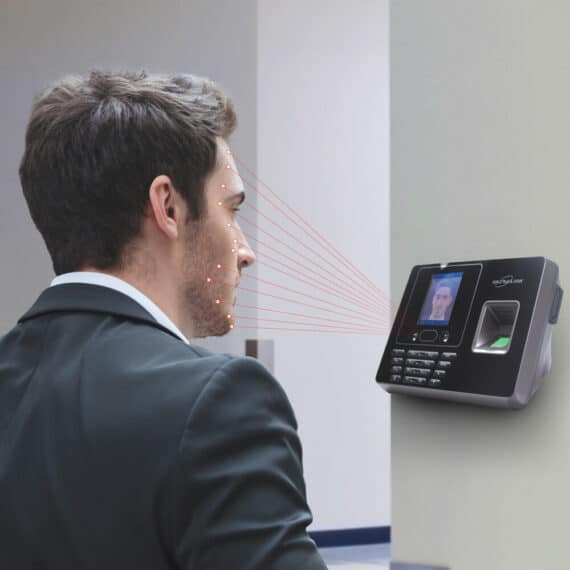
Key Benefits of a Time & Attendance System
Implementing a modern Time & Attendance System delivers far-reaching advantages that go well beyond simple clock-in and clock-out functionality. It plays a critical role in improving operational efficiency, enhancing workforce transparency, and supporting strategic HR decision-making. Below are the key benefits explained in detail:
1. Accurate and Reliable Time Tracking: Time & Attendance
One of the biggest advantages of a Time & Attendance System is precision. Manual attendance registers and spreadsheets are prone to human error, manipulation, and data loss. Automated systems record employee work hours down to the minute, ensuring accurate capture of:
- Clock-in and clock-out times
- Break durations
- Shift start and end times
- Overtime and early departures
Biometric and digital authentication methods ensure that attendance records are genuine and tamper-proof. This level of accuracy creates a reliable foundation for payroll processing, compliance, and performance evaluation.
2. Elimination of Time Theft and Buddy Punching: Time & Attendance
Time theft — including buddy punching, false reporting of hours, and extended breaks — can cost organizations significant revenue annually. A Time & Attendance System eliminates these risks by using:
- Biometric verification (fingerprint, facial recognition)
- Secure login credentials
- GPS-based attendance validation
Each employee can only mark attendance for themselves, ensuring fairness and protecting the organization from fraudulent practices.
3. Reduced Administrative Workload: Time & Attendance
Manual attendance management requires HR teams to spend countless hours collecting, verifying, correcting, and consolidating time records. A Time & Attendance System automates these tasks, resulting in:
- Reduced paperwork
- Less manual data entry
- Fewer calculation errors
- Faster attendance approvals
HR teams can shift focus from repetitive administrative work to strategic initiatives such as employee engagement, training, and workforce planning.
4. Streamlined Payroll Processing: Time & Attendance
Payroll accuracy depends heavily on correct attendance data. Time & Attendance Systems seamlessly integrate with payroll software to:
- Automatically calculate working hours
- Apply overtime rules
- Deduct late arrivals or early exits
- Adjust pay based on approved leave
This automation reduces payroll disputes, ensures employees are paid accurately and on time, and minimizes compliance risks.
5. Improved Employee Productivity and Discipline: Time & Attendance
When attendance is monitored transparently and consistently, employees are more likely to adhere to work schedules. A Time & Attendance System encourages:
- Punctuality
- Accountability
- Reduced absenteeism
- Better time management
Employees become more conscious of their attendance patterns, leading to improved productivity and a more disciplined workplace culture.
6. Real-Time Workforce Visibility: Time & Attendance
Managers gain instant access to live attendance data through centralized dashboards. This allows them to:
- See who is present, absent, or late
- Monitor shift coverage in real time
- Quickly respond to staffing shortages
- Make informed operational decisions
Real-time visibility is especially valuable in industries such as healthcare, retail, manufacturing, and construction, where staffing levels directly affect operations.
7. Support for Remote and Field Employees: Time & Attendance
Modern workplaces are no longer confined to a single location. Time & Attendance Systems support remote, hybrid, and field-based employees through:
- Mobile attendance applications
- GPS location tracking
- Geo-fencing technology
Employees can mark attendance from approved locations, while employers maintain full visibility and control — without compromising flexibility.
8. Enhanced Compliance with Labor Laws: Time & Attendance
Labor regulations require organizations to maintain accurate records of employee working hours, overtime, and leave. A Time & Attendance System ensures:
- Proper documentation for audits
- Easy generation of compliance reports
- Accurate overtime calculations
- Reduced legal disputes
Having a reliable attendance system protects organizations from penalties and strengthens compliance with local labor laws and internal policies.
9. Actionable Insights and Reporting: Time & Attendance
Attendance data is a valuable resource when analyzed correctly. Time & Attendance Systems provide detailed reports that help management:
- Identify attendance trends
- Detect chronic absenteeism or lateness
- Optimize shift scheduling
- Improve workforce planning
These insights empower decision-makers to address inefficiencies and improve overall organizational performance.
10. Scalability for Growing Organizations: Time & Attendance
As businesses grow, managing attendance manually becomes increasingly complex. Time & Attendance Systems are designed to scale effortlessly, allowing organizations to:
- Add new employees and locations easily
- Manage multiple departments or sites
- Customize attendance rules for different roles
Whether a company has 10 employees or 10,000, the system adapts to evolving requirements.
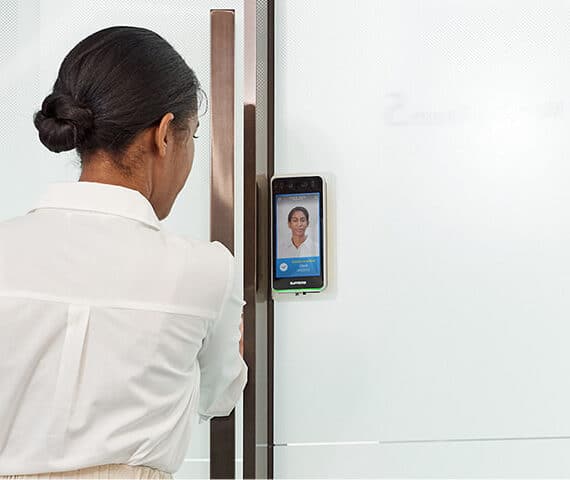
Core Features of a Modern Time & Attendance System
A modern Time & Attendance System is more than just a punch clock; it’s a sophisticated workforce management platform designed to streamline HR operations, enhance productivity, and ensure compliance. Here are the core features in detail:
1. Biometric Clock‑in Options
Modern systems use biometric authentication such as fingerprints, facial recognition, or iris scanning to ensure secure, accurate attendance tracking. Biometric systems prevent “buddy punching” — when employees clock in for each other — and guarantee that only authorized individuals can record their attendance.
- Example: A company with 500 employees can track each employee’s entry and exit times in real-time, ensuring payroll accuracy.
- Benefit: High security and precise attendance records, reducing HR disputes.
2. Web & Mobile Access
Employees can clock in and out using mobile apps or web portals, which is especially beneficial for organizations with remote or hybrid teams. Web and mobile access allows HR managers and supervisors to monitor attendance from anywhere, providing flexibility and transparency.
- Example: Field sales staff can check in using their mobile devices when arriving at client locations, with GPS verification.
- Benefit: Supports a modern workforce while maintaining accurate records.
3. GPS & Geo‑Fencing
For employees working offsite or in the field, GPS-enabled attendance ensures they are physically present at the required location. Geo-fencing creates virtual boundaries, and employees can only clock in when inside the designated area.
- Example: Construction teams at multiple sites can be monitored simultaneously without manual reporting.
- Benefit: Accurate attendance verification for remote teams and enhanced accountability.
4. Custom Reports & Analytics
Time & Attendance Systems generate detailed reports on employee work hours, overtime, leave balances, late arrivals, early departures, and absenteeism. These reports are customizable and can be scheduled automatically.
- Example: Managers can run monthly attendance summaries to identify trends and plan staffing needs.
- Benefit: Data-driven decision-making, operational optimization, and easier audits.
5. Cloud-Based Accessibility
Cloud-based systems store data securely on remote servers, allowing easy access from any device. They offer real-time updates, automatic backups, and simplified software updates.
- Example: A multi-branch organization can monitor attendance data from all locations through a centralized cloud system.
- Benefit: Reduces IT overhead and ensures uninterrupted access to attendance data.
6. Alerts & Notifications
Automated alerts notify managers about attendance irregularities such as late check-ins, missed punches, or exceeded overtime hours. Employees can also receive reminders for clocking in/out or submitting leave requests.
- Example: A notification alert for an employee who forgot to clock in prevents payroll discrepancies.
- Benefit: Proactive management reduces errors and improves accountability.
7. Shift & Leave Management
Advanced systems allow HR teams to assign, adjust, and manage shifts, track holidays, and handle leave requests efficiently. Complex schedules such as rotating or split shifts are easily managed.
- Example: Hospitals or factories with 24/7 operations can manage shift schedules without manual tracking.
- Benefit: Minimizes scheduling conflicts, ensures operational continuity, and maintains employee satisfaction.
8. Payroll & HR Integration
Integration with payroll and HR management systems allows attendance data to feed directly into salary calculations. Automatic calculation of overtime, deductions, and allowances saves time and ensures accuracy.
- Example: Bi-weekly payroll processing can be automated, reflecting accurate work hours without manual entry.
- Benefit: Reduces administrative workload and payroll errors, improving efficiency.
9. Role-Based Access Control
Admins can assign access levels to HR managers, supervisors, and employees. Sensitive data is protected, while staff can only access what’s relevant to them.
- Example: Supervisors can approve leave requests but cannot edit attendance records of unrelated departments.
- Benefit: Enhances security and compliance with data privacy policies.
10. Overtime & Absence Tracking
The system tracks extra work hours, leaves, and absenteeism patterns to support labor cost control and employee management. Alerts notify managers when overtime limits or absence thresholds are exceeded.
- Example: A factory manager can monitor overtime trends to prevent excessive employee workload.
- Benefit: Helps balance workforce efficiency, employee wellbeing, and labor costs.
11. Multi-Device Compatibility
Modern systems are compatible with multiple devices such as desktop computers, tablets, smartphones, and biometric terminals. This flexibility ensures smooth operations across all work environments.
- Example: Employees in a corporate office use desktop access, while field employees use mobile apps for attendance.
- Benefit: Ensures seamless attendance tracking regardless of work location or device.
12. Advanced Security Features
Data security is a key concern. Modern systems incorporate encryption, secure cloud storage, and regular audits to protect sensitive employee attendance data.
- Example: Cloud-stored attendance data is encrypted during transmission and at rest, preventing unauthorized access.
- Benefit: Protects company and employee data while ensuring regulatory compliance.
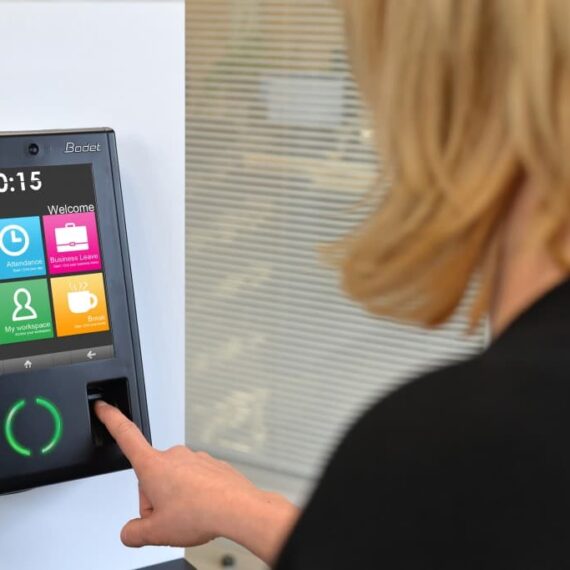
Uses of Time & Attendance Systems Across Industries
Modern Time & Attendance Systems are versatile tools that go far beyond basic clock-in/clock-out functions. They are critical in managing workforce efficiency, ensuring compliance, and optimizing payroll across multiple industries. Here’s a detailed look at how different sectors use these systems:
1. Corporate & Office Environments
In offices and corporate settings, accurate attendance tracking is essential for maintaining productivity, fairness, and transparency.
- Use Cases:
- Monitor punctuality and working hours for salaried and hourly employees.
- Automate leave tracking and approval workflows.
- Integrate attendance data with payroll for accurate salary calculation.
- Example: A multinational company with 1,000 employees can track office attendance, remote work, and business trips, ensuring that HR has up-to-date attendance data in real-time.
- Benefits:
- Reduces payroll errors.
- Encourages accountability and transparency among employees.
- Simplifies compliance with labor laws.
2. Healthcare & Hospitals
Healthcare organizations operate 24/7, with complex shifts for doctors, nurses, technicians, and administrative staff. Attendance systems help streamline scheduling and ensure proper coverage.
- Use Cases:
- Manage rotating shifts and night duty schedules.
- Track overtime and leave for medical staff.
- Ensure regulatory compliance with labor standards and safety requirements.
- Example: A hospital can use biometric and mobile clock-ins for staff on multiple floors, departments, and remote care locations.
- Benefits:
- Ensures adequate staffing at all times.
- Reduces scheduling conflicts.
- Improves operational efficiency and patient care quality.
3. Retail & Hospitality
Retail stores, restaurants, and hotels often rely on hourly employees with variable schedules. Attendance systems help manage peak periods, seasonal staff, and multiple branches.
- Use Cases:
- Track attendance across multiple store locations.
- Manage flexible shifts for cashiers, waiters, and housekeeping staff.
- Automatically calculate overtime during busy periods.
- Example: A hotel chain can manage front desk, housekeeping, and restaurant staff shifts across different properties using a centralized attendance dashboard.
- Benefits:
- Optimizes labor costs.
- Ensures consistent customer service.
- Provides real-time attendance insights for management.
4. Construction & Field Operations
Field-based teams and construction workers require accurate attendance tracking, especially when multiple sites are involved. Mobile and GPS-enabled systems are highly effective in this sector.
- Use Cases:
- Record attendance for remote and on-site workers using mobile apps.
- Track employee location with GPS and geo-fencing.
- Monitor overtime and project-based work hours.
- Example: A construction company can track attendance for workers across five sites, ensuring each site is properly staffed and payroll is accurately calculated.
- Benefits:
- Eliminates time theft and buddy punching.
- Ensures operational accountability.
- Simplifies payroll for project-based work.
5. Manufacturing & Industrial
Manufacturing facilities and factories operate with multiple shifts, production lines, and large workforces. Attendance systems help manage labor-intensive operations efficiently.
- Use Cases:
- Track employee attendance for morning, evening, and night shifts.
- Monitor overtime, absenteeism, and leave trends.
- Integrate attendance with payroll and HR software for accurate wage computation.
- Example: A factory with 500+ employees can manage shift changes, monitor overtime, and track absences in real-time through an attendance system.
- Benefits:
- Ensures continuous production without staffing gaps.
- Reduces HR administrative effort.
- Improves employee accountability and operational efficiency.
6. Education
Schools, colleges, and universities can use attendance systems for both staff and students, providing a streamlined and secure method of tracking presence.
- Use Cases:
- Track teacher and administrative staff attendance.
- Monitor student attendance and class participation.
- Automate leave approvals and report generation for management.
- Example: A university can implement facial recognition devices to track faculty attendance and online portals for student class participation.
- Benefits:
- Enhances transparency in attendance records.
- Reduces manual paperwork and record-keeping.
- Supports academic administration and planning.
7. Government & Public Sector
Government organizations and public institutions require accurate and compliant attendance tracking for accountability, payroll, and audit purposes.
- Use Cases:
- Track attendance for office staff across departments.
- Maintain audit trails for labor compliance and reporting.
- Integrate with centralized payroll systems.
- Example: A government office can use cloud-based attendance systems to manage employees across different branches, ensuring compliance with labor regulations.
- Benefits:
- Promotes transparency and accountability.
- Ensures compliance with public sector rules.
- Simplifies record-keeping for audits and inspections.
8. Logistics & Transportation
Attendance systems are crucial for tracking drivers, warehouse staff, and field operatives in logistics companies. Accurate attendance improves safety, scheduling, and delivery efficiency.
- Use Cases:
- Track drivers’ shifts and working hours.
- Monitor warehouse employees and loading/unloading operations.
- Integrate with payroll and compliance reporting.
- Example: A logistics company with multiple distribution hubs can track driver attendance via mobile GPS check-ins and warehouse staff via biometric terminals.
- Benefits:
- Ensures timely deliveries and operational efficiency.
- Reduces labor disputes and errors.
- Supports compliance with safety and labor regulations.
9. IT & Tech Companies
Tech companies with flexible hours, remote work policies, and project-based teams benefit from automated attendance solutions.
- Use Cases:
- Track remote employees’ working hours.
- Manage flexible shifts and hybrid work schedules.
- Provide employees with self-service portals for leave and attendance queries.
- Example: An IT company can monitor remote developers’ work hours via web-based attendance systems integrated with project management tools.
- Benefits:
- Supports flexible work culture.
- Reduces HR overhead.
- Provides accurate attendance and productivity insights.
10. Non-Profit & NGO Organizations
Non-profits often operate across multiple sites and involve volunteers. Attendance systems help monitor staff and volunteer participation efficiently.
- Use Cases:
- Track volunteer attendance for programs and events.
- Monitor staff working hours across multiple projects.
- Maintain accurate records for funding and reporting purposes.
- Example: An NGO running health camps in different locations can track volunteer check-ins and working hours via mobile attendance apps.
- Benefits:
- Simplifies workforce tracking.
- Ensures transparency and accountability.
- Improves operational planning and reporting.

Axle Systems — Your Trusted Supplier of Time & Attendance Solutions
Who We Are
Axle Systems is a leading supplier of advanced Time & Attendance solutions in Qatar, offering both hardware and software options tailored to your organization’s needs. With over a decade of experience in workforce management technologies and system integration, Axle Systems has become a trusted partner for businesses across sectors.
From biometric terminals to cloud-based and mobile attendance platforms like 360 TNA, we provide end-to-end solutions — from consultation and deployment to integration and ongoing support.
Why Choose Axle Systems?
• Proven Expertise
With years of experience delivering attendance and workforce management systems in Qatar, we understand local business needs and regulatory requirements.
• Tailored Solutions
We don’t do “one-size-fits-all.” Every business has unique requirements, and we tailor systems to fit your HR policies and operational structure.
• Advanced Technology
We provide cutting-edge solutions — from traditional biometric devices to innovative device-less software such as 360 TNA that works on mobile apps, desktop access, and GPS tracking.
• Comprehensive Support
We handle everything from installation to training and technical support — helping you adopt the system smoothly and reliably.
• Compliance and Integration
Our systems are designed to comply with Qatar’s labor law requirements and integrate seamlessly with HR and payroll back-end systems.
Contact Axle Systems Today
Ready to transform your workforce management? Contact us for a consultation or quote:
Phone: +974 4468 2391/7744 3731
Email: info@axlesys.com
Website: www.axlesys.com
Address: Office #505, Building 24, Street 940, Zone 26, Al Bandary Building, Al Khalidiya Street, PO Box 200081, Doha, Qatar
Frequently Asked Questions (FAQs)
1. What is a Time & Attendance System?
A Time & Attendance System is software and/or hardware used to record employee attendance data — including work hours, breaks, overtime, and absences — in a precise and automated manner.
2. Do I need hardware for modern attendance tracking?
Not always. Many modern systems, like 360 TNA, are device-less and allow employees to clock in using mobile phones or web browsers — though biometric terminals can be included for added security.
3. How does a Time & Attendance System help payroll?
Attendance data from the system can be synchronized with payroll software to automatically calculate pay based on hours worked, overtime, leaves, and other criteria — reducing errors and administrative effort.
4. Can remote employees mark attendance?
Yes. With mobile apps and GPS tracking, remote, field, and hybrid teams can clock in and out easily and securely.
5. Is attendance data secure?
Modern systems use cloud backup, encrypted transmission, and role-based access to secure sensitive attendance data.
6. How long does implementation take?
Implementation timelines vary by organization size and complexity, but Axle Systems provides detailed project plans to ensure a fast, smooth rollout.
7. Can Time & Attendance systems integrate with HR software?
Yes — the latest systems support integration with popular HRMS and payroll solutions for seamless data flow.
8. What industries benefit most?
Almost all industries — from corporate offices and healthcare to retail and construction — benefit from automated attendance tracking.
9. Do these systems help with compliance reporting?
Absolutely — automated logs, timestamps, and detailed records help with audit trails and compliance reporting.
10. How do I get started?
Contact Axle Systems at the details above for an initial consultation and needs assessment.
Conclusion
In today’s competitive business environment, efficient workforce management is no longer optional — it is a critical factor for operational success. Time & Attendance Systems have evolved far beyond simple clock-in and clock-out mechanisms. They are now sophisticated tools that provide accurate attendance tracking, real-time insights, seamless payroll integration, and robust compliance support across industries.
From corporate offices and healthcare facilities to retail, manufacturing, construction, and government organizations, the applications of these systems are vast and transformative. By leveraging modern attendance solutions — including biometric devices, mobile apps, cloud-based platforms, and GPS-enabled tracking — businesses can enhance productivity, reduce administrative workload, prevent time fraud, and make data-driven decisions with confidence.
Axle Systems, as a leading supplier of Time & Attendance solutions in Qatar, is committed to helping organizations implement reliable, secure, and scalable workforce management systems. With our expert consultation, advanced technology solutions, and dedicated support, we ensure that your organization can manage attendance efficiently while fostering transparency and accountability among employees.
Investing in a modern Time & Attendance System is not just about monitoring hours; it’s about empowering your organization with accuracy, efficiency, and insight — ultimately creating a more productive, fair, and organized workplace. Whether you are a small enterprise, a large corporation, or a government institution, Axle Systems provides solutions tailored to meet your unique operational needs.
Contact Axle Systems today to transform your workforce management:
- Phone: +974 4468 2391/7744 3731
- Email: info@axlesys.com
- Website: www.axlesys.com
- Location: Office #505, Building 24, Street 940, Zone 26, Al Bandary Building, Al Khalidiya Street, PO Box 200081, Doha, Qatar