

Security X-Ray Machines in Qatar
Security X-Ray Machines are the backbone of modern physical security at airports, seaports, hotels, courthouses, event venues, customs and critical infrastructure. They speed up screening, reduce manual searches, and — when the right model and training are used — detect weapons, explosives, contraband and prohibited liquids reliably while keeping operators safe. Axle Systems is a supplier and integrator of Security X-Ray Machines in Qatar.
What are Security X-Ray Machines?
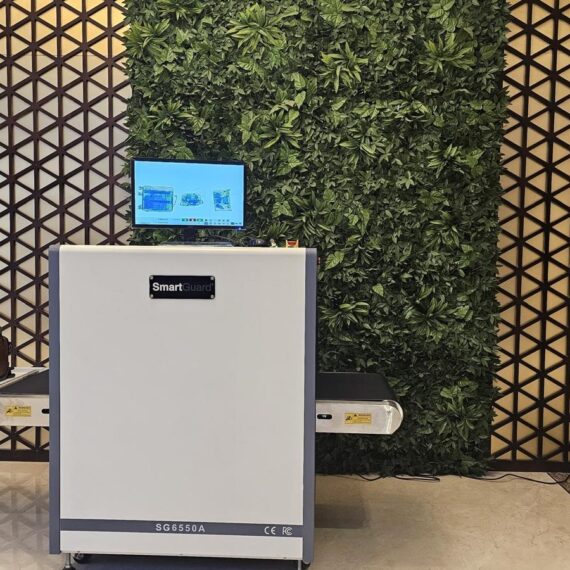
A Security X-Ray Machines is a screening device that uses X-ray imaging to inspect the internal contents of luggage, parcels and cargo without opening them. The machines come in different sizes and capabilities — from compact tunnel scanners for bags and parcels to large, dual-view or computed tomography (CT) systems for checked baggage and cargo. Modern units often incorporate automatic threat detection software, multi-energy imaging (which helps discriminate organic vs inorganic materials), dual-view imaging, and connectivity to central security management systems.
Key Features of the Security X-Ray Machines
When choosing Security X-Ray Machines—whether for hotels, airports, embassies, government buildings, logistics hubs, or commercial facilities—the right specifications directly influence detection accuracy, operational speed, and long-term reliability. Each feature listed below plays a critical role in ensuring that your screening process is secure, efficient, and compliant with modern safety standards.
1. Tunnel Size & Throughput Capacity
Why it matters:
The size of the inspection tunnel and the machine’s throughput determine what types of items can be screened and how quickly your checkpoint can process traffic.
Tunnel Size
- Small/Medium Tunnels (e.g., 500×300 mm, 600×400 mm):
Ideal for hotels, commercial buildings, offices, visitor screening points, and small luggage. - Large Tunnels (e.g., 1000×800 mm and above):
Suitable for airports, logistics centers, warehouses, and cargo inspection. - Oversized / Cargo Tunnels:
Used in customs, ports, and large freight environments.
Choosing a wrong tunnel size leads to operational delays, manual re-screening, or inability to inspect bulky items.
Throughput (Bags Per Hour)
High-traffic sites require Security X-ray Machines that can screen hundreds of bags per hour.
- Hotels and small facilities: Low to medium throughput is enough.
- Airports, stadiums, metro stations: High throughput ensures smooth movement during peak hours.
A well-matched tunnel size and throughput prevent bottlenecks and reduce waiting times.
2. Energy Type: Single, Dual, Multi-energy & CT
Why it matters:
The energy type directly affects detection accuracy and the machine’s ability to differentiate materials.
Single-Energy Systems
Basic machines with limited ability to distinguish between organic and inorganic substances.
Dual-Energy Systems (Industry Standard)
- Provide clear material differentiation
- Color-coded imaging
- Improved detection of weapons, explosives, and organic materials
This is the minimum recommended specification for modern security screening.
Multi-Energy & CT (Computed Tomography)
- Required in aviation security environments where advanced explosive detection is mandatory
- Offers 3D imaging, high-resolution reconstruction, and automated explosive detection algorithms
For airports and government facilities, CT-based systems may be required to meet compliance standards.
3. Image Quality & Resolution
Why it matters:
High-resolution images enable operators to identify small, complex, or cleverly concealed threats.
Key Indicators:
- Wire Resolution: Ability to detect extremely thin wires (important for identifying detonator components).
- Steel Penetration: How thick a steel plate the X-ray can penetrate while maintaining clear images.
- Pixel Density & Detector Quality: Higher pixel counts improve object clarity and edge definition.
High-quality imaging reduces operator fatigue and helps ensure critical threats aren’t missed.
4. Automatic Detection & Operator Assistance Tools
Why it matters:
Not all operators have years of experience. AI-enabled tools help them perform at a high standard.
Features Include:
- Alarm Zoning: Highlights suspicious areas automatically.
- ATD (Automatic Threat Detection): Identifies weapons, liquids, powders, explosives.
- TIP (Threat Image Projection): Randomly inserts virtual threat images to test and train operators in real time.
- Auto Enhancement Controls: Optimize image clarity, density, and contrast instantly.
These features significantly reduce human error, improve consistency, and support compliance with global security standards.
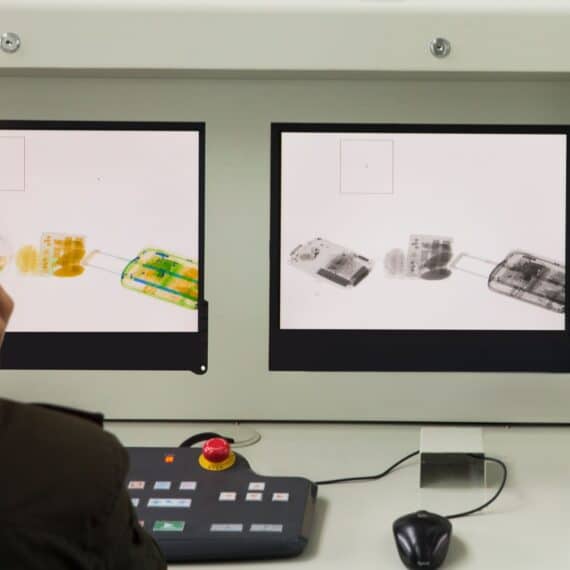
5. Material Discrimination & Color Coding
Why it matters:
Quickly differentiating materials helps operators assess threats faster.
Typical Color Coding:
- Orange/Amber: Organic materials (explosives, food, clothing)
- Blue: Inorganic substances
- Green: Metals and dense objects
Clear color coding reduces inspection time, helps spot anomalies instantly, and limits operator fatigue during long shifts.
6. Ergonomics, Workflow & User Interface (UI)
Why it matters:
A well-designed user interface improves operator performance and shortens training time.
Important UI Considerations:
- Auto-zoom, image replay & fast scrolling
- Keyboard shortcuts for high-volume screening
- Option to export images and generate reports
- Network connectivity for remote monitoring
- Touchscreen controls (on modern systems)
Good ergonomics reduce misreads, streamline workflows, and improve overall operator efficiency.
7. Compliance, Standards & Certifications
Why it matters:
Security X-ray Machines often need to meet specific regulatory requirements depending on the sector.
Important Certifications:
- ECAC Standard 2 / Standard 3 (Aviation)
- TSA Certification (USA)
- CE, ISO, IEC Compliance
- Local regulatory approvals in Qatar
Facilities handling aviation security, government screening, or VIP protection must use machines that meet recognized international standards.
8. Serviceability, Maintenance & Spare Parts Availability
Why it matters:
Even the most advanced Security X-Ray Machines are only valuable when they are operational. Downtime compromises safety and productivity.
Key Serviceability Considerations:
- Modular design for quick repairs
- Local spare parts availability to avoid long delays
- Qualified technicians in Qatar to minimize downtime
- Remote diagnostics for predictive maintenance
- Annual maintenance contracts (AMC) for continuous reliability
- Software updates for security & performance
Good serviceability ensures long-term reliability, reduces costs, and keeps your screening operations uninterrupted.
Top Benefits of Security X-Ray Machines
Security X-Ray Machines play a critical role across airports, hotels, government buildings, logistics hubs, and commercial facilities. Their benefits go far beyond simply “seeing inside bags.” They provide a structured, measurable, and highly reliable security layer that enhances safety, operational efficiency, and regulatory compliance. Below is a deeply expanded explanation of the most important benefits, the real-world value they bring, and why modern organizations in Qatar and globally rely on them as an essential part of their security infrastructure.
1. Exceptional Detection Accuracy — Even for Concealed or Fragmented Threats: Security X-Ray Machines
One of the primary reasons organizations depend on X-ray screening is the unmatched ability to detect concealed threats without physically opening any item. This includes:
- Metallic weapons: guns, ammunition, knives, shrapnel.
- Improvised explosive device (IED) components: detonators, batteries, wiring, switches.
- Non-metallic weapons: ceramic knives, plastic tools.
- Prohibited items: flammables, corrosives, and restricted chemicals.
Modern dual-energy and multi-energy X-ray systems analyze objects at the molecular absorption level, enabling operators to differentiate between:
- Organic materials (explosives, gels, plastics)
- Inorganic materials (glass, synthetic materials)
- Metallic objects (steel, alloys)
This layered detection capability dramatically reduces the likelihood of human error and improves consistency — a crucial need in high-traffic environments such as airports, hotels, and public events.
The value:
Security staff can identify suspicious objects faster and with far greater certainty, ensuring a safer environment without invasive bag checks.
2. Fast, Non-Invasive, and High-Throughput Screening: Security X-Ray Machines
Efficiency is critical in any facility that experiences a steady flow of visitors, employees, or cargo. Security X-Ray Machines are designed for maximum throughput, processing hundreds to thousands of bags per hour depending on tunnel size.
Benefits of fast, non-intrusive screening include:
- Shorter queues and waiting times
- Smoother visitor or passenger experience
- Reduced manual inspections, which often cause delays
- Ability to maintain strict security without slowing operations
In hotels, malls, and government buildings, this speed is essential to maintain comfort and convenience. In logistics hubs and warehouses, speed directly influences productivity and operational efficiency.
The value:
High throughput keeps operations flowing while maintaining robust security—ideal for busy checkpoints and time-sensitive environments.
3. Clear Visual Color Discrimination for Faster Decision-Making: Security X-Ray Machines
Modern scanners provide high-resolution, color-enhanced imaging, which allows operators to quickly differentiate between material types. Instead of analyzing monochrome images, operators see:
- Organic materials (orange or similar warm tones)
- Inorganic materials (green/blue)
- Metals (dense dark shades)
This color-coded system dramatically reduces cognitive load and operator fatigue. When scanning thousands of items, visual clarity is essential.
Advanced systems also include:
- Pseudo-coloring modes
- High-density alarms
- Edge-enhancement for tiny objects
- Zoom, reverse, and replay functions
The value:
Operators make faster, more accurate decisions, minimizing missed threats and improving operational confidence.
4. Fully Automated Threat Recognition & Operator Assistance Tools: Security X-Ray Machines
The latest generation of Security X-Ray Machines integrates AI-based features such as:
- Automatic Threat Detection (ATD)
- Automatic firearms and explosives recognition
- TIP (Threat Image Projection) for training
- Auto-zoom on suspicious objects
- Real-time alarms for dense or abnormal shapes
These tools ensure that even less experienced operators can perform at a high level, improving overall security consistency.
The value:
Automation reduces error rates, improves training quality, and ensures standardized performance across all operators.
5. Robust Compliance With International Security Standards: Security X-Ray Machines
Depending on the industry, organizations may need to comply with international or regional regulations, such as:
- ECAC standards for Europe
- TSA certifications for aviation
- Local regulatory approvals for government and customs operations
- ISO/IEC guidelines for security equipment
Certified machines guarantee that screening meets global safety and security benchmarks. This is especially important for:
- Airports
- Customs facilities
- Critical infrastructure sites
- Government departments
The value:
Compliance ensures that the facility meets mandatory requirements, avoids penalties, and aligns with international best practices.
6. Reduces Need for Manual Inspections (Protecting Privacy and Speeding Processes): Security X-Ray Machines
Manual bag checks are:
- Slow
- Invasive
- Labor-intensive
- Potentially uncomfortable for visitors
- Subject to human bias and error
Security X-Ray Machines minimize manual inspection by offering complete visibility into bag contents without opening them.
This preserves:
- Visitor privacy
- Operational flow
- Security staff safety
The value:
Reduced manual inspection improves customer experience while maintaining strict security integrity.
7. Enhanced Safety for Security Personnel: Security X-Ray Machines
Without Security X-Ray Machines, staff are forced to physically inspect every suspicious item — exposing them to:
- Sharp objects
- Biohazards
- Toxic chemicals
- Explosive components
X-ray screening acts as a barrier between the operator and the threat.
The value:
Staff remain safe, protected, and less exposed to risk, leading to a healthier and more sustainable working environment.
8. Better Record-Keeping, Auditing, and Real-Time Monitoring: Security X-Ray Machines
Most modern systems support:
- Image archiving
- Centralized monitoring stations
- Real-time video integration
- Audit trails for reporting
- Remote diagnostics and maintenance
Security supervisors can review past scans, verify compliance, and investigate incidents using precise imaging data.
The value:
Digital records support audits, training, compliance, and incident investigation, improving overall security governance.
Common Uses of Security X-Ray Machines
Security X-Ray Machines are highly versatile tools used across multiple industries to detect prohibited, dangerous, or concealed items. Their adaptability, durability, and accuracy make them an essential component of modern security infrastructure. Below is an expanded discussion of the most common deployment scenarios, why each environment relies on X-ray screening, and the operational challenges these machines solve.
1. Airports and Aviation Security
Aviation is one of the strictest and most sensitive security environments anywhere in the world. Security X-Ray Machines are deployed at:
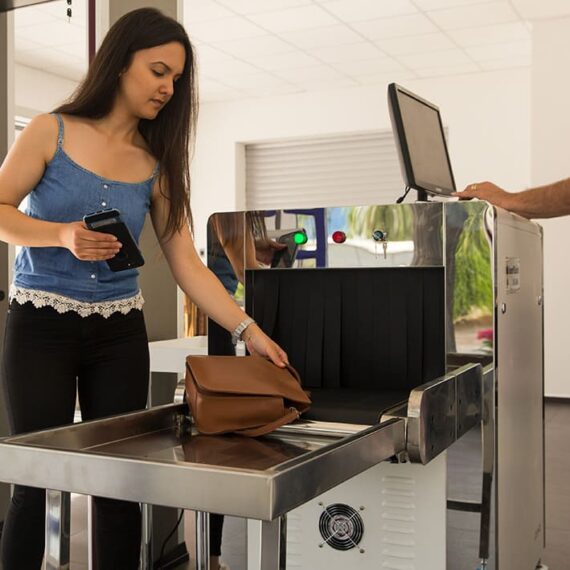
- Passenger screening checkpoints
- Staff entrances
- Checked baggage screening stations
- Cargo and freight terminals
- VIP and private jet lounges
Security X-Ray Machines in airports perform:
- Cabin-luggage screening
- Checked-baggage explosive detection (EDS)
- Cargo inspection
- Detection of restricted items (liquids, aerosols, weapons, electronics)
Many airports rely on dual-energy, multi-energy, or CT (Computed Tomography) X-ray systems to meet international standards such as:
- ECAC EDS Standard 2 / Standard 3
- TSA approvals
- ICAO guidelines
2. Hotels and Hospitality Sector
Hotels in Qatar and across the region increasingly deploy X-ray scanners at:
- Main entrances
- Staff entrances
- Back-of-house security zones
- Mailrooms
This is especially common in:
- 4-star and 5-star hotels
- Resorts and conference centers
- VIP and government guest accommodations
- Hotels connected to malls or multiplexes
3. Government Buildings & Critical Infrastructure
Key government sites rely on X-ray screening as their first line of defense. These include:
- Ministries and public departments
- Municipal offices
- Courthouses
- Embassies and consulates
- Police and military facilities
- Immigration centers
- Museums and national heritage buildings
Why government entities depend on X-ray screening
- They face high security threats and require controlled access.
- They must protect public officials, employees, and visitors.
- They process large numbers of visitors daily.
- They handle sensitive documents, classified materials, and valuable assets.
Security X-Ray Machines in these areas typically integrate with:
- Access control systems
- Turnstiles
- CCTV
- Visitor management platforms
4. Corporate Offices & Commercial Buildings
Large corporations and commercial towers use Security X-Ray Machines to:
- Screen visitors entering office lobbies
- Ensure safety during high-profile events
- Protect executives and staff
- Prevent prohibited items from entering private workspaces
In Qatar, many organizations in the banking, energy, telecom, media, and legal sectors deploy X-ray scanners due to stringent security policies.
Why offices use X-ray equipment
- They reduce risk to employees and assets.
- They prevent sabotage, internal theft, and unauthorized items.
- They create a secure and professional environment.
- They complement existing security operations (CCTV, guards, access control).
5. Shopping Malls & Retail Complexes
Malls are high-traffic environments with thousands of visitors daily. X-ray systems are deployed at:
- Main entrances
- Staff entrances
- Cinema or entertainment zones
- Delivery bays and storage areas
Challenges that malls face
- Large crowds
- Multiple entry/exit points
- High value retail stores
- Frequent deliveries
- Seasonal fluctuations in traffic
6. Customs & Border Control
X-ray scanners are fundamental tools at:
- Land borders
- Seaports
- Customs inspection centers
- Cargo clearance terminals
- Free zones and bonded warehouse
They are used for:
- Detection of contraband
- Identification of smuggling attempts
- Inspection of parcels, containers, luggage, and vehicles
- Verification of customs declaration accuracy
- Screening of import/export shipments
7. Logistics, Warehousing & Cargo Screening
In the logistics and supply chain industry, X-ray technology is deployed to inspect:
- Parcels
- Pallets
- Air freight
- Shipping containers
- Internal warehouse movement
Companies such as courier services, e-commerce hubs, and distribution centers rely on X-ray systems because they provide:
- Rapid inspection for large cargo volumes
- Detection of stolen items
- Prevention of hazardous goods entering storage
- Compliance with shipping regulations and international transport policies
8. Schools, Universities & Educational Institutions
Educational facilities—especially large campuses—use Security X-Ray Machines to:
- Screen entry points
- Protect students, staff, and visitors
- Prevent weapons or harmful items from being brought on campus
- Secure special events, exams, and VIP visits
In recent years, many institutions have strengthened their security infrastructure due to:
- Increased population density
- Higher risk awareness
- Large-scale events and academic functions
Why academic institutions deploy scanners
- They maintain a safe learning environment.
- They reduce risk during high-traffic periods.
- They complement campus security programs.
Axle Systems — Supplier & Integrator in Qatar
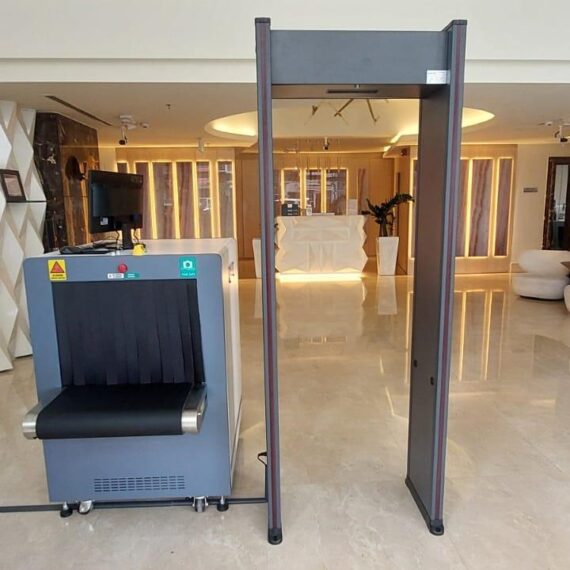
Axle Systems is a trusted provider and integrator of Security X-Ray Machines in Qatar, offering a complete range of solutions tailored for airports, hotels, government facilities, corporate offices, retail spaces, and logistics hubs. With years of experience in security technology, Axle Systems has built a reputation for delivering high-quality equipment, seamless installation, and reliable after-sales support.
Our Role as a Supplier
Axle Systems provides an extensive portfolio of Security X-Ray Machines, including:
- Dual-energy baggage scanners for airports, hotels, and high-security facilities
- CT and multi-energy scanners for aviation and critical infrastructure
- Cargo and pallet scanners for logistics and customs applications
- Compact desktop scanners for mailrooms, offices, and small-scale operations
We partner with globally recognized manufacturers to ensure our clients receive cutting-edge technology, certified compliance, and superior imaging performance. Each system is rigorously tested for:
- Image quality and resolution
- Automatic threat detection capabilities
- Throughput and operational efficiency
- Material discrimination and color coding
Our Role as an Integrator
Beyond supplying hardware, Axle Systems provides end-to-end integration services:
- Site Assessment & Planning
Our team evaluates traffic flow, checkpoint design, and operational requirements to determine the optimal Security X-Ray Machines type and configuration. - Installation & Commissioning
Certified engineers handle installation, calibration, and testing to ensure the system is fully operational and meets regulatory standards. - Workflow Optimization
We integrate scanners with access control, CCTV, alarm systems, and visitor management software for seamless operational efficiency. - Training & Support
We train operators on best practices, system features, and automated detection functions to maximize effectiveness and minimize human error.
Why Choose Axle Systems in Qatar
- Local Presence & Rapid Support
- Trained technicians and spare parts are available locally.
- Onsite and remote support ensures minimal downtime.
- Regulatory Compliance Expertise
- Systems installed by Axle Systems meet ECAC, TSA, ISO, and local Qatari security standards.
- Ideal for facilities requiring certification for aviation, government, or corporate security.
- Custom Solutions
- Whether your facility is a boutique hotel, a high-volume airport terminal, or a logistics hub, Axle Systems provides tailored solutions that fit your unique security requirements.
- Trusted Track Record
- We have successfully deployed X-ray screening solutions across airports, hotels, government buildings, and commercial sites in Qatar.
- Our installations prioritize safety, efficiency, and operational reliability.
Contact Axle Systems
For organizations looking to upgrade or deploy X-ray screening systems, Axle Systems offers a consultative approach, ensuring the right machine, configuration, and support package for each facility.
Contact Details:
- Phone: +974 77443731/44682391
- Email: info@axlesys.com
- Website: www.axlesys.com
- Office Location: PO.BOX: 200081, Al Khalidiya Street, Najma, Doha, Qatar
Frequently Asked Questions (FAQ)
Q1: What’s the difference between single-energy, dual-energy and CT scanners?
A: Single-energy provides basic grayscale images. Dual-energy uses two X-ray energy levels to distinguish organic from inorganic materials (helps find explosives and drugs). CT scanners generate 3D images and support certified Explosive Detection Systems (EDS) used in high-security aviation and cargo screening.
Q2: Do Security X-Ray Machines harm electronics or film?
A: Modern X-ray systems use low doses that are safe for most electronics and for short exposures; however, traditional photographic film can be fogged by repeated exposure — special handling is advised for unprocessed film. Consult the machine manual and manufacturer for guidance.
Q3: How fast can a scanner process bags?
A: Throughput varies with conveyor speed and operator workflow. Airport baggage systems can handle hundreds to thousands of bags per hour; small checkpoint units for hotels or events typically handle tens to low hundreds per hour depending on staff. Check manufacturer throughput specs.
Q4: Do these machines detect liquids and gels?
A: Dual-energy systems give material discrimination but may not identify specific liquid types. CT-based EDS and specialized algorithms provide improved liquids/explosive detection for regulated contexts. For strict aviation requirements, use equipment certified for liquids/explosive detection.
Q5: How much training is required for operators?
A: Basic operator training (product familiarization, alarm procedures, image interpretation) typically ranges from a few days to a few weeks. Ongoing TIP practice and periodic refresher training are best practice.
Q6: What certifications should I ask for?
A: For aviation/cargo: ECAC (Common Evaluation Process) levels or TSA acceptance. For other applications, ask about supplier quality (ISO) and local regulatory compliance.
Q7: What about radiation safety?
A: When installed and maintained correctly, security Security X-Ray Machines use low doses and are safe. Your integrator must handle shielding, signage, operator exposure monitoring if local rules require it. Never attempt DIY installation.
Q8: Can AI replace trained operators?
A: No. AI and automatic detection are excellent operator aids — they flag suspicious areas and reduce workload — but human judgment, escalation protocols and secondary searches remain essential.
Conclusion
Security X-Ray Machines have become an indispensable part of modern security infrastructure across airports, hotels, government buildings, corporate offices, retail complexes, logistics hubs, and industrial facilities. Their ability to detect concealed weapons, explosives, prohibited substances, and hazardous materials with speed and accuracy makes them a cornerstone of public safety, operational efficiency, and regulatory compliance.
From dual-energy scanners for standard baggage screening to CT and multi-energy systems for advanced threat detection, these machines provide a versatile, reliable, and scalable solution for a wide range of environments. Features such as automatic threat detection, material discrimination, color-coded imaging, and ergonomic operator interfaces ensure that security personnel can perform their duties effectively while minimizing human error. Coupled with modular design, local maintenance support, and preventive care, Security X-ray Machines also deliver long-term reliability and cost efficiency.
Organizations in Qatar and around the world increasingly recognize that investing in high-quality X-ray screening solutions is not merely about compliance—it is about protecting people, assets, and operations in a seamless, efficient, and professional manner.
As a trusted supplier and integrator in Qatar, Axle Systems offers end-to-end solutions for all security X-ray needs. From consultation and installation to training, maintenance, and system integration, Axle Systems ensures that your screening infrastructure is future-ready, fully compliant, and optimized for maximum performance.
Whether your priority is safeguarding passengers, protecting employees, securing VIP premises, or screening cargo and mail, Security X-ray Machines — paired with the expertise of Axle Systems — provide a robust, reliable, and technologically advanced security solution that organizations can depend on.