

IoT Smart Washroom Solutions in Qatar
Modern buildings and public facilities demand more than just functioning restrooms — they need restrooms that are clean, efficient, safe, and cost-effective to operate. IoT Smart Washroom Solutions combine sensors, cloud connectivity, real-time analytics, and automation to transform traditional washrooms into intelligent, responsive environments that reduce costs, improve hygiene, and deliver better user experiences.
Introduction: why IoT Smart Washroom Solutions matter
Restrooms are critical but often overlooked assets in buildings and public infrastructure. They directly affect user satisfaction, health and hygiene outcomes, operational efficiency, and maintenance costs. Traditional cleaning schedules (time-based rounds) are inefficient — resulting in overcleaning some facilities and under-servicing others — increasing costs and risking poor hygiene. The COVID-19 pandemic accelerated focus on cleanliness and touchless interactions, and IoT Smart Washroom Solutions answer this need by providing continuous, objective, and actionable information about restroom conditions.
IoT Smart Washroom Solutions enable:
- Real-time visibility into occupancy and cleanliness needs.
- Predictive cleaning and resource allocation.
- Reduced water and energy consumption.
- Improved hygiene and regulatory compliance.
- Data to inform facility planning and optimization.
For airports, malls, hospitals, hotels, corporate campuses, stadiums, and government buildings in Qatar and beyond, IoT Smart Washroom Solutions shift the model from reactive to proactive facilities management.
What is an IoT Smart Washroom Solutions?
An IoT Smart Washroom Solutions is an integrated system that uses connected sensors, network gateways, cloud or on-premises platforms, analytics, and user interfaces (dashboards and mobile apps) to monitor, manage, and automate restroom operations in real time.
Key idea: sensors collect objective data (occupancy, soap levels, paper, water usage, odors, air quality, temperature, humidity, hand-dryers activity). That data is transmitted to a central platform where analytics convert raw signals into actionable alerts, cleaning tasks, usage trends, and performance reports. Facility managers receive prioritized cleaning tickets, maintenance reminders, and compliance reports — and they can measure improvements over time.
Unlike one-off smart devices, a complete solution includes hardware, software, installation, integration, and ongoing support.
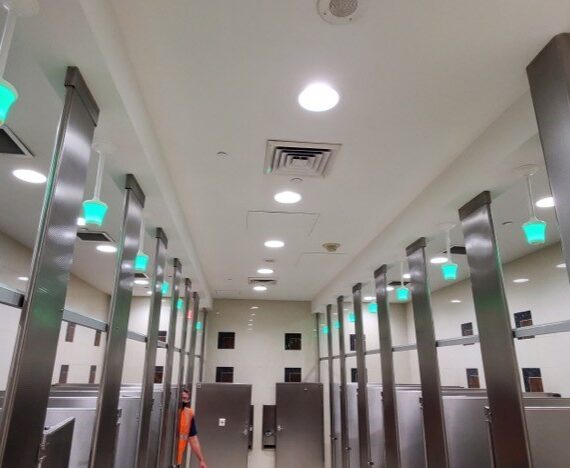
Key Features and Capabilities of IoT Smart Washroom Solutions
IoT Smart Washroom Solutions combine advanced sensor technology, data analytics, and automation to create an intelligent, connected environment that continuously monitors restroom conditions and ensures hygiene, efficiency, and user comfort. Each feature of the system serves a specific operational or experiential objective — from improving cleaning schedules to reducing consumable waste and ensuring the highest standards of cleanliness.
1. Real-Time Occupancy and Stall Monitoring
One of the core features of an IoT Smart Washroom Solutions is real-time occupancy detection. Using non-intrusive sensors such as infrared, ultrasonic, or door-switch devices, the system can accurately determine which cubicles or urinals are occupied and for how long.
Key functions include:
- Monitoring each stall individually for occupancy duration.
- Displaying stall availability through LED indicators or digital signage outside the washroom.
- Providing real-time occupancy data for cleaning staff and facility managers.
- Tracking usage frequency to identify high-traffic areas requiring more frequent cleaning.
Benefits:
- Prevents overcrowding by guiding users to available stalls.
- Helps cleaning staff identify recently used or heavily trafficked stalls.
- Reduces wait time and enhances user comfort, particularly in airports, malls, and stadiums.
2. Predictive Cleaning and Task Automation
Instead of relying on fixed cleaning schedules, IoT Smart Washroom Solutions enable predictive, data-driven cleaning. Sensors detect when a washroom reaches certain thresholds — for example, a set number of users, low consumable levels, or poor air quality — and automatically trigger cleaning alerts.
Features include:
- Automated alerts sent to cleaning staff via mobile app or dashboard.
- Task prioritization based on occupancy and hygiene data.
- Digital logs of completed cleaning tasks for audit and compliance.
- Integration with Facility Management Systems (CAFM/CMMS) for seamless work order creation.
Benefits:
- Reduces unnecessary cleaning and optimizes manpower allocation.
- Ensures that every washroom receives timely attention before hygiene issues arise.
- Enables data-backed scheduling that aligns with actual usage trends.
3. Smart Consumable Level Monitoring
The system continuously tracks soap, toilet paper, hand towel, and sanitizer levels using smart dispensers or refill sensors. This ensures that consumables are always available and reduces both stockouts and wastage.
Functions:
- Sensor-based monitoring of dispenser fill levels.
- Automatic low-level alerts when supplies drop below predefined thresholds.
- Historical usage reports for inventory planning.
- Integration with procurement systems to automate replenishment requests.
Benefits:
- Prevents customer dissatisfaction caused by empty dispensers.
- Avoids overfilling or wastage of consumables.
- Helps facilities plan and optimize inventory, reducing operational costs.
4. Air Quality, Odor, and Environmental Monitoring
IoT sensors track environmental parameters such as temperature, humidity, volatile organic compounds (VOCs), CO₂, and ammonia levels, providing early detection of poor air quality or unpleasant odors.
Features include:
- Odor detection using VOC/ammonia sensors.
- Airflow and humidity monitoring to prevent mold growth.
- Temperature monitoring for user comfort.
- Integration with ventilation and HVAC systems for automated adjustments.
Benefits:
- Maintains a fresh and hygienic atmosphere at all times.
- Automatically activates exhaust fans when air quality drops.
- Provides data for preventive maintenance of ventilation systems.
5. Touchless and Hygienic Automation
Post-pandemic hygiene expectations have made contactless technology a necessity in public restrooms. IoT-enabled washrooms integrate automatic and sensor-based fixtures to minimize physical touchpoints.
Common touchless features:
- Automatic soap and sanitizer dispensers.
- Motion-activated faucets and flush valves.
- Touchless hand dryers and lighting systems.
- Contact-free feedback terminals or QR-code-based reporting.
Benefits:
- Reduces spread of bacteria and viruses.
- Improves user confidence and overall satisfaction.
- Complies with global health and hygiene guidelines.
6. Fault Detection and Predictive Maintenance
IoT Smart Washroom Solutions continuously monitor every device’s status — from dispensers to flush systems — to detect malfunctions or abnormalities. When a device fails or performance drops, the system automatically generates an alert.
Capabilities include:
- Real-time fault alerts (e.g., jammed dispenser, broken dryer, water leak).
- Predictive maintenance analytics that forecast equipment failures.
- Remote diagnostics for quick troubleshooting.
- Maintenance ticket creation in CAFM/CMMS systems.
Benefits:
- Reduces downtime of critical washroom equipment.
- Enables timely repairs before users experience issues.
- Extends lifespan of assets through proactive maintenance.
7. Energy and Water Consumption Management
IoT solutions also optimize resource consumption. Smart meters and valves monitor and regulate water usage, while intelligent lighting systems adapt to occupancy patterns.
Core features:
- Water flow sensors for real-time usage tracking.
- Leak detection and instant alerting.
- Adaptive lighting (auto on/off based on occupancy).
- Integration with building energy management systems (BEMS).
Benefits:
- Reduces utility costs by eliminating waste.
- Prevents undetected leaks that could cause damage.
- Supports sustainability initiatives and green building certifications (LEED, GSAS, etc.).
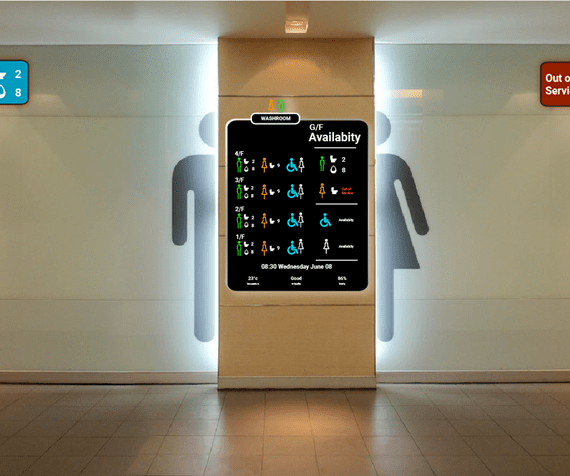
Benefits — Operational, Financial, and User Experience
IoT Smart Washroom Solutions are redefining how facilities manage hygiene, resource efficiency, and maintenance operations. From commercial buildings and shopping malls to airports and hospitals, these systems deliver a holistic transformation that extends far beyond traditional restroom management. Below are the key benefits, categorized into operational, financial, and user-experience advantages.
A. Operational Benefits
- Real-time Monitoring and Alerts
IoT Smart Washroom Solutions enable real-time monitoring of all critical elements — from soap dispensers and tissue rolls to occupancy and air quality. Facility managers receive live alerts when supplies run low or maintenance is required, ensuring no downtime or inconvenience to users.
This proactive approach eliminates guesswork and ensures that cleaning staff can prioritize restrooms that need immediate attention. - Optimized Cleaning and Maintenance Schedules
Traditional washroom maintenance operates on fixed schedules, often leading to over-cleaning or missed areas. With IoT sensors, cleaning is data-driven — triggered based on actual usage rather than time intervals.
This ensures that cleaning resources are used efficiently, reducing unnecessary labor and improving hygiene consistency across all restrooms. - Data-Driven Decision Making
IoT Smart Washroom Solutions systems collect and analyze a continuous stream of data, including footfall, occupancy duration, supply usage, and maintenance frequency. Facility managers can access dashboards and reports that provide valuable insights for better resource planning, staffing decisions, and operational strategy. - Improved Hygiene Compliance
IoT devices track handwashing compliance through smart faucets and dispensers, ensuring health and safety standards are consistently met. These insights can also be used to ensure adherence to MOI (Ministry of Interior) and Qatari hygiene standards for public facilities. - Enhanced Energy and Water Efficiency
IoT-enabled washrooms are designed to minimize wastage. Smart faucets and flush systems use occupancy and motion sensors to control water flow, while smart lighting and ventilation systems activate only when needed.
This contributes significantly to sustainability goals, aligning with Qatar’s National Vision 2030 for environmental efficiency and conservation. - Predictive Maintenance
Instead of waiting for failures or breakdowns, IoT analytics predict potential issues before they occur. For example, sensors can detect abnormal patterns in water flow or temperature, signaling possible leaks or system malfunctions.
Predictive maintenance not only reduces downtime but also extends the lifespan of equipment. - Centralized Remote Management
Facility administrators can remotely monitor multiple restrooms across different locations via a unified control dashboard. This centralization simplifies management, especially for large facilities such as airports, malls, and corporate campuses.
B. Financial Benefits
- Reduced Operational Costs
By automating maintenance schedules and reducing unnecessary manual inspections, IoT Smart Washroom Solutions help organizations cut down on labor costs. Real-time data ensures that cleaning and restocking only occur when necessary, optimizing workforce allocation. - Lower Resource Consumption
Smart water dispensers, lighting systems, and flush mechanisms are designed for energy and water efficiency. Reduced consumption directly translates into lower utility bills and a measurable reduction in environmental impact. - Extended Equipment Life
Predictive maintenance minimizes wear and tear, extending the operational life of washroom fixtures and IoT hardware. This means fewer replacements and long-term savings on equipment investment. - Improved Asset Management
IoT data allows businesses to monitor the performance and lifespan of all washroom assets — from dispensers to HVAC systems. This visibility helps in making informed procurement and budgeting decisions. - Reduced Waste and Theft
Smart dispensers only release predefined quantities of consumables like soap, tissue, or sanitizer, ensuring zero wastage. Additionally, real-time usage tracking helps detect anomalies such as theft or misuse of supplies. - Enhanced ROI through Customer Retention
A clean, well-maintained, and technologically advanced washroom leaves a strong impression on visitors and customers. Businesses in the retail, hospitality, and transport sectors benefit from improved customer satisfaction, repeat visits, and stronger brand loyalty. - Sustainability Credits and Compliance Benefits
Implementing IoT Smart Washroom Solutions can contribute to LEED or GSAS certification credits (Green Building Rating Systems). Organizations committed to sustainability can also benefit from government incentives for eco-friendly practices in Qatar.
C. User Experience Benefits
- Real-Time Occupancy Insights
Users can see which stalls or washrooms are occupied through smart indicators or digital signage, reducing waiting time and enhancing convenience — especially in high-traffic environments like Hamad International Airport or Qatar Rail stations. - Touchless Experience
IoT Smart Washroom Solutions integrate contactless technology across faucets, soap dispensers, hand dryers, and flushing systems. This minimizes the risk of germ transmission and ensures a more hygienic user experience. - Improved Cleanliness and Freshness
Smart air quality sensors monitor parameters such as humidity, odor levels, and air circulation. When thresholds are exceeded, the system automatically triggers ventilation or cleaning alerts, maintaining a consistently pleasant environment. - Accessibility and Inclusivity
IoT systems can be programmed to enhance accessibility for differently-abled users — for instance, by adjusting lighting, water pressure, or voice assistance automatically. - Personalized and Predictive Service
In corporate and hospitality environments, data from IoT systems can help anticipate user needs. For example, the system can notify cleaning staff when usage spikes occur during lunch hours or events, ensuring facilities remain fresh and ready. - Enhanced Safety and Privacy
Occupancy sensors prevent accidental intrusion, ensuring privacy. In emergencies (like water leaks or prolonged occupancy), alerts can be sent to facility staff for immediate response, improving overall safety. - Positive Brand Perception
A smart, clean, and well-maintained restroom communicates professionalism, care, and innovation. It reflects a brand’s commitment to hygiene and technology — essential in industries like aviation, hospitality, and healthcare in Qatar.
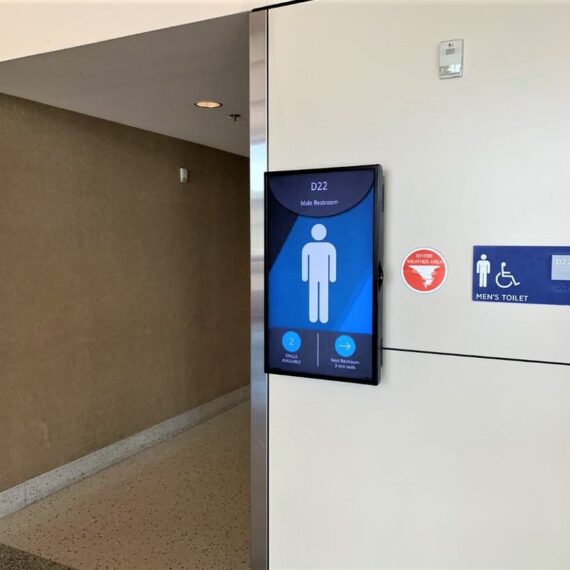
Use Cases and Deployment Scenarios of IoT Smart Washroom Solutions
IoT Smart Washroom Solutions are designed to enhance operational efficiency, hygiene management, and user experience across a wide range of environments. These intelligent systems are adaptable and scalable, making them suitable for everything from small commercial facilities to massive public infrastructure projects.
Below are the key use cases and real-world deployment scenarios where IoT Smart Washroom Solutions can create significant value — particularly in Qatar’s modern infrastructure, hospitality, transport, and corporate sectors.
1. Airports and Aviation Facilities
Airports are high-traffic environments with thousands of visitors every day. Maintaining restroom cleanliness and availability is both a logistical and hygiene challenge.
IoT Smart Washroom Solutions transform this by enabling real-time monitoring of every washroom across terminals.
Applications:
- Occupancy sensors display stall availability on digital screens, reducing waiting times.
- Smart dispensers track soap, tissue, and sanitizer levels, automatically notifying cleaning teams before supplies run out.
- Air quality sensors ensure continuous freshness and odor control.
- Cleaning alerts are generated automatically based on usage count (e.g., after 300 visitors).
- Maintenance dashboards allow HIA’s facility managers to remotely track performance.
Benefits:
- Maintains a world-class airport hygiene standard aligned with HIA’s 5-Star Skytrax rating.
- Reduces manpower wastage by optimizing cleaning schedules.
- Enhances traveler satisfaction through smart signage and touchless experience.
2. Shopping Malls and Retail Centers
High visitor footfall and varying peak hours make mall washroom management challenging. IoT Smart Washroom Solutions offer precise data to ensure restrooms remain clean, stocked, and operational.
Applications:
- Footfall sensors monitor visitor trends by time of day.
- Smart cleaning alerts ensure washrooms are serviced after certain usage thresholds.
- IoT air-quality sensors maintain odor-free conditions.
- Smart LED indicators outside washrooms show “Available / Cleaning in Progress.”
Benefits:
- Consistent cleanliness boosts visitor satisfaction and brand image.
- Data analytics help management optimize staffing and cleaning shifts.
- Reduces wastage of consumables and water.
3. Corporate Offices and Commercial Towers
In corporate environments, hygiene, sustainability, and resource optimization are key priorities. IoT Smart Washroom Solutions integrate seamlessly with building management systems (BMS) for smart, centralized control.
Applications:
- Occupancy detection enables automated lighting and ventilation.
- Smart dispensers provide data for restocking schedules.
- Cleaning alerts and maintenance logs are automatically recorded.
- Reports offer insights on restroom usage trends and resource consumption.
Benefits:
- Promotes employee health and wellness.
- Reduces operating costs by minimizing over-cleaning and overuse of supplies.
- Supports corporate sustainability and ESG (Environmental, Social, Governance) goals.
4. Hospitals, Clinics, and Healthcare Centers
In healthcare facilities, washroom hygiene is not just about comfort — it’s a matter of patient safety. IoT Smart Washroom Solutions help prevent the spread of infections through automation and data-driven maintenance.
Applications:
- Continuous monitoring of occupancy, humidity, and air quality.
- Touchless soap dispensers, flushes, and faucets to prevent cross-contamination.
- Alerts for cleaning and sanitization after each use or time interval.
- Integration with hospital hygiene compliance systems.
Benefits:
- Improves infection control and patient safety.
- Supports MOI and Ministry of Public Health hygiene compliance.
- Provides audit trails for cleaning and maintenance verification.
5. Hotels and Hospitality Industry
Guest satisfaction in hotels is heavily influenced by cleanliness and comfort. IoT Smart Washroom Solutions enable proactive housekeeping and maintenance for consistent guest experience.
Applications:
- Smart sensors detect restroom usage and trigger automatic cleaning requests.
- Real-time data on consumables ensures supplies are always available.
- Air quality monitoring keeps facilities fresh and odor-free.
- Integration with hotel management software for unified reporting.
Benefits:
- Enhances guest satisfaction and brand reputation.
- Reduces labor costs by automating service scheduling.
- Aligns with sustainability goals through water and energy management.
6. Stadiums, Arenas, and Public Venues
Large public venues require rapid response to high-volume usage. IoT Smart Washroom Solutions help maintain hygiene and functionality during events and peak hours.
Applications:
- Real-time occupancy monitoring for crowd control.
- Supply tracking for soaps and tissues during large events.
- Data analytics to predict cleaning requirements before, during, and after events.
- Environmental monitoring to manage humidity and odor.
Benefits:
- Maintains hygiene standards even with massive footfall.
- Reduces downtime between cleaning cycles.
- Provides data insights for post-event facility management.
7. Government Buildings and Public Facilities
Public offices and service centers serve thousands daily, requiring a consistent and reliable hygiene system. IoT Smart Washroom Solutions streamline maintenance operations and ensure compliance with hygiene regulations.
Applications:
- Automatic alerts for janitorial staff.
- Monitoring of supply usage and equipment status.
- Integration with central government facility dashboards.
- Automated reports for compliance audits.
Benefits:
- Ensures consistent hygiene for staff and visitors.
- Reduces government operational costs.
- Demonstrates commitment to citizen wellbeing and modernization.
8. Educational Institutions
Maintaining hygiene in educational environments is vital for student health. IoT Smart Washroom Solutions enable proactive management in schools, universities, and training centers.
Applications:
- Occupancy sensors to track restroom traffic.
- Smart dispensers for controlled resource use.
- Automated cleaning alerts during class breaks or high-traffic times.
- Water-saving IoT taps for sustainability.
Benefits:
- Promotes student hygiene and safety.
- Reduces resource wastage and maintenance effort.
- Provides transparency and data for administrative oversight.
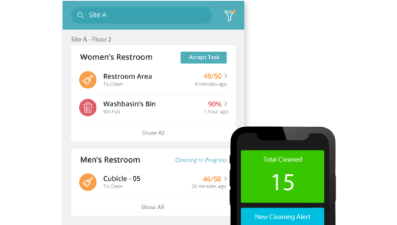
Why Choose Axle Systems for IoT Smart Washroom Solutions in Qatar
As Qatar rapidly advances toward becoming a fully smart, connected, and sustainable nation, the need for intelligent facility management systems is more crucial than ever. At the forefront of this transformation stands Axle Systems, a trusted technology provider offering IoT Smart Washroom Solutions designed to meet the highest standards of innovation, hygiene, and efficiency.
Axle Systems delivers not just hardware or software — but complete, integrated solutions that combine smart sensors, intelligent data analytics, and automated control to revolutionize restroom management for public and private organizations across Qatar.
Below are the key reasons why leading enterprises, government bodies, and facility managers across the country choose Axle Systems for their IoT Smart Washroom Solutions.
1. Proven Expertise in Smart Facility Solutions
Axle Systems has years of experience in delivering advanced smart building, security, and automation technologies across multiple sectors — including transportation, hospitality, healthcare, education, and corporate environments.
Our deep understanding of facility management workflows allows us to tailor washroom systems that align with real-world operational needs.
We’ve successfully implemented smart systems for:
- Airports and aviation services
- Government facilities
- Corporate offices and commercial towers
- Malls, retail, and hospitality sectors
- Educational and healthcare institutions
Each project is handled by professionals with hands-on technical experience in IoT integration, ensuring that every system is reliable, efficient, and optimized for Qatar’s infrastructure standards.
2. End-to-End IoT Smart Washroom Solutions
Unlike vendors that only provide individual components, Axle Systems offers complete end-to-end solutions for IoT Smart Washrooms. From design and consultation to installation, integration, and after-sales support, every stage is covered under one trusted brand.
Our solutions include:
- Smart occupancy and motion sensors
- Real-time monitoring dashboards
- Smart dispensers for soap, tissue, and sanitizer
- Air quality and odor management sensors
- IoT-based water and energy management systems
- Data analytics and reporting tools
- Integration with Building Management Systems (BMS)
By delivering an integrated platform, Axle Systems ensures seamless communication between all devices, giving facility managers a single, unified control system for effortless management.
3. Advanced Data Analytics and Dashboard Visualization
Our IoT Smart Washroom Solutions are built around intelligent analytics platforms that provide meaningful, actionable insights.
Facility managers can:
- Monitor live occupancy and usage trends.
- View the refill status of all consumables.
- Track cleaning schedules and task completions.
- Analyze historical data to optimize resource allocation.
- Generate automated reports for management or compliance audits.
With Axle Systems’ smart dashboards, decisions are based on data, not assumptions, helping organizations save costs, improve hygiene, and deliver superior user experiences.
4. Compliance with Qatar’s Health, Safety, and Hygiene Standards
Axle Systems ensures that every IoT Smart Washroom Solutions complies with Qatar’s Ministry of Interior (MOI), Ministry of Public Health (MOPH), and Qatar Construction Specifications (QCS).
Our systems support:
- Automated cleaning verification
- Air quality monitoring for odor and humidity control
- Sensor-based hygiene assurance
- Data logging for hygiene audits
This makes our solutions ideal for public facilities, airports, healthcare centers, and large organizations that must meet strict hygiene and safety protocols.
5. Partnerships with Leading Global IoT Brands
Axle Systems partners with globally recognized IoT and automation manufacturers to ensure that every component we provide meets international performance and reliability standards.
We work with trusted global technology brands for:
- Smart washroom sensors
- Cloud-based monitoring platforms
- Smart dispensers and utilities
- AI-driven analytics engines
This ensures that our clients receive cutting-edge technology backed by global innovation, fully supported by local expertise.
6. Scalable and Customizable Solutions
Every facility is unique. Whether it’s a small corporate office or a massive airport terminal, Axle Systems designs scalable IoT Smart Washroom Solutions that can grow with your organization’s needs.
Customization options include:
- Adjustable sensor sensitivity levels
- Integration with existing cleaning management systems
- Modular expansion for multiple locations
- Custom dashboards and KPIs for reporting
This flexibility makes Axle Systems the ideal partner for organizations looking to start small and scale up their smart infrastructure over time.
7. Energy and Sustainability Focus
Sustainability is one of Axle Systems’ core values. Our IoT Smart Washroom Solutions help organizations achieve measurable reductions in energy, water, and material consumption, aligning perfectly with Qatar National Vision 2030 and the country’s environmental sustainability goals.
Key features promoting sustainability:
- Water-saving IoT faucets and flush systems
- Smart lighting control with motion sensors
- Airflow optimization to reduce HVAC load
- Usage-based cleaning to reduce chemical waste
By choosing Axle Systems, you contribute to a greener, smarter, and more sustainable future for Qatar.
8. Local Presence, Global Standards
Axle Systems is proudly based in Qatar, with an expert technical team that understands the region’s infrastructure, environmental challenges, and facility management standards.
Our local presence ensures:
- Faster support and response times
- On-site technical assistance
- Tailored solutions for Qatari climate and building conditions
- Strong relationships with local facility managers, developers, and authorities
We bring global technology with local service excellence — ensuring that every deployment is smooth, compliant, and high-performing.
Common FAQs about IoT Smart Washroom Solutions
Q1. What types of sensors do you use for occupancy detection?
We typically use non-imaging sensors such as infrared (PIR), ultrasonic, door-switch sensors, and pressure mats. These deliver reliable occupancy detection while preserving user privacy. For people counting at restroom entrances, we use thermal or 3D time-of-flight sensors that count entries and exits without capturing personal images.
Q2. Are camera systems required for IoT Smart Washroom Solutions?
No. Cameras are not required and are rarely used due to privacy concerns. Most effective solutions rely on anonymous sensors (PIR, ultrasonic, door counters, pressure mats) and consumable level sensors. If a camera is ever required for a very specific security or forensic purpose, strict legal review and redaction policies apply.
Q3. How do you conserve data and ensure network security?
Devices use secure communication protocols (e.g., MQTT over TLS or HTTPS). Data is encrypted in transit and at rest. Edge gateways can perform local filtering to reduce bandwidth. We implement role-based access and logging to ensure only authorized users access dashboards and data.
Q4. What connectivity options are available for sensors?
Common options: Wi-Fi (for high bandwidth), LoRaWAN (for large buildings and outdoor coverage with low power), NB-IoT (cellular for areas without local networks), or wired Ethernet for fixed locations. The choice depends on site layout, power availability, and scale.
Q5. How long do sensor batteries last?
Battery life depends on sensor type, data reporting frequency, and connectivity. Many low-power sensors run 2–5 years on a single battery with typical reporting intervals. We design sensor polling intervals to balance real-time needs and battery longevity.
Q6. Can the IoT Smart Washroom Solutions system integrate with my existing CAFM/BMS?
Yes. Our platform provides RESTful APIs and supports webhooks for two-way integration with CAFM, CMMS, and BMS systems. This enables automatic work order creation, asset management, and HVAC coordination.
Q7. Will the system work in outdoor or semi-outdoor restrooms?
Yes, provided sensors and enclosures are rated for the environment. For outdoor restrooms, we specify weatherproof sensors, and connectivity might use LoRaWAN or cellular options.
Q8. How do you ensure data privacy for users?
We collect aggregate and anonymous data only — occupancy counts and consumable levels — with strict controls to avoid PII. Sensors are selected to avoid capturing identifiable images. Data retention policies comply with local regulations.
Q9. What is the typical deployment timeline?
A pilot (representative area) can be installed and commissioned in 2–4 weeks depending on approvals. Full rollouts depend on scale — for large airports or multiple buildings, deployments are phased over weeks to months. We work with your team to minimize disruption.
Q10. What are the typical costs and ROI?
Costs vary by scale, sensor types, connectivity, and integration level. Typical ROI scenarios show payback in 12–24 months through reduced labor, lower consumable spend, and utility savings. We provide a customized ROI analysis during the proposal phase.
Conclusion
IoT Smart Washroom Solutions are transforming the way facilities are managed, setting new standards for hygiene, efficiency, and sustainability across Qatar. From airports and hotels to corporate offices, healthcare centers, educational institutions, and public infrastructure, these intelligent systems provide real-time monitoring, predictive maintenance, and data-driven insights that optimize operations while enhancing the user experience.
By integrating advanced sensors, touchless automation, environmental monitoring, and smart analytics, IoT Smart Washroom Solutions not only reduce operational costs and resource consumption but also ensure compliance with Qatar’s stringent health and safety standards. The result is a cleaner, safer, and more sustainable environment for employees, visitors, and residents alike.
Axle Systems stands at the forefront of this transformation, delivering end-to-end IoT Smart Washroom Solutions that are tailored, scalable, and future-ready. With local expertise, global technology partnerships, and a commitment to innovation, Axle Systems ensures that every facility in Qatar achieves operational excellence, sustainability, and world-class hygiene standards.
Investing in IoT Smart Washroom Solutions is no longer just a technological upgrade — it is a strategic step toward smarter, greener, and more efficient facilities. Organizations that adopt these solutions gain a competitive edge, enhance customer satisfaction, and contribute to Qatar’s vision of a digitally advanced and sustainable nation.