

Smart Washroom Sensor with Environmental Analyzer in Qatar
Modern washrooms are no longer just plumbing and tiles. They’re an opportunity to improve hygiene, comfort, energy efficiency, and operational efficiency — all at once. The Smart Washroom Sensor with Environmental Analyzer combines occupancy and fixture sensing with environmental monitoring (air quality, temperature, humidity, VOCs, etc.) to deliver
What is a Smart Washroom Sensor with Environmental Analyzer?
A Smart Washroom Sensor with Environmental Analyzer is an integrated device (or a small network of devices) designed to:
- Detects washroom occupancy and movement (for cleaning triggers and safety).
- Monitor environmental conditions (temperature, relative humidity, CO₂ or CO, volatile organic compounds — VOCs, particulate matter (PM2.5/PM10), and sometimes ammonia or hydrogen sulfide in specialized installations).
- Track fixture usage (toilets, urinals, soap dispensers, hand dryers) either directly or through connected sensors.
- Send real-time alerts and aggregate data to a cloud or local analytics platform for reporting, trending, and automated actions (lighting, extract fan control, cleaning notifications).
Think of it as the central nervous system for a modern washroom: sensing, analyzing, notifying, and automating.
How the system works — simple technical overview: Smart Washroom Sensor with Environmental Analyzer
- Sensing layer
- Occupancy / People counting sensors: PIR, ultrasonic, time-of-flight (ToF), or stereo-vision sensors detect presence and estimate occupancy/dwell time.
- Environmental sensors: modules for temperature, relative humidity, CO₂ (or eCO₂), VOCs, PM2.5/PM10 and sometimes specific gases.
- Fixture sensors: flow meters, door sensors, or reed/contact switches on dispensers to track consumable usage.
- Edge device / gateway
- Aggregates sensor data and pre-processes it (noise filtering, local thresholds, short-term trends). Often supports Wi-Fi, LoRaWAN, Zigbee, or wired Ethernet.
- Connectivity & cloud analytics
- Data is sent securely to a cloud platform or an on-premise server where dashboards, alerts, historic reports, and integrations (BMS, CAFM, cleaning apps) are managed.
- Automation & notifications
- Triggers: send cleaning task to staff, increase exhaust fan speed on high VOC/CO₂, turn on boost ventilation, dim lights when unoccupied, or reorder consumables when soap levels run low.
Key Features of a Best-in-Class Smart Washroom Sensor with Environmental Analyzer
A Smart Washroom Sensor with Environmental Analyzer is much more than a basic occupancy detector — it’s an advanced IoT-driven ecosystem that continuously monitors environmental conditions, usage patterns, and cleanliness levels within washroom spaces. Below are the detailed key features that define a premium-quality Smart Washroom Sensor with Environmental Analyzer monitoring solution.
1. Multi-Parameter Environmental Sensing- Smart Washroom Sensor with Environmental Analyzer
The most crucial aspect of this system is its comprehensive environmental sensing capability. A best-in-class sensor suite measures multiple parameters simultaneously to maintain optimal hygiene and comfort levels:
- Temperature Monitoring:
Ensures washrooms remain within a comfortable thermal range for users. Deviations in temperature can trigger alerts for HVAC adjustments or system faults. - Humidity (RH) Measurement:
High humidity can promote bacterial growth and unpleasant odors. Continuous humidity tracking allows facility managers to identify moisture buildup early and activate exhaust fans automatically. - CO₂ and eCO₂ Detection:
Elevated CO₂ levels indicate poor ventilation and high occupancy. Smart systems use this data to trigger ventilation fans or notify cleaning staff about crowded conditions. - Volatile Organic Compounds (VOC) Monitoring:
Detects unpleasant odors, chemical fumes, or other air pollutants commonly found in washroom environments. The sensor can automatically activate air purifiers or exhaust systems. - Particulate Matter (PM2.5 / PM10):
Monitors airborne particles that affect air quality and cleanliness perception. Useful in high-traffic commercial facilities like malls and airports. - Ammonia or Hydrogen Sulfide (H₂S) Detection (Optional):
Advanced analyzers can detect gases specifically associated with sanitation levels — giving real-time feedback on odor control and hygiene.
2. Intelligent Occupancy Detection- Smart Washroom Sensor with Environmental Analyzer
Accurate occupancy monitoring is vital for both energy optimization and hygiene management.
The system employs a combination of sensors such as:
- Passive Infrared (PIR) – Detects body heat and motion within the washroom area.
- Time-of-Flight (ToF) – Measures distance changes for precise people detection, even in low light.
- Ultrasonic or Radar-Based Detection – Provides non-intrusive occupancy monitoring with high accuracy.
- Door and Stall Sensors – Monitors individual stall usage or entry counts for granular occupancy data.
This data enables the system to determine real-time occupancy levels, peak usage hours, and average dwell times, which help optimize cleaning schedules and ventilation.
3. Fixture and Consumable Monitoring- Smart Washroom Sensor with Environmental Analyzer
Modern washrooms contain multiple fixtures — toilets, urinals, soap dispensers, hand dryers, and tissue dispensers — that require regular maintenance. Smart Washroom Sensor with Environmental Analyzer systems integrate fixture-level sensors that:
- Track the number of flushes or activations to estimate wear and usage.
- Monitor soap, sanitizer, and paper levels to prevent shortages.
- Send real-time alerts when consumables need refilling.
- Help optimize procurement by analyzing usage trends and seasonal variations.
This minimizes downtime, reduces waste, and ensures that facilities remain fully functional at all times.
4. Advanced Connectivity and Integration- Smart Washroom Sensor with Environmental Analyzer
A top-tier Smart Washroom Sensor with Environmental Analyzer System offers robust connectivity and interoperability with other building systems. Common features include:
- Multiple Communication Protocols:
MQTT, BACnet/IP, Modbus, and RESTful APIs for integration with Building Management Systems (BMS) and Computer-Aided Facility Management (CAFM) software. - Flexible Connectivity Options:
Supports Wi-Fi, Ethernet, Zigbee, or LoRaWAN for both wired and wireless deployments — ideal for facilities of varying infrastructure complexity. - Edge and Cloud Integration:
Data can be processed locally for fast response (edge computing) or sent to a centralized cloud platform for large-scale analytics and reporting. - Secure Communication:
Data encryption (TLS 1.2/1.3), role-based access control, and multi-factor authentication ensure all transmitted information remains private and tamper-proof.
This enables facility managers to view live dashboards, set triggers, and generate reports remotely — all in real time.
5. AI-Powered Analytics and Automation- Smart Washroom Sensor with Environmental Analyzer
Smart Washroom Sensor with Environmental Analyzer are integrated with AI and machine learning algorithms that continuously analyze patterns and predict future needs:
- Predictive Cleaning:
The system analyzes traffic and environmental data to recommend optimal cleaning schedules.
Example: A sensor can trigger a cleaning alert after 100 uses or when VOC levels exceed a set threshold. - Ventilation Control:
Automatically increases fan speed or activates air purifiers when CO₂ or VOC readings rise beyond the comfort range. - Lighting Automation:
Lights can automatically turn on/off based on occupancy data, reducing energy waste. - Anomaly Detection:
AI algorithms detect unusual activity, such as prolonged occupancy or sudden humidity spikes (possibly indicating leaks or blockages).
These automation features transform washroom maintenance from reactive to proactive.
6. User-Friendly Dashboards and Visualization- Smart Washroom Sensor with Environmental Analyzer
A well-designed dashboard interface is essential for actionable decision-making.
Key dashboard features include:
- Real-Time Visualization:
Live data streams showing occupancy levels, air quality metrics, and consumable status. - Historical Trend Analysis:
Graphs and heatmaps that help track long-term usage patterns, enabling better resource planning. - Custom Alerts and Notifications:
Users can set custom alert thresholds for humidity, odor, or occupancy — with instant notifications via SMS, email, or mobile app. - Multi-Site Management:
For organizations managing several buildings or branches, the dashboard can consolidate all washroom data into a unified view.
7. Scalable and Modular Design- Smart Washroom Sensor with Environmental Analyzer
Every facility has unique requirements. A professional Smart Washroom Sensor with Environmental Analyzer solution is built to scale and adapt:
- Modular Hardware:
Choose from occupancy-only, environmental-only, or combined sensor packages. - Expandable Network:
Add new washrooms or zones without reconfiguring the entire system. - Flexible Mounting:
Ceiling, wall, or recessed installations to suit washroom layouts. - Integration-Ready:
Plug-and-play compatibility with other IoT platforms or BMS solutions.
This scalability makes the system suitable for single-branch offices, large malls, airports, stadiums, and universities alike.
8. Durability and Build Quality- Smart Washroom Sensor with Environmental Analyzer
Washroom environments can be humid, dusty, and sometimes prone to vandalism. Therefore, premium systems feature:
- IP65 or higher-rated enclosures — dustproof and water-resistant.
- Tamper-proof housing — prevents unauthorized removal or damage.
- Corrosion-resistant components — extend device lifespan in humid environments.
- Low-power design — supports both PoE and battery-powered operation for flexible installation.
Durability ensures consistent performance even in high-traffic, demanding conditions.
9. Smart Alerting and Workflow Automation- Smart Washroom Sensor with Environmental Analyzer
Alerts are essential to maintaining service quality. A good system offers multi-channel alerts and task management features:
- Threshold-Based Alerts:
Automatic notifications when air quality degrades, temperature exceeds limits, or occupancy peaks. - Real-Time Task Creation:
Directly integrates with janitorial or maintenance apps to create tasks automatically. - Multiple Notification Methods:
Alerts via email, SMS, or push notifications to mobile devices. - Priority Scheduling:
Urgent alerts can be escalated to supervisors for immediate response.
This ensures cleaning and maintenance teams always stay ahead of potential issues.
10. Data Security and Privacy Protection- Smart Washroom Sensor with Environmental Analyzer
Data security is paramount, especially for systems deployed in public washrooms.
High-quality systems come with:
- Data Encryption (AES-256 / TLS 1.3) to safeguard transmitted information.
- Anonymous Occupancy Detection: No personal or video data stored or transmitted.
- Role-Based Access Control (RBAC): Different permission levels for administrators, cleaners, and maintenance staff.
- Audit Logs: Track changes, user logins, and configuration adjustments for compliance and accountability.
- Compliance: Designed in line with global data protection standards and local Qatar data security requirements.
This ensures that user privacy and data integrity are never compromised.
11. Cloud and API Ecosystem- Smart Washroom Sensor with Environmental Analyzer
Integration capabilities allow seamless interaction with other smart systems:
- Open APIs: For integration with ERP, CAFM, or third-party cleaning management software.
- Cloud Storage and Analytics: Securely store data for long-term analysis and sustainability reporting.
- Custom Dashboards and Reports: Generate personalized KPI summaries, maintenance logs, and ESG metrics.
- Cross-Platform Compatibility: Accessible from desktops, tablets, and mobile apps.
This helps facility managers track performance across multiple properties with ease.
12. Localization and Customization Options- Smart Washroom Sensor with Environmental Analyzer
For deployments in Qatar and the GCC, localized features are valuable:
- Arabic and English Dashboard Support
- Region-Specific Compliance Settings
- Customizable Thresholds Based on Climate Conditions (e.g., humidity and heat in Qatar)
- Integration with Local Facility Management Workflows
These localized features ensure the system performs optimally under Qatar’s unique environmental conditions.
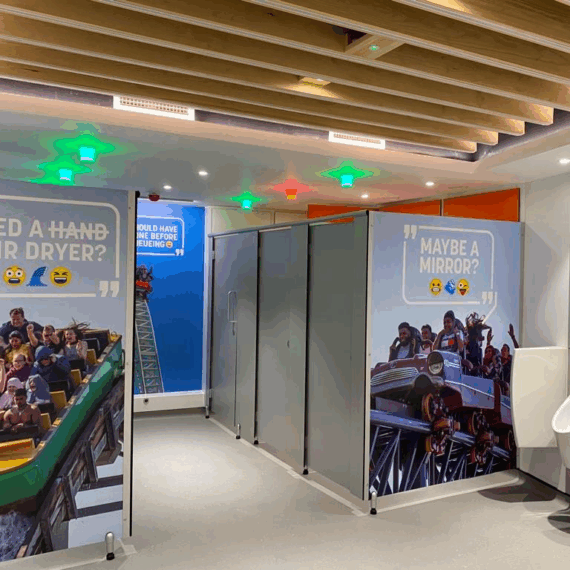
Benefits — Why Organizations Adopt Smart Washroom Sensors with Environmental Analyzer
Modern buildings are transforming into intelligent ecosystems where every function — from lighting to energy and hygiene — is automated, measured, and optimized. Among these innovations, the Smart Washroom Sensor with Environmental Analyzer stands out as a game-changer in facility hygiene management. It transforms traditional, manual washroom maintenance into a data-driven, proactive, and sustainable process.
For businesses, government facilities, shopping malls, airports, and corporate offices in Qatar, the benefits go far beyond cleanliness. These sensors deliver operational efficiency, energy optimization, environmental compliance, and a vastly improved user experience — all aligned with Qatar National Vision 2030 for smart, sustainable infrastructure.
Below are the key benefits of adopting Smart Washroom Sensors with Environmental Analyzers.
1. Unparalleled Hygiene and Sanitation Standards
Hygiene is a non-negotiable factor in any public or commercial facility. Smart Washroom Sensor with Environmental Analyzer maintain the highest level of cleanliness through constant monitoring and automation.
- Occupancy-triggered cleaning: When a washroom reaches a specific user count, the system alerts cleaning staff to sanitize the area, ensuring freshness throughout the day.
- Odor and gas detection: Environmental analyzers measure ammonia, hydrogen sulfide, and volatile organic compounds (VOCs). Rising odor levels automatically trigger ventilation or cleaning alerts.
- Touchless automation: Integration with smart dispensers, flush valves, and hand dryers minimizes the need for contact, reducing cross-contamination and improving user confidence.
This continuous, sensor-based hygiene management ensures every visitor experiences a clean and pleasant environment — a key factor in customer satisfaction and brand reputation.
2. Real-Time Occupancy and Crowd Management
Washrooms often become congested during peak hours, especially in malls, airports, offices, and stadiums. Smart sensors provide accurate occupancy data to manage these scenarios effectively.
- Live user counting: Entry and exit sensors track the number of users inside the facility in real time.
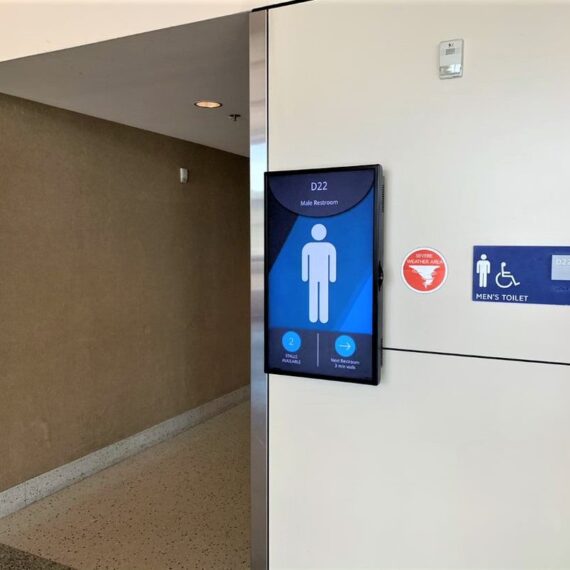
- Display integration: Occupancy data can be shown on digital signage outside the washroom, helping users know which facilities are available.
- Dynamic cleaning scheduling: Instead of time-based cleaning, the system alerts staff based on actual usage.
The result: reduced waiting times, smoother crowd flow, and optimized cleaning staff deployment.
3. Enhanced Air Quality and Comfort
Air quality inside a washroom directly affects user comfort and perception. Smart Washroom Sensor with Environmental Analyzer continuously analyzes environmental conditions to maintain optimal air quality.
- Ammonia & VOC detection ensures early odor control.
- CO₂ monitoring identifies poor ventilation or crowding.
- Humidity and temperature tracking help prevent mold growth and maintain comfort.
- Automated ventilation control activates exhaust systems when air quality drops below acceptable levels.
By maintaining fresh, breathable air, organizations project a sense of care and professionalism while improving user comfort.
4. Energy and Resource Efficiency
Sustainability is a national priority in Qatar, and Smart Washroom Sensor with Environmental Analyzer technology plays an important role in achieving eco-friendly facility management.
- Energy savings: Lights and HVAC systems are automatically adjusted based on occupancy, cutting down unnecessary electricity use.
- Water conservation: Leak detection and controlled activation of flushes and taps reduce water wastage.
- Consumable optimization: Dispensers equipped with fill-level sensors alert staff when paper towels, soap, or tissue levels run low, preventing both overuse and shortage.
These intelligent controls directly reduce operational costs and support LEED and GSAS green building certifications — vital in Qatar’s construction and development sector.
5. Predictive and Efficient Maintenance
Smart Washroom Sensor with Environmental Analyzer automate maintenance workflows and eliminate guesswork from cleaning operations.
- Usage-based alerts notify cleaning teams exactly when attention is needed.
- Predictive maintenance uses historical data to forecast future cleaning or equipment servicing schedules.
- Centralized dashboards allow managers to monitor all restrooms across multiple locations in real time.
This proactive approach reduces manual inspection rounds, saves manpower, and ensures washrooms are always ready for use — without overburdening cleaning staff.
6. Data-Driven Insights and Reporting
Every event captured by the sensors — from user entry to air quality change — is recorded and analyzed in a centralized platform.
- Usage analytics show traffic trends, helping managers identify peak hours.
- Performance reports track cleaning frequency, staff response times, and air quality consistency.
- Long-term analysis helps optimize staffing levels and consumable ordering.
With this data, facility managers can make evidence-based decisions, streamline budgets, and continuously enhance operational efficiency.
7. Enhanced User Experience
User satisfaction is the ultimate indicator of a facility’s success. With smart sensors, visitors experience a consistently clean, odor-free, and comfortable restroom every time.
- No more waiting: Occupancy indicators guide users to available facilities quickly.
- Always clean and stocked: Refill and cleaning alerts prevent shortages or unclean conditions.
- Feedback integration: Some systems allow users to rate cleanliness or request maintenance with a simple touch.
A superior restroom experience contributes directly to brand image, loyalty, and public trust — especially in high-traffic spaces like airports and malls.
8. Hygiene Compliance and Documentation
For sectors such as healthcare, hospitality, food service, and transportation, hygiene compliance is essential. Smart Washroom Sensor with Environmental Analyzer make this effortless.
- Automated logs: Every cleaning event, alert, and air-quality change is recorded digitally.
- Compliance reporting: Reports can be exported for audits or inspections.
- Health and safety assurance: Early detection of poor air quality or malfunctioning equipment reduces risk to users.
This digital trail ensures transparency, accountability, and easy compliance with local hygiene and safety regulations.
9. Operational Cost Reduction
Smart Washroom Sensor with Environmental Analyzer directly translate into lower operational costs without compromising service quality.
- Reduced manual checks: Cleaning teams only act when needed, saving time and labor.
- Less waste: Efficient management of consumables prevents overuse.
- Lower energy and water bills: Automation prevents unnecessary utility use.
The system typically offers a fast return on investment (ROI) as savings accumulate over months of optimized operations.
10. Scalability and IoT Integration
These systems are built with scalability and connectivity in mind — ideal for Qatar’s expanding smart infrastructure.
- IoT-enabled architecture: Sensors connect to central building management systems (BMS) for unified control.
- Flexible expansion: New sensors can be easily added as facilities grow.
- Integration with cleaning workforce apps: Tasks and alerts can be linked directly to mobile devices used by staff.
This adaptability ensures the washroom system grows alongside the facility’s operational and technological evolution.
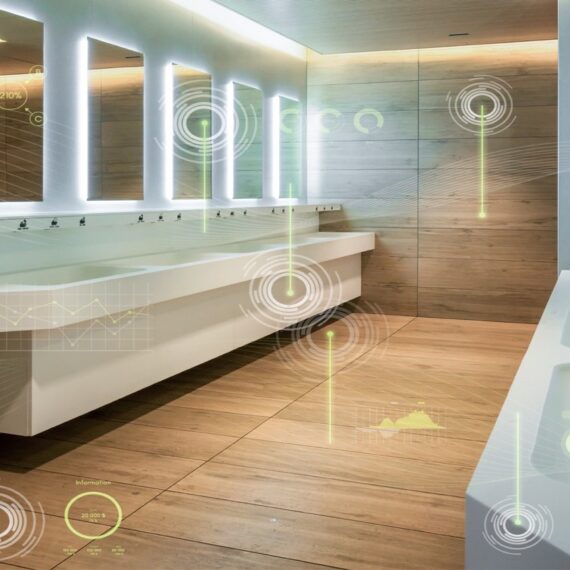
Use Cases — Where Smart Washroom Sensors with Environmental Analyzer Deliver the Most Value
The Smart Washroom Sensor with Environmental Analyzer is designed to provide actionable insights, operational efficiency, and hygiene assurance across a wide range of facilities. By combining occupancy detection, environmental monitoring, and predictive analytics, these systems have become essential for organizations aiming to maintain high standards of cleanliness, sustainability, and user satisfaction.
Below are the most impactful use cases where these systems deliver tangible value:
1. Airports and Transportation Hubs
Airports, metro stations, and bus terminals experience extremely high foot traffic, often fluctuating within hours. Maintaining hygiene and comfort in such facilities is critical for both passenger satisfaction and regulatory compliance.
Benefits in Transportation Hubs:
- Real-time occupancy tracking: Ensures no washroom is overcrowded and allows dynamic allocation of cleaning resources.
- Air quality management: VOC, CO₂, and humidity sensors prevent odor buildup and maintain a pleasant environment.
- Predictive cleaning: Based on traffic patterns, cleaning staff can prioritize high-use washrooms at peak hours.
- Remote monitoring: Facility managers can track all terminals from a centralized dashboard.
Impact: Improved passenger satisfaction, compliance with hygiene standards, and optimized labor deployment.
2. Shopping Malls and Retail Centers
In malls, washrooms are not just functional spaces—they are part of the visitor experience. Clean, well-maintained facilities directly affect brand perception and customer loyalty.
Key Use Cases in Retail:
- Peak-hour analysis: Sensors track traffic near entrances, food courts, and high-traffic stores.
- Odor and air quality control: Environmental analyzers maintain freshness and reduce complaints.
- Consumable monitoring: Real-time alerts for soap, tissue, and hand sanitizer levels prevent stockouts.
- Cleaning optimization: Automated alerts reduce redundant cleaning rounds while ensuring cleanliness.
Impact: Enhanced customer satisfaction, reduced operational costs, and a measurable increase in overall facility efficiency.
3. Corporate Offices and Business Towers
Modern office buildings prioritize employee well-being and operational efficiency. Smart Washroom Sensor with Environmental Analyzer systems help ensure that workplace facilities reflect these priorities.
Key Features for Corporate Use:
- Occupancy insights: Real-time dashboards show usage patterns across floors and departments.
- Sustainability tracking: Monitors energy, water, and consumable usage to support ESG initiatives.
- Predictive maintenance: Cleaning alerts are sent based on actual usage, ensuring high standards with minimal staff.
- Integration with building systems: Connected to HVAC and lighting to optimize energy efficiency.
Impact: Improved employee satisfaction, reduced costs, and a strong sustainability profile.
4. Healthcare Facilities
Hospitals, clinics, and diagnostic centers require the highest hygiene standards to prevent infections. Smart Washroom Sensor with Environmental Analyzer enhance safety and compliance in sensitive environments.
Healthcare Applications:
- Airborne pathogen control: Environmental analyzers detect VOCs and other gases that may indicate contamination or odor issues.
- Occupancy monitoring: Reduces overcrowding and assists in infection control.
- Digital cleaning logs: Provides compliance records for audits and regulatory reporting.
- Consumable management: Ensures soap, sanitizer, and paper supplies are always available, critical for hygiene protocols.
Impact: Safer washrooms, reduced infection risk, and compliance with local and international healthcare standards.
5. Hotels and Hospitality
Luxury hotels and resorts aim to provide a seamless and comfortable experience for guests. Smart Washroom Sensor with Environmental Analyzer support this goal by maintaining a pristine environment while optimizing operational efficiency.
Hospitality Use Cases:
- Guest experience monitoring: Real-time environmental analytics ensure all washrooms meet comfort standards.
- Predictive maintenance: Alerts for cleaning, refills, and odor control minimize guest complaints.
- Energy optimization: Lights and ventilation are automatically controlled based on occupancy.
- Integration with facility management: Central dashboards allow hotels to manage multiple locations from a single interface.
Impact: Elevated guest satisfaction, lower operating costs, and enhanced brand reputation.
6. Educational Institutions
Universities, schools, and training centers have washrooms that serve large populations of students and staff, often with irregular usage patterns. Smart sensors help maintain hygiene without overburdening maintenance teams.
Applications in Education:
- Usage tracking: Understand peak times to optimize cleaning schedules.
- Air quality monitoring: Ensures a healthy environment for students and staff.
- Consumable management: Automated alerts ensure soap and paper supplies are consistently available.
- Behavioral insights: Data helps administrators identify areas where hygiene awareness campaigns may be needed.
Impact: Cleaner facilities, healthier students and staff, and reduced maintenance inefficiencies.
7. Event Venues and Stadiums
High-capacity stadiums and event centers experience spikes in washroom usage during events, making real-time monitoring essential.
Event Venue Use Cases:
- Crowd-based cleaning: Sensors trigger alerts when washrooms reach a pre-set usage limit.
- Air quality control: Ensures odor control during peak events.
- Predictive staffing: Helps allocate cleaning staff effectively based on live occupancy data.
- Centralized monitoring: Event organizers can oversee multiple washroom zones from a single platform.
Impact: Enhanced visitor experience, efficient staff deployment, and better facility hygiene management.
8. Government Offices and Public Buildings
Public offices, courts, and municipal buildings see consistent foot traffic. Smart Washroom Sensor with Environmental Analyzer ensure hygiene standards are maintained while optimizing government resources.
Government Applications:
- Occupancy monitoring: Tracks usage across multiple departments.
- Automated cleaning alerts: Reduces manual checks and increases operational efficiency.
- Energy and water optimization: Automatic control of lights, HVAC, and water fixtures.
- Data for audits: Maintains digital logs for hygiene and maintenance compliance.
Impact: Higher public satisfaction, lower operational costs, and streamlined facility management.
Why Choose Axle Systems for Smart Washroom Sensors in Qatar?
Your Trusted Supplier for Advanced Washroom Solutions
When it comes to implementing Smart Washroom Sensors with Environmental Analyzers in Qatar, Axle Systems stands out as a reliable and experienced partner. With years of expertise in supplying cutting-edge facility management solutions, Axle Systems ensures that every installation delivers efficiency, hygiene, and sustainability, tailored to the unique needs of Qatari facilities.
1. Comprehensive Product Portfolio- Smart Washroom Sensor with Environmental Analyzer
Axle Systems offers a wide range of smart washroom technologies, including:
- Occupancy Sensors: Track real-time usage and manage cleaning schedules efficiently.
- Environmental Analyzers: Monitor air quality, humidity, VOCs, and ammonia levels.
- Touch-Free Dispensers & Flush Systems: Reduce germ transmission and improve user experience.
- Data Dashboards: Cloud-based platforms providing actionable insights, analytics, and reports for facility managers.
By offering a complete solution, Axle Systems ensures facilities can achieve optimal hygiene and operational efficiency from day one.
2. Expertise in Installation and Integration- Smart Washroom Sensor with Environmental Analyzer
A great system requires more than just hardware—it needs professional installation and seamless integration.
- Expert Assessment: Axle Systems evaluates the facility layout, usage patterns, and ventilation to recommend the best sensor placement.
- System Integration: Sensors are integrated with Building Management Systems (BMS), cleaning workforce software, and energy management tools.
- Scalable Solutions: Whether a single office building, a large mall, or multiple airport terminals, Axle Systems ensures the system can expand as facility needs grow.
This approach guarantees that your Smart Washroom Sensor with Environmental Analyzer system works flawlessly, providing real-time insights and alerts from the start.
3. Localized Knowledge and Support- Smart Washroom Sensor with Environmental Analyzer
Operating in Qatar requires familiarity with local standards, regulations, and environmental conditions. Axle Systems has extensive experience serving:
- Airports and transportation hubs
- Hotels and resorts
- Shopping malls and retail centers
- Corporate offices and business towers
- Healthcare facilities and government buildings
By understanding local requirements, Axle Systems ensures compliance with Qatar’s hygiene and environmental standards while tailoring solutions for maximum effectiveness.
4. Dedicated Customer Support- Smart Washroom Sensor with Environmental Analyzer
Axle Systems prides itself on providing exceptional post-installation support:
- 24/7 technical assistance for any sensor or system issues
- Regular system health checks and maintenance guidance
- Software updates for dashboards, analytics, and cloud monitoring
- Staff training to ensure facility teams can fully leverage all features
This commitment ensures that the Smart Washroom Sensor with Environmental Analyzer system remains reliable, accurate, and fully functional throughout its lifespan.
5. Proven Track Record- Smart Washroom Sensor with Environmental Analyzer
Axle Systems has successfully implemented Smart Washroom Sensor with Environmental Analyzer solutions across multiple sectors in Qatar, achieving:
- Higher hygiene standards in public and commercial facilities
- Reduced operational costs through data-driven cleaning and energy optimization
- Improved occupant satisfaction and visitor experience
- Seamless integration with existing building management and IoT systems
These results demonstrate Axle Systems’ ability to deliver tangible outcomes and measurable ROI for every client.
6. Focus on Sustainability and Smart Infrastructure- Smart Washroom Sensor with Environmental Analyzer
Axle Systems aligns with Qatar’s vision for smart, sustainable buildings:
- Sensors optimize energy and water usage, reducing environmental impact.
- Environmental analyzers ensure a healthy indoor environment for all users.
- Cloud-based analytics provide insights for sustainability reporting and ESG compliance.
Clients benefit from eco-friendly, future-ready solutions that support Qatar’s smart city initiatives.
7. Customized Solutions for Every Facility
No two facilities are the same. Axle Systems offers tailored smart washroom solutions:
- Customized sensor placement for optimal coverage
- Adjustable thresholds for air quality, odor, and occupancy alerts
- Integration with specific cleaning protocols or building management systems
- Multi-location management for large organizations with multiple facilities
This flexibility ensures that every client receives a solution that perfectly fits their operational needs.
8. Why Choose Axle Systems — The Bottom Line
Choosing Axle Systems means choosing a trusted partner who delivers complete, reliable, and advanced Smart Washroom Sensor with Environmental Analyzer solutions. With:
- Expertise in Qatar’s regulatory environment
- Proven experience across multiple sectors
- End-to-end support, from consultation to maintenance
- Commitment to sustainability and smart building integration
Axle Systems ensures that your Smart Washroom Sensors with Environmental Analyzer system not only meets hygiene and operational goals but also enhances user experience, reduces costs, and prepares your facility for the future.
Contact Axle Systems Today
For businesses and institutions in Qatar looking to upgrade their washrooms with Smart Washroom Sensors and Environmental Analyzers, Axle Systems is your local expert and supplier.
- Phone: +974 44682391 / +974 77443731
- Email: info@axlesys.com
- Website: www.axlesys.com
- Address: Al Khalidiya Street, Najma, Doha, Qatar.
Common FAQ — Smart Washroom Sensor with Environmental Analyzer
Q1: Do these sensors record video or personal information?
A: No — modern Smart Washroom Sensor with Environmental Analyzer packages are typically built to preserve privacy. Occupancy is captured using anonymized methods (PIR, ToF, or on-device counting). If camera-based people counting is used, the system should be configured so no raw video leaves the device and only anonymous counts are transmitted. Always ask your integrator about privacy features and data retention.
Q2: Which environmental parameters are most important in washrooms?
A: Temperature and humidity affect user comfort and odor dynamics; CO₂ gives an idea of ventilation adequacy; VOCs and ammonia-related compounds can indicate odor and cleanliness issues; particulate matter is less common as a washroom metric but useful for adjacent industrial or high-traffic environments. The required sensors depend on your use case and risk profile.
Q3: Can the system trigger ventilation or fans automatically?
A: Yes — when integrated with a BMS or via a local relay/gateway, the system can trigger mechanical ventilation, boost extract fans, or even trigger HVAC mode changes when thresholds are exceeded.
Q4: How is data accessed and how often is it updated?
A: Data is typically available in real time on web dashboards, with configurable refresh intervals (e.g., every 60 seconds). Historical trends can be viewed, exported, and used for reporting.
Q5: How long do sensors last and how often do they need calibration?
A: Environmental sensors typically need calibration or replacement every 12–36 months depending on model and environment. Battery life for wireless devices is often 2–5 years. Gateway and firmware updates are recommended annually or as vendor releases occur.
Q6: What about vandalism or vandal-resistant options?
A: Ruggedized enclosures and anti-tamper mounts are available. For high-risk locations, choose tamper-proof mounting hardware and recessed installations.
Q7: Do these systems require internet connectivity?
A: For cloud analytics and remote monitoring, internet connectivity is needed. Some systems support local-only deployments and on-premise hosting for organizations that cannot or prefer not to use cloud services.
Q8: Can I integrate the data with my existing CAFM or janitorial app?
A: Yes — systems typically provide APIs, MQTT, and standard connectors to CAFM or dedicated cleaning apps to automate task dispatch.
Q9: What’s the difference between CO₂ and VOC sensors?
A: CO₂ measures carbon dioxide — a proxy for human exhalation and ventilation adequacy. VOC sensors detect volatile organic compounds like odor-causing substances (from cleaning agents, body odor, or building materials). Both are useful: CO₂ for ventilation control; VOC for odor and sanitation triggers.
Q10: How much does an installation cost?
A: Costs vary widely by facility size, number of zones, connectivity method, and integration complexity. Typical commercial installations can range from a modest per-room cost for basic occupancy + temp/RH monitoring to higher amounts for full multi-parameter analytics, integrated fixture telemetry, and full BMS integration. Contact Axle Systems for a site survey and a tailored quote.
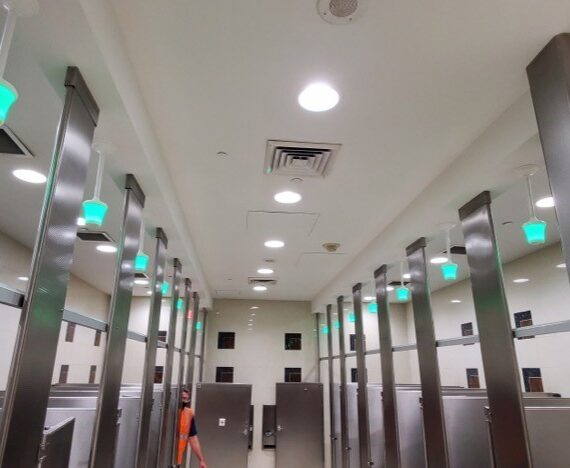
Conclusion
The Smart Washroom Sensor with Environmental Analyzer represents the future of hygiene, efficiency, and sustainability for facilities across Qatar. By combining real-time occupancy monitoring, environmental analysis, and data-driven insights, organizations can ensure clean, comfortable, and well-managed washrooms while optimizing resources and reducing operational costs.
As a trusted supplier, Axle Systems delivers end-to-end solutions, from installation to ongoing support, helping businesses, hotels, airports, malls, and public facilities implement intelligent washroom management with ease. Invest in a Smart Washroom Sensor with Environmental Analyzer today to enhance user experience, maintain high hygiene standards, and future-proof your facility for a smarter, cleaner tomorrow.