

Anti-Shoplifting Systems in Qatar
Shoplifting and internal theft quietly erode retail profits, shrink margins and make merchandising and staffing decisions harder. Modern Anti-Shoplifting Systems — often called Electronic Article Surveillance (EAS) or retail loss-prevention systems — let retailers open merchandise for customers while protecting inventory and improving the customer experience. Below is a comprehensive, practical guide to Anti-Shoplifting Systems: what they are, how they work, pros and cons of different technologies, use cases, return on investment, installation and maintenance tips, legal/privacy considerations, plus how Axle Systems supplies and supports these solutions in Qatar.
What are EAS Anti-Shoplifting Systems?
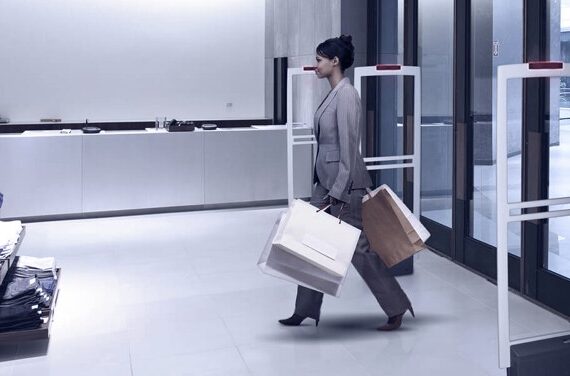
Electronic Article Surveillance (EAS) — commonly called Anti-Shoplifting Systems — is a class of retail security technology that detects the removal of tagged or labelled merchandise from a secured zone (usually store exits). A typical system has three parts:
- Tag/label attached to or embedded in the merchandise (hard tags, soft labels, adhesive labels).
- Deactivator/detacher at the checkout for soft labels and for removing or detaching hard tags at the point of sale.
- Detection antennas/pedestals placed at exits, which sense active tags and trigger an alarm or alert staff.
When a tagged item passes between the exit antennas without being deactivated or detached, the system recognizes the tag’s signature and raises an alarm (audible, visual, and often an on-screen alert in CCTV or the store dashboard). These Anti-Shoplifting Systems let retailers keep products out in the open while retaining theft protection.
Core EAS Anti-Shoplifting Systems technologies — how they differ
Understanding technology differences helps you choose the right solution for store layout, merchandise mix, and budget.
1. Radio-Frequency (RF) — 8.2 MHz (most common for apparel/retail)
- How it works: Tags are simple LC circuits resonant at RF; antennas sweep and detect a resonance dip.
- Strengths: Economical, slim antennas, inexpensive soft labels (stickers) — ideal for clothing and general retail.
- Weaknesses: Performance can suffer near metal or liquids; foil-lined bags can sometimes interfere.
- Typical use: Fashion stores, supermarkets, convenience stores.
2. Acousto-Magnetic (AM) — ~58 kHz
- How it works: Tags contain magneto strictive strips that resonate when excited at the AM frequency. Detectors listen for the resonance.
- Strengths: Excellent detection range, strong at detecting through foil or metal bags, fewer false negatives for small tags.
- Weaknesses: Tags are thicker/harder (hard tags) and costlier than simple RF labels.
- Typical use: High-value goods, large department stores, electronics, stores using foil security bags.
3. Electromagnetic (EM)
- How it works: Uses amorphous metal strips and low-frequency magnetic fields; commonly used in libraries, pharmacies, and small items.
- Strengths: Thin strip labels are useful for books, small gadgets, and delicate items.
- Weaknesses: Not as common for general retail compared to RF/AM; more specialized use cases.
Anti-Shoplifting Systems components explained
- Hard tags: Reusable plastic tags (e.g., on clothing or electronics) detached at checkout with a magnet detacher. Very visible — good theft deterrence.
- Soft labels / adhesive tags: Low-cost stickers deactivated at checkout via a deactivator pad. Great for garments with price tags or boxed items.
- Ink tags: Hard tags that release dye if forcibly removed — deterrent for aggressive theft.
- Deactivators & detachers: Devices at the POS to render labels inactive or remove hard tags cleanly.
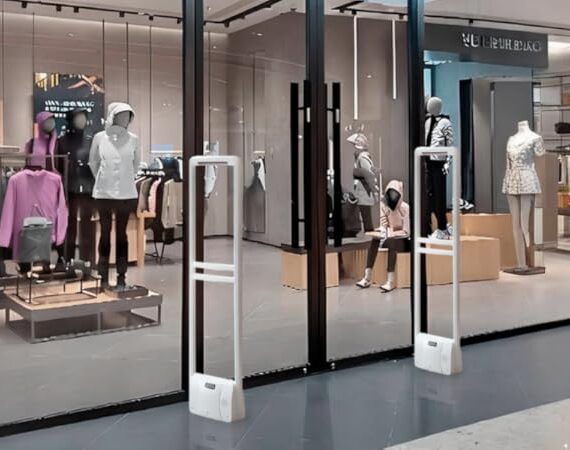
- Antenna/pedestal units: The exit portals that detect tags; they come in slim modern designs and heavy-duty versions for harsh environments.
- Integration modules: Software/APIs that tie antennas into CCTV alerting, POS event correlation (tag alarm + unpaid receipt), staff notification systems or inventory analytics.
Benefits of Anti-Shoplifting Systems
Investing in Anti-Shoplifting Systems is not just about catching thieves — it’s about creating a secure, customer-friendly, and profitable retail environment. Below are the most important benefits explained in detail:
1. Significant Reduction in Shrinkage
- Direct impact on profit margins: Shoplifting and employee theft contribute to retail shrinkage, which globally costs retailers billions each year.
- Even a 1–2% shrink reduction can dramatically improve profit margins, especially in high-turnover sectors like supermarkets, electronics, and apparel.
2. Deterrence Effect — Preventing Theft Before It Happens
- The visible presence of EAS gates, antennas, and security tags acts as a psychological deterrent.
- Potential shoplifters are less likely to attempt theft if they see a store is protected with modern systems.
- Hard tags and ink tags (which release dye if forcibly removed) amplify this deterrence.
- This proactive deterrence reduces not only theft but also staff confrontation risks.
3. Open Merchandising — Better Shopping Experience, Anti-Shoplifting Systems
- Customers prefer being able to touch, try, and view products without having to request them from locked cabinets.
- EAS Anti-Shoplifting Systems allow stores to confidently display high-value goods in the open, boosting sales.
- Example: A cosmetics retailer in Doha reported higher impulse sales after moving small but valuable products (like perfumes and creams) from behind the counter to open shelves — thanks to EAS protection.
4. Improved Staff Efficiency
- Without EAS, staff must constantly monitor high-risk zones, often leading to customer service gaps.
- With EAS, staff can focus on customer engagement and upselling rather than surveillance.
- Alarm triggers guide staff attention only when necessary, which improves resource allocation.
5. Enhanced Safety for Employees
- Shoplifting incidents can escalate into confrontations, which are risky for staff.
- EAS Anti-Shoplifting Systems reduce the need for direct intervention, since alarms alert staff and CCTV provides evidence.
- Staff can follow safe escalation protocols instead of physical confrontation, reducing liability for retailers.
6. Integration with CCTV & POS for Smarter Security
- When combined with CCTV, alarms can automatically tag video footage of incidents.
- Integration with POS systems verifies whether the alarmed item was actually paid for or not, minimizing false accusations.
- This data-driven approach strengthens security while protecting innocent customers from embarrassment.
7. Customer Confidence & Brand Reputation
- A store known for organized, secure, and safe shopping earns trust.
- Customers feel comfortable shopping in environments where theft is visibly under control.
- On the flip side, stores plagued by shoplifting often appear chaotic and unsafe, damaging brand image.
- A safe shopping environment encourages repeat business and customer loyalty.
8. Lower Insurance & Operational Costs
- Retailers with effective Anti-Shoplifting Systems measures may enjoy reduced insurance premiums.
- Less shrinkage means fewer write-offs, improved stock accuracy, and better supply chain efficiency.
- Over time, this creates a more predictable and profitable business model.
9. Analytics & Data Insights
- Modern EAS Anti-Shoplifting Systems can log when and where alarms occur, allowing managers to analyze theft patterns.
- Example insights:
- Are theft attempts more frequent during specific hours (e.g., busy evenings)?
- Do certain product categories attract more theft?
- Are specific store layouts creating blind spots?
- These insights help improve staff scheduling, store layout, and inventory planning.
10. Quick Return on Investment (ROI)
- Unlike many long-term technology investments, Anti-Shoplifting Systems often pay for themselves quickly.
- ROI can be achieved within a year in high-shrink environments.
11. Scalability for Multi-Store Retail Chains
- For brands with multiple outlets, Anti-Shoplifting Systems can be standardized across branches, creating consistent policies and data collection.
- Centralized reporting dashboards help retail chains compare shrinkage rates across locations and identify high-risk stores.
- This scalability ensures the loss-prevention strategy evolves with business growth.
12. Support for Omnichannel Retailing
- As retailers in Qatar embrace click & collect, Anti-Shoplifting Systems ensure items remain secure even when reserved online and picked up in-store.
- This balances the need for open merchandise displays with secure order fulfillment.
Typical Use Cases of Anti-Shoplifting Systems
Anti-Shoplifting Systems (EAS) are not “one size fits all.” Different industries and store formats have unique requirements based on merchandise type, customer behavior, and store layout. Below is an expanded breakdown of the most common use cases, with practical examples of how these Anti-Shoplifting Systems are applied — especially relevant for businesses in Qatar.
1. Fashion & Apparel Retailers-Anti-Shoplifting Systems
- Why it matters: Clothing, accessories, and footwear are high-shrink categories. Apparel items are easy to conceal and often targeted by shoplifters.
- Solution:
- Hard tags for garments, jackets, and handbags.
- Soft labels for smaller accessories and packaged apparel.
- Ink tags for luxury items, which deter theft by threatening visible damage to the product if forcibly removed.
- Example in Qatar: International fashion chains in malls like Doha Festival City, Villaggio Mall, and Place Vendome use EAS gates at entrances to protect clothing lines while allowing customers to freely browse.
2. Department Stores & Hypermarkets-Anti-Shoplifting Systems
- Why it matters: Large stores with multiple product categories face diverse theft risks — from cosmetics and apparel to electronics and groceries.
- Solution:
- Combination of RF systems for apparel, AM systems for electronics, and soft labels for cosmetics and packaged goods.
- Wide-aisle gates for large entrances.
- Centralized dashboards for monitoring multiple exits simultaneously.
- Example: Hypermarkets in Qatar, such as Carrefour and Lulu, often use hybrid systems to cover everything from high-value clothing to everyday items, ensuring consistent protection across departments.
3. Electronics & Mobile Phone Stores-Anti-Shoplifting Systems
- Why it matters: High-value items like smartphones, tablets, laptops, and accessories are prime shoplifting targets.
- Solution:
- AM tags for small electronics that may be concealed in foil-lined bags.
- Display security holders combined with EAS hard tags for demo units.
- Integration with CCTV for evidence capture when alarms trigger.
- Example: Retailers such as Jarir Bookstore and Virgin Megastore in Qatar deploy EAS alongside display security solutions to keep phones, tablets, and gaming consoles safe.
4. Pharmacies & Cosmetics Stores
- Why it matters: Small, high-value products (like perfumes, skincare, vitamins, and medicines) are frequently targeted.
- Solution:
- EM (Electro-Magnetic) strip tags for pharmaceuticals and small boxes.
- AM soft labels for cosmetics that may be carried in foil or metallic packaging.
- Narrow detection systems for pharmacy aisles or single-door exits.
- Example: Popular chains like Wellcare Pharmacy and Boots in Qatar use EAS to safeguard cosmetics and health supplements while keeping the customer experience smooth.
5. Supermarkets & Convenience Stores
- Why it matters: Everyday theft of small consumables (razor blades, chocolates, batteries, alcohol, etc.) adds up to significant annual shrinkage.
- Solution:
- RF soft labels for packaged goods.
- Shelf-level tagging for high-risk items.
- Integration with POS deactivation pads at checkout.
- Example: Al Meera Supermarket outlets in Qatar use RF label-based EAS Anti-Shoplifting Systems to protect grocery items without slowing checkout flow.
6. Libraries, Bookstores & Educational Institutions
- Why it matters: Books and printed materials are valuable and easily hidden.
- Solution:
- EM strip labels embedded inside books.
- Deactivation pads at checkout or borrowing counters.
- Example: University libraries in Qatar use EM-based anti-theft strips to ensure books are borrowed correctly through the Anti-Shoplifting Systems. Bookstores like WHSmith in Hamad International Airport also use soft label solutions for magazines and books.
7. Jewellery & Luxury Retail
- Why it matters: Extremely high-value items are at risk, even in monitored stores.
- Solution:
- Hard tags with ink or alarms for displayed items.
- Integration with access control and CCTV.
- In some cases, hybrid solutions where only packaging (cases/boxes) are tagged.
- Example: Jewellery outlets in Gold Souq (Souq Waqif, Doha) often combine traditional counters with hidden EAS solutions for packaged or boxed items.
8. Sports Stores & Footwear Outlets
- Why it matters: Shoes, branded clothing, and sports accessories are common theft targets due to brand desirability.
- Solution:
- Hard tags on shoes and apparel.
- RF gates at store exits.
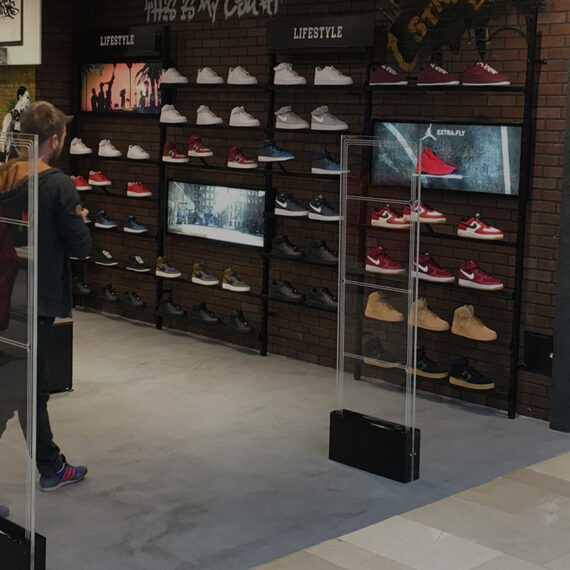
- Example: Global brands like Nike, Adidas, and Foot Locker in Qatar malls use RF hard tags on footwear and accessories to ensure security.
9. Airport Duty-Free & Travel Retail
- Why it matters: Duty-free shops carry premium cosmetics, perfumes, alcohol, and electronics — small but high-value items ideal for theft attempts.
- Solution:
- AM systems with wide entrance gates to cover heavy passenger flow.
- Soft labels for cosmetics and spirits.
- Hard tags for luxury bags and accessories.
- Example: Hamad International Airport duty-free shops use advanced AM detection systems integrated with security teams.
10. Hospitality & Leisure (Hotels, Gyms, Resorts)
- Why it matters: Gift shops, spas, and gyms often sell branded merchandise or small luxury items prone to theft.
- Solution:
- Compact RF systems with adhesive labels.
- Integration with CCTV at entry/exit.
- Example: High-end hotels in Doha (e.g., The Ritz-Carlton, W Doha) often secure their gift boutiques with discreet RF solutions to maintain elegance while preventing shrinkage.
11. Specialty & Niche Retail (Toys, Baby Stores, Optical Shops)
- Why it matters: Items like baby formula, toys, sunglasses, and contact lenses are high-risk.
- Solution:
- Soft labels for boxed toys and formula.
- Specialty tags for eyewear and optical lenses.
- Example: Stores like Mumzworld and Babyshop in Qatar use EAS labels on baby formula tins and toys to cut shrinkage. Optical retailers in malls use mini hard tags for sunglasses and spectacles.
Choosing the right EAS Anti-Shoplifting Systems
Selecting the right system requires matching store needs to technology:
- Inventory profile: Are items mostly textiles, boxed electronics, metal/liquid-rich products, or small/flat items? (RF is common for textiles; AM is better for foil bags/metal)
- Store layout & exit design: Wide entrances may need multiple antenna arrays or AM gates with longer detection zones.
- Aesthetics vs performance: Slim RF pedestals look modern; AM provides more robust detection but often with larger hardware.
- Integration needs: Do you want alarms sent to CCTV, POS correlation to identify unpaid transactions, or data sent into Loss Prevention dashboards? Prioritize vendors that support APIs and system integration.
- Tag lifecycle & consumable costs: Soft labels are cheaper but consumable; hard tags cost more initially but are reusable. Consider tag inventory and operational processes (detaching/re-attaching).
- False alarm tolerance: Some environments (metal racks, multiple doors) increase false positives. Choose systems with intelligent signal processing and calibration.
- Budget & ROI horizon: Estimate shrink reduction and calculate payback. Many retailers see ROI in months to a couple of years depending on shrink levels and merchandise value. (Market data supports continued EAS adoption because of demonstrable ROI).
Operational best practices
A well-designed deployment is as much about process as technology:
- Staff training: Teach staff proper detacher/deactivator use, response procedures for alarms, and safe confrontation policies.
- Tag management: Maintain a tag lifecycle log — how many hard tags are deployed, reattached, replaced, or lost.
- Checkout procedures: Ensure consistent deactivation to avoid customer inconvenience and unnecessary alarms.
- Regular calibration & maintenance: Antennas must be calibrated for their environment (metal shelving, signage, and seasonal displays change the RF environment). Schedule vendor maintenance.
- False alarm reduction: Place polite signage, use polite alarm tones, and integrate with CCTV to assess cause-and-effect.
- Incident logging & review: Keep a simple incident log (alarm, CCTV evidence, outcome) to analyze patterns and refine placement or staffing.
Common concerns & myths
- “EAS systems give 100% protection.” No system eliminates theft entirely — but correctly deployed EAS combined with process and CCTV dramatically reduces opportunistic theft and improves evidence capture.
- “Tags will trigger false alarms constantly.” Modern systems with proper site surveys and calibration have low false alarms; false positives are usually due to incorrect tag deactivation or nearby metal/installation issues.
- “EAS is intrusive to customers.” When designed thoughtfully (discrete antennas, quiet alarms, staff training), most customers don’t mind — and open merchandising increases sales.
- “RF is always cheaper and better.” RF is cost-effective for many retailers, but AM may be a better investment for stores with frequent foil bag concealment or metal interference.
Why professional installation & a local partner matter
A local integrator brings:
- Site surveys tailored to store specifics (exits, shelving, metallic fixtures).
- Local support & spares (tag supplies, rapid detacher replacement).
- Regulatory familiarity and local workmanship standards — important in Qatar’s retail environment.
- Integration expertise with local CCTV and POS vendors and language/operational alignment with your staff.
Axle Systems — Your Trusted Supplier & Integrator of Anti-Shoplifting Systems in Qatar
At Axle Systems, we understand that loss prevention is more than just stopping theft — it’s about ensuring business continuity, customer trust, and long-term profitability. As a leading technology solutions provider in Qatar, we have been delivering world-class Anti-Shoplifting Systems to retailers, supermarkets, malls, showrooms, and specialty stores across the country.
Why Choose Axle Systems?
Authorized Distributor of Leading Global Brands
We supply internationally recognized Anti-Shoplifting Systems and EAS (Electronic Article Surveillance) systems that are proven in retail environments worldwide. Whether you need AM (Acousto-Magnetic), RF (Radio-Frequency), or RFID-based solutions, Axle Systems ensures you get genuine, certified products with reliable warranties.
Tailored Solutions for Every Retail Sector
Different retail environments have different challenges. A luxury boutique requires discreet but powerful tagging systems, while a supermarket needs wide-aisle antennas and high-durability tags. Our experts design customized Anti-Shoplifting Systems to match your business type, store layout, and budget.
Seamless Integration with Existing Security Systems
Our solutions can be integrated with:
- CCTV cameras for incident recording
- POS (Point of Sale) systems for transaction verification
- Inventory management software for real-time tracking
This makes loss prevention smarter, data-driven, and cost-effective.
End-to-End Project Management
We don’t just sell — we handle everything from consultation and site survey to installation, staff training, and post-installation support. Our certified technicians ensure that the system is deployed effectively and works flawlessly from day one.
24/7 Technical Support in Qatar
Unlike overseas vendors, we are right here in Qatar, with a dedicated support team available to assist you anytime. This means faster response times, quick troubleshooting, and minimal downtime for your store operations.
Experience with Qatar’s Retail Landscape
We’ve worked with leading malls, supermarkets, fashion brands, pharmacies, and electronics showrooms across Qatar. Our deep understanding of local retail trends and MOI compliance requirements helps us design systems that meet international standards while aligning with local regulations.
Our Anti-Shoplifting Systems Solutions Include:
- EAS Antennas & Gates (RF/AM)
- Hard Tags & Soft Labels for apparel, electronics, cosmetics, and FMCG products
- Ink Tags for high-value merchandise
- Deactivation Systems for checkout counters
- RFID-based Smart Retail Security Solutions
- Integration with CCTV & POS Systems
Why Qatar’s Retailers Trust Axle Systems
With shoplifting on the rise and retail competition intensifying, retailers in Qatar trust Axle Systems to protect their merchandise, reduce shrinkage, and improve customer experience. Our solutions allow stores to confidently display products, improve staff efficiency, and build a safer shopping environment for customers.
Contact Axle Systems
Address: Al Khalidiya Street, Najma, Doha, Qatar
Phone: +974 44682391 / +974 77443731
Email: info@axlesys.com
Website: www.axlesys.com
At Axle Systems, we don’t just install devices — we build long-term partnerships with our clients, helping them stay secure, efficient, and profitable.
Frequently Asked Questions (FAQ)
1. Which EAS technology is best for my store — RF or AM?
It depends on your merchandise and environment. RF (8.2 MHz) is cost-effective and good for apparel. AM (58 kHz) offers stronger detection through foil and metal, better for electronics and large stores. A site survey will determine the best choice.
2. Will EAS tags damage products or packaging?
No — soft labels are adhesive and designed for retail packaging; hard tags attach to garments or displays and have no effect on product functionality. Specialized tags exist for fragile items. Proper tag selection avoids damage.
3. How much does an EAS installation cost?
Costs vary widely: a small boutique can expect lower hardware and installation costs (antennas + labels). Larger or multi-door deployments, AM systems and integrations with CCTV/POS raise costs. Calculate ROI from expected shrink reduction to determine payback. Industry reports show sustained market growth due to positive ROI in many deployments.
4. How do I handle frequent false alarms?
Common causes are undetached labels, incorrect calibration, or environmental interference. Solutions: re-calibrate antennas, re-train staff on deactivation, check for tag remnants or metal objects near the gate.
5. What maintenance is required?
Periodic antenna calibration, test tags for detection, replace worn/damaged tags and ensure deactivator/detacher functionality. Consider an annual service contract with your integrator.
6. Can EAS integrate with my POS and CCTV?
Yes — modern systems support POS correlation (to check if an item was purchased) and can flag CCTV clips for rapid review. Integration reduces false alarms and speeds incident response.
7. Do EAS systems cause health or electronic interference?
EAS systems operate at low power; RF and AM EAS systems have been widely used in retail for decades with no demonstrated harmful health effects for the general public. However, EAS operates at specific frequencies — professional installation avoids interference with nearby sensitive equipment.
Conclusion
In today’s competitive retail environment, Anti-Shoplifting Systems are no longer optional — they are essential. From reducing shrinkage and boosting profit margins to creating a safer shopping experience and empowering staff, these systems provide measurable value for businesses of all sizes. Whether it’s a supermarket, fashion outlet, electronics showroom, or pharmacy, investing in modern Anti-Shoplifting Systems ensures products are protected, customers feel secure, and business operations run smoothly.
At Axle Systems, we take pride in being one of the most trusted suppliers and integrators of Anti-Shoplifting Systems in Qatar. With world-class technology, customized solutions, and dedicated local support, we help retailers safeguard their merchandise while enhancing customer experience. Our expertise ensures that your investment delivers long-term results and peace of mind.
If you are a retailer in Qatar looking to protect your assets, reduce losses, and build a secure shopping environment, Axle Systems is your trusted partner.
Contact us today at +974 44682391 or info@axlesys.com to learn how we can design and implement the right Anti-Shoplifting Systems for your business.