

EAS Solutions in Qatar
Inventory shrinkage — whether from theft, accidental loss, or administrative error — eats into retail margins. For many retailers the world over, Electronic Article Surveillance (EAS) systems are the first and most cost-effective line of defense. EAS helps deter theft, reduce losses, and create a visible security presence that improves staff confidence and customer experience.
This comprehensive blog post covers everything retailers, shopping-mall managers, pharmacies, libraries, and logistics managers need to know about EAS solutions: what they are, how they work, the different technologies available, product components, installation best practices, and the measurable business benefits. We also explain why Axle Systems is the supplier of choice for EAS Solutions in Qatar and provide a practical FAQ to answer common questions.
What is EAS Solutions?
EAS Solutions is a set of technologies used to prevent unauthorized removal of merchandise from a protected area. The system works by attaching a small tag or label to an item and installing detection antennas (pedestals/gates) at the exits. If a tagged item passes through the detection field without being deactivated (or detached) at the point of sale, the system triggers an alarm — alerting staff and deterring theft.
EAS is widely used across retail verticals (clothing, electronics, cosmetics), libraries, pharmacies, and even warehouses. Modern EAS Solutions also integrate with point-of-sale (POS) systems, CCTV, and access control to create a layered security approach.
Main EAS Solutions Technologies
There are four main EAS Solutions technologies in use today. Choosing the right one depends on the merchandise type, store layout, aesthetic requirements, and sensitivity to false alarms.
1. Radio Frequency (RF)
- How it works: Uses radio-frequency tags and gates typically operating at ~8.2 MHz.
- Best for: General retail — apparel, groceries, cosmetics, books.
- Pros: Cost-effective tags and gates; good detection range; low maintenance.
- Cons: Vulnerable to metal interference in some layouts; passive RF labels are small but have lower range than some AM tags.
2. Acousto-Magnetic (AM) / Magneto-Acoustic
- How it works: Uses acousto-magnetic resonators that respond to magnetic interrogation signals.
- Best for: Apparel and stores with high-metal-content fixtures; thicker merchandise.
- Pros: Excellent detection through liquids and metals; lower false alarm rates in noisy RF environments; long read range.
- Cons: Tags are larger and more visible; higher cost per tag compared to RF; detachers/pricers may be heavier.
3. Electromagnetic (EM)
- How it works: Uses soft magnetic strips that trigger detection.
- Best for: High-value items like CDs, DVDs (legacy), and specialized applications where thin labels are needed.
- Pros: Very thin labels; can be effective on specific merchandise.
- Cons: Shorter detection range; limited to certain use-cases; somewhat legacy technology compared to RF/AM.
4. Ultra-High Frequency RFID (UHF-RFID) — EAS + Inventory
- How it works: UHF RFID tags operate at higher frequencies and can also provide inventory and item-level visibility.
- Best for: Retailers seeking EAS Solutions plus inventory/data tracking (omni-channel retailers).
- Pros: Dual-purpose — loss prevention and inventory accuracy; long read range; can be used for analytics and item-level stock visibility.
- Cons: Cost per tag is higher; environment and metal/liquid interference must be managed; requires RFID infrastructure and middleware.
Core components of an EAS Solutions
A typical EAS Solutions deployment includes the following components:
- Tags & Labels
- Hard tags: Reusable, attached to garments or boxed items; require detachers.
- Soft labels (stickers): Disposable; applied to boxed or low-cost items and deactivated at POS.
- RFID-EAS tags: Combine EAS Solutions protection with RFID inventory capability.
- Detachers & Deactivators
- Detacher: Mechanical device used to remove hard tags at checkout.
- Deactivator: Electronic unit that disables soft labels so they won’t alert on the exit gate.
- Detection Antennas / Pedestals
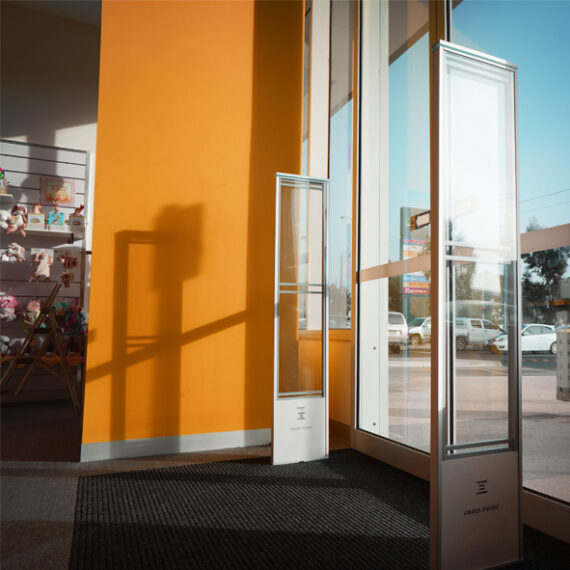
- Located at store exits; form an invisible detection field that senses active tags. Designs include slimline glass, floormount, and swing gates.
- Modern pedestals can be integrated with turnstiles or combined with cosmetics/anti-theft pedestals.
- Integration Devices & Middleware
- POS integration to automatically deactivate labels, video management system (VMS) integration for linked footage, and retail analytics integrations when RFID is used.
- Accessories
- Tag pins, lanyards, ink tags (for extra deterrence), education materials for staff, and signage.
Key Features Modern Retailers Should Expect in EAS Solutions
When investing in an Electronic Article Surveillance (EAS) system, retailers need to ensure the solution is not only effective today but also scalable and adaptable for tomorrow’s challenges. Below are the key features modern EAS Solutions should provide, with explanations and real-world examples to illustrate their value.
1. High Detection Accuracy
- What it means: The system must reliably detect active tags passing through the exit zone, with minimal false alarms.
- Why it matters: Missed detections mean stolen goods slip away unnoticed, while excessive false alarms frustrate customers and staff.
- Example: A clothing store with slim exits needs antennas that accurately detect hard tags on garments, even when customers carry shopping bags or trolleys.
2. Aesthetic and Slimline Designs
- What it means: Detection antennas should blend seamlessly with the store’s interior design.
- Why it matters: Modern retail spaces prioritize customer experience, and bulky, intrusive gates can negatively impact the store’s ambiance.
- Example: Luxury boutiques in malls often choose glass-panel AM pedestals with sleek lighting that doubles as a branding feature.
3. Easy POS Integration
- What it means: Deactivators and detachers should integrate smoothly with the checkout workflow.
- Why it matters: Customers expect quick, hassle-free checkout. Poor integration can lead to long queues or unintentional alarms.
- Example: Grocery stores use RF deactivators placed under barcode scanners, so labels are automatically deactivated when scanned.
4. Modularity and Scalability
- What it means: The system should be easy to expand or upgrade as your business grows.
- Why it matters: Retailers often open new branches or add new exits — the EAS Solutions system must adapt without requiring a full replacement.
- Example: A supermarket chain in Qatar might start with two RF pedestals at the main exit and later add more units when expanding to larger stores.
5. Analytics and Reporting
- What it means: Advanced EAS Solutions (especially RFID-based) can provide insights into alarms, tag deactivations, and store traffic.
- Why it matters: Data-driven decision-making helps retailers improve both security and sales operations.
- Example: A fashion retailer uses RFID-EAS Solutions to monitor which items trigger the most alarms — identifying high-risk SKUs for better security strategies.
6. Remote Monitoring and Health Checks
- What it means: Systems that can be monitored remotely for performance, downtime, or tampering.
- Why it matters: Downtime equals vulnerability — retailers need alerts if a gate stops working or is deliberately sabotaged.
- Example: Axle Systems provides remote diagnostics, so a service technician can troubleshoot issues without delay.
7. Multiple Alarm Modes
- What it means: Options for audible alarms, silent alerts to staff devices, or integration with CCTV.
- Why it matters: Not all environments need loud alarms; sometimes a discreet notification is better for security and customer experience.
- Example: Pharmacies may prefer silent alarms that notify staff on handheld devices, avoiding confrontation in front of customers.
8. Adjustable Sensitivity Zones
- What it means: Fine-tuning detection strength to avoid interference or false alarms.
- Why it matters: High-traffic stores with metallic shopping carts or nearby electronics need customized sensitivity.
- Example: A hypermarket in Doha adjusts its RF gate sensitivity to avoid triggering alarms from trolleys passing near the antennas.
9. Power Backup and Surge Protection
- What it means: Built-in backup options to keep EAS Solutions running during power interruptions.
- Why it matters: Even short outages can expose stores to theft risk.
- Example: Electronics retailers in Qatar often use UPS-backed EAS Solutions gates to ensure uninterrupted security during short power cuts.
10. Compliance and Safety
- What it means: Systems should meet international standards for electromagnetic safety and regional compliance.
- Why it matters: Ensures the safety of customers, staff, and equipment, while avoiding regulatory issues.
- Example: All Axle Systems EAS solutions meet EMC and CE safety certifications, making them safe for public environments.
11. Customizable Tagging Options
- What it means: Availability of hard tags, soft labels, lanyards, ink tags, and source tagging (tags applied at manufacturing).
- Why it matters: Different product types require different tagging strategies.
- Example: A perfume shop uses soft labels on boxed items, while a clothing retailer uses reusable hard tags.
12. Future-Ready with RFID Integration
- What it means: Option to upgrade from standard EAS Solutions to RFID-enabled systems.
- Why it matters: RFID provides item-level visibility for inventory management, omni-channel retailing, and analytics.
- Example: A department store installs RFID-ready pedestals now, with plans to activate full RFID capability in the future.
Benefits of Implementing EAS Solutions
Investing in an EAS Solutions is not just about preventing theft — it’s about strengthening the entire retail ecosystem. From reducing shrinkage to improving customer trust, EAS brings multiple business, operational, and financial advantages. Below are the key benefits of EAS Solutions, explained in detail with practical examples.
1. Reduced Shrinkage and Higher Margins
- How it helps: Shrinkage (losses from theft, fraud, or errors) directly impacts profits. Even a 1–2% shrink rate can represent huge losses over time.
- Why it matters: By deterring theft and alerting staff to unauthorized removals, EAS ensures more items stay on shelves for paying customers.
- Example: A fashion retailer in Doha saw a 40% drop in missing merchandise after installing EAS Solutions gates, directly boosting its profit margins.
2. Strong Visual Deterrent Against Theft
- How it helps: The presence of EAS Solutions antennas, tags, and “Store Protected” signage discourages opportunistic shoplifters before they act.
- Why it matters: Most theft is opportunistic — a clear deterrent is often enough to prevent incidents.
- Example: In supermarkets, even placing visible RF tags on high-theft goods like baby formula and razors can reduce attempted theft significantly.
3. Operational Efficiency and Workflow Improvements
- How it helps: EAS Solutions reduces the need for constant manual surveillance, freeing staff to focus on customer service.
- Why it matters: Employees spend less time monitoring for theft and more time assisting customers, restocking, or managing checkout.
- Example: Pharmacies in Qatar that implemented EAS Solutions reported shorter checkout times because staff didn’t have to manually check every basket for hidden items.
4. Enhanced Staff Safety and Morale
- How it helps: Staff no longer need to constantly confront suspicious individuals; alarms notify them automatically when a theft attempt occurs.
- Why it matters: Employees feel safer, and turnover is reduced when workplaces are secure.
- Example: In a busy electronics store, silent alarm notifications sent to security staff prevented aggressive confrontations between sales staff and shoplifters.
5. Better Customer Shopping Experience
- How it helps: When stores can prevent theft effectively, they avoid over-securing merchandise with locked cabinets or constant staff oversight.
- Why it matters: Customers can browse freely, handle products, and shop with confidence without feeling they are under suspicion.
- Example: A perfume shop in Doha removed bulky locked displays after installing EAS, creating a more inviting shopping environment for customers.
6. Integration with Loss Prevention Programs
- How it helps: Modern EAS integrates with POS, CCTV, and even ERP systems for a layered approach to security.
- Why it matters: This ensures theft incidents are recorded, linked with video footage, and analyzed for patterns.
- Example: A department store integrated EAS Solutions alarms with CCTV — so whenever a gate triggered, cameras automatically bookmarked the incident, making investigations faster.
7. Return on Investment (ROI)
- How it helps: EAS pays for itself quickly by reducing shrinkage. ROI often comes within months for high-shrink environments.
- Why it matters: Unlike some security solutions, EAS is measurable — you can compare pre- and post-installation shrink data.
- Example: A supermarket chain in Qatar calculated that EAS Solutions paid for itself in under 9 months, thanks to reduced theft of high-demand items.
8. Inventory Accuracy (RFID-EAS Systems)
- How it helps: RFID-enabled EAS tags double as inventory tags, allowing fast stock counts and real-time visibility.
- Why it matters: Accurate inventory reduces out-of-stocks, prevents over-ordering, and supports online-to-offline retail (click & collect, same-day delivery).
- Example: A fashion retailer integrated RFID-EAS and cut its stocktaking time from 8 hours to 30 minutes, while also reducing theft.
9. Brand Protection and Customer Trust
- How it helps: A store known for being secure and well-stocked builds customer trust.
- Why it matters: Customers are more likely to return to stores where they feel safe and where shelves are reliably stocked.
- Example: Malls in Qatar prefer tenants with EAS Solutions, as they project a professional and reliable image to shoppers.
10. Scalability Across Multiple Stores
- How it helps: EAS Solutions can be standardized across multiple locations, enabling chain-wide consistency.
- Why it matters: Retailers can centrally monitor shrinkage and performance across branches.
- Example: A chain of pharmacies rolled out a standard EAS Solutions across 12 branches in Qatar, making shrink analysis easier and reducing costs through bulk purchasing of tags.

Use Cases — Where EAS Solutions Work Best
EAS Solutions are versatile and have applications across a wide range of industries. While their primary role is theft prevention, they also play a significant role in improving operational efficiency, customer experience, and inventory management. Below are some of the most common and impactful use cases of EAS Solutions in Qatar and beyond:
1. Retail Stores and Supermarkets
Retail environments remain the most widespread users of EAS Solutions. From small shops to large supermarkets, EAS solutions help protect products while allowing free customer movement.
- Application: Clothing stores, electronics outlets, grocery stores, and pharmacies.
- Why it works: EAS tags and labels protect high-value items like apparel, perfumes, cosmetics, and electronic gadgets. Hard tags can be easily attached and detached by staff during billing, ensuring legitimate sales.
- Impact: Minimizes shrinkage, reduces financial loss, and creates a visible deterrent to shoplifters.
2. Shopping Malls
Large malls with multiple tenants face the challenge of managing security across various brands and shops. EAS Solutions help ensure uniform protection.
- Application: Centralized EAS Solutions gates at mall exits or individual store setups within the mall.
- Why it works: Integrating EAS Solutions across different stores creates consistency in security standards.
- Impact: Enhances the reputation of the mall as a safe shopping destination while safeguarding tenants’ interests.
3. Fashion & Apparel Industry
Fashion retailers often deal with high volumes of merchandise, including premium items. These are particularly attractive targets for theft.
- Application: Clothing, handbags, footwear, accessories, and luxury goods.
- Why it works: Soft EAS tags can be sewn into garments or placed discreetly on labels without affecting customer experience.
- Impact: Protects valuable collections, particularly during peak shopping seasons like Ramadan and Eid in Qatar.
4. Electronics & Mobile Stores
Electronic gadgets, smartphones, tablets, and accessories are high-value, small-sized items — making them vulnerable to theft.
- Application: Mobile stores, IT retailers, and electronic chains.
- Why it works: Hard tags and alarming cable locks secure items on display, ensuring both accessibility and protection.
- Impact: Prevents theft of high-ticket items and instills customer confidence in the brand.
5. Pharmacies and Healthcare Retail
Pharmacies often deal with medicines and healthcare products that are both expensive and easy to conceal.
- Application: Over-the-counter medicines, cosmetics, supplements, and medical devices.
- Why it works: EAS Solutions protect restricted or costly products while allowing open shelving for customer convenience.
- Impact: Helps maintain compliance with local regulations and prevents misuse or theft of controlled products.
6. Hypermarkets and Department Stores
Hypermarkets manage a large inventory across diverse categories — groceries, clothing, electronics, toys, and household items.
- Application: End-to-end coverage of different product zones.
- Why it works: Combination of soft labels (for groceries and packaged goods) and hard tags (for apparel and electronics).
- Impact: Provides comprehensive loss prevention while streamlining checkout operations.
7. Bookstores and Libraries
Books, magazines, and stationery items are relatively easy to conceal. Libraries also face challenges with unauthorized removal of books.
- Application: Educational institutions, university libraries, and commercial bookstores.
- Why it works: RF or EM EAS systems are particularly effective in protecting paper-based items without damaging them.
- Impact: Preserves valuable intellectual resources and reduces replacement costs.
8. Airports and Duty-Free Shops
Duty-free shops at airports handle a large flow of international travelers and luxury products like perfumes, spirits, and electronics.
- Application: Perfumes, liquor, jewelry, and travel essentials.
- Why it works: EAS Solutions gates at store exits ensure only paid items leave the store, despite high passenger traffic.
- Impact: Protects premium merchandise and enhances brand trust in global retail settings.
9. Luxury & Jewelry Stores
High-value items like gold, diamonds, and watches need maximum security.
- Application: Watches, fine jewelry, and premium accessories.
- Why it works: Advanced EAS with integrated RFID adds layered protection and real-time monitoring.
- Impact: Prevents even the most sophisticated theft attempts and supports insurance compliance.
10. Sports & Outdoor Equipment Stores
Sporting goods, fitness equipment, and outdoor gear are often bulky but expensive.
- Application: Sports apparel, branded footwear, gym accessories, and camping gear.
- Why it works: Specialized tags secure irregularly shaped items while ensuring customer convenience.
- Impact: Protects niche merchandise and supports customer-friendly layouts.
11. Supply Chain & Warehouses
Beyond retail, EAS Solutions are also used in logistics and warehousing to prevent internal shrinkage.
- Application: Distribution centers, wholesale warehouses, and logistics hubs.
- Why it works: Integrated EAS and RFID solutions track goods through supply chains.
- Impact: Reduces internal theft, enhances visibility, and improves inventory accuracy.
Why Choose Axle Systems as Your EAS Solutions Partner in Qatar
When it comes to protecting your retail or commercial environment, selecting the right EAS Solutions supplier is just as important as choosing the right technology. Axle Systems has built a solid reputation in Qatar as a trusted provider of cutting-edge Electronic Article Surveillance solutions. Here are the key reasons businesses prefer us as their partner:
1. Local Expertise & Market Understanding
Axle Systems is deeply rooted in Qatar’s retail and commercial landscape. We understand the unique challenges businesses face, such as:
- High customer traffic during weekends, Ramadan, and festive seasons.
- Regulatory compliance with Qatar’s Ministry of Commerce and Industry guidelines.
- Diverse retail formats ranging from small boutiques to large hypermarkets.
Our solutions are tailored to meet local business needs rather than generic one-size-fits-all offerings.
2. Wide Range of EAS Solutions Technologies
We offer a complete portfolio of EAS solutions, ensuring you find the right match for your store size, merchandise type, and security requirements. Our range includes:
- RF (Radio Frequency) EAS systems for general retail protection.
- AM (Acousto-Magnetic) systems for environments with metallic shelving.
- EM (Electro-Magnetic systems) ideal for bookstores and libraries.
- RFID-enabled EAS for advanced, future-ready inventory tracking.
This breadth ensures that whether you run a small pharmacy or a high-end luxury outlet, we have the right solution for you.
3. Partnerships with Global Brands
Axle Systems collaborates with leading international manufacturers to bring world-class technology to Qatar. Our partnerships guarantee:
- High-quality, durable equipment.
- Access to the latest innovations in anti-shoplifting technology.
- Warranty-backed installations with full service support.
4. Professional Installation & Integration
Installing an EAS Solutions system isn’t just about placing gates at the entrance. It requires careful planning and integration with store design and checkout workflows. Axle Systems ensures:
- Minimal disruption during installation.
- Aesthetic integration with store interiors.
- Compatibility with POS (Point-of-Sale) and access control systems.
5. Comprehensive After-Sales Support
What truly sets Axle Systems apart is our commitment to long-term service. Our after-sales support includes:
- Regular maintenance visits.
- Quick response times for service requests.
- Availability of spare parts and accessories (tags, labels, detachers, deactivators).
- On-demand staff training to handle equipment effectively.
6. Proven Track Record in Qatar
We have successfully delivered EAS Solutions to retailers, malls, pharmacies, and libraries across Qatar. Our long list of satisfied clients is proof of our reliability and expertise. Businesses trust us because we consistently deliver solutions that reduce losses and improve profitability.
7. Cost-Effective & Scalable Solutions
Axle Systems understands that every business has a different budget. We offer flexible solutions that balance affordability and performance. Whether you’re starting small and planning to expand, or need a large-scale deployment across multiple outlets, our EAS Solutions are scalable and future-ready.
8. Dedicated Local Presence
Unlike international vendors who operate remotely, Axle Systems maintains a dedicated local presence in Qatar. This ensures:
- Faster project delivery.
- On-ground technical support.
- Easy accessibility for consultation, upgrades, and emergencies.

Common FAQ about EAS Solutions
Q1: What is the difference between hard tags and soft labels?
A: Hard tags are reusable plastic tags (commonly used on apparel); they are removed at checkout with a detacher. Soft labels are adhesive stickers applied to items (often used on cosmetics or boxed goods) and are deactivated electronically at the POS.
Q2: Which EAS technology is best for clothing stores?
A: AM (Acousto-Magnetic) and RF are both widely used for clothing. AM provides excellent detection around metal fixtures and through liquids; RF is typically more cost-effective and versatile for many apparel stores.
Q3: Will EAS scanners interfere with my devices or medical equipment?
A: Modern EAS Solutions comply with safety and EMC standards. They have negligible effects on consumer electronics. However, consult with Axle Systems about specific medical equipment or sensitive environments.
Q4: How much does an EAS Solutions system cost?
A: Costs vary widely depending on technology (RF vs AM vs RFID), number of exits, and tags/labels. Include hardware, tags, installation, maintenance, and personnel training in your budget. Axle Systems can provide a tailored quote after a site survey.
Q5: Can EAS be defeated by shoplifters?
A: No system is 100% foolproof, but EAS Solutions is a powerful deterrent. Combining EAS with CCTV, well-trained staff, store layout optimization, and policy enforcement creates a layered defense that drastically reduces incidents.
Q6: Do EAS systems trigger false alarms?
A: False alarms can occur if sensitivity isn’t tuned to the environment or if metallic objects and trolleys interfere. Proper commissioning and sensitivity adjustments minimize false positives.
Q7: Can EAS integrate with my POS and CCTV?
A: Yes. Modern EAS systems often integrate directly with POS systems (for automatic deactivation) and VMS platforms (for camera tagging when alarms occur).
Q8: How long do tags/labels last?
A: Hard tags are reusable and can last many years with proper care. Soft labels are single-use; adhesive durability depends on the product and storage conditions.
Q9: Can EAS help with inventory management?
A: Traditional EAS Solutions only detects tags at exits. RFID-enabled EAS systems provide inventory-level data for stock counts, replenishment and omni-channel operations.
Q10: What maintenance is required?
A: Regular health checks, firmware updates, and spare parts inventory (labels, tag pins, etc.). Axle Systems offers maintenance contracts and fast on-site support.
Conclusion
Investing in Electronic Article Surveillance EAS Solutions is no longer optional for modern retailers and commercial establishments — it is a critical step toward safeguarding inventory, improving operational efficiency, and enhancing the customer experience. From reducing shrinkage and deterring theft to supporting advanced inventory management with RFID-enabled systems, EAS Solutions deliver tangible financial benefits and operational peace of mind.
Across industries — whether it’s fashion retail, electronics stores, pharmacies, libraries, or hypermarkets — EAS technology has proven to be versatile, scalable, and future-ready, adapting to the unique needs of each environment. With a wide range of technologies such as RF, AM, EM, and RFID-based systems, businesses can implement solutions tailored to their security challenges and customer experience goals.
As the trusted supplier of EAS Solutions in Qatar, Axle Systems provides not just advanced equipment, but complete end-to-end support — from consultation and installation to ongoing maintenance and staff training. Our commitment to local expertise, integration with existing systems, and reliable after-sales support ensures that every business can maximize the value of its investment.
In today’s competitive retail landscape, combining cutting-edge EAS technology with a trusted partner like Axle Systems is the most effective way to protect your assets, enhance customer trust, and maintain operational efficiency. Whether you are a small boutique or a large retail chain, implementing a robust EAS Solutions system is a smart, long-term investment in security, profitability, and brand reputation.