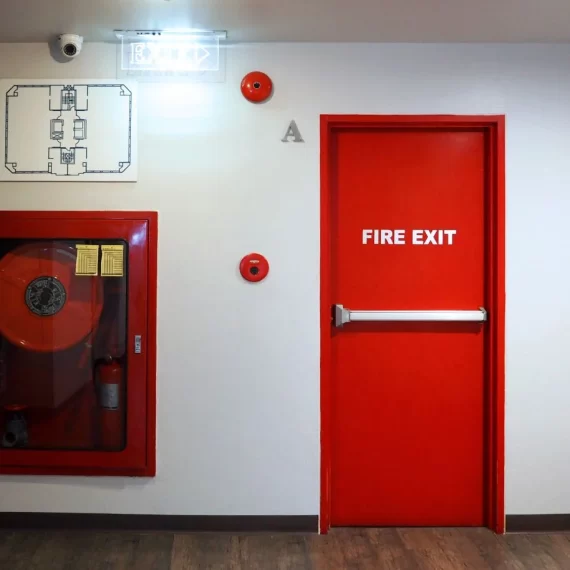

Fire Exit Door Alarm System in Qatar
When it comes to ensuring safety in buildings—be it commercial, industrial, healthcare, educational, or hospitality facilities—Fire Exit Door Alarm System plays a critical role. However, an often-overlooked component that enhances the utility of these exits is the Fire Exit Door Alarm System. This essential system not only ensures that emergency exits remain secure and accessible but also prevents unauthorized use.
In this blog, we explore what a Fire Exit Door Alarm System is, its benefits, key features, common use cases, and why Axle Systems is your trusted supplier for Fire Exit Door Alarm System in Qatar.
What is a Fire Exit Door Alarm System?
A Fire Exit Door Alarm System is an electronic security device designed to monitor the usage of emergency exit doors. It triggers an audible or visual alarm when the door is opened, alerting staff or security personnel to potential misuse or emergency egress. These alarms are often battery-operated or connected to a centralized security system and can be configured to allow timed egress or emergency-only access.
In simpler terms, the system ensures that fire exits are used only in emergencies, maintaining building safety, reducing unauthorized exits, and complying with civil defense and safety regulations.
Benefits of a Fire Exit Door Alarm System
A Fire Exit Door Alarm System is not just a security feature—it’s an essential component of a building’s overall fire and life safety strategy. These systems offer multiple advantages that enhance safety, streamline building management, and help organizations stay compliant with regulatory requirements in Qatar.
Let’s explore the key benefits in detail:
1. Enhanced Emergency Readiness
A fire emergency can arise without warning. In such situations, quick and safe evacuation is critical. Fire Exit Door Alarm System ensure that designated emergency exits are:
- Always closed and secure when not in use.
- Instantly accessible when an emergency occurs.
- Equipped to notify occupants or security teams if opened.
This state of constant readiness ensures that occupants can exit swiftly and safely during emergencies, significantly reducing panic and injury.
In Qatar, where compliance with the Qatar Civil Defense Department (QCDD) is mandatory, maintaining emergency exits in operational condition is a legal requirement—and fire exit alarms help enforce that readiness consistently.
2. Prevention of Unauthorized Use
One of the most common issues in commercial, institutional, and retail environments is the misuse of fire exits as shortcuts or unauthorized exits. Staff, visitors, or even intruders may open these doors for:
- Unauthorized access to restricted areas.
- Theft and escape routes in retail settings.
- Unmonitored entry/exit in schools, offices, or hospitals.
Installing a Fire Exit Door Alarm System ensures that every unauthorized door opening triggers an alert, prompting immediate investigation and action. It acts as a powerful deterrent while maintaining the sanctity of designated emergency pathways.
3. Regulatory Compliance (QCDD and International Standards)
Qatar has strict guidelines around fire and life safety systems, governed by QCDD. According to these guidelines:
- Fire exits must remain unobstructed.
- Emergency exits must not be used for regular access.
- Any door marked “Emergency Exit” must be monitored and alarmed, especially in public-use buildings.
By installing a compliant fire exit alarm system, businesses and facility managers can:
- Avoid penalties and violations during inspections.
- Gain faster QCDD approval during project commissioning.
- Ensure that emergency exits meet NFPA and international safety standards.
This makes the fire exit alarm not only a safety tool but also a compliance necessity.
4. Cost-Effective Security Enhancement
While employing personnel to monitor all exits 24/7 can be prohibitively expensive, a Fire Exit Door Alarm System provides an automated monitoring solution with minimal ongoing cost. It:
- Reduces dependency on physical security staff.
- Minimizes potential loss or risk due to unauthorized access.
- Operates continuously, including during power outages (with battery backup).
Additionally, it reduces liability risks and insurance premiums by maintaining a higher standard of safety compliance.
5. Audible and Visual Alerting Mechanism
Most fire exit alarm systems include loud sirens (95–120 dB) and flashing strobe lights. These serve two important functions:
- Immediate Alerting: Staff and nearby individuals are instantly made aware of the door opening.
- Deterrent Effect: The potential embarrassment or attention drawn by the alarm discourages unauthorized use.
In busy environments like airports, malls, or schools, these alarms can cut through noise to alert personnel effectively, ensuring prompt response.
6. Door Status Monitoring & Audit Trail
Advanced Fire Exit Door Alarm System are equipped with door status sensors and event logging capabilities. These features allow building administrators to:
- Track every instance of door opening or tampering.
- Review usage history to detect patterns of misuse.
- Maintain logs for QCDD audits or incident investigations.
This is particularly useful for hospital administrators, facility managers, and safety officers, who must ensure all exits remain secure yet accessible.
7. Integration with Fire Panels and BMS Systems
Modern fire exit alarm systems can be integrated into:
- Building Management Systems (BMS)
- Fire Alarm Control Panels (FACP)
- Access Control Platforms
- CCTV and Monitoring Systems
This centralized integration allows real-time response, enabling security personnel or facility managers to receive instant notifications, view live footage of the exit point, or unlock/lock doors remotely. It enhances operational efficiency and strengthens the overall security infrastructure.
8. Customizable Time Delay Settings
In some cases—such as in hospitals or eldercare facilities—allowing a short delayed exit (e.g., 15–30 seconds) is crucial. Fire Exit Door Alarm System offer customizable delay settings that:
- Allow staff to accompany patients or wheelchairs during emergency evacuations.
- Minimize false alarms from accidental touches or nudges.
- Maintain a balance between security and accessibility.
This feature is especially useful in environments with children, elderly patients, or people with special needs.
9. Power Failure Resilience
During emergencies like fires, power supply disruptions are common. A reliable Fire Exit Door Alarm System comes with:
- Battery backup options (usually 9V or lithium batteries).
- Fail-safe triggers, where the door unlocks for emergency egress in the event of power loss.
This ensures the system remains functional during the most critical times, safeguarding lives when it matters most.
10. Supports Risk Management and Incident Response
By using a Fire Exit Door Alarm System, facility managers are better equipped to:
- Respond quickly to suspicious activity.
- Prevent theft or unauthorized movement of people.
- Reduce liability and ensure proper response protocols are followed.
In the long term, this contributes to lower operational risk, stronger insurance profiles, and improved incident response times.
11. Peace of Mind for Occupants and Management
Ultimately, knowing that Fire Exit Door Alarm System are monitored 24/7 gives peace of mind to everyone—residents, employees, customers, and building owners. People feel safer when:
- Emergency exits are in working order.
- Alarms will sound in case of unauthorized access.
- Security protocols are actively enforced.
This fosters a culture of safety within the organization and demonstrates a commitment to protecting lives and property.
12. Environmentally Friendly and Low-Maintenance
Many modern fire exit alarm systems are:
- Energy-efficient with low power consumption.
- Built with eco-friendly materials.
- Designed to require minimal maintenance—only periodic battery changes or functional tests.
This makes them an ideal choice for green buildings and organizations committed to sustainability.
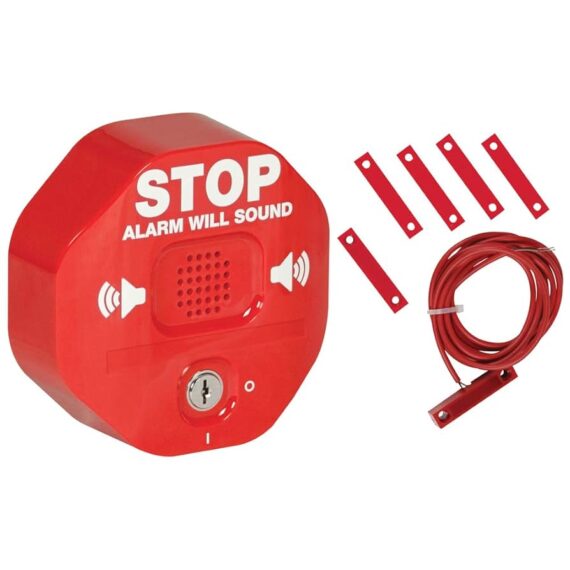
Key Features of Fire Exit Door Alarm System
Modern Fire Exit Door Alarm System are designed not only to sound an alarm but also to ensure safety, compliance, and control. These systems are available in various models—from simple battery-operated units to advanced networked systems integrated with building management platforms.
Let’s explore the key features that make Fire Exit Door Alarm System a crucial part of your building’s fire and life safety ecosystem:
1. Tamper-Proof and Vandal-Resistant Housing
Fire exit alarm systems are typically installed in public access areas such as stairwells, back corridors, and emergency exits, making them susceptible to tampering or vandalism. To prevent system failure, high-quality units include:
- Reinforced enclosures made of steel or impact-resistant plastic.
- Tamper-proof screws or lockable housings to prevent unauthorized access to internal components.
- Built-in tamper switches that trigger alerts if someone attempts to dislodge or open the unit.
These protective measures ensure the system remains functional even in high-traffic or unsupervised areas.
2. High-Decibel Audible Siren (95–120 dB)
One of the most important functions of a Fire Exit Door Alarm System is its sound output. The alarm must be loud enough to immediately alert staff and dissuade unauthorized access.
- Decibel levels typically range between 95–120 dB, depending on model and application.
- Some systems offer multi-tone sirens, including piercing sounds for emergencies or softer tones for non-critical alerts.
- Certain units allow users to adjust the volume setting to match environmental needs.
In a shopping mall or hospital setting, for instance, the alarm must cut through ambient noise and reach personnel swiftly.
3. Visual Alert Indicators (LEDs and Strobe Lights)
Alongside an audible siren, many systems are equipped with visual alerts, ideal for:
- Noisy environments (e.g., airports, factories) where a siren might go unheard.
- Hearing-impaired individuals who rely on visual cues.
- Enhancing overall awareness during an emergency.
Features include:
- Flashing red or blue LEDs to indicate door status.
- Strobe lights that activate when the alarm is triggered.
- Visual alarms that remain active until the system is reset.
These features improve compliance with universal accessibility standards and contribute to occupant safety.
4. Key Switch, Reset Button, or Digital Code Panel
To prevent misuse or unauthorized silencing of the alarm, most units include an authorized reset mechanism such as:
- Mechanical key switch: Requires a physical key to disable or reset the alarm.
- PIN-code enabled keypad: Allows authorized personnel to enter a code to deactivate.
- Push-button reset with time delay: Ensures the alarm doesn’t reset instantly, giving staff time to respond.
These features maintain system integrity while offering authorized control to security personnel or facility managers.
5. Programmable Time Delay Settings
Some fire exit alarms include time delay functionality—a key feature for allowing legitimate egress under controlled conditions.
- Common delay options include 5, 15, or 30 seconds before the alarm is activated.
- Useful in healthcare facilities, schools, or assisted living environments where caregivers may need to assist people through exit doors.
- Delay can be configured to allow staff to override the alarm for scheduled activities, such as fire drills or maintenance checks.
The delay feature ensures a balance between safety and operational flexibility.
6. Battery Backup and Power Supply Flexibility
During a fire or power outage, mains-powered systems may fail if not properly backed up. Fire Exit Door Alarm System typically come with:
- Internal battery backup, usually a 9V or rechargeable lithium-ion battery.
- Low-battery alerts (beeps or LED warnings) to signal maintenance requirements.
- Dual power options, allowing connection to both AC mains and battery for uninterrupted operation.
This ensures the alarm remains operational during emergencies—a vital safety requirement.
7. Remote Notification Capability
Advanced systems offer network-enabled features for real-time alerts and system monitoring. Depending on the model and configuration, notifications can be sent via:
- SMS alerts
- Push notifications on mobile apps
- Email alerts
- Central control software dashboards
This feature is ideal for large facilities or multi-building campuses, where central monitoring improves response time and situational awareness.
8. Door Status Monitoring (Open/Closed Sensors)
These systems continuously monitor the physical status of the door and update the control system or trigger alerts in case of:
- Forced entry
- Propped-open doors
- Faulty latch conditions
By integrating magnetic door sensors or reed switches, the alarm system provides real-time feedback on door status, helping facility managers:
- Maintain fire code compliance.
- Track usage patterns.
- Identify maintenance needs.
9. Integration with Fire Alarm, Access Control & BMS Systems
Fire Exit Door Alarm System aren’t standalone devices—they’re designed to seamlessly integrate with other building safety and security systems:
- Fire Alarm Control Panels (FACP): Automatically disarm the alarm when the fire system activates.
- Access Control Systems: Monitor user access, grant egress during emergencies, or log exits.
- Building Management Systems (BMS): Display door status across centralized dashboards.
This integration provides centralized control, reporting, and a coordinated emergency response strategy.
10. Data Logging and Event History
Premium models come with built-in memory modules or connect to software platforms that log:
- Time-stamped door open events
- Duration of door openings
- Reset and silencing actions
- Tamper events
This data is critical for:
- Compliance audits
- Incident investigations
- Safety performance reviews
In Qatar, this is especially useful for QCDD inspections, where evidence of proper system use and maintenance can be requested.
11. Compact and Aesthetic Design Options
While functionality is crucial, many businesses and institutions—such as hotels, malls, and luxury residences—also care about aesthetics.
Many Fire Exit Door Alarm System are designed to be:
- Compact and low-profile
- Available in various finishes (white, grey, stainless steel, etc.)
- Surface-mounted or flush-mounted for minimal visual disruption
This allows the system to blend with interior design without sacrificing functionality.
12. Environmental Durability
Fire exit alarms in Qatar must perform under extreme environmental conditions, including:
- High heat and humidity
- Dust and debris exposure
- Frequent HVAC activity near exit areas
High-quality systems come with IP-rated enclosures (e.g., IP54 or higher) that are:
- Weather-resistant for outdoor installation
- Corrosion-resistant for humid indoor environments
- Anti-static and fire-retardant
This ensures long-term performance in Qatar’s demanding climate.
13. Wireless Connectivity
Some modern units now offer wireless communication, enabling faster installation with minimal cabling—especially useful for:
- Retrofits in older buildings
- Temporary sites
- Multi-tenant buildings
Wireless Fire Exit Door Alarm System typically use Zigbee, Wi-Fi, or proprietary RF protocols to communicate with central hubs or monitoring stations.
14. Multi-Mode Operation
Advanced systems offer different operating modes, allowing configuration based on the environment:
- Alarm-only mode
- Silent logging mode
- Lockdown mode
- Bypass mode for scheduled times
This flexibility makes it easier for safety officers to tailor the system for different operational hours, shifts, or security levels.
15. Easy Installation and Maintenance
Fire exit alarm systems are designed for quick installation and minimal maintenance:
- Self-adhesive sensor options
- Wall-mountable compact units
- User-friendly battery compartments
- LED indicators for diagnostics
These features reduce setup time and keep ongoing operational costs low, which is beneficial for organizations managing multiple facilities.
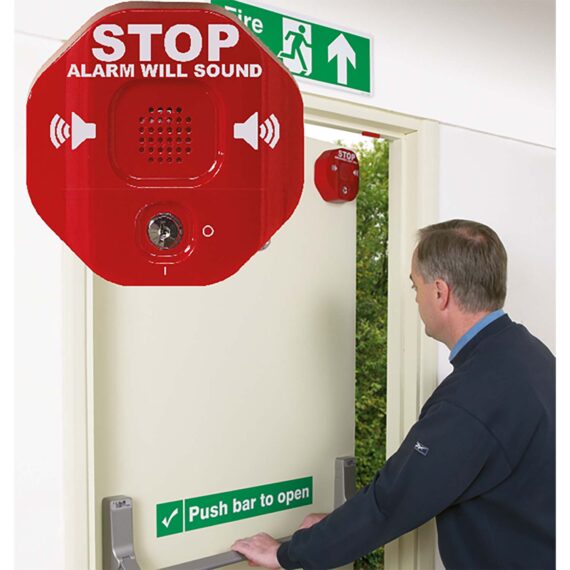
Use Cases of Fire Exit Door Alarm System
Fire Exit Door Alarm System are indispensable across various industries and sectors in Qatar. These systems are not just about regulatory compliance—they play a critical role in protecting lives, preventing losses, and managing operational integrity.
Below is a detailed breakdown of how these systems are used in different environments, including specific challenges, benefits, and Qatar-specific applications.
1. Hospitals and Healthcare Facilities
Hospitals have multiple exit doors, many of which are located in sensitive areas such as:
- Emergency rooms
- ICUs and isolation wards
- Supply storage and pharmaceutical rooms
Challenges:
- Preventing patients—especially those with dementia or in critical condition—from accidentally leaving through fire exits.
- Avoiding security breaches while maintaining safety compliance.
Role of Fire Exit Door Alarm System:
- Ensures that emergency doors are not misused by unauthorized individuals.
- Alerts staff if a patient attempts to exit unsupervised.
- Complies with Hamad Medical Corporation (HMC) safety standards and QCDD regulations.
2. Educational Institutions (Schools, Colleges, Universities)
Educational campuses feature a variety of exit doors, including:
- Gymnasium side doors
- Staircase doors in multi-level schools
- Dormitory and cafeteria exits
Challenges:
- Students attempting to skip classes or leave school premises through fire exits.
- Unauthorized entry by outsiders during class hours.
Role of Fire Exit Door Alarm System:
- Prevents misuse of emergency exits while ensuring they’re functional during fire drills or real emergencies.
- Supports real-time monitoring through central security systems.
- Alerts teachers or security if a fire exit is opened unexpectedly.
Qatar-Specific Note:
In Qatar, private and international schools are required to maintain strict fire safety compliance—making fire exit alarms critical during Civil Defense inspections.
3. Shopping Malls and Retail Stores
Large malls and individual retail units have numerous exits for customers, staff, and stock deliveries.
Challenges:
- Risk of shoplifting through poorly monitored emergency exits.
- Unauthorized personnel entering staff-only areas.
- Need to protect customers during fire emergencies.
Role of Fire Exit Door Alarm System:
- Triggers an alarm if a customer tries to use a fire exit door as a shortcut.
- Prevents theft and enhances store loss prevention systems.
- Ensures compliance with mall-wide fire evacuation procedures.
4. Hotels, Resorts, and Serviced Apartments
The hospitality sector needs to balance guest comfort with safety and security. Hotels have emergency exit doors on every floor.
Challenges:
- Guests mistakenly use fire exits instead of main corridors.
- Unauthorized staff or outsiders accessing guest floors.
- Requirement for rapid evacuation during fire or gas leaks.
Role of Fire Exit Door Alarm System:
- Alerts management if guests or housekeeping staff open emergency doors.
- Prevents doors from being propped open by trolleys or cleaning carts.
- Enables timely evacuation while maintaining security.
5. Commercial Office Buildings
Offices and corporate buildings often have multiple fire exits at the ends of hallways or stairwells.
Challenges:
- Employees using fire exits for smoking breaks or unsanctioned egress.
- Security gaps in multi-tenant office towers.
- Corporate compliance with safety protocols.
Role of Fire Exit Door Alarm System:
- Deters employees from unauthorized movement.
- Provides security teams with alerts via central BMS.
- Helps building owners meet leasing and insurance compliance.
6. Airports, Seaports, and Transport Terminals
Large public infrastructure such as Hamad International Airport (HIA) and Doha Port involve complex movement of people and cargo.
Challenges:
- Preventing passengers from exiting into restricted or airside areas.
- Monitoring exits in large terminals with multiple zones.
- Meeting ICAO and IMO safety regulations.
Role of Fire Exit Door Alarm System:
- Enhances perimeter security at restricted access points.
- Sends alerts to central command centers.
- Ensures emergency exits are usable during evacuation but secured otherwise.
7. Industrial Facilities, Warehouses, and Logistics Centers
Large-scale warehouses and manufacturing facilities in Industrial Area, Mesaieed, or Ras Laffan deal with:
- Dangerous equipment
- Hazardous materials
- High employee traffic
Challenges:
- Preventing theft of goods via fire exits.
- Securing perimeter zones with limited security staff.
- Ensuring safe and rapid evacuation during a fire.
Role of Fire Exit Door Alarm System:
- Supports 24/7 monitoring of critical exit doors.
- Connects with internal fire suppression and gas detection systems.
- Meets Qatar Energy and KAHRAMAA safety protocols.
8. Mosques, Religious Centers, and Cultural Venues
These places often host large gatherings and are required to provide ample emergency exits.
Challenges:
- Limited supervision of all access points.
- Risk of doors being locked or obstructed during events.
- High visitor turnover.
Role of Fire Exit Door Alarm System:
- Ensures all exit doors are functional and unobstructed.
- Triggers alerts in the event of blockage or tampering.
9. Residential Towers and Compounds
In gated communities and high-rise residential buildings, fire exits are a lifeline for families and tenants.
Challenges:
- Children or domestic staff using fire exits unsupervised.
- Residents use them as back doors for deliveries.
- Fire doors being blocked or wedged open.
Role of Fire Exit Door Alarm System:
- Discourages misuse by triggering a loud siren.
- Notifies building management or concierge services.
- Supports evacuation during civil defense drills or actual emergencies.
10. Event Venues, Cinemas, and Stadiums
Large venues such as Katara Cultural Village, Qatar National Convention Centre, and Lusail Stadium require high-capacity evacuation plans.
Challenges:
- Crowd management during concerts, matches, or festivals.
- Preventing backstage or staff-only access.
- Rapid evacuation in case of fire, electrical fault, or crowd panic.
Role of Fire Exit Door Alarm System:
- Part of event risk mitigation plans.
- Alerts security personnel in case of exit use.
- Ensures exit pathways are unlocked and clear during emergencies.
11. Government and Embassy Buildings
Facilities such as ministries, embassies, and court buildings are considered high-security zones.
Challenges:
- Preventing unauthorized or unsupervised exits.
- Adhering to strict civil defense guidelines.
- Need for quick lockdown or emergency exit features.
Role of Fire Exit Door Alarm System:
- Logs all exit attempts for audit purposes.
- Triggers layered security response if breached.
- Integrates with CCTV and access control systems.
12. Public Toilets, Changing Rooms, and Service Areas
Often located at the edge of facilities, these zones have fire exits that may not always be monitored.
Challenges:
- Potential misuse or vandalism.
- Theft or unmonitored movement.
- Fire hazard from cleaning supplies or electrical faults.
Role of Fire Exit Door Alarm System:
- Monitors low-traffic, high-risk zones.
- Acts as a deterrent for unauthorized access.
- Enhances safety in under-supervised areas.
Axle Systems: Your Trusted Partner for Fire Exit Door Alarm System in Qatar
Axle Systems stands as a premier provider of cutting-edge security and safety solutions in Qatar. With years of experience and a deep understanding of local market needs and regulations, we are proud to be the leading supplier of high-quality Fire Exit Door Alarm System in the region.
Why Choose Axle Systems?
- Expertise and Experience: Our team comprises highly skilled professionals with extensive knowledge in fire safety and security systems. We understand the nuances of various building types and their specific requirements.
- Comprehensive Solutions: We offer a wide range of Fire Exit Door Alarm System, from basic standalone units to advanced, integrated solutions that seamlessly connect with your existing security and fire safety infrastructure.
- QCDD Compliance: We ensure that all our Fire Exit Door Alarm System meet or exceed the stringent standards set by the Qatar Civil Defence Department (QCDD), guaranteeing your compliance and safety.
- Quality Products: We partner with leading international manufacturers to bring you durable, reliable, and technologically advanced alarm systems that are built to last.
- Tailored Solutions: We don’t believe in a one-size-fits-all approach. Our experts will assess your specific needs and recommend a customized Fire Exit Door Alarm System that perfectly fits your operational requirements and budget.
- Professional Installation: Our certified technicians ensure flawless installation, adhering to the highest industry standards and minimizing disruption to your operations.
- After-Sales Support and Maintenance: We provide comprehensive after-sales support, including regular maintenance, testing, and troubleshooting services, to ensure your system remains in optimal working condition. Our proactive maintenance helps prevent false alarms and system malfunctions.
- Commitment to Safety: At Axle Systems, safety is at the core of everything we do. We are dedicated to helping businesses and organizations in Qatar create safer environments for their employees, customers, and assets.
Common FAQs about Fire Exit Door Alarm System
Here are some frequently asked questions about Fire Exit Door Alarm System:
Q1: What is the primary purpose of a Fire Exit Door Alarm System?
A1: The primary purpose is two-fold: to deter unauthorized use of emergency exit doors for security reasons (e.g., theft, unauthorized entry) and to ensure these doors remain functional and unobstructed for safe evacuation during a fire or other emergency.
Q2: Are Fire Exit Door Alarm System mandatory in Qatar?
A2: While specific mandates can vary based on building type, occupancy, and size, the Qatar Civil Defence Department (QCDD) has strict regulations concerning fire safety and emergency exits. Implementing Fire Exit Door Alarm System is often a critical component of achieving and maintaining QCDD compliance, especially in public buildings and commercial spaces. It’s always best to consult with fire safety professionals and local authorities to confirm specific requirements for your building.
Q3: How loud are these alarms, and can the volume be adjusted?
A3: Most Fire Exit Door Alarm System emit a very loud siren, typically ranging from 90 to 120 decibels, designed to be immediately noticeable. Many modern units offer adjustable volume settings to suit different environments, such as a quieter setting for a hospital corridor during non-emergency times, or a maximum volume for a noisy industrial facility.
Q4: Do these systems interfere with emergency egress?
A4: Absolutely not. A fundamental principle of fire safety is that emergency exits must always allow for free and immediate egress. Fire Exit Door Alarm System are designed to sound an alarm when the door is opened, but they do not physically impede the door’s operation. In fact, many advanced systems integrate with the main fire alarm panel to automatically disarm or unlock the doors when a building-wide fire alarm is activated, ensuring seamless evacuation.
Q5: What happens during a power outage?
A5: Reliable Fire Exit Door Alarm System are equipped with battery backup power. This ensures that the system remains fully operational and continues to provide security and alarm functions even if the main power supply to the building is interrupted. The batteries typically last for a significant period (e.g., 24-72 hours) and often include a low battery indicator.
Q6: Can the alarm be silenced or reset easily?
A6: Yes, authorized personnel typically have a key or a code to silence and reset the alarm after it has been triggered. This allows for legitimate use of the door (e.g., for maintenance, deliveries) without causing a prolonged disturbance. It also ensures that only authorized individuals can disable the alarm.
Q7: How are false alarms prevented?
A7: Quality Fire Exit Door Alarm System are designed to be highly reliable. False alarms are rare but can sometimes occur due to improper installation, damage, or extreme environmental conditions. Regular maintenance, including cleaning sensors and checking connections, helps prevent false alarms. Axle Systems ensures professional installation and offers ongoing maintenance to minimize such occurrences.
Q8: Can these systems be integrated with other security systems?
A8: Yes, many Fire Exit Door Alarm System are designed for seamless integration with other building security and fire safety systems, such as: * Centralized Security Management Systems: For unified monitoring and control. * Fire Alarm Control Panels (FACP): For automatic disarming during a fire event. * Access Control Systems: To log door usage and control specific access permissions. * CCTV Surveillance: To trigger camera recording when an alarm is activated, providing visual evidence. * Remote Notification Systems: To send alerts to security personnel’s mobile devices or monitoring stations.
Q9: What types of doors can these alarms be installed on?
A9: Fire Exit Door Alarm System can be installed on virtually any type of emergency exit door, including single doors, double doors, inward-swinging, and outward-swinging doors. The installation method may vary slightly depending on the door’s construction and swing direction.
Q10: What is the maintenance schedule for a Fire Exit Door Alarm System?
A10: Regular maintenance is crucial to ensure the system’s optimal performance. This typically includes: * Monthly Visual Inspections: Checking for obvious damage, obstructions, and ensuring clear signage. * Quarterly or Bi-Annual Functionality Tests: Activating the alarm to ensure it sounds correctly, checking battery backup, and verifying integration with other systems. * Annual Professional Servicing: A certified technician should conduct a thorough inspection, clean components, test all functionalities, and replace batteries as needed. Axle Systems offers comprehensive maintenance contracts to ensure your system is always in top working order.
Q11: How long does the installation process take?
A11: The installation time for a Fire Exit Door Alarm System can vary depending on the complexity of the system, the number of doors, and whether it’s a standalone unit or integrated with existing infrastructure. A professional installation typically takes a few hours per door, but a more complex system across a large facility could take several days. Axle Systems strives for efficient and minimally disruptive installation.
Q12: What is the lifespan of a Fire Exit Door Alarm System?
A12: With proper installation and regular maintenance, a high-quality Fire Exit Door Alarm System can last for many years, often 10-15 years or even longer. Components like batteries will need periodic replacement, and technology upgrades might be considered over time.
Conclusion
In today’s dynamic environment, ensuring the safety and security of your premises is non-negotiable. Fire Exit Door Alarm System are an indispensable part of a comprehensive safety strategy, providing critical deterrence against unauthorized access while guaranteeing unhindered emergency egress. From preventing theft and vandalism to ensuring compliance with rigorous fire safety regulations like those from the QCDD in Qatar, the benefits are clear and significant.
At Axle Systems, we are dedicated to providing the highest quality Fire Exit Door Alarm System tailored to your specific needs. Our expertise, commitment to compliance, and exceptional after-sales support make us the ideal partner for safeguarding your assets and the lives of your occupants. Don’t compromise on safety; invest in the peace of mind that comes with a robust and reliable Fire Exit Door Alarm System from Axle Systems.