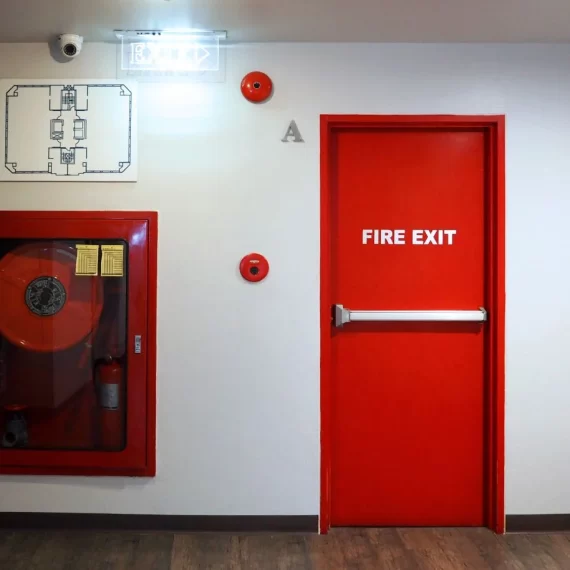

Emergency Exit Alarm in Qatar
In today’s fast-paced world, ensuring safety in commercial and public buildings is not just a necessity—it’s a legal and moral obligation. One crucial component of a comprehensive safety system is the Emergency Exit Alarm. These systems are designed to deter unauthorized use of Emergency Exit Alarm while ensuring quick evacuation during emergencies.
At Axle Systems, we provide state-of-the-art Emergency Exit Alarm systems in Qatar, helping organizations meet safety standards and protect occupants in case of fire, intrusions, or other emergencies.
What is an Emergency Exit Alarm?
An Emergency Exit Alarm is a security device installed on or near emergency exits to detect unauthorized opening of exit doors and sound an alert. It ensures that emergency exits remain accessible only during actual emergencies, and not for unauthorized entry or exit. These alarms are often equipped with loud sirens, flashing lights, and tamper-proof features to prevent misuse.
Emergency Exit Alarms are a critical part of emergency preparedness plans for schools, hospitals, malls, offices, factories, and more.
Benefits of Emergency Exit Alarm Systems
Installing an Emergency Exit Alarm system is a proactive step toward ensuring the safety, security, and regulatory compliance of your facility. These systems are not just deterrents—they are vital components in emergency preparedness, theft prevention, and operational efficiency. Below is an in-depth look at the key benefits of deploying Emergency Exit Alarm Systems in your building or premises:
1. Prevents Unauthorized Exit and Entry
Emergency exits are often targeted for unauthorized uses—either by internal personnel attempting to bypass proper exit procedures or by outsiders seeking to gain illegal entry.
How this helps:
- Prevents theft or shrinkage in retail environments by stopping individuals from using emergency exits as escape routes.
- Discourages employees or unauthorized persons from misusing secure exit-only doors.
- Adds a protective barrier against intruders who might attempt to enter through poorly monitored emergency exits.
Example: In a shopping mall or retail store, a person trying to exit through the emergency door triggers a loud siren, drawing immediate attention from security personnel.
2. Promotes Fire and Safety Compliance
Compliance with fire safety codes is not optional, especially in regulated environments like commercial buildings, healthcare, and educational institutions. Emergency Exit Alarm support compliance with international and local regulations such as NFPA, QCDD (Qatar Civil Defence Department), and MOI safety guidelines.
How this helps:
- Ensures emergency exit doors are not blocked or misused.
- Facilitates safe evacuation during fires, earthquakes, or gas leaks.
- Meets QCDD’s requirement for alarms on emergency doors that alert when opened.
Example: A school can use Emergency Exit Alarm to remain compliant with Qatari fire safety regulations, ensuring safe evacuation paths for students during a fire drill or actual emergency.
3. Reduces Liability Risks
In the event of an emergency, delays in evacuation due to blocked exits or unauthorized tampering can lead to casualties and legal consequences. Emergency Exit Alarm can help reduce these liabilities.
How this helps:
- Provides evidence (in logs or alerts) that exits were used appropriately.
- Reduces the chance of litigation related to negligence or non-compliance.
- Offers protection to building owners, property managers, and tenants.
Example: In a hotel setting, ensuring exit doors are properly alarmed could protect management from liability if guests are injured during an emergency evacuation.
4. Real-Time Alerting and Monitoring
Modern Emergency Exit Alarm can be connected to centralized monitoring systems or Building Management Systems (BMS) for real-time oversight.
How this helps:
- Alerts security or facility staff immediately upon door activation.
- Triggers notifications via email, SMS, or control room display systems.
- Can be paired with CCTV systems to activate recording upon alarm trigger.
Example: A hospital control room gets an immediate alert when someone tries to exit through a restricted emergency door in a critical care unit, allowing security to respond within seconds.
5. Supports Controlled Access in High-Security Zones
In facilities like data centers, warehouses, and pharmaceutical storage, Emergency Exit Alarm act as an additional access control point to prevent unauthorized egress.
How this helps:
- Enhances perimeter security.
- Enables the integration of electronic locks that work in tandem with alarm triggers.
- Allows restricted access through controlled override by security teams.
Example: A logistics center can restrict emergency exit access to security staff only, ensuring that only trained personnel can open the door using authorized access cards without triggering the alarm.
6. Psychological Deterrence
Even the mere presence of an Emergency Exit Alarm acts as a strong deterrent to potential wrongdoers. The possibility of being caught immediately discourages misuse.
How this helps:
- Reinforces discipline among staff and visitors.
- Reduces incidents of casual or negligent exit use.
- Builds a culture of safety and accountability.
Example: In a college dormitory, students are less likely to misuse emergency exits when they know it triggers a high-decibel alarm and alerts the administration.
7. Ensures Quick Evacuation During Real Emergencies
Emergency Exit Alarm are designed not to hinder escape but to ensure doors are opened only during actual emergencies. During such events, the loud alarm and visual indicators guide people toward the safest escape route.
How this helps:
- Enhances crowd flow during fire evacuations or natural disasters.
- Supports the quick identification of open emergency doors.
- Reduces confusion during chaotic situations by clearly marking active exits.
Example: In a cinema hall, during a fire, Emergency Exit Alarm with strobe lights guide the audience to the proper exits even if there’s smoke or dim lighting.
8. Easy Maintenance and Reliability
Modern Emergency Exit Alarm are designed to be low-maintenance and long-lasting. Battery backup and status indicators help ensure the system is always ready to function when needed.
How this helps:
- Reduces operational downtime and maintenance costs.
- Provides confidence in system reliability.
- Notifies users if the system requires service or battery replacement.
Example: A hospital corridor Emergency Exit Alarm notifies the facilities team via a blinking LED or alert if the battery needs to be replaced, ensuring continuous uptime.
9. Flexible Integration with Existing Systems
Emergency Exit Alarm are not isolated devices. Many can integrate seamlessly into broader security or life safety systems, enhancing overall functionality.
How this helps:
- Works with access control, surveillance, and fire detection systems.
- Enables centralized logging and reporting.
- Can be configured for zone-wise management in large facilities.
Example: In a smart building in Lusail, an emergency door alarm system is integrated into the access control system so that all data on exit usage is logged automatically.
10. Customizable for Different Environments
Whether your environment is quiet (like libraries or hospitals) or noisy (like factories or malls), Emergency Exit Alarm can be customized for decibel level, strobe light brightness, and response protocols.
How this helps:
- Provides the right level of alert without disrupting daily operations.
- Ensures alarms are noticeable in any environmental condition.
- Matches the aesthetic and technical needs of various industries.
Example: A museum configures Emergency Exit Alarm to flash silently with only remote notifications during normal hours to maintain the ambiance but enables full audio alerts during off-hours or emergencies.
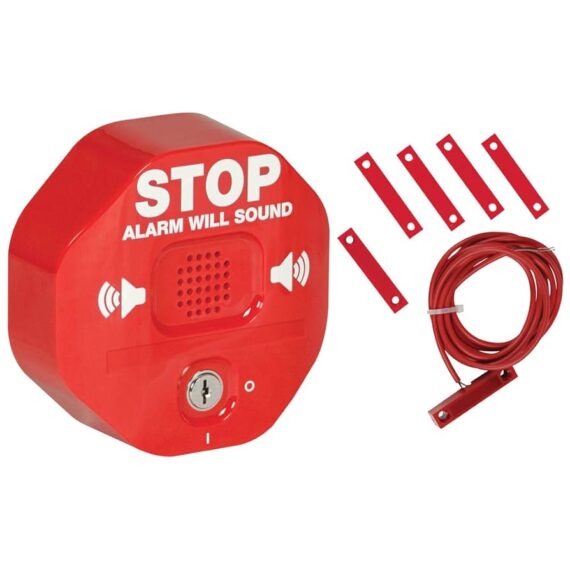
Features of Emergency Exit Alarm
Emergency Exit Alarm are engineered to offer reliable performance in critical moments while also serving as a deterrent for misuse. Modern Emergency Exit Alarm systems are packed with smart functionalities that ensure safety, compliance, and ease of management. Below is a comprehensive breakdown of the key features of Emergency Exit Alarm supplied by Axle Systems in Qatar:
High-Decibel Audible Alarm (Up to 120 dB)
One of the most important features is the powerful audible alarm that activates the moment the emergency exit door is opened without authorization.
Why it matters:
- A 100–120 dB sound level is loud enough to alert people across multiple floors or zones.
- Immediate attention is drawn to the unauthorized activity.
- Useful in large spaces like malls, hospitals, and factories.
Flashing Visual Indicators (Strobe Lights)
In environments with high ambient noise or for facilities serving individuals with hearing impairments, visual indicators play a vital role. These often take the form of high-intensity flashing LEDs or strobe lights.
Why it matters:
- Enhances the alarm system’s effectiveness in noisy environments like industrial plants.
- Helps guide people during emergencies in low visibility due to smoke or darkness.
- Supports inclusivity for people with hearing challenges.
Key Bypass or Manual Override Function
Emergency Exit Alarm are equipped with key-operated or access control-based override systems. Authorized personnel can temporarily disable the alarm for maintenance or emergency services access.
Why it matters:
- Enables controlled access without triggering a false alarm.
- Facilitates emergency drills, repairs, or inspections without disruption.
- Increases convenience for facility managers and security staff.
Tamper-Proof Enclosure and Lockable Housing
Most Emergency Exit Alarm units feature robust housings made from impact-resistant polycarbonate or metal. They are designed to resist vandalism, tampering, or accidental disabling.
Why it matters:
- Prevents unauthorized attempts to silence or remove the device.
- Maintains security even in unsupervised areas.
- Offers long-term durability in high-traffic locations.
Battery Backup Power Supply
To ensure functionality during power outages, many Emergency Exit Alarm include rechargeable or replaceable backup batteries.
Why it matters:
- Guarantees the alarm works during critical moments like fires or blackouts.
- Increases reliability in remote or off-grid buildings.
- Indicates power status with low battery alerts.
Example: In a residential tower, the alarm continues to function during a nighttime power failure due to the onboard battery system.
Adjustable Alarm Duration and Sound Mode
Some Emergency Exit Alarm allow configuration of the alarm duration, volume, and tone type (continuous, intermittent, escalating, etc.).
Why it matters:
- Lets you adapt the system for different operational zones (e.g., offices vs. factories).
- Reduces unnecessary panic by tailoring sound to alert level.
- Can be fine-tuned for shift-based operations or occupancy changes.
Example: A university can set a 30-second alarm for residence halls and a 60-second one for academic buildings.
Integrated Door Status Monitoring Sensor
Advanced models feature magnetic or mechanical sensors that track the open/close status of the door and log events when the door is triggered.
Why it matters:
- Helps monitor door usage history for audits or investigations.
- Provides data for operational reports and incident logs.
- Allows remote status checking in integrated systems.
Remote Monitoring & Integration Capability
Modern Emergency Exit Alarm are increasingly network-enabled or compatible with control systems like:
- Fire alarm panels
- Access control systems
- CCTV cameras
- Building Management Systems (BMS)
Why it matters:
- Enhances centralized control over large premises.
- Enables alarm notifications via SMS, email, or app-based alerts.
- Supports real-time logging and emergency event documentation.
Example: In a corporate campus, the security team receives real-time alerts on their dashboard when any emergency exit door is opened.
Wireless and Wired Configurations
Depending on the infrastructure and layout of the building, Emergency Exit Alarm can be deployed in wireless or hardwired versions.
Why it matters:
- Wireless options are ideal for retrofit projects with limited wiring access.
- Wired options offer continuous power and reliable communication.
- Offers flexibility for different architectural needs.
Example: A heritage building retrofits wireless Emergency Exit Alarm to avoid wall drilling or major renovations.
Event Logging and Historical Reporting
Some systems come with digital memory or cloud storage features that record usage history, alarm triggers, bypass instances, and service logs.
Why it matters:
- Helps security teams analyze trends and identify problem areas.
- Useful for internal audits and compliance documentation.
- Supports forensic analysis during incident investigations.
Example: A shopping mall uses event logs to investigate an unauthorized exit after merchandise was found missing.
Compact and Aesthetic Design
Emergency Exit Alarm don’t have to look intrusive. Many models come with sleek designs, clear casing options, and minimal profiles to blend into various interiors.
Why it matters:
- Maintains the visual aesthetics of hotels, malls, galleries, and offices.
- Provides clear labeling and user-friendly interfaces.
- Can include multilingual stickers (e.g., English and Arabic in Qatar).
Example: A high-end office in The Pearl, Doha, installs clear acrylic-cased alarms that match their interior design without compromising security.
Smart Sensor Options
High-end models come with smart motion sensors or AI-based analytics that can distinguish between real threats and environmental interference (like wind or vibration).
Why it matters:
- Reduces false alarms caused by environmental triggers.
- Improves system intelligence and reliability.
- Optimizes alarm accuracy in dynamic environments.
Example: An industrial plant uses smart sensors to ignore wind-blown doors but alert on actual human exit attempts.
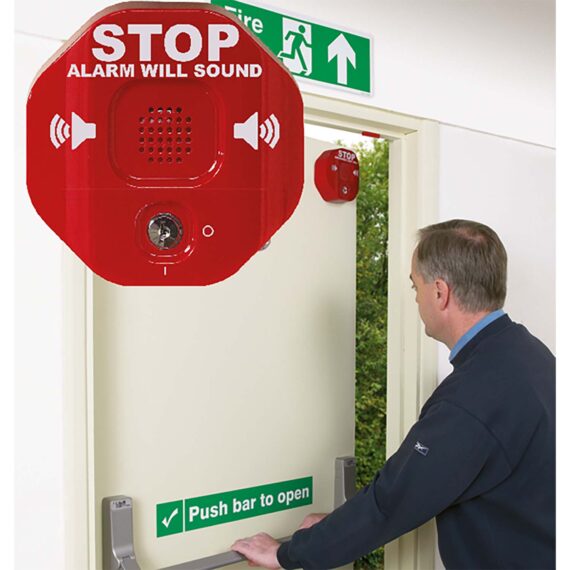
Uses of Emergency Exit Alarm in Qatar
Emergency Exit Alarm plays a pivotal role in ensuring safety, security, and regulatory compliance across a wide range of sectors in Qatar. Whether it’s a commercial tower in West Bay, a retail store in Villaggio Mall, or a healthcare facility in Hamad Medical City, Emergency Exit Alarm provide crucial protection by controlling how and when emergency exits are used.
Below is a detailed breakdown of how various industries in Qatar benefit from the use of Emergency Exit Alarm Systems:
Corporate Offices and Business Towers
In high-rise office buildings, particularly in areas like Lusail City and West Bay, emergency exit doors are often placed in stairwells, back corridors, or fire escape routes. These doors must remain unobstructed and functional during emergencies, but also need protection against misuse.
Use Case:
- Deter unauthorized personnel from using emergency exits as shortcuts.
- Notify security in real-time when emergency doors are accessed without proper authorization.
- Comply with QCDD safety regulations for office premises.
Example: A financial firm installs Emergency Exit Alarm in stairwells to prevent employees from using fire exits to bypass security-controlled areas.
Shopping Malls and Retail Stores
Retail outlets in locations like Doha Festival City, City Center Mall, or Mall of Qatar experience high footfall. Emergency Exit Alarm in such environments are vulnerable to theft or unauthorized usage during busy hours.
Use Case:
- Prevent shoplifters from escaping through fire exits.
- Alert mall security when doors are opened unexpectedly.
- Maintain unobstructed escape paths during peak visitor hours.
Example: A fashion retailer integrates exit alarms with their CCTV system to monitor real-time activity around Emergency Exit Alarm, enabling faster response to theft.
Hospitals and Healthcare Facilities
In hospitals such as Hamad General Hospital or Sidra Medicine, controlling access to emergency exits is critical—not just for safety, but also for patient security, especially in psychiatric wards, pediatric units, and ICU zones.
Use Case:
- Prevent patients or visitors from exiting restricted areas.
- Allow rapid evacuation of wards during medical emergencies.
- Alert medical security teams in real-time for quick intervention.
Example: A maternity ward installs tamper-proof Emergency Exit Alarm to ensure newborn units are secure and monitored at all times.
Schools, Universities, and Educational Institutions
Educational environments must prioritize student safety while adhering to government safety protocols. Schools and universities in Qatar like Qatar Foundation campuses, American School of Doha, and University of Doha for Science and Technology use emergency exit alarms for controlled evacuation and security monitoring.
Use Case:
- Ensure fire exits are used only during drills or emergencies.
- Prevent students from leaving the campus without permission.
- Provide real-time alerts to school administrators during emergencies.
Example: A university uses networked exit alarms to monitor all buildings during exams to prevent students from sneaking out through Emergency Exit Alarm.
Hotels and Hospitality Venues
Hotels ranging from budget accommodations to luxury resorts like The Ritz-Carlton, W Doha, and Mandarin Oriental require high levels of safety without disturbing guest experience.
Use Case:
- Maintain guest safety while keeping emergency routes monitored.
- Ensure exit doors are used only in emergencies.
- Reduce false alarms while maintaining compliance with MOI/QCDD rules.
Example: A luxury hotel in Doha integrates a silent Emergency Exit Alarm that trigger security room alerts without disturbing guests during nighttime.
Industrial Facilities and Warehouses
Large industrial spaces such as logistics warehouses in the Industrial Area or production facilities in Mesaieed often have multiple Emergency Exit Alarm due to their scale and layout.
Use Case:
- Monitor emergency exits in areas with limited surveillance coverage.
- Ensure compliance with health and occupational safety regulations.
- Prevent external intrusions through lesser-used exit doors.
Sports Arenas and Event Venues
Large public spaces such as Lusail Stadium, Aspire Zone, and Qatar National Convention Centre (QNCC) must manage thousands of visitors during events. Emergency Exit Alarm help manage crowd safety efficiently.
Use Case:
- Assist in directing crowds during fire alarms or evacuations.
- Prevent unauthorized backstage or technical area access.
- Enable event staff to quickly locate which exit was triggered.
Mosques and Religious Facilities
Mosques across Qatar, especially large ones like the Imam Muhammad ibn Abd al-Wahhab Mosque, need to protect against unauthorized access and also ensure safe egress during busy prayer times or festivals.
Use Case:
- Prevent unauthorized opening of fire exit doors during Friday prayers or Eid gatherings.
- Allow smooth evacuation in case of emergencies like power failures or overcrowding.
- Avoid tampering of exit doors by unattended children or visitors.
Government and Administrative Offices
Government buildings, such as ministries, immigration offices, and municipal centers in Qatar, require tight access control and emergency readiness.
Use Case:
- Maintain public safety while ensuring restricted access to staff-only areas.
- Record any use of Emergency Exit Alarm for security audits.
- Respond quickly to emergencies such as fire or threats.
Airports and Transportation Terminals
In high-security, high-traffic environments like Hamad International Airport, Doha Metro stations, and Karwa bus terminals, managing Emergency Exit Alarm is critical for crowd safety and national security.
Use Case:
- Monitor and control access to restricted operational areas.
- Allow timely evacuation during fire alarms or technical faults.
- Prevent unauthorized passage through emergency exits in baggage or crew zones.
Example: An emergency door near a restricted hangar at Hamad Airport is fitted with a dual alarm system: audible onsite and silent alert to airport security.
Residential Compounds and High-Rise Towers
Modern residential towers and gated communities across Doha, The Pearl, and Al Wakrah often include fire exits for each floor, which can be misused if not monitored.
Use Case:
- Protect against unauthorized access by non-residents.
- Ensure safe evacuation for residents in fire or gas emergencies.
- Prevent children or elderly from inadvertently exiting through unsafe paths.
Example: A residential tower integrates its Emergency Exit Alarm with the building’s intercom system, notifying the reception desk of any unauthorized door opening.
Construction Sites and Temporary Facilities
Even temporary project offices, construction sites, and event pavilions require Emergency Exit Alarm protection. In such dynamic environments, alarms can be portable, wireless, and battery-operated.
Use Case:
- Ensure worker safety in compliance with construction safety standards.
- Monitor emergency exits in modular cabins or prefabricated buildings.
- Deter unauthorized exit during work hours or restricted movement times.
Axle Systems: Your Trusted Supplier for Emergency Exit Alarm in Qatar
Axle Systems has established itself as a leader in providing comprehensive ELV system integration solutions across Qatar. With a steadfast commitment to quality, innovation, and customer satisfaction, we are the preferred partner for businesses and organizations seeking to enhance their security and safety infrastructure.
Our Expertise and Commitment:
- Industry Leadership: Established in 2012, Axle Systems is an industry-leading system integrator specializing in a wide range of Electronic Low Voltage systems, including Electronic Article Surveillance (EAS), Queue Management Systems, Audio Visual Systems, CCTV, Parking Management solutions, IT Solutions, and other ELV Systems for diverse verticals such as government, healthcare, retail, and hospitality.
- Customer-Centric Approach: We believe in understanding the unique objectives of our clients and are dedicated to delivering the right solutions on time, consistently exceeding expectations. Our focus is on providing top-notch quality products at competitive prices.
- Holistic Solutions: We don’t just supply products; we offer end-to-end services, including design, installation, and after-sales support. We also undertake Annual Maintenance Contracts (AMCs) for various vendors, recognizing that ongoing support is crucial for long-term system performance.
- Global Standards, Local Expertise: While we source internationally accredited, technologically advanced products, our major operations are based in Qatar, giving us an intimate understanding of local regulations, market needs, and client requirements.
- Integrated Security: We excel in integrating diverse security systems into a unified and cohesive infrastructure, ensuring seamless compatibility and enhanced functionality. Our emergency exit alarm systems can be integrated with your existing access control, CCTV, and building management systems for a truly comprehensive security solution.
Why Choose Axle Systems for Emergency Exit Alarm?
- Quality Products: We offer a range of high-quality Emergency Exit Alarm products from trusted manufacturers, known for their durability, reliability, and compliance with international safety standards. Our product range includes self-contained alarm units, wireless options, and models with advanced features like remote notification.
- Expert Installation: Our team of highly trained professionals possesses deep expertise in installing and maintaining emergency exit alarms. We ensure that all installations adhere to the latest building and fire safety codes in Qatar, guaranteeing that your property remains compliant and secure.
- Tailored Solutions: We understand that every building has unique requirements. We work closely with our clients to assess their specific needs and design customized Emergency Exit Alarm solutions that perfectly align with their security goals and budget.
- Reliable Support: Our commitment extends beyond installation. We provide comprehensive maintenance and dedicated technical support to ensure the continuous reliability and optimal performance of your Emergency Exit Alarm systems.
Contact Axle Systems Today
Ensure the safety and security of your premises with state-of-the-art Emergency Exit Alarm systems from Axle Systems. Our team is ready to provide you with expert advice, tailored solutions, and unparalleled service.
Axle Systems Contact Details:
- Address: P.O. Box 200081, Al Khalidiya Street, Najma, Doha, Qatar
- Mobile: +974 77443731, +974 44682391
- Email: info@axlesys.com
- Website: www.axlesys.com
We encourage you to visit our website or contact us directly to learn more about our Emergency Exit Alarm solutions and how we can help you enhance your building’s safety and security.
Common FAQs About Emergency Exit Alarm
To further assist you in understanding Emergency Exit Alarm systems, here are some frequently asked questions:
Q1: What is the primary purpose of an Emergency Exit Alarm?
A1: The primary purpose is to deter unauthorized use of emergency exit doors and to alert personnel when an emergency exit is opened without authorization. This ensures the doors are only used for genuine emergencies and helps prevent theft, trespassing, and other security breaches.
Q2: Are Emergency Exit Alarm mandatory in Qatar?
A2: While specific regulations can vary, generally, building codes and fire safety regulations in Qatar, as in many countries, mandate or strongly recommend the installation of alarm systems on emergency exit doors in commercial, public, and certain multi-occupancy residential buildings. This is to ensure compliance with the Qatar Civil Defence Department (QCDD) norms and regulations. It is always best to consult with relevant local authorities or a fire safety expert to confirm the specific requirements for your type of building.
Q3: How loud are these alarms?
A3: Most Emergency Exit Alarm produce a loud, piercing siren, typically in the range of 95dB to 105dB. This volume is designed to be highly noticeable and effective in drawing attention to the opened door, even in noisy environments.
Q4: Can an Emergency Exit Alarm be turned off or bypassed?
A4: Authorized personnel can typically turn off or bypass the alarm using a key-operated override. This allows for legitimate use of the door (e.g., for maintenance or deliveries) without triggering an alert. The alarms are designed to be tamper-resistant to prevent unauthorized disabling.
Q5: What happens if there’s a power outage?
A5: Many hardwired Emergency Exit Alarm systems include battery backup to ensure continued functionality during power outages. Battery-operated models, by their nature, are not affected by power cuts, but they require regular battery checks and replacements.
Q6: Can Emergency Exit Alarm be integrated with other security systems?
A6: Yes, modern Emergency Exit Alarm, especially hardwired and advanced wireless models, can be integrated with other security systems such as access control systems, CCTV surveillance, and building management systems (BMS). This allows for centralized monitoring, immediate visual verification of events, and enhanced security management.
Q7: How often should Emergency Exit Alarm be tested?
A7: Regular testing is crucial to ensure the alarms are functioning correctly. The frequency of testing may depend on local regulations, the type of building, and the manufacturer’s recommendations. Typically, monthly or quarterly tests are recommended, along with routine inspections to ensure the doors are not obstructed and the alarm batteries (if applicable) are in good condition.
Q8: What is a “Delayed Egress Alarm”?
A8: A delayed egress alarm is a type of Emergency Exit Alarm that introduces a brief delay (e.g., 15 or 30 seconds) before the door can be opened after the alarm is triggered. This delay provides security personnel time to respond to an unauthorized exit attempt while still allowing for quick and safe egress in a genuine emergency. These are commonly used in retail, healthcare, and educational facilities.
Q9: Do these alarms interfere with emergency evacuation?
A9: No, Emergency Exit Alarms are designed to comply with life safety codes, ensuring they do not impede or delay genuine emergency evacuation.
Q10: Can Axle Systems provide maintenance for existing Emergency Exit Alarm systems?
A10: Yes, Axle Systems offers Annual Maintenance Contracts (AMCs) for both systems installed by us and existing systems from various vendors. Regular maintenance ensures the longevity, reliability, and optimal performance of your Emergency Exit Alarm systems.
Conclusion
In an age where safety and compliance are paramount, having a reliable Emergency Exit Alarm system is no longer optional—it’s essential. Whether you manage a commercial property, healthcare facility, educational institution, or retail store, installing an Emergency Exit Alarm enhances your emergency preparedness while ensuring compliance with Qatar’s safety standards.
At Axle Systems, we take pride in supplying and installing trusted Emergency Exit Alarm solutions across Qatar. Contact us today and take the first step toward a safer, smarter facility.